History Museum in Suceava: the Princely Council Hall
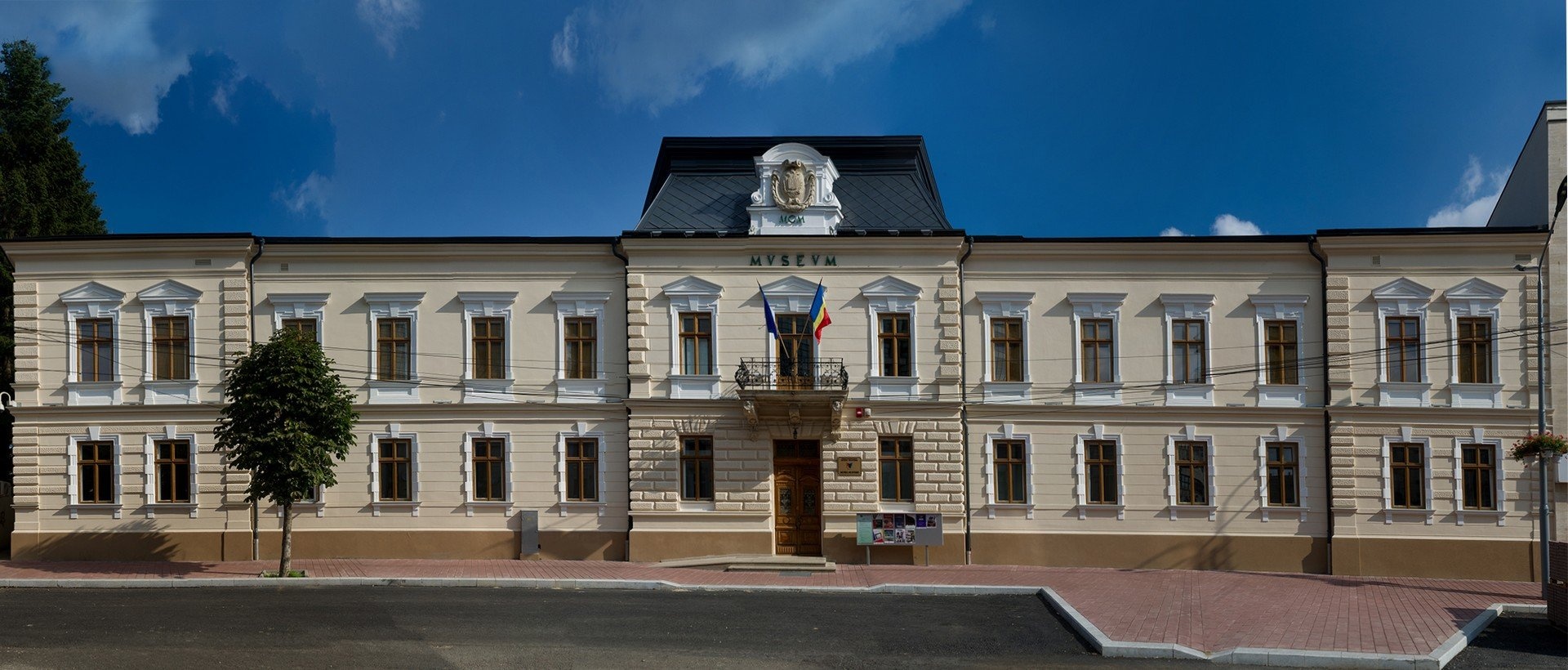
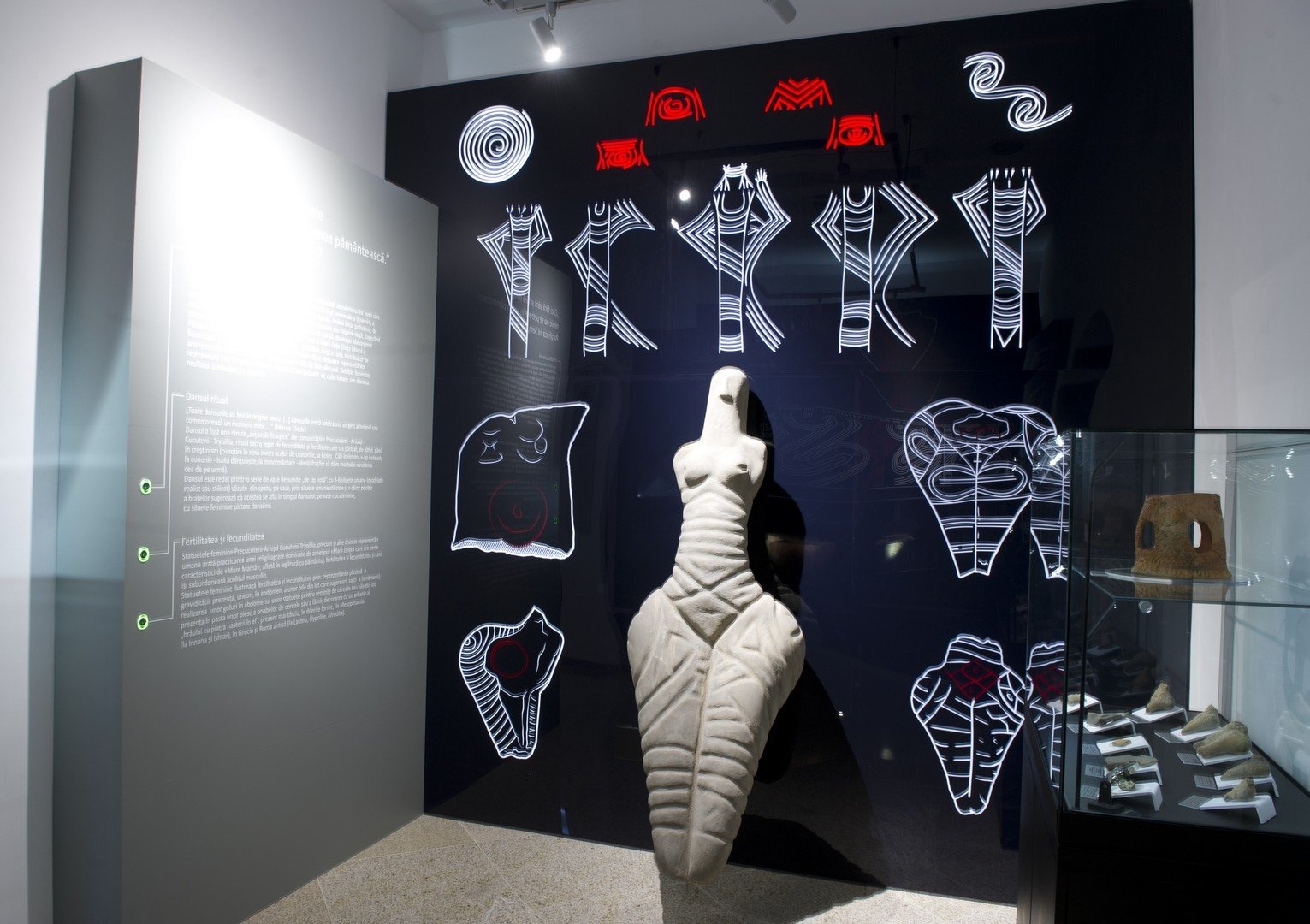
A museum in the former Austrian district office
The History Museum (Muzeul de Istorie) in Suceava is the main exhibition of the Bukovina National Museum (Muzeul Național al Bucovinei), the oldest museum institution in the region. It tells the story of a land that for more than a century was the heart of the Principality of Moldavia: Suceava was the main residence of the Moldavian princes until the capital moved to Iași. Later, the northern part of Moldavia became Austrian Bukovina and, after 1918, part of Romania — and all these eras are reflected in the exhibition.
The museum occupies a building put up in 1902–1903 to designs by the Austrian architect Julius Bochner for the district office (Kreisamt) of Bukovina. After 1918 it housed the county prefecture, and since 1968 the museum's history department. In 2014–2016 the building was restored and enlarged to about 5,000 square metres; the Habsburg coat of arms returned to the pediment, and the new permanent exhibition opened on 31 July 2016. The institution itself goes back to the early 20th century: the first exhibition of the town museum opened in 1906, while the Seat Fortress was being restored.
Why go
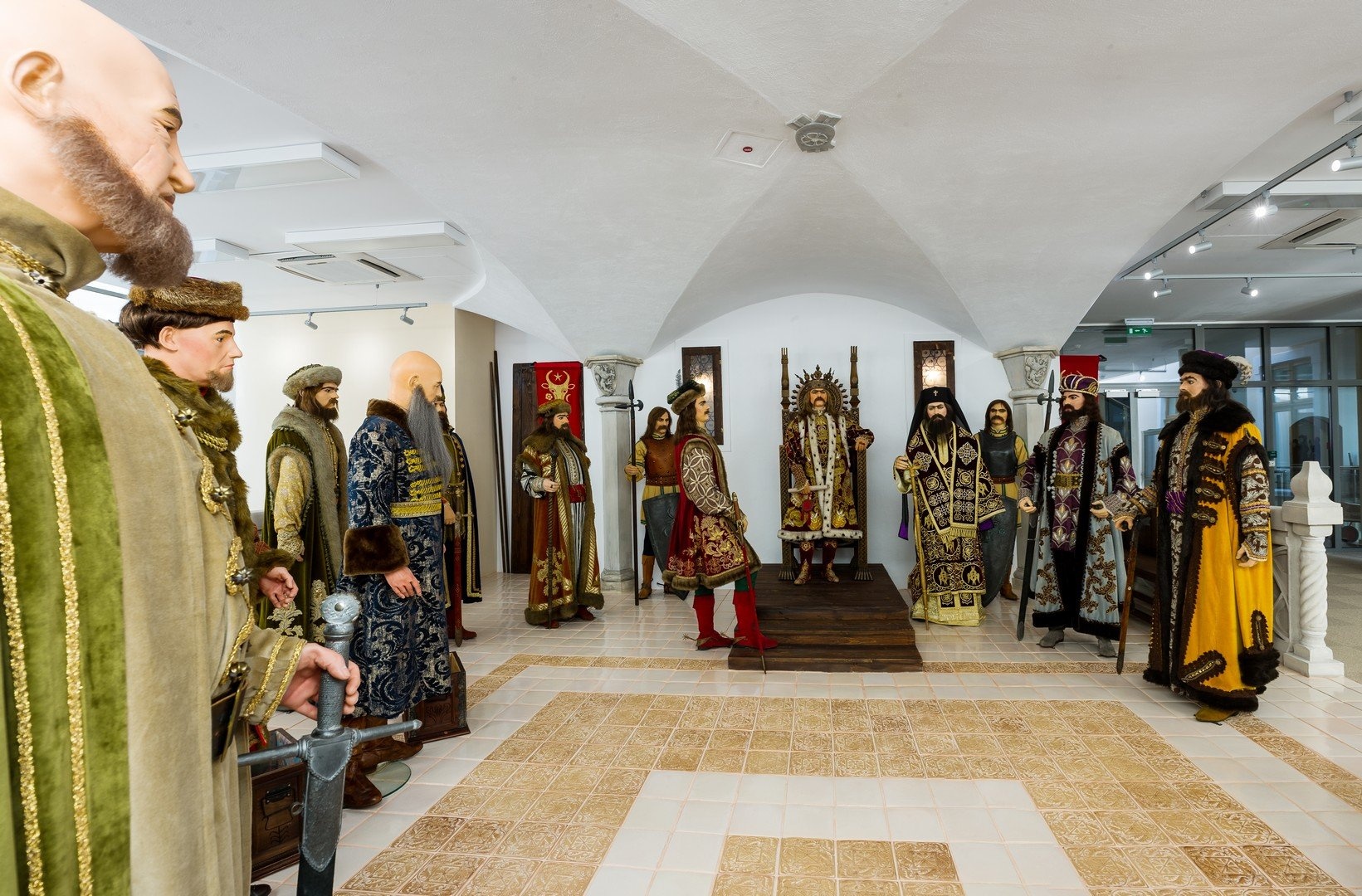
If you came to Bukovina for its painted monasteries, this museum helps you understand who built them and in what circumstances. The exhibition in 27 rooms runs chronologically from Palaeolithic finds to the events of December 1989 in Suceava, and touchscreens in every room explain the context of each object. The best-known part is the reconstruction of the Princely Council Hall from the time of Stephen the Great, with figures of the prince, boyars, clergy and foreign envoys in costumes hand-sewn after historical models. A separate treasury in the basement rooms shows the region's most precious archaeological finds. The museum is in the town centre, so it combines easily with a walk around old Suceava.
What to see
- The Princely Council Hall (Sala Sfatului Domnesc, formerly the "Throne Hall"), opened in 1980: a reconstruction of the Moldavian princes' audience hall using fragments of real 15th-century architecture — columns, capitals, keystones and floor tiles from Suceava.
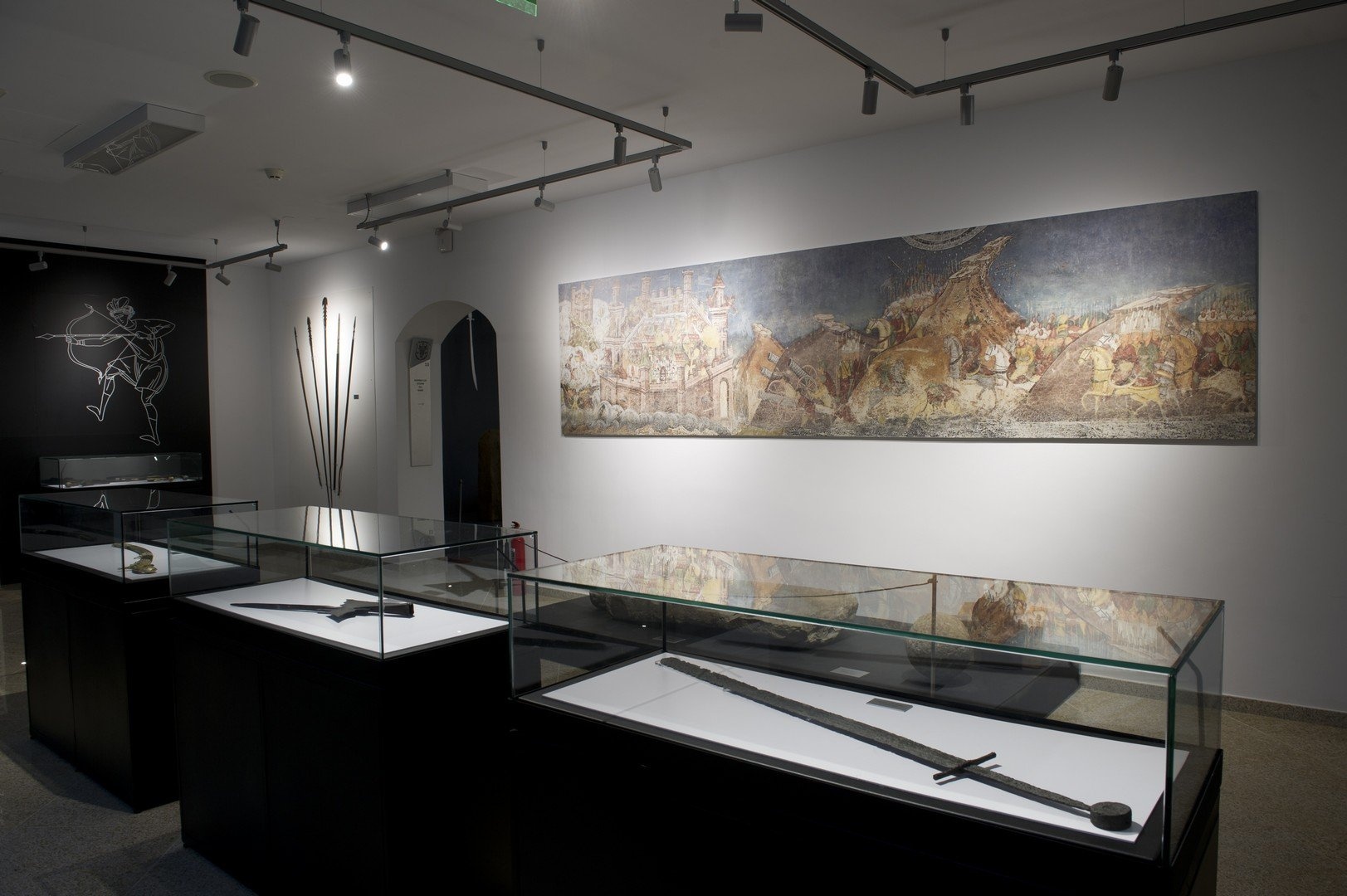
- The archaeology rooms (rooms one to fifteen): jewellery, weapons, tools, coins, pottery and rare archaeological textiles.
- The treasury of four rooms: from Scythian plaques of the 6th century BC found at Cajvana to finds from the princely tombs in St Nicholas Church in Rădăuți and at Probota Monastery.
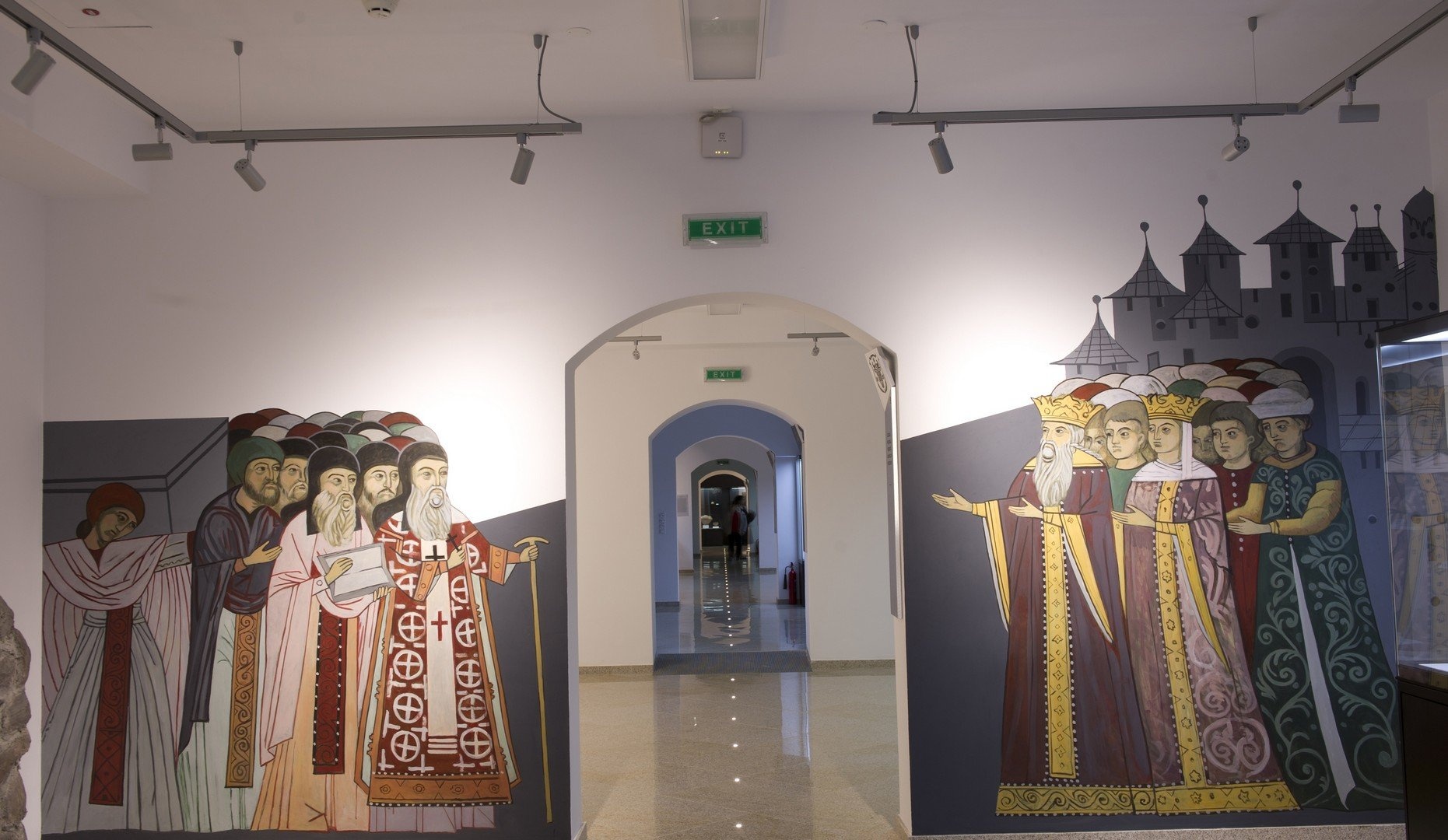
- The medieval rooms with copies of frescoes, weapons, coats of arms and stove tiles.
- The Austrian period and the 20th century: town interiors, a horse-drawn carriage, the world wars, the communist period and the 1989 revolution.
- The virtual tour "Suceava around 1900", showing the town's old buildings destroyed in the communist era.
Practical information
Address: Strada Ștefan cel Mare 33, 720003 Suceava, in the town centre. The Porubne–Siret border crossing from Ukraine is about 45 km away. Opening hours per the official website: 1 April – 31 October, Tuesday–Sunday 10:00–18:00; 1 November – 31 March, Tuesday–Sunday 9:00–17:00; last entry half an hour before closing; closed on Mondays. Ticket for the permanent exhibition: adults 16 lei, pupils and students 4 lei, pensioners 8 lei; you can also visit only the Council Hall, the treasury or individual sections (4 lei each for adults), and virtual reality costs 5 lei. Tickets are also sold online on the museum's website. Information as of November 2026. Allow 1.5–2 hours. Phone: +40 230 216 439, e-mail: [email protected].
Nearby
- The Church of St George of the Monastery of St John the New, a few hundred metres away in the town centre.
- The Bukovina Village Museum, an open-air museum 1.5 km away next to the Seat Fortress (the fortress itself has been temporarily closed for restoration since 12 October 2026).
- Dragomirna Monastery, about 13 km to the north.
- The church in Pătrăuți, a painted church from the time of Stephen the Great.
- Bogdana Monastery in Rădăuți, one of the oldest stone churches in Moldavia.
Official website: muzeulbucovinei.ro
Photos: Muzeul Național al Bucovinei, official website.
Getting there from Ukraine
Border crossings
- Porubne – Siret — road and pedestrian, 24/7
- Diakivtsi – Racovăț — road and pedestrian, 24/7 No freight traffic.
- Krasnoilsk – Vicovu de Sus — road and pedestrian, 08:00–20:00 Cars up to 3.5 t and pedestrians only; not 24/7.
- Solotvyno – Sighetu Marmației — road and pedestrian, 24/7 Passenger traffic only: vehicles up to 3.5 t with up to 9 seats, pedestrians.
- Diakove – Halmeu — road, 24/7 No pedestrian crossing.
By car
Chernivtsi – Câmpulung Moldovenesc ≈121 km, ≈2 h 12 min (via Krasnoilsk – Vicovu de Sus); Ivano-Frankivsk – Câmpulung Moldovenesc ≈239 km, ≈4 h 12 min (via Krasnoilsk – Vicovu de Sus); Rakhiv – Câmpulung Moldovenesc ≈217 km, ≈4 h 35 min (via Solotvyno – Sighetu Marmației). Times without border queues, our road routing (GraphHopper, OSM).
Checked 03.11.2026; border crossing hours and timetables change — check before you travel.
Comments
Travellers’ experience: reports, tips, questions.
No one has written here yet. Be the first — your experience helps others.
Location on the map
Nearby attractions
 MuseumBukovina Village Museum in Suceava: open-air museum1.1 km from History Museum in Suceava: the Princely Council HallA Bukovinian village below the fortress walls The Bukovina Village Museum (Muzeul Satului Bucovinean) is an open-air museum on a plateau on the eastern edge of Suceava...
 ChurchDragomirna Monastery: a fortified stone convent in Bucovina13 km from History Museum in Suceava: the Princely Council HallDragomirna Monastery (Mănăstirea Dragomirna) stands among the gentle hills of Bucovina, about 12 km north of Suceava, the former capital of the Principality of Moldavia.
 CastleNeamț Citadel: Stephen the Great's fortressTârgu Neamț48 km from History Museum in Suceava: the Princely Council HallNeamț Citadel (Cetatea Neamț) is a medieval stone stronghold of the Principality of Moldavia on the north-western edge of the town of Târgu Neamț.
Craft nearby
All craft places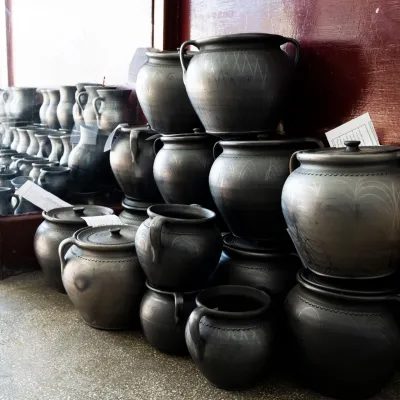 Crafts & workshopsBlack pottery of Marginea: the Magopăț family workshopMarginea39 km from History Museum in Suceava: the Princely Council HallBlack pottery of Marginea: the sixth generation of the Magopăț family Marginea is a large village in the Romanian part of Bukovina, between the town of Rădăuți and...
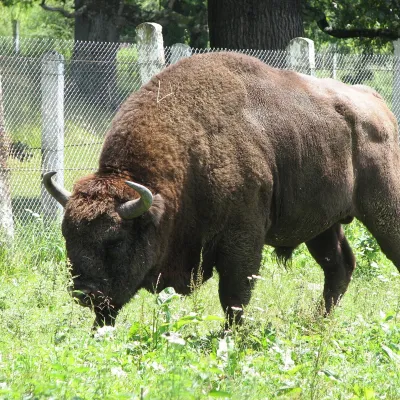 Wildlife parks & animal farmsBison Safari in Vânători-Neamț: a guided walk with a rangerMănăstirea Neamț45 km from History Museum in Suceava: the Princely Council HallThe first place in Romania where the bison came back Vânători-Neamț Natural Park lies on the eastern slopes of the Carpathians near the small town of Târgu Neamț, in a...
