Dragomirna Monastery: a fortified stone convent in Bucovina
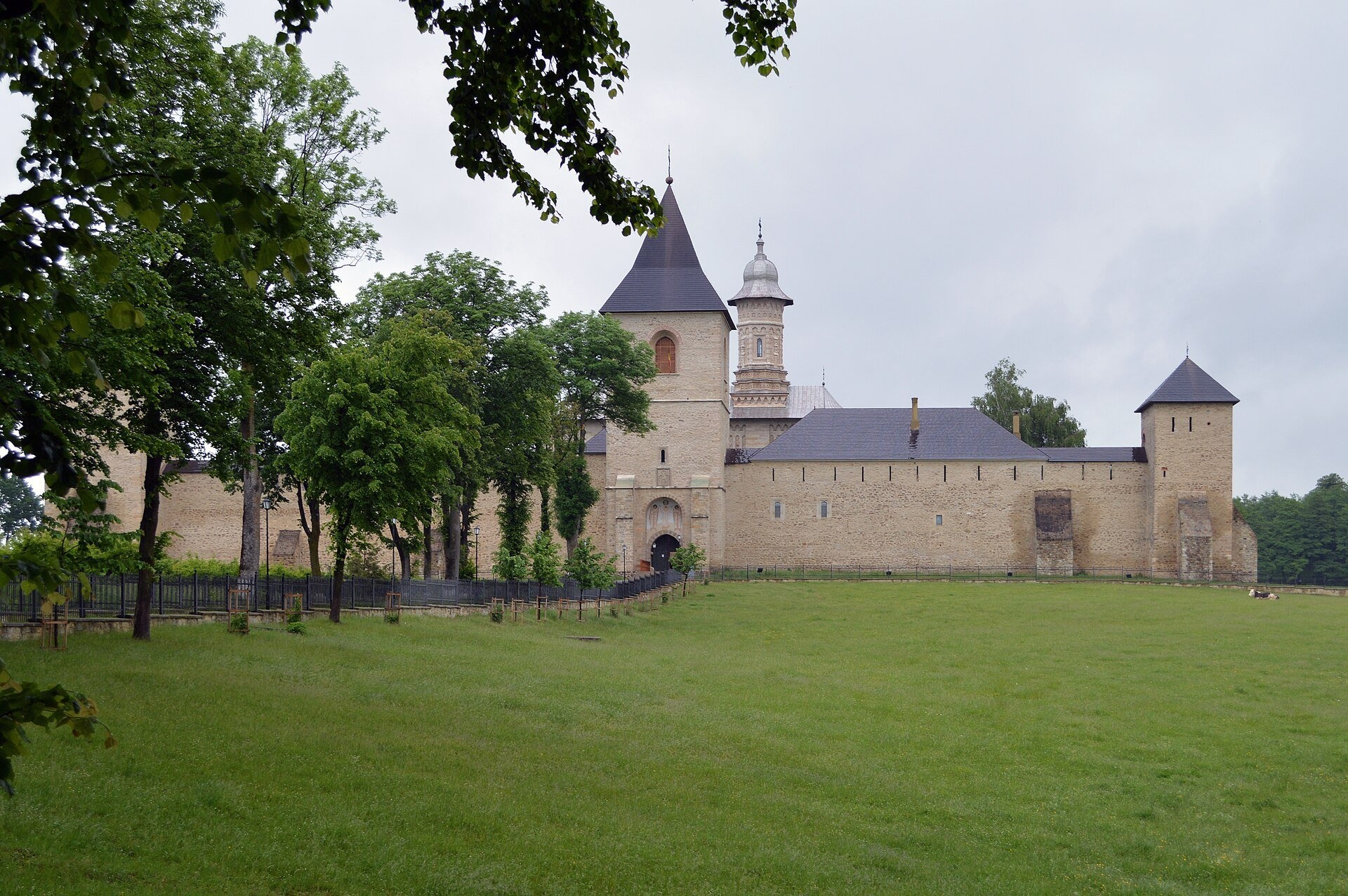
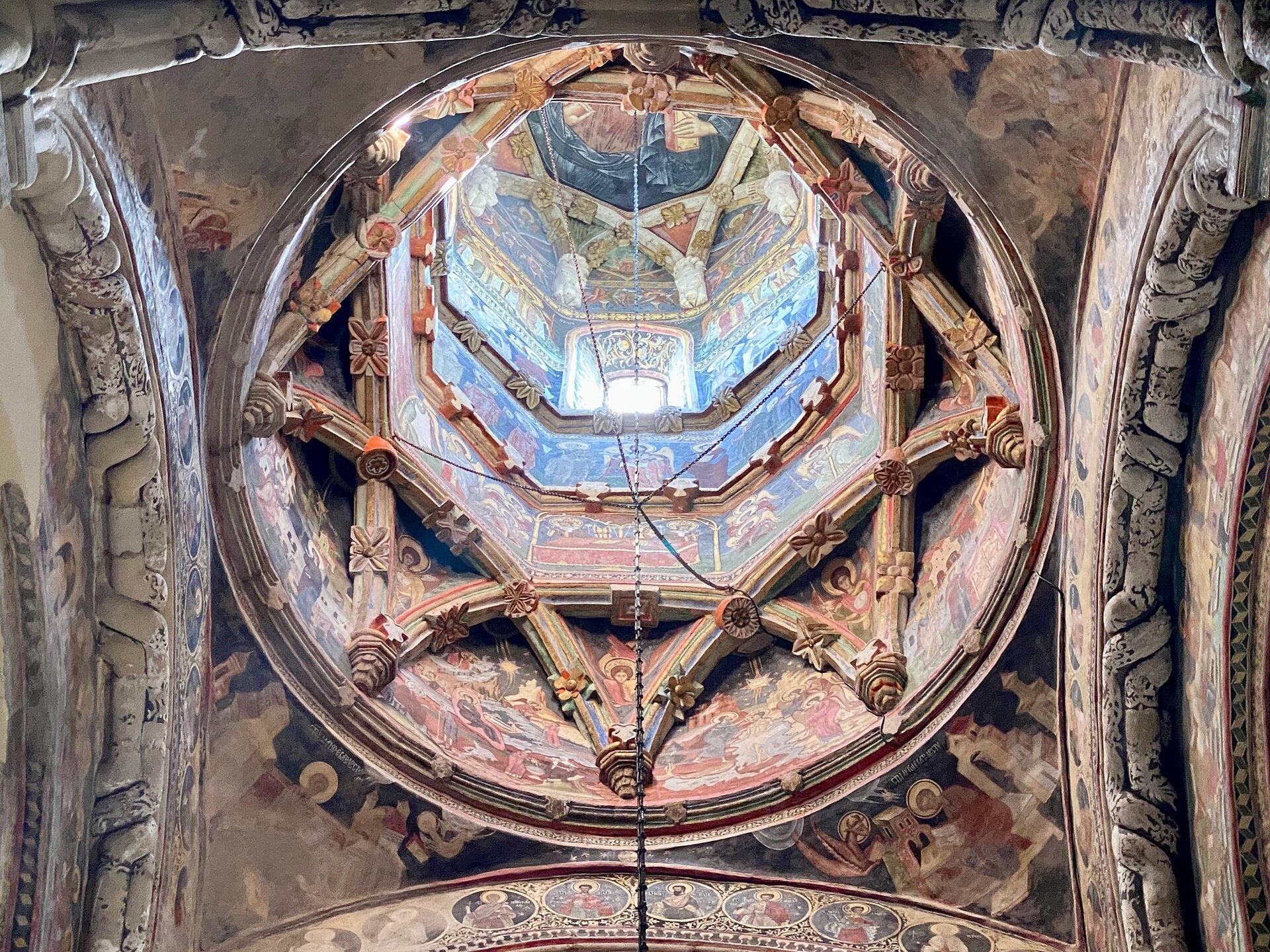
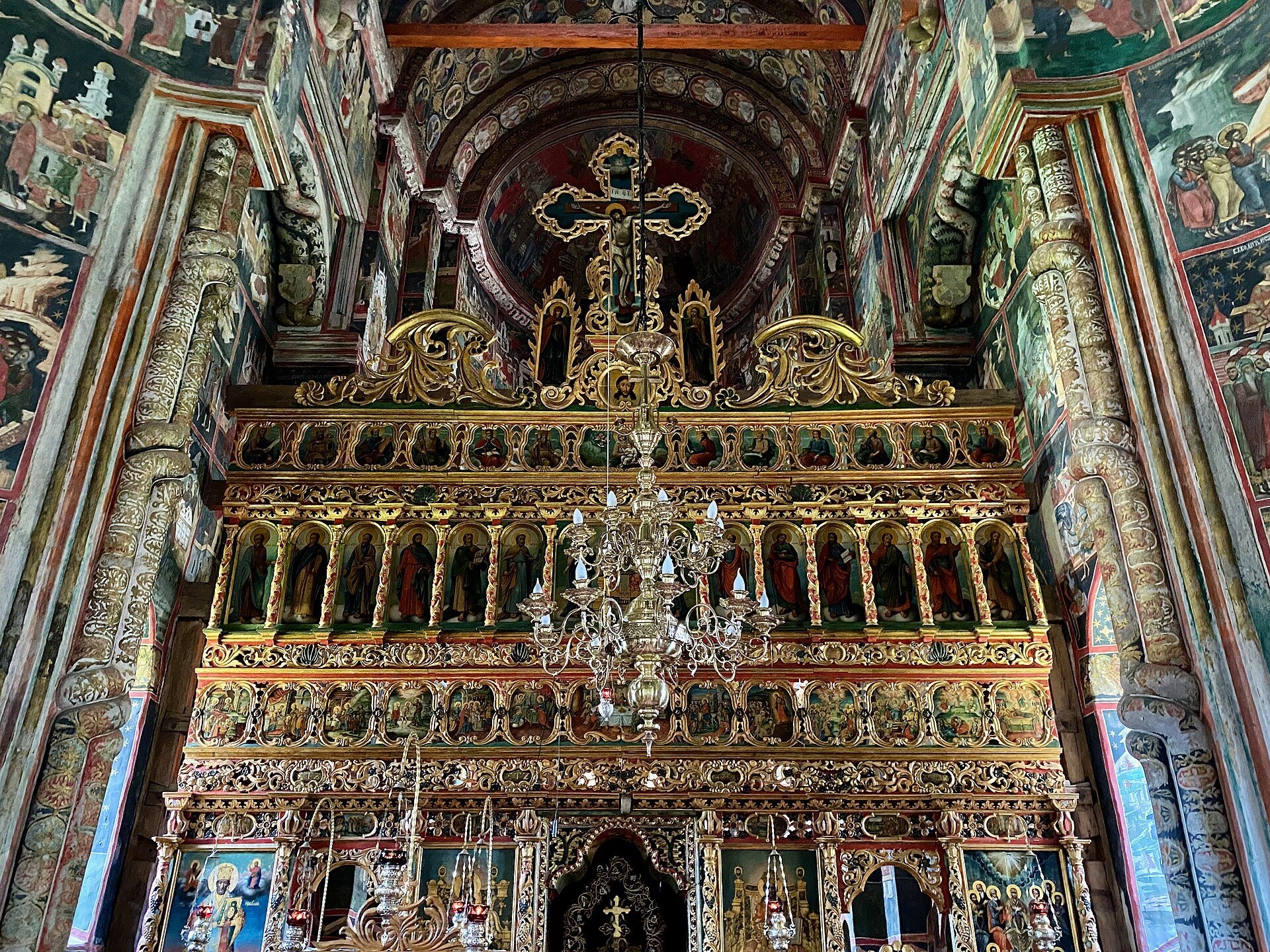
Dragomirna Monastery (Mănăstirea Dragomirna) stands among the gentle hills of Bucovina, about 12 km north of Suceava, the former capital of the Principality of Moldavia. It is an active Orthodox convent of the Romanian Orthodox Church and, at the same time, one of the most unusual monuments of Moldavian architecture: instead of the painted façades typical of Bucovina, here a tall church of dressed stone rises inside walls that make the monastery look like a real fortress.
From hermitage to fortified monastery
Its story begins in 1602, when Anastasie Crimca, former Bishop of Rădăuți, together with the Grand Logothete Luca Stroici and his brother Simion, built a small hermitage church. By 1609 Crimca, by then Metropolitan of Moldavia, had completed the large church dedicated to the Descent of the Holy Spirit. In 1627 Prince Miron Barnovschi surrounded the monastery with massive walls and towers. In 1653 the monastery was plundered by the Cossacks of Tymish Khmelnytsky, as the Moldavian chronicler Miron Costin recorded, and in 1758 by the Tatars. In the 18th century St Paisius Velichkovsky, a native of Poltava, lived and taught monks here, and the monastery still honours him among its founders.
Why go
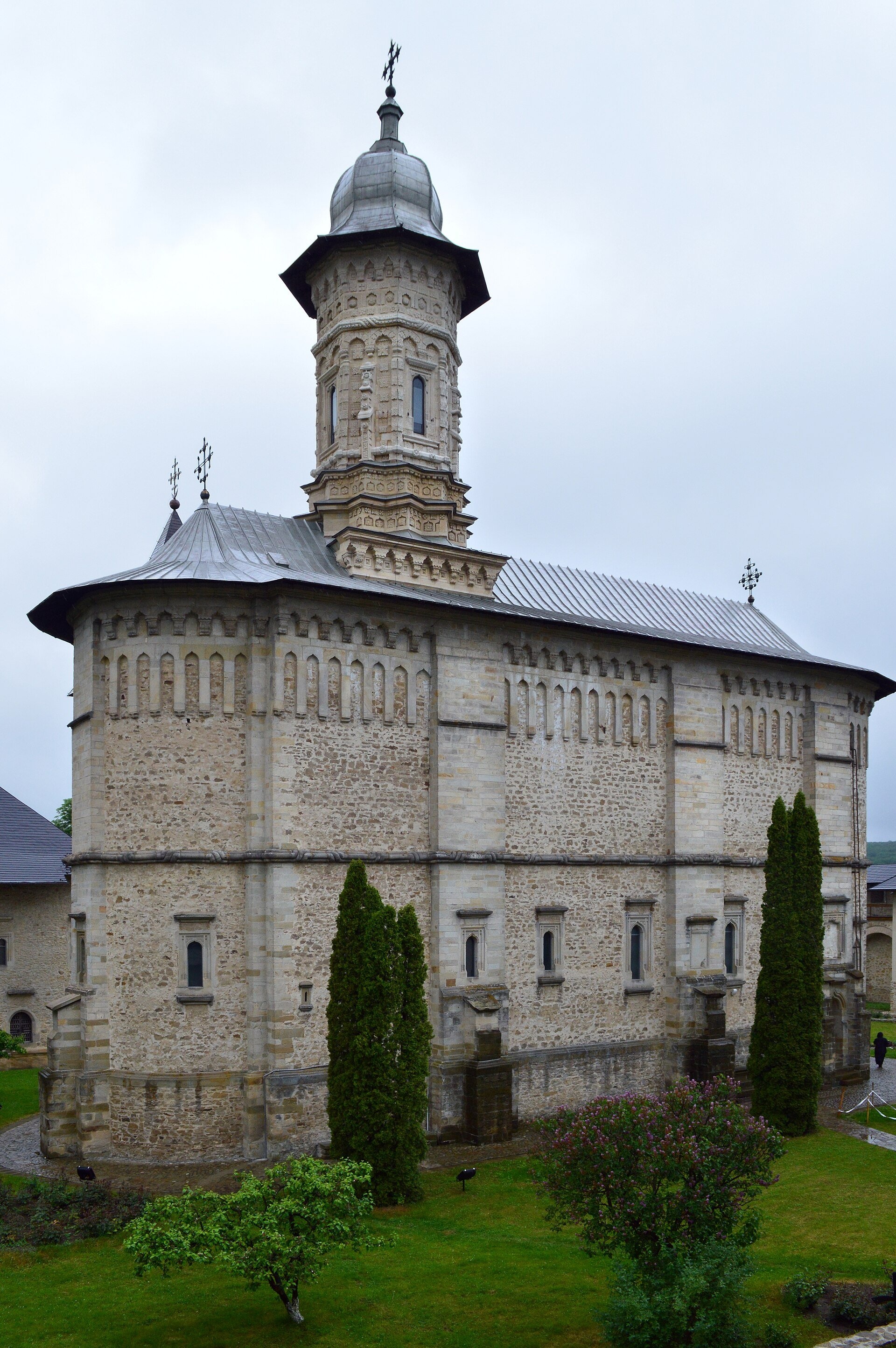
Dragomirna is striking for its proportions: the large church is about 35 m long, only 9.5 m wide and almost 42 m high. The historian Nicolae Iorga compared it to a tall, narrow reliquary. The stone lacework on the drum of the tower, the carved rope-like belt of three twisted mouldings on the façades and the stern walls create an image you will not find in the painted monasteries of Bucovina. It is also quiet: most tourist traffic passes Dragomirna by, and the monastery is surrounded by forest and a lake that reflects its walls.
What to see
- The large Church of the Descent of the Holy Spirit (1609) — rubble-stone façades with dressed-stone pilasters, a twisted stone belt halfway up and a richly carved tower above the nave.
- The frescoes inside — Christ Pantocrator in the dome and the Ascension on a vivid red background in the altar apse; the names of the painters Popa Crăciun Mătieș, Popa Ignat and Gregorie are carved into the altar wall.
- The miracle-working icon of the Mother of God in a silver cover, framed by an iconostasis of 2003, and a relic of St James the Persian.
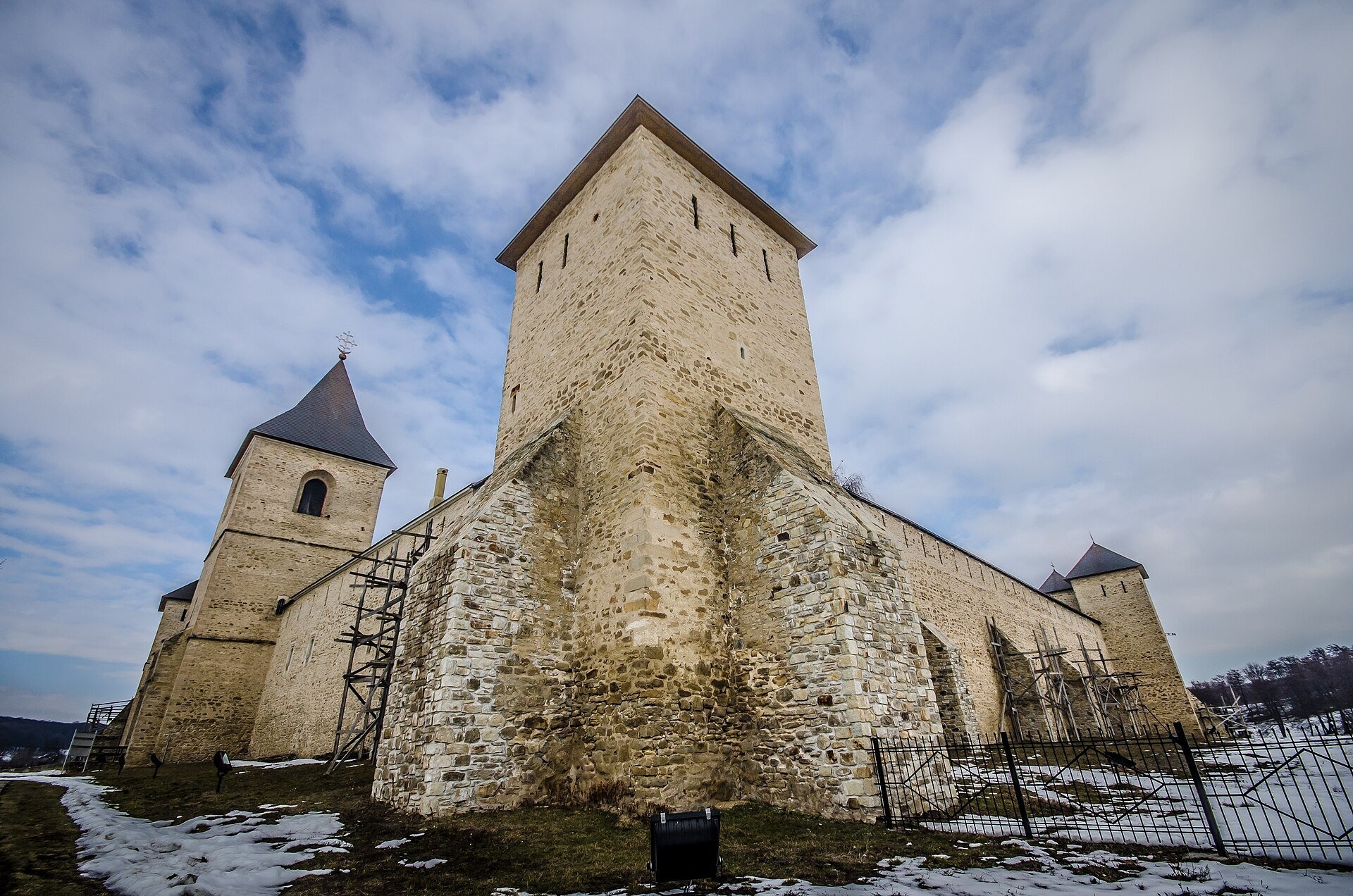
- The defensive walls of 1627 — about 11 m high, with a bell tower above a vaulted gateway and four corner towers.
- The Gothic hall of the former abbot's refectory, with ribs fanning out from an octagonal pillar — it houses the monastery museum: manuscripts from the Dragomirna school of calligraphers, epitaphioi embroidered with gold thread in 1612 and 1626, and a carved cross of 1624.
- The small hermitage church (1602) in the monastery cemetery outside the walls, with its rare dedication to Saints Enoch, Elijah and John the Theologian.
Practical information
Address: strada Dragomirnei 1, Dragomirna village, Mitocu Dragomirnei commune, Suceava County, 727366. From Suceava drive towards Rădăuți; in the Ițcani district, after the railway bridge, turn right towards Mitocu Dragomirnei and continue about 3 km beyond the village. City bus line M106 runs from the centre of Suceava (Ștefan cel Mare stop) roughly every two hours on weekdays and at weekends. From Ukraine the nearest border crossing is Porubne – Siret, about 40 km away. Monastery phone: +40 741 348 348 (weekdays 10:00–12:00 and 13:00–17:00). Services are held every morning and at 17:00 (Vespers); on Sunday the Liturgy starts at 7:30 (according to the schedule on the monastery website, as of November 2026). The monastery does not publish official visiting hours or museum prices — check before you go. This is an active convent: dress modestly, keep quiet and do not disturb prayer during services. The monastery does not offer pilgrim accommodation and does not hold weddings or baptisms. Allow about an hour for the church, the walls and the museum.
Nearby
- Suceava, with St George's Church of the Monastery of St John the New (UNESCO), the Bucovina History Museum and the Bucovina Village Museum; the Seat Fortress of Suceava is temporarily closed for restoration.
- The church in Pătrăuți, the oldest of the UNESCO painted churches, about 20 km away.
- Bogdana Monastery in Rădăuți, the oldest stone church in Moldavia, about 40 km away.
- Putna Monastery, burial place of Stephen the Great, about 70 km away.
Official website: manastireadragomirna.ro
Photos: DimiTalen, CC0, Wikimedia Commons; petrache cristian photography, CC BY-SA 3.0, Wikimedia Commons; Josep Renalias Lohen11, CC BY 4.0, Wikimedia Commons; Alessio Damato, CC BY-SA 3.0, Wikimedia Commons; Codrinanton, CC BY-SA 3.0 ro, Wikimedia Commons; Cezar Suceveanu, CC BY-SA 3.0 ro, Wikimedia Commons.
Getting there from Ukraine
Border crossings
- Porubne – Siret — road and pedestrian, 24/7
- Diakivtsi – Racovăț — road and pedestrian, 24/7 No freight traffic.
- Krasnoilsk – Vicovu de Sus — road and pedestrian, 08:00–20:00 Cars up to 3.5 t and pedestrians only; not 24/7.
- Solotvyno – Sighetu Marmației — road and pedestrian, 24/7 Passenger traffic only: vehicles up to 3.5 t with up to 9 seats, pedestrians.
- Diakove – Halmeu — road, 24/7 No pedestrian crossing.
By car
Chernivtsi – Câmpulung Moldovenesc ≈121 km, ≈2 h 12 min (via Krasnoilsk – Vicovu de Sus); Ivano-Frankivsk – Câmpulung Moldovenesc ≈239 km, ≈4 h 12 min (via Krasnoilsk – Vicovu de Sus); Rakhiv – Câmpulung Moldovenesc ≈217 km, ≈4 h 35 min (via Solotvyno – Sighetu Marmației). Times without border queues, our road routing (GraphHopper, OSM).
Checked 03.11.2026; border crossing hours and timetables change — check before you travel.
Comments
Travellers’ experience: reports, tips, questions.
No one has written here yet. Be the first — your experience helps others.
Video 2
 Mănăstirea Dragomirna 4k #bucovina #drone #ortodoxMihai Grosu

Location on the map
Nearby attractions
 ChurchPătrăuți Church: Stephen the Great's oldest, UNESCOPărhăuți4.2 km from Dragomirna Monastery: a fortified stone convent in BucovinaThe Church of the Exaltation of the Holy Cross in the village of Pătrăuți stands about 10 km north-west of the city of Suceava, the old capital of the Principality of...
 MuseumHistory Museum in Suceava: the Princely Council Hall13 km from Dragomirna Monastery: a fortified stone convent in BucovinaA museum in the former Austrian district office The History Museum (Muzeul de Istorie) in Suceava is the main exhibition of the Bukovina National Museum (Muzeul...
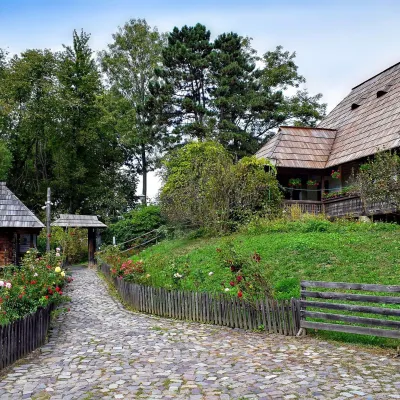 MuseumBukovina Village Museum in Suceava: open-air museum13 km from Dragomirna Monastery: a fortified stone convent in BucovinaA Bukovinian village below the fortress walls The Bukovina Village Museum (Muzeul Satului Bucovinean) is an open-air museum on a plateau on the eastern edge of Suceava...