Agapia Monastery: Nicolae Grigorescu's paintings
A convent with paintings by Nicolae Grigorescu
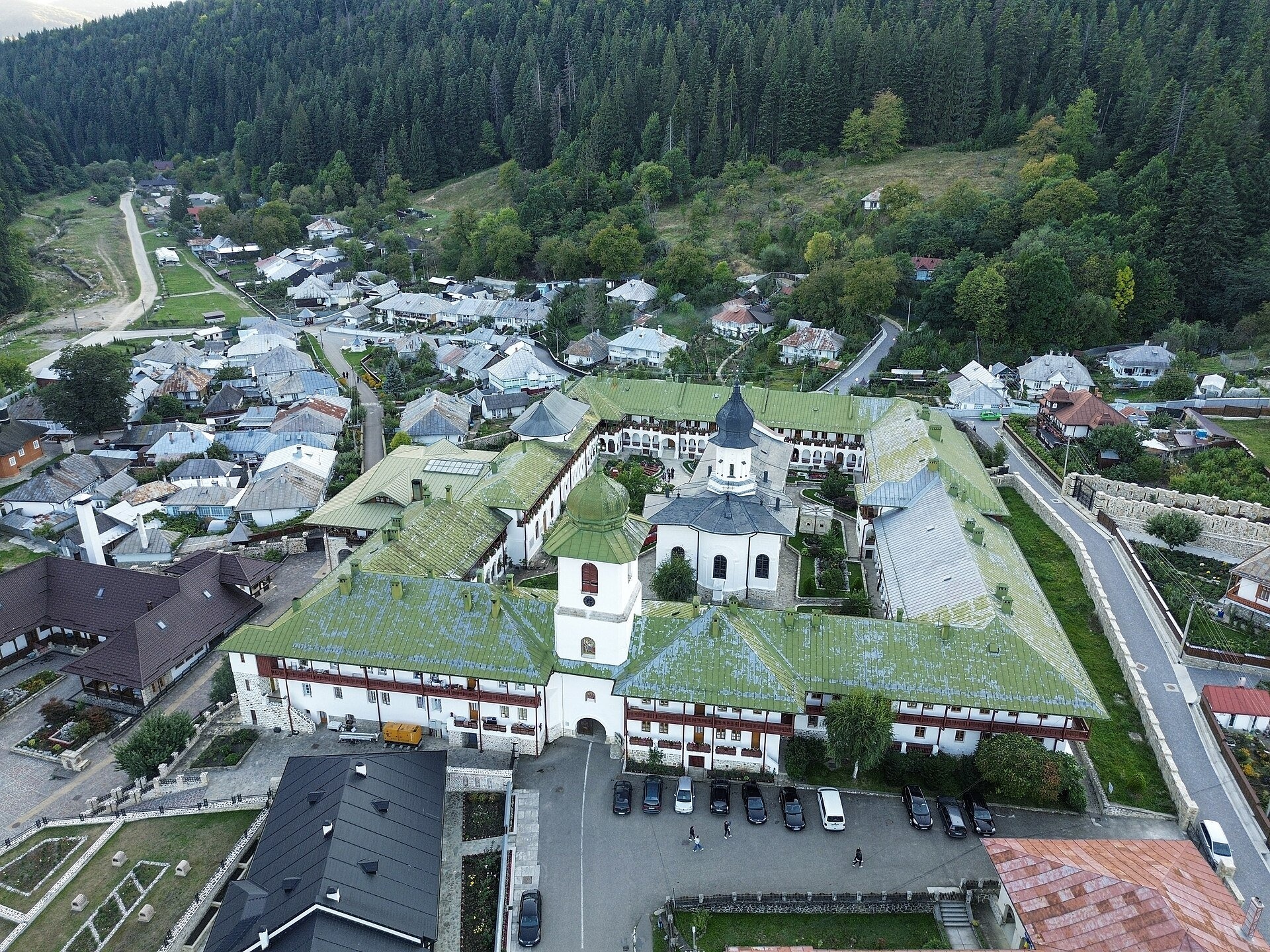
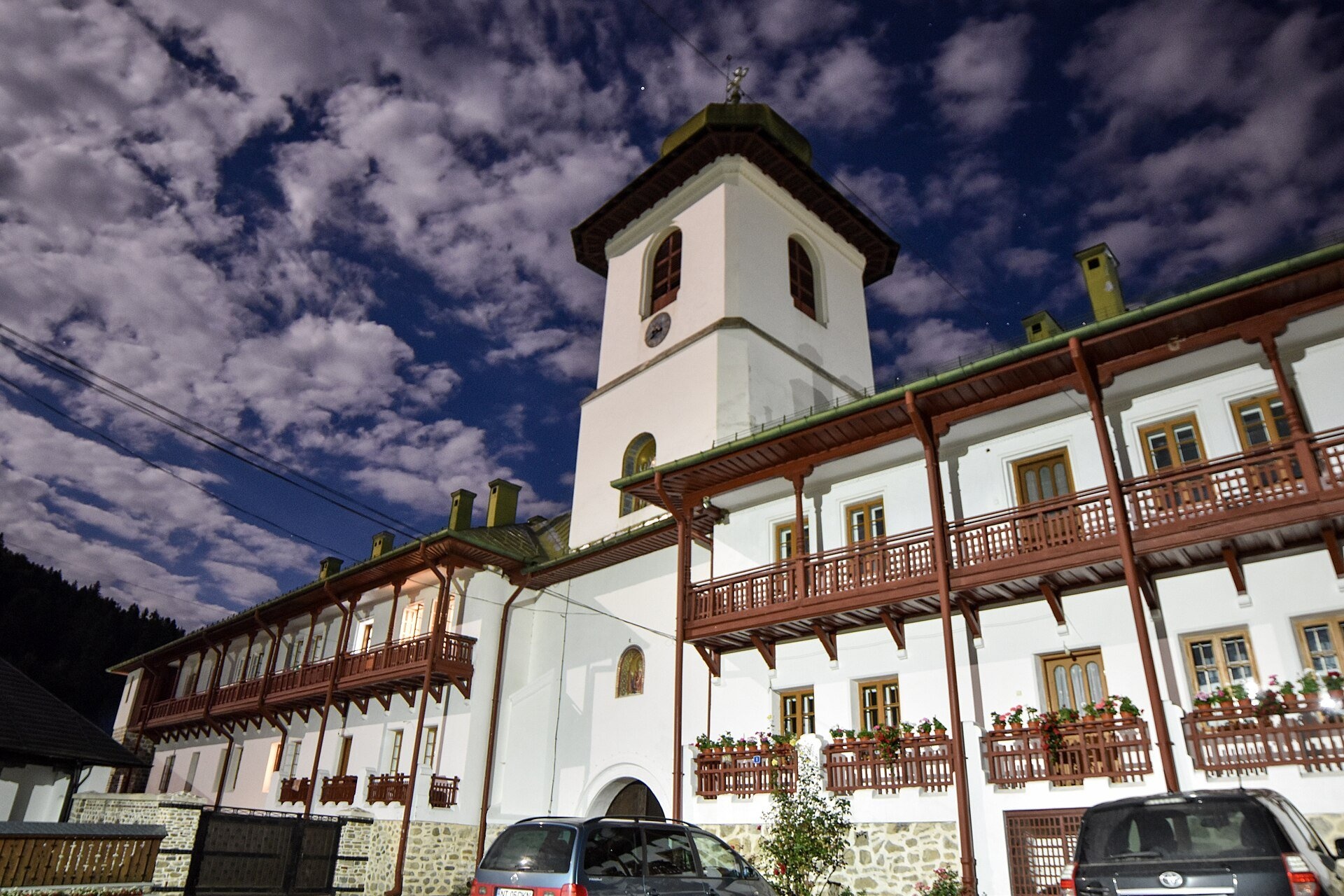
Agapia Monastery (Mănăstirea Agapia), also called New Agapia or Agapia of the Valley, is an active convent of the Romanian Orthodox Church in the valley of the Agapia stream, about 9 km from the town of Târgu Neamț. It is one of the largest convents in Romania. The name comes from the hermit Agapie, who lived in a glade higher up in the hills where the Old Agapia skete stands today; at the beginning of the 17th century the monks moved down into the more accessible valley and built a wooden church here.
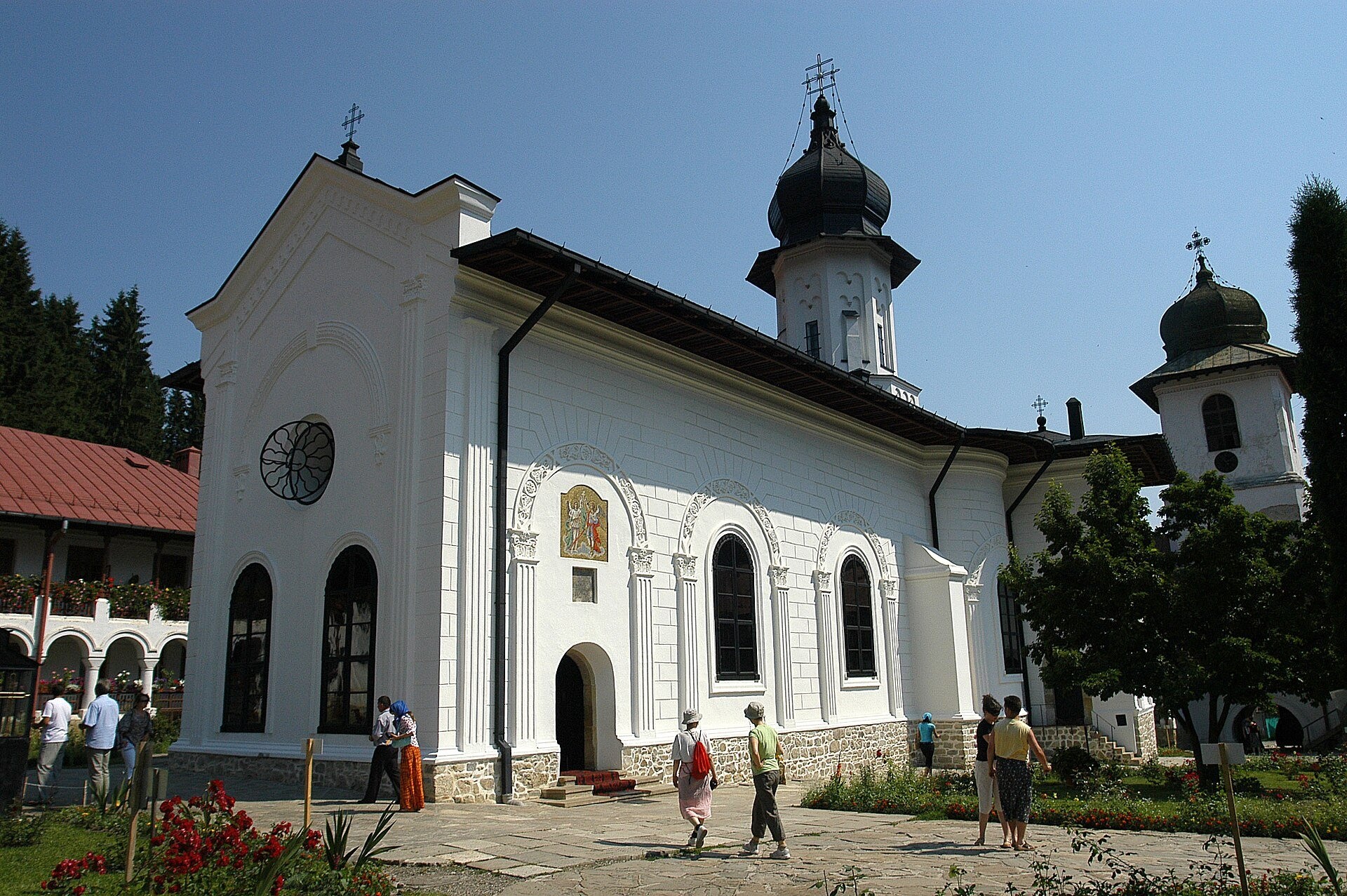
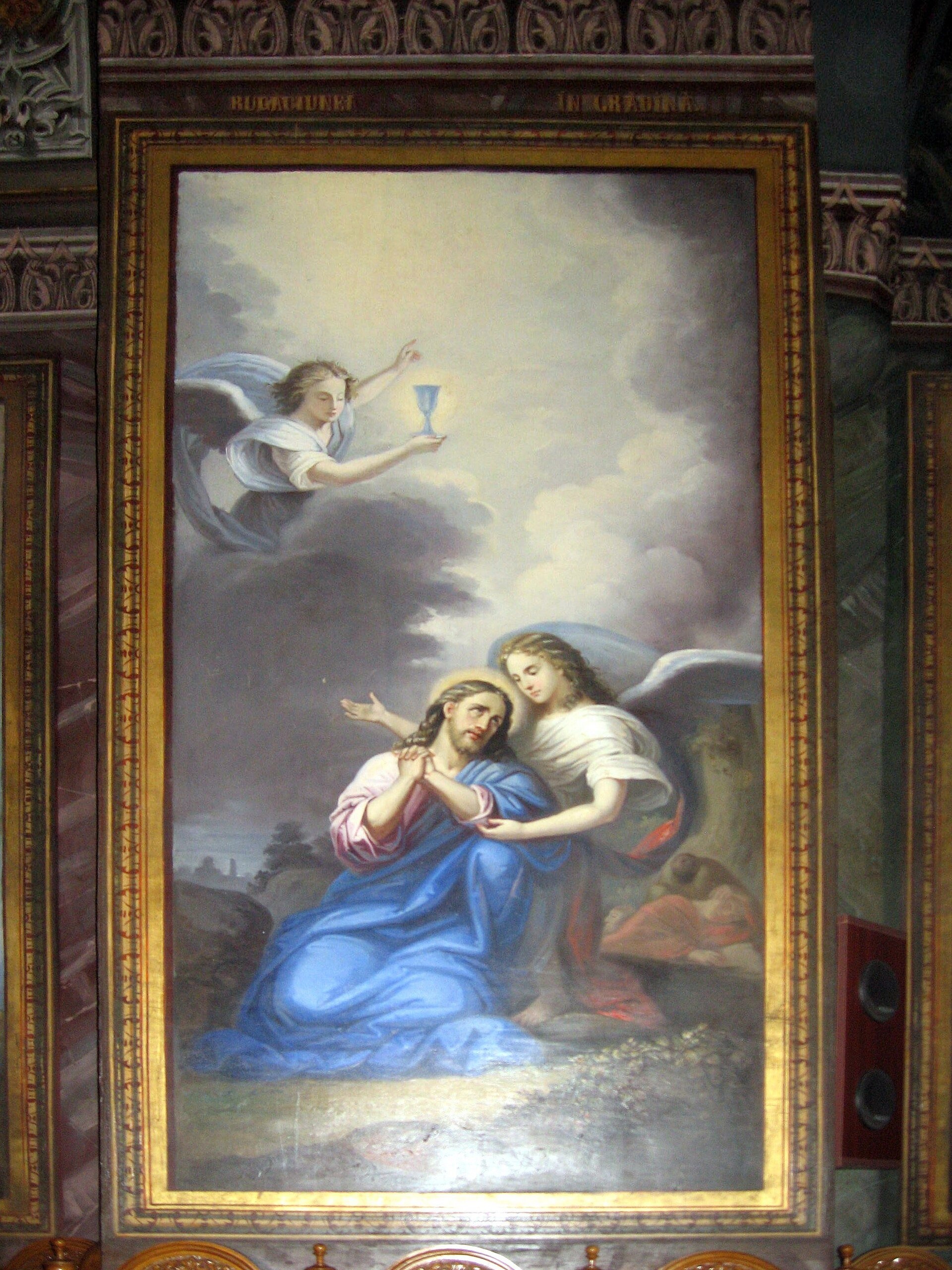
The present stone Church of the Holy Archangels Michael and Gabriel was built in 1641–1643 by Hetman Gavriil Coci, brother of the Moldavian Prince Vasile Lupu, and consecrated by Metropolitan Varlaam on 12 September 1646. The monastery was damaged several times in the wars of the late 17th century, and in 1821 it was set on fire by Ottoman troops. From 1803, by decision of Metropolitan Veniamin Costache, Agapia became a convent with a school where nuns learned church chant, embroidery and weaving. In 1858–1861 Abbess Tavefta Ursache invited the twenty-year-old Nicolae Grigorescu, later one of the best-known Romanian painters, and he painted the interior of the church. A major restoration of the monument, including Grigorescu's paintings, was completed in 2009.
Why go
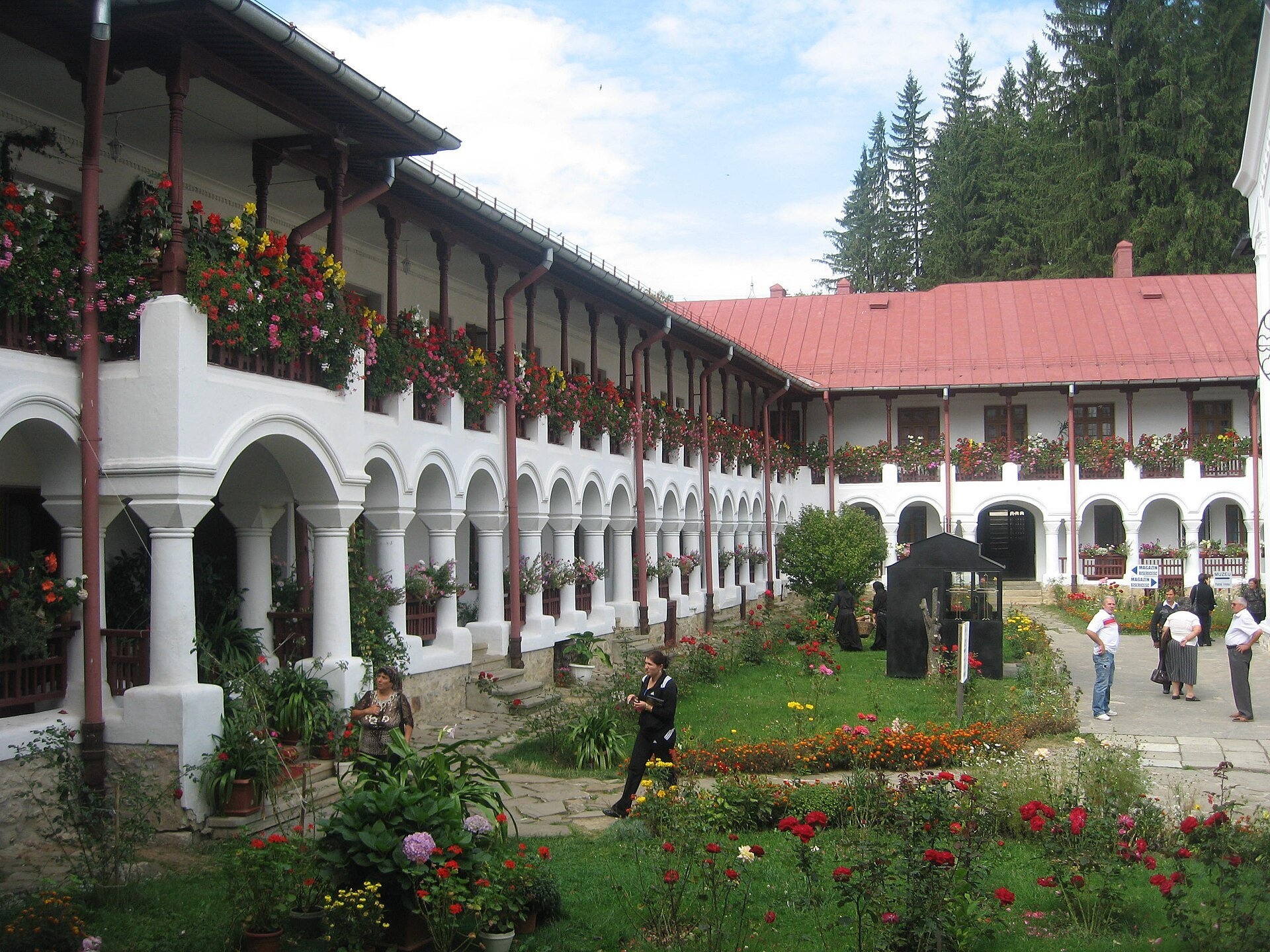
Agapia is a rare example of a church painted not in the canonical Byzantine manner but by a young academic artist who later became a classic of Romanian painting: his saints have lively, portrait-like faces. Around the monastery lies a whole monastic village of whitewashed cottages, flower gardens and workshops, and the complex sits in a wooded valley among the Muncelu, Ciungi, Bogoslov and Crucii hills. Agapia combines easily with Văratec and Sihla monasteries and with Neamț Citadel.
What to see
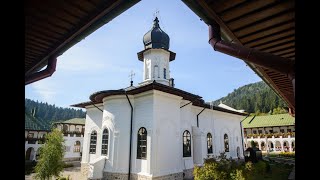
- The Church of the Holy Archangels Michael and Gabriel (1641–1643) with white façades, pilasters and a mosaic icon of the patron feast above the entrance.
- Nicolae Grigorescu's paintings (1858–1861) — images of saints and biblical scenes inside the church.
- The founders' tomb of Hetman Gavriil and his family in the church.
- The monastery museum with Moldavian and foreign icons of the 17th–18th centuries, icons by Grigorescu, old books, carpets and church objects.
- The carpet and embroidery workshops for which the convent has been known since the early 19th century.
- The monastic village with the nuns' cottages, among them the memorial house of the writer Alexandru Vlahuță (a museum since 1966).
- The wooden Church of St John the Theologian in the monastery cemetery.
Practical information
Address: Mănăstirea Agapia, comuna Agapia, cod 617005, Neamț County. Phones: +40 233 244 736, +40 768 085 709, e-mail [email protected]. From Târgu Neamț it is about 9 km (through Agapia village; from the village to the monastery about 3 km); from Piatra Neamț about 40 km. From Ukraine: via the Porubne – Siret border crossing and Suceava, about 120 km from the border.
Neither the monastery nor its museum publishes official visiting hours or prices on its website — check before you go. Agapia is an active convent: dress modestly (shoulders and knees covered, a headscarf and skirt are advisable for women), speak quietly and do not enter cells or the nuns' cottages; ask permission before taking photos in the church. The patronal feast is that of the Holy Archangels Michael and Gabriel, 8 November. Allow about an hour and a half for the church, courtyard and museum.
Nearby
- Văratec Monastery — the neighbouring convent a few kilometres away.
- Sihla skete with St Theodora's cave — through the forest higher in the hills.
- Neamț Citadel above Târgu Neamț.
- Neamț Monastery — the oldest monastery of Moldavia.
- Bison safari in Vânători-Neamț.
Official website: agapia.mmb.ro
Photos: Svlad6403, CC BY-SA 3.0 ro, Wikimedia Commons; Curcan ionel, CC BY-SA 4.0, Wikimedia Commons; Cezar Suceveanu, CC BY 3.0, Wikimedia Commons; Cezar Suceveanu, Public domain, Wikimedia Commons; GerritR, CC BY-SA 4.0, Wikimedia Commons.
Getting there from Ukraine
Border crossings
- Porubne – Siret — road and pedestrian, 24/7
- Diakivtsi – Racovăț — road and pedestrian, 24/7 No freight traffic.
- Krasnoilsk – Vicovu de Sus — road and pedestrian, 08:00–20:00 Cars up to 3.5 t and pedestrians only; not 24/7.
- Solotvyno – Sighetu Marmației — road and pedestrian, 24/7 Passenger traffic only: vehicles up to 3.5 t with up to 9 seats, pedestrians.
- Diakove – Halmeu — road, 24/7 No pedestrian crossing.
By car
Chernivtsi – Durău ≈204 km, ≈3 h 54 min (via Diakivtsi – Racovăț); Ivano-Frankivsk – Durău ≈342 km, ≈6 h 11 min (via Diakivtsi – Racovăț); Rakhiv – Durău ≈313 km, ≈6 h 18 min (via Solotvyno – Sighetu Marmației). Times without border queues, our road routing (GraphHopper, OSM).
Checked 03.11.2026; border crossing hours and timetables change — check before you travel.
Comments
Travellers’ experience: reports, tips, questions.
No one has written here yet. Be the first — your experience helps others.
Video 3
 Mănăstirea Agapiaarhiva TVR

Location on the map
Trails nearby
All trails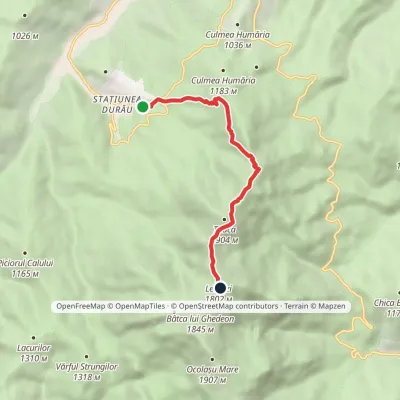 ModerateOne-dayMarkedDurău Dochia HutElevation profile862–1 803 m6.8 kmascent 992 m≈ 3.5 h walking29 km from Agapia Monastery: Nicolae Grigorescu's paintings
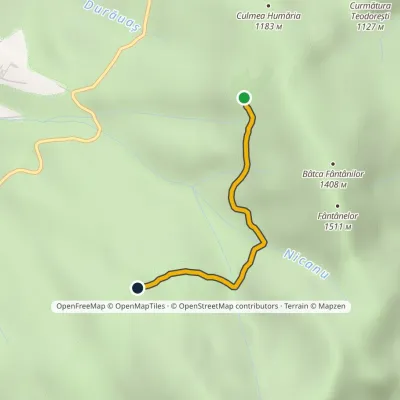 EasyOne-dayMarkedFântânele Hut Poiana VesuriElevation profile1 146–1 237 m2.1 kmascent 57 m≈ 30 min walking29 km from Agapia Monastery: Nicolae Grigorescu's paintings
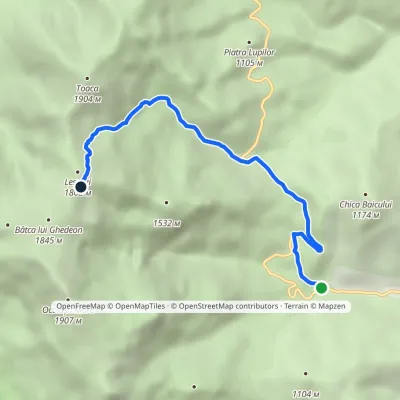 ModerateOne-dayMarkedIzvorul Muntelui Hut Dochia Hutvia Stânca DochieiElevation profile803–1 782 m6.2 kmascent 986 m≈ 3 h walking30 km from Agapia Monastery: Nicolae Grigorescu's paintings
Nearby attractions
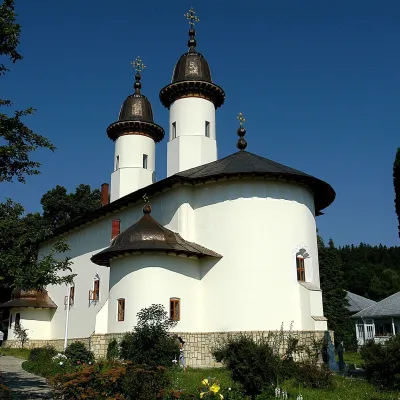 ChurchVăratec Monastery: Romania's largest conventVăratec4.2 km from Agapia Monastery: Nicolae Grigorescu's paintingsA convent founded by disciples of Paisius Velichkovsky Văratec Monastery (Mănăstirea Văratec; spelled Văratic on its official website) is an active convent of the...
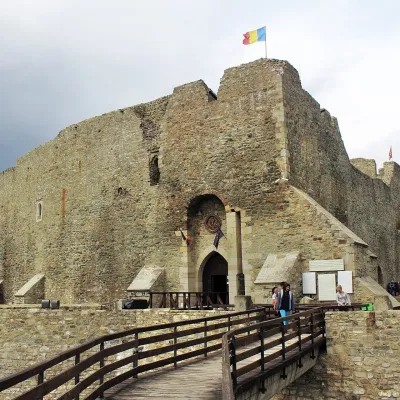 CastleNeamț Citadel: Stephen the Great's fortressTârgu Neamț9.5 km from Agapia Monastery: Nicolae Grigorescu's paintingsNeamț Citadel (Cetatea Neamț) is a medieval stone stronghold of the Principality of Moldavia on the north-western edge of the town of Târgu Neamț.
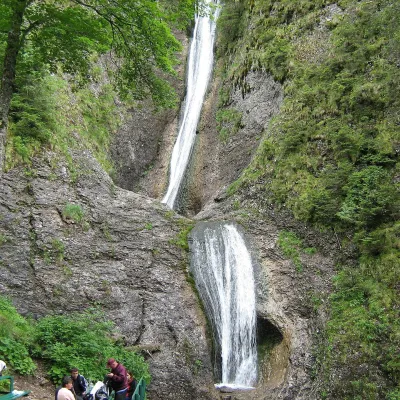 WaterfallDuruitoarea Waterfall (Cascada Duruitoarea)Ceahlău · Ceahlău32 km from Agapia Monastery: Nicolae Grigorescu's paintingsheight 25 m2 cascades1 251 m above sea levelDuruitoarea Waterfall (Cascada Duruitoarea) is a natural monument of national importance in the Ceahlău massif, Neamț County.