Hucul Horse Stud in Wołosate, Bieszczady National Park
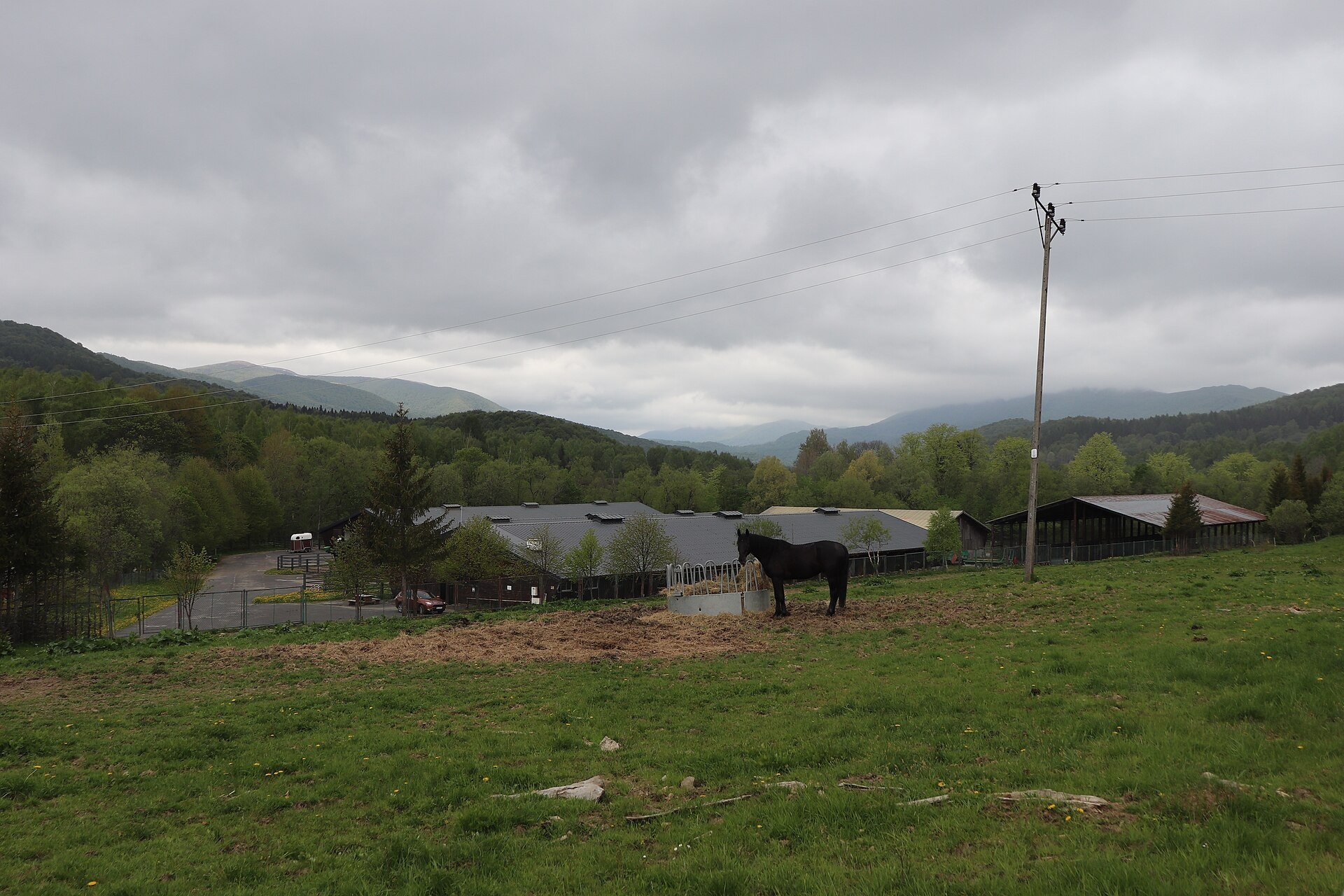
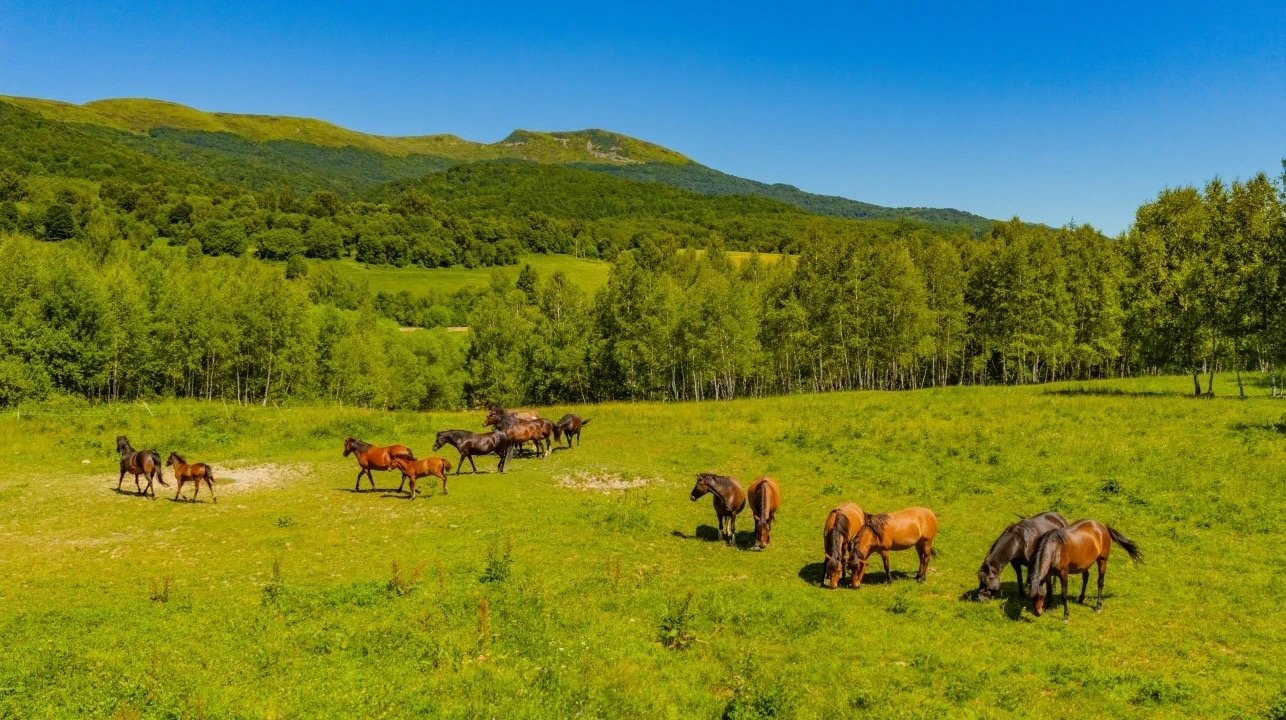
Wołosate is the southernmost inhabited village in Poland, tucked away in the valley of the Wołosatka stream below Tarnica, the highest peak of the Polish Bieszczady. It was once a large Boyko village; after the Second World War it was emptied, and today only a few dozen people live here. Yet it is here, on the edge of Bieszczady National Park (BdPN), that the Hucul Horse Conservation Stud (Zachowawcza Hodowla Konia Huculskiego, ZHKH) has been working since 1993 — a stud that the park itself calls the centre of horse tourism in the Bieszczady.
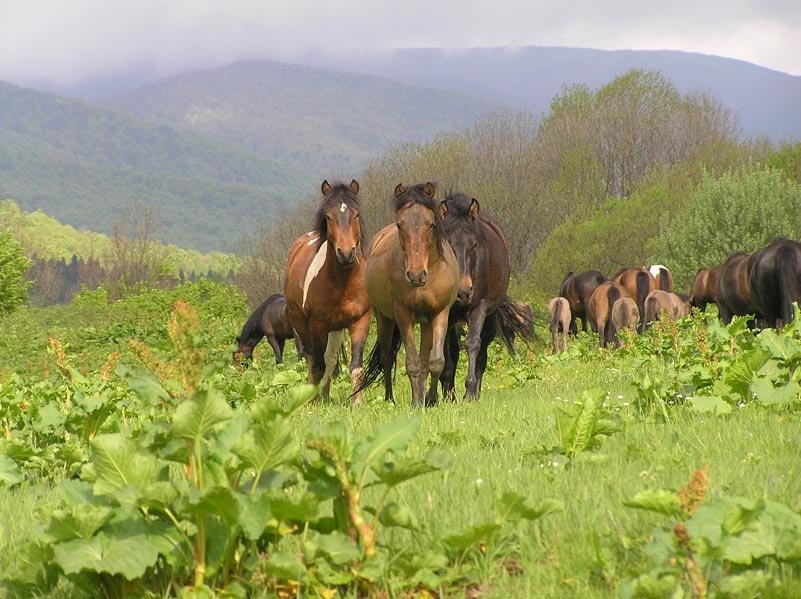
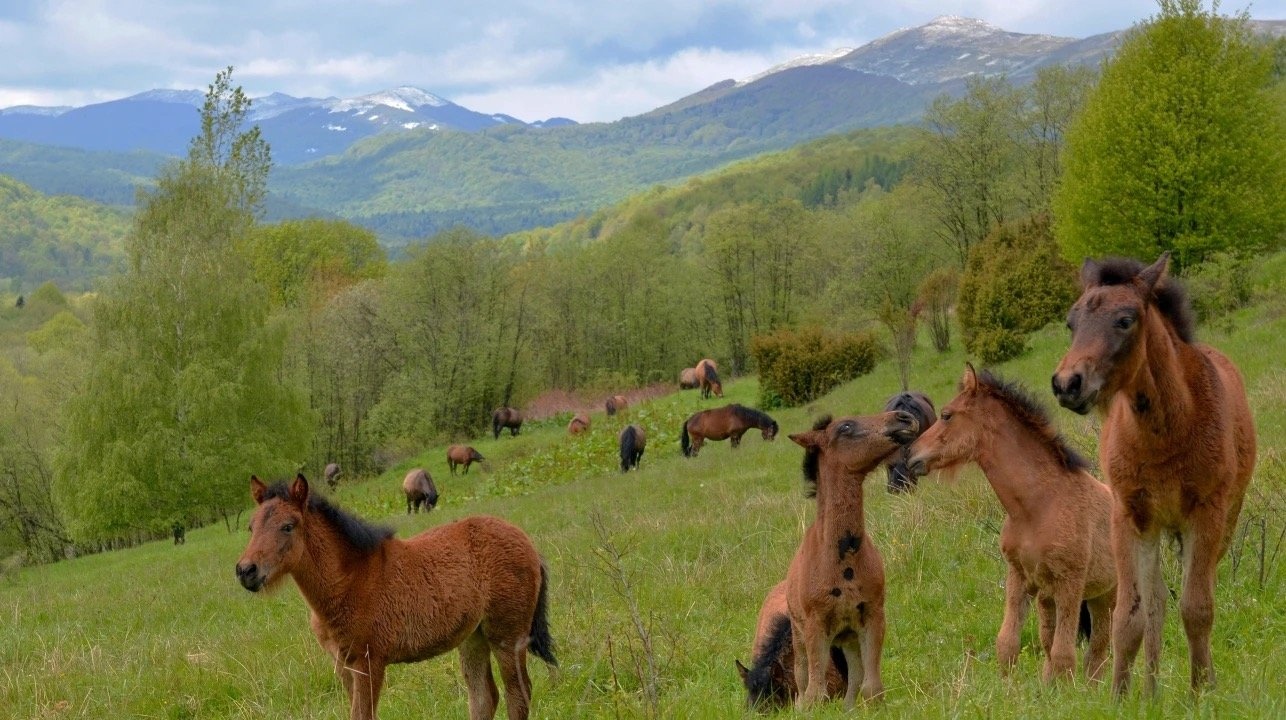
The Hucul horse is the native breed of the Carpathians and takes its name from the Hutsul highlanders, for whom it was an indispensable helper: it worked in harness, under saddle and as a pack horse. According to the park, the first mention of Carpathian mountain horses may date back to Dorohostajski's treatise of 1603, and the first show of the breed was held in 1899 in Żabie — today's Verkhovyna in Ukraine. Huculs are small (135–145 cm at the withers for stallions and 132–143 cm for mares), calm, hardy and hard-hoofed, and, as BdPN stresses, they genuinely seek contact with people. The stud preserves the breed's genetic diversity: it keeps mares from four dam lines (Agatka, Bajkałka, Wołga, Wyderka) and uses stallions from all seven Polish Hucul sire lines. Young horses are sold every year at auctions held at the stud.
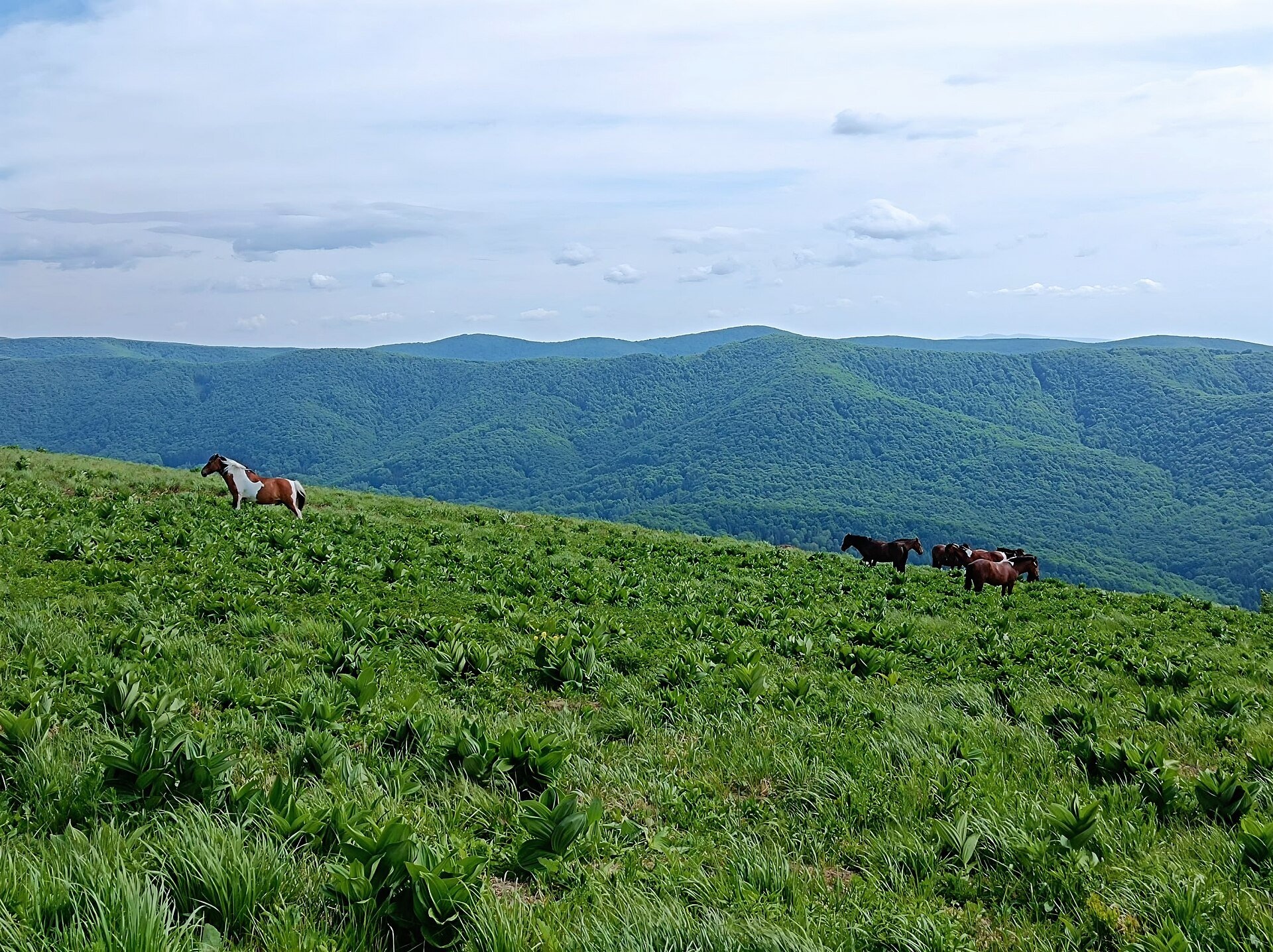
The horses are not only there for visitors: grazing and mowing help preserve the mountain meadows of the Wołosaty valley, and the hay from these meadows feeds the herd. Foals are born from February to May; in summer the herd is out on pasture and only a few horses used for tourism stay in the stable. In autumn the weaned colts are taken to the Hucul Horse Station in the upper San valley (Tarnawa Niżna), while the fillies stay in Wołosate.
What to do
- For the youngest — a ride on a horse led by a member of staff (two laps, about 7 minutes).
- Individual riding in the indoor arena or paddock, and lunge lessons for beginners.
- Trail rides in the mountains with a BdPN instructor — only for those who are confident in the three basic gaits: steep climbs, descents and stream crossings are part of the route. Helmets are lent free of charge; footwear with a heel is required.
- A carriage ride (up to 4 people) towards the Bukowska Pass (Przełęcz Bukowska) or to Ustrzyki Górne and back.
- A tour of the stud with a member of staff (about 30 minutes) and talks on Hucul breeding for groups.
Practical information
Wołosate lies at the end of regional road 897, beyond Ustrzyki Górne; the village has a bus stop, paid car parks and a BdPN ticket office. The stud is at the north-western end of the village. All services must be booked in advance with the instructor: +48 724 750 031. Prices from the official BdPN price list for 2026: a child on a led horse — 20 zł (each extra lap 5 zł), riding in the arena — 80 zł for 45 min, a lunge lesson — 60 zł for 30 min, a trail ride with an instructor — 100 zł per person per hour (for the first two hours), each further hour 70 zł, a carriage ride — 200 zł per route, a tour of the stud — 100 zł per group.
Within the park, riding is allowed only on marked horse trails (about 70 km of them), on BdPN horses and between sunrise and sunset; riding your own horse requires written permission. If you go on foot after visiting the stud, for example up the blue trail to Tarnica (about two hours), buy a BdPN ticket — 11 zł, reduced 5.50 zł. The best time is from late spring to autumn; in May and June you may see foals.
Nearby
A few kilometres to the north are the pass and the trails to Połonina Caryńska, further on Połonina Wetlińska and the UNESCO-listed wooden church in Smolnik. On the way from Lesko, stop at the Ursa Maior craft brewery.
Official website: bdpn.gov.pl
Photos: Andrzej Otrębski, CC BY-SA 4.0, Wikimedia Commons; Auctor quaerendae, CC BY-SA 4.0, Wikimedia Commons; Grzegorz Polak, CC BY-SA 4.0, Wikimedia Commons; bdpn.gov.pl.
Getting there from Ukraine
Border crossings
- Krakovets – Korczowa — road, 24/7
- Shehyni – Medyka — road, 24/7 Pedestrian crossing is not confirmed by the Ukrainian border service — check dpsu.gov.ua before the trip.
- Smilnytsia – Krościenko — road, 24/7
- Hrushiv – Budomierz — road, 24/7
- Mostyska – Przemyśl (rail) — rail, 24/7
By car
Lviv – Sanok ≈168 km, ≈3 h 20 min without queues: road to Shehyni → Shehyni – Medyka checkpoint → Przemyśl → DK28 via Bircza to Sanok (≈83 km, ≈1 h 45 min from the border). Alternative via Krakovets – Korczowa: A4 to the Radymno exit, DK77 to Przemyśl and DK28 (≈185 km from Lviv, ≈3 h 25 min). For the Bieszczady proper, Smilnytsia – Krościenko is handier: Lviv – Sambir – Staryi Sambir – border, then DK84 via Ustrzyki Dolne to Sanok (≈203 km, ≈5 h; ≈57 km from the border). From Krościenko to Ustrzyki Górne by DW896 ≈53 km (≈1 h 40 min; ≈200 km and ≈4 h 50 min from Lviv), to Wetlina by DW896 and DW897 ≈69 km (≈216 km and ≈5 h from Lviv). From Sanok: Ustrzyki Górne ≈82 km (DK84 via Lesko, then DW896, ≈1 h 35 min), Wetlina ≈72 km (DK84 to Lesko, DW894 via Baligród and Cisna, DW897, ≈1 h 20 min).
Checked 23.10.2026; border crossing hours and timetables change — check before you travel.
Location on the map
Comments
Trails nearby
All trails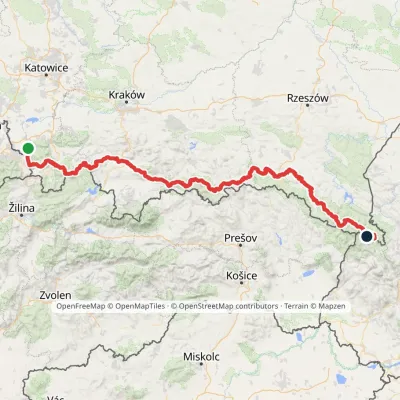 HardMulti-dayMarkedMain Trail of BeskidyElevation profile309–1 723 m499.9 kmascent 19 519 munder 1 km from Hucul Horse Stud in Wołosate, Bieszczady National Park
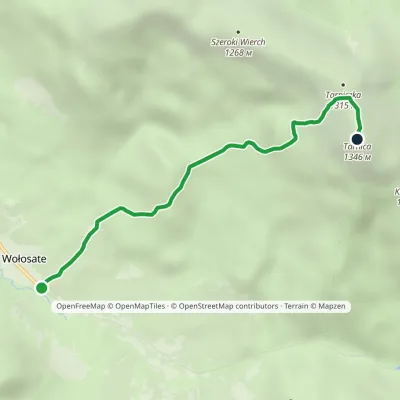 EasyOne-dayMarkedNature and Historical Trail Wołosate TarnicaElevation profile739–1 346 m4.3 kmascent 607 m≈ 2.5 h walkingunder 1 km from Hucul Horse Stud in Wołosate, Bieszczady National Park
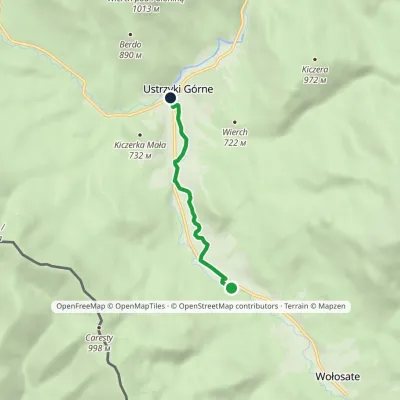 EasyOne-dayMarkedNature Trail "Salamandra" Ustrzyki Górne WołosateElevation profile649–703 m4 kmascent 11 m≈ 1 h walking1.6 km from Hucul Horse Stud in Wołosate, Bieszczady National Park
Nearby attractions
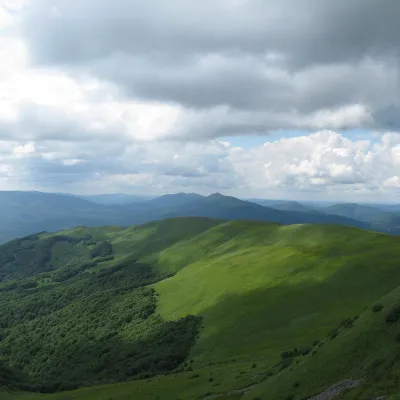 PeakSzeroki Wierchaltitude 1 268 m3 km from Hucul Horse Stud in Wołosate, Bieszczady National ParkSzeroki Wierch («Broad Top») is a mountain massif in the połonina range of the Western Bieszczady, the western wing of the Tarnica group in Bieszczady National Park.
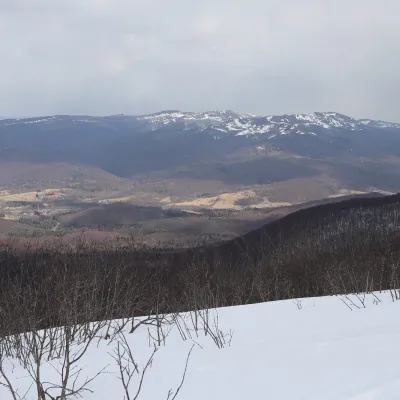 PeakTarnicaaltitude 1 346 m · Volcanic Carpathians range3.6 km from Hucul Horse Stud in Wołosate, Bieszczady National ParkTarnica is the highest peak of the Polish Bieszczady and of the whole Subcarpathian Voivodeship, rising to 1,346 m.
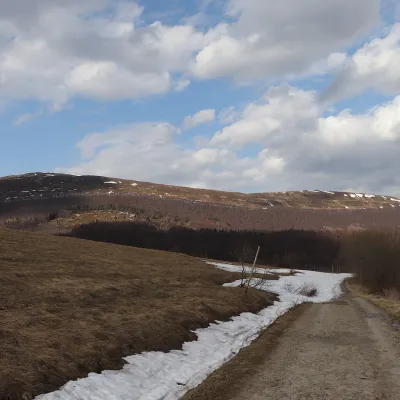 Mountain meadowPołonina Caryńskaaltitude 1 297 m9.5 km from Hucul Horse Stud in Wołosate, Bieszczady National ParkPołonina Caryńska (also called Berehowska) is a mountain massif and alpine meadow in the Western Bieszczady, between the valleys of the Prowcza and the Wołosaty, where...
Craft nearby
All craft places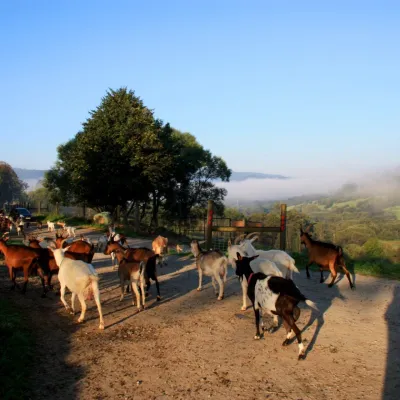 Cheese dairies & pasturesBieszczadzka Koza Goat Cheese Farm, Smolnik16 km from Hucul Horse Stud in Wołosate, Bieszczady National ParkBieszczadzka Koza ("the Bieszczady Goat") is a family goat farm and artisan cheese dairy in the village of Smolnik on the San, in the eastern Polish Bieszczady, right...
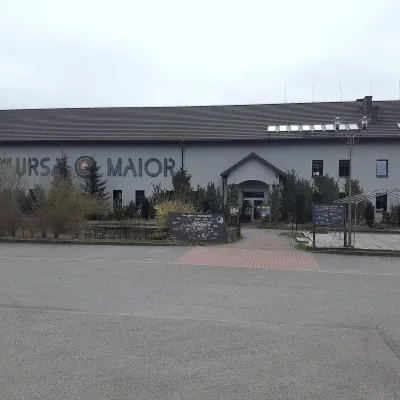 Craft beer & breweriesUrsa Maior Brewery, Uherce Mineralne49 km from Hucul Horse Stud in Wołosate, Bieszczady National ParkUrsa Maior, or the Bieszczady Brewery (Bieszczadzka Wytwórnia Piwa), is an independent craft microbrewery in the village of Uherce Mineralne, between Lesko and...
