Glacier buttercup
This plant is poisonous: do not taste or pick it, and wash your hands after touching it. In case of poisoning call 112 (103 in Ukraine).
About
Glacier buttercup is a plant of the Arctic and the highest mountains: it grows in Spitsbergen, Greenland, Alaska, and in the mountains of Europe — in the Alps and Tatras. In Poland, it occurs only in the Tatras and rarely. Our records come from the High, Western, and Low Tatras; half of them are above 2000 m. This species is absent in Ukraine.
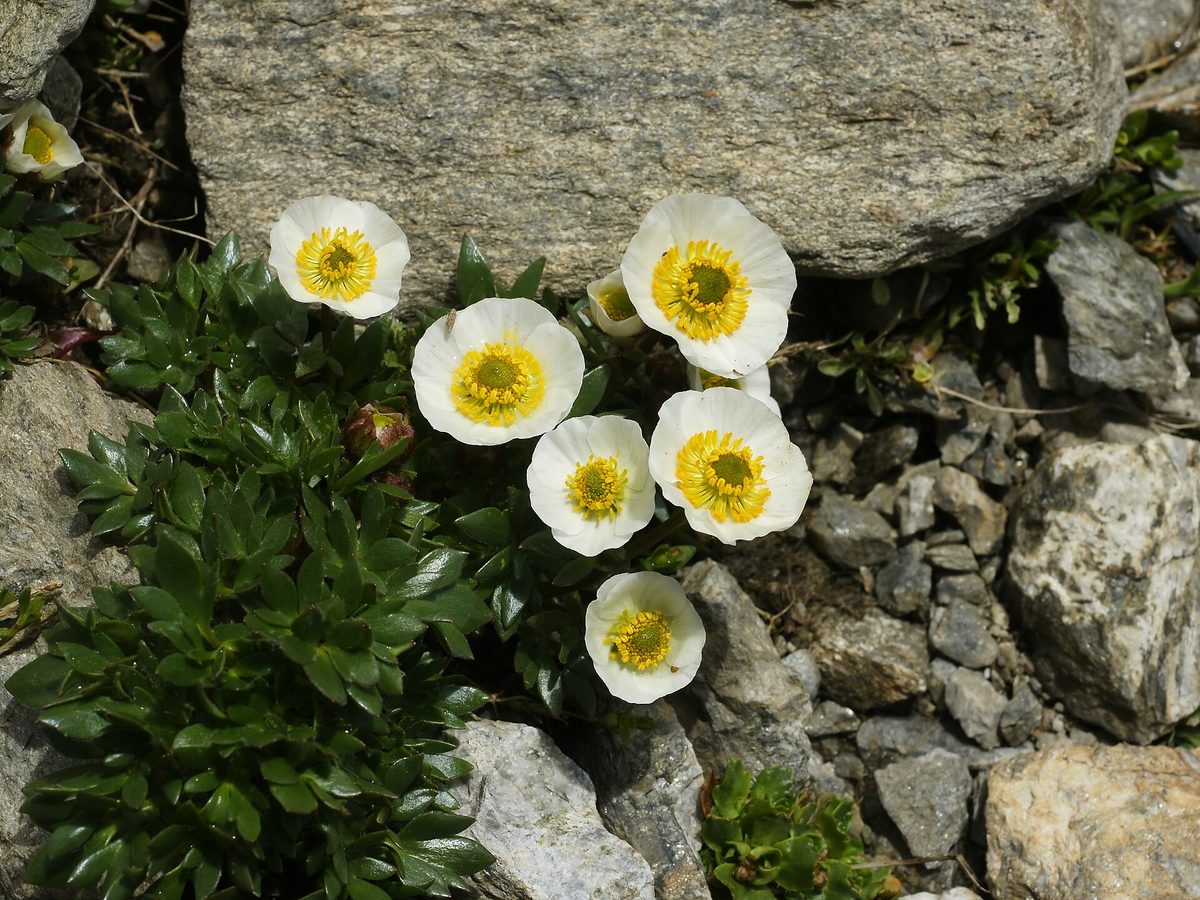
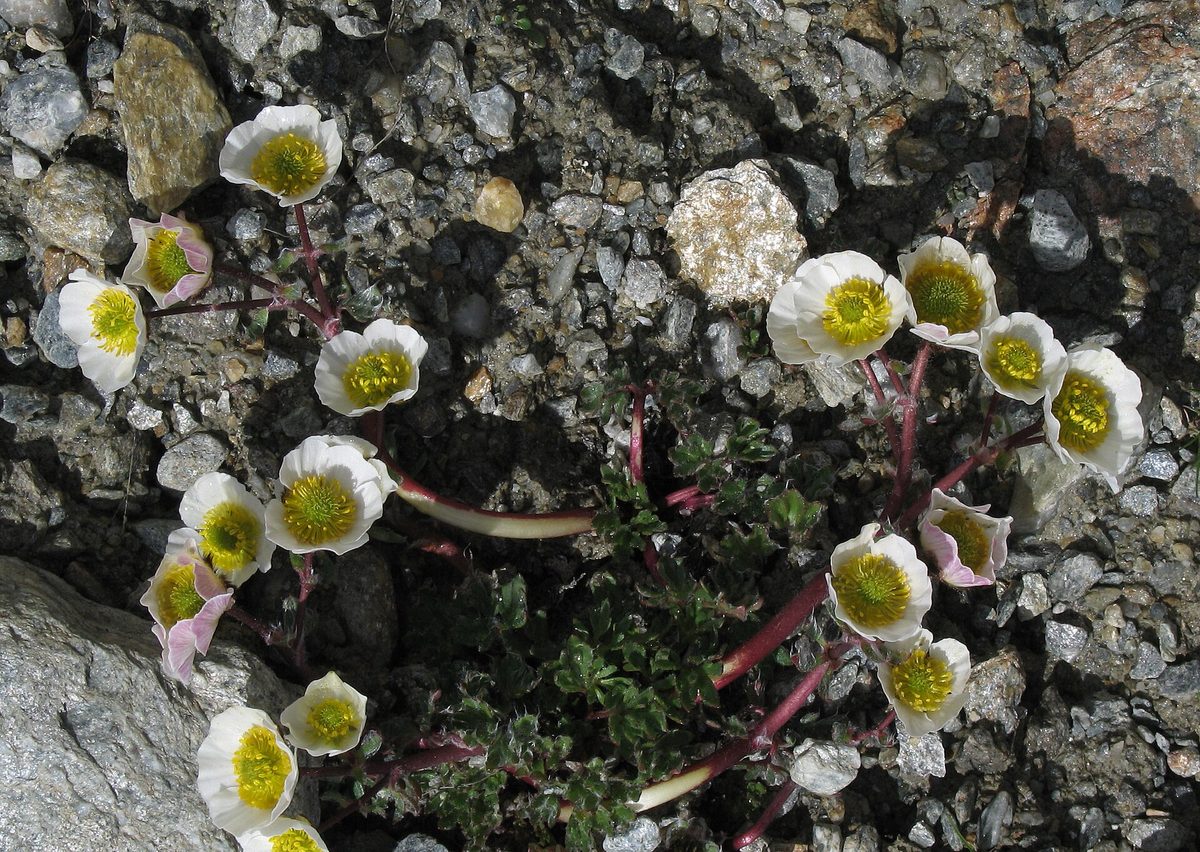
The plant is 5–15 cm tall. The stem is thick and juicy, bare, upright or sprawling. The leaves are evergreen, glossy, fleshy, 1–4 cm long. On the stem, there are one to three flowers with petals 9–15 mm; contrary to the name of the genus, they are not yellow, but white or white-pink.
It blooms from June to August. It grows only on granite: in rock crevices, often on nearly vertical walls, on ledges, screes, and stone debris, from the juniper belt to the highest rocky peaks. According to Polish Wikipedia, the species generally rises to 4250 m above sea level.
Like many buttercups, it is poisonous — it contains ranunculin. The plant is rare, growing in national parks where picking anything is prohibited; it is best viewed up close in photos.
This species does not live in the Ukrainian Carpathians today — you can see it in other Carpathian countries.
Where in the Carpathians

Orange — where naturalists recorded the species (GBIF, CC0/CC BY); a blank area does not mean it is absent.
- Countries
- Slovakia · Poland
- Mountain ranges
- In other countries: 🇸🇰 High Tatras, 🇸🇰 Western Tatras, 🇸🇰 Low Tatras
- Altitude belts
- Beech forests (600–1200 m) · Subalpine belt (1600–1900 m) · Alpine belt (above 1900 m)
When to see it
| Jan | Feb | Mar | Apr | May | Jun | Jul | Aug | Sep | Oct | Nov | Dec | |
|---|---|---|---|---|---|---|---|---|---|---|---|---|
| Flowering |
From naturalists’ observations in the Carpathians (iNaturalist, research grade): the darker the cell, the more often the species is seen that month.
Safety
Poisonous plant (contains ranunculin). Do not pick or put in your mouth.
Protection and rules
The species is absent in Ukraine. In the Tatras, it is rare; it grows in national parks where picking plants is prohibited.
FAQ
Where in the Carpathians does Glacier buttercup grow?
In the Tatras — High and Western, as well as in the Low Tatras, on granite cliffs, mostly above 2000 m. It is absent in Ukraine.
What color are the flowers of Glacier buttercup?
White or white-pink, although most buttercups have yellow flowers.
Comments
Travellers’ experience: reports, tips, questions.
No one has written here yet. Be the first — your experience helps others.
Similar species
Where to meet it
Mountain ranges: In other countries: 🇸🇰 High Tatras, 🇸🇰 Western Tatras, 🇸🇰 Low Tatras
Trails and peaks near which naturalists recorded the species (GBIF, iNaturalist), matched by altitude and habitat. Sightings are not guaranteed.
Sources
GBIF · iNaturalist · Wikidata · Distribution data: GBIF.org (CC0 and CC BY records), iNaturalist; names and identifiers: Wikidata (CC0). Text: Karpaty.rocks, checked 11.11.2026.
