Common wall lizard
About
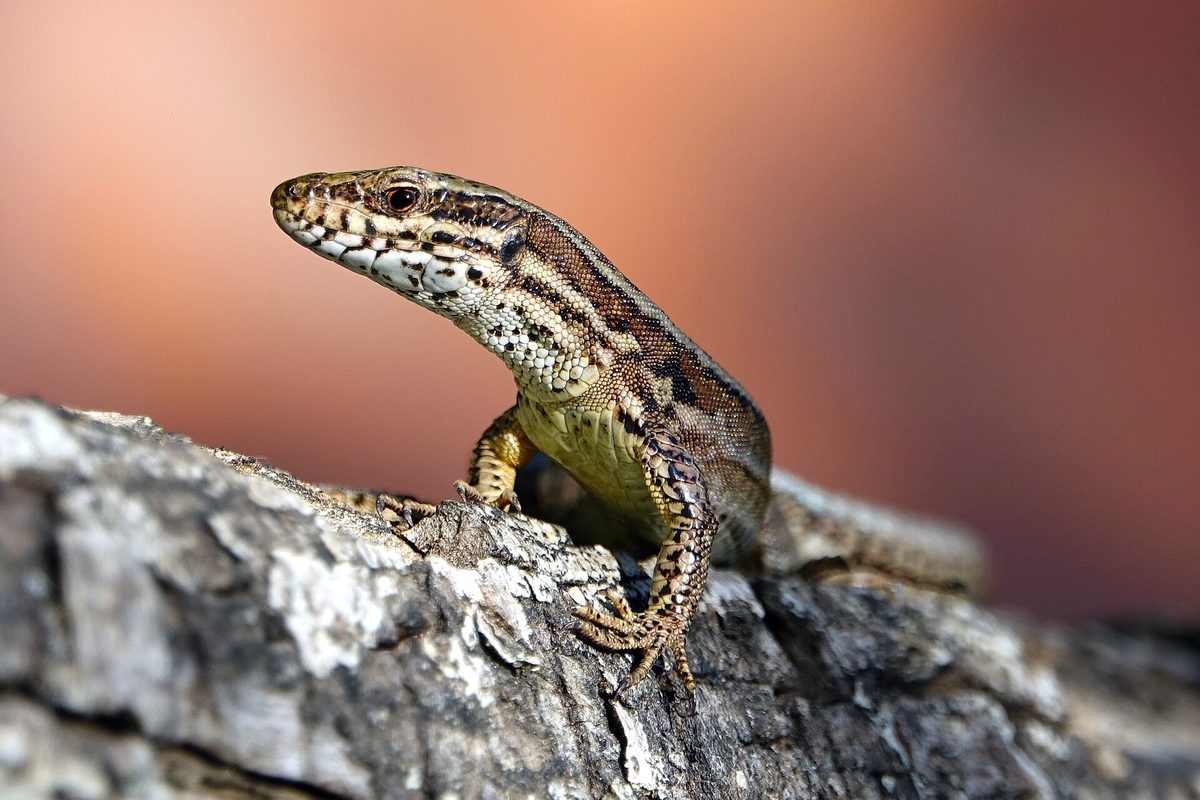
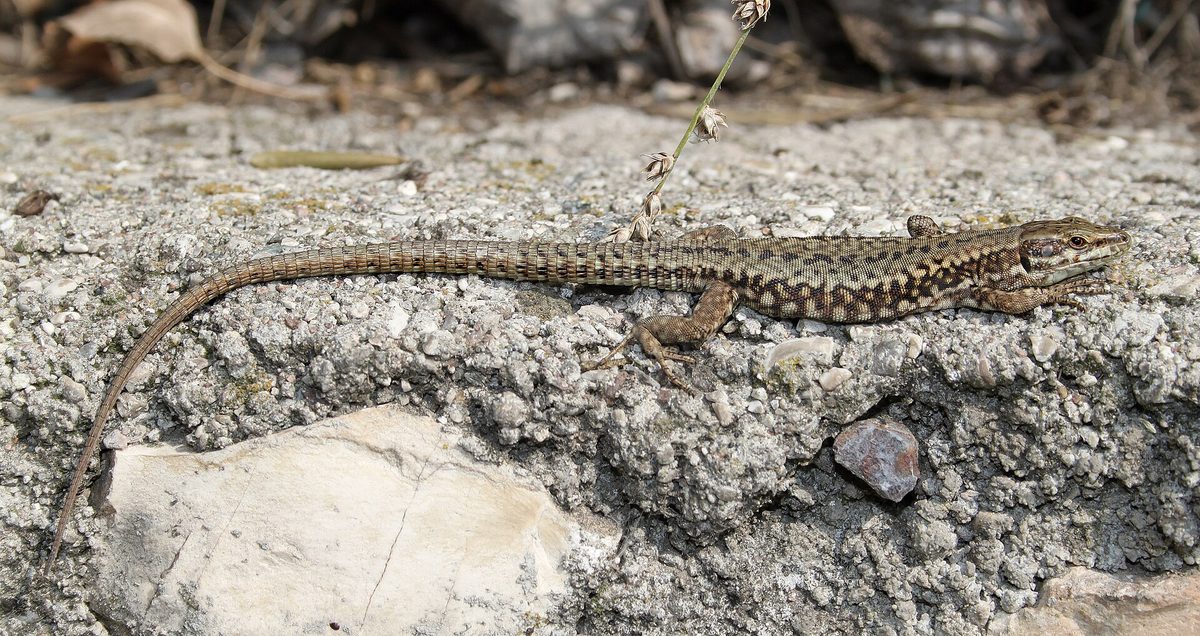
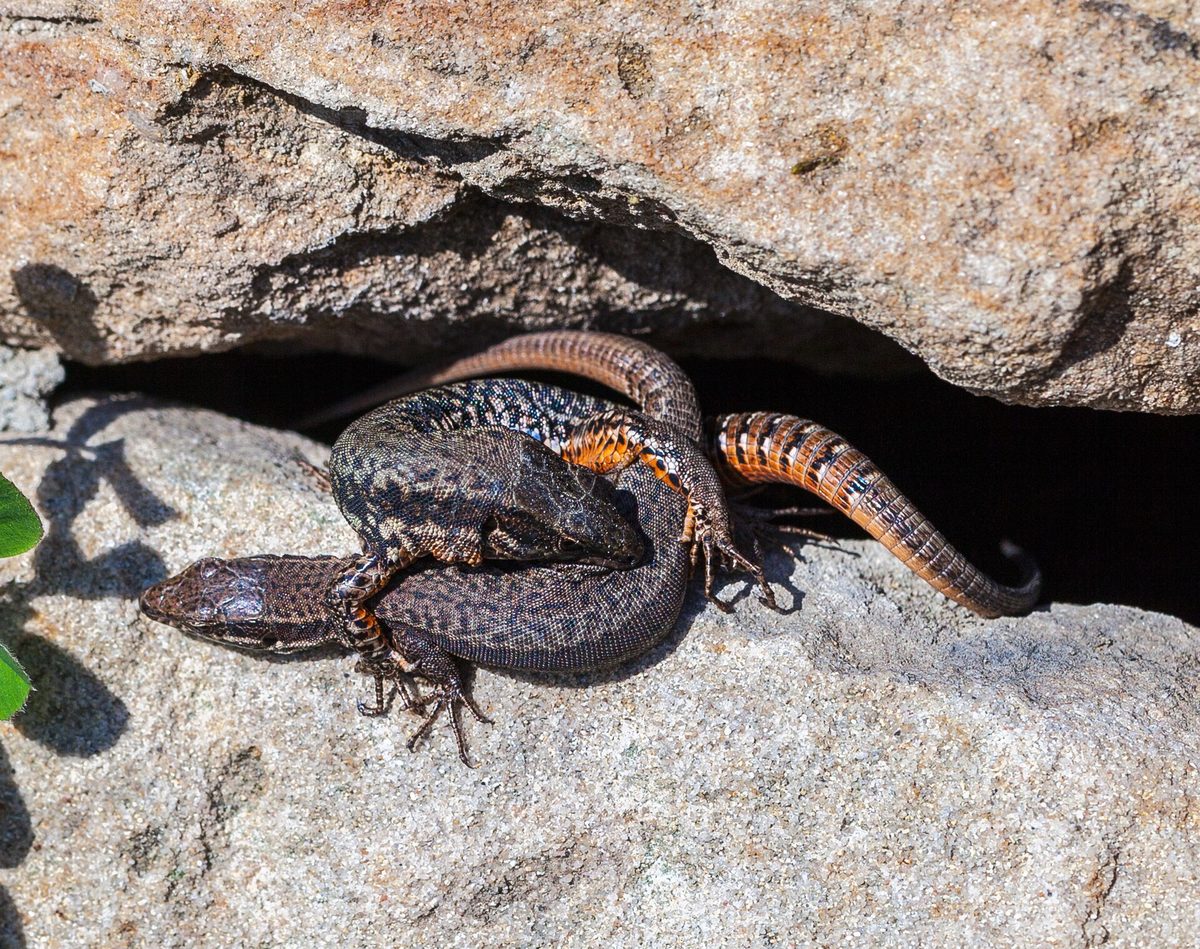
The Common wall lizard is a small slender lizard about 20 cm long including the tail, occasionally reaching 25 cm. Its coloration is highly variable: the back is brownish or grayish, sometimes with a greenish tint, along it runs a line of spots or a net-like pattern, with dark and light spots on the sides. The belly has large rectangular scales and can be reddish, pink, or orange, often with dark spots on the throat.
This is a thermophilic species. It prefers rocky areas: cliffs, screes, quarries, vineyards, light forests, and in the south, it readily settles on the walls of buildings and ruins — hence the name. In warm weather, the lizard is active all day, skillfully running up vertical walls and hunting for insects, spiders, and woodlice.
The northern limit of the species' distribution runs through Slovakia. In the Carpathians, our data show the Common wall lizard in Romania — in the Almăj, Trascău, Bihor, and Bucegi mountains — in Hungary's Matra, and in Slovakia, mostly at altitudes up to 800 m. In Poland, only introduced populations are known in the quarries of Lower Silesia, far from the Carpathians. In Ukraine, the species has only been recorded near the Reni port and Lake Kagul in Odesa region — it is absent from the Ukrainian Carpathians.
In the EU, the Common wall lizard is protected by the Habitats Directive (Annex IV). On the warm rocks of Slovakia or Romania, it often appears to tourists: basking on a stone just a step away from the trail. Do not catch lizards — observe from a distance.
This species does not live in the Ukrainian Carpathians today — you can see it in other Carpathian countries.
Where in the Carpathians

Orange — where naturalists recorded the species (GBIF, CC0/CC BY); a blank area does not mean it is absent.
- Countries
- Romania · Hungary · Slovakia · Serbia · Czechia
- Mountain ranges
- In other countries: 🇷🇴 Almăj and Locva Mountains, 🇷🇴 Trascău and Metaliferi Mountains, 🇷🇴 Bihor-Vlădeasa Mountains, 🇭🇺 Mátra, 🇷🇴 Bucegi Mountains, 🇷🇸 Đerdap and Miroč, 🇸🇰 Greater Fatra, 🇭🇺 Zemplén Mountains, 🇸🇰 Slovak Central Mountains, 🇷🇴 Baiu Mountains, 🇷🇴 Cindrel Mountains, 🇷🇴 Făgăraș Mountains, 🇷🇴 Vrancea Mountains, 🇷🇴 Pădurea Craiului
- Altitude belts
- Foothills (below 600 m) · Beech forests (600–1200 m)
When to see it
| Jan | Feb | Mar | Apr | May | Jun | Jul | Aug | Sep | Oct | Nov | Dec | |
|---|---|---|---|---|---|---|---|---|---|---|---|---|
| Sightings |
From naturalists’ observations in the Carpathians (iNaturalist, research grade): the darker the cell, the more often the species is seen that month.
Look-alikes — how to tell them apart
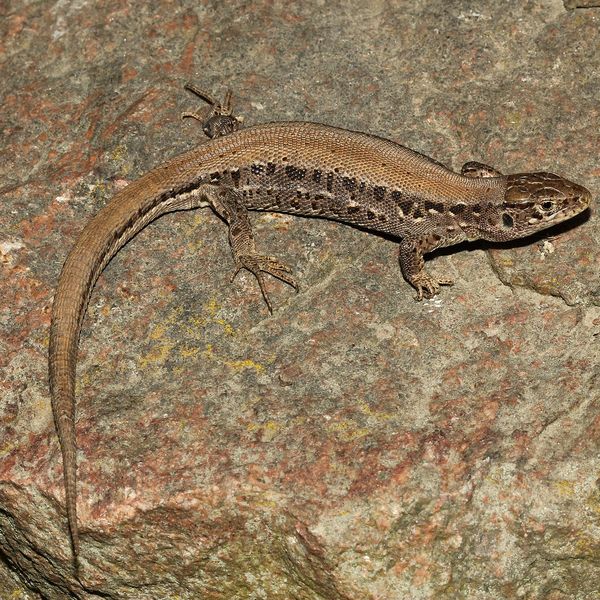
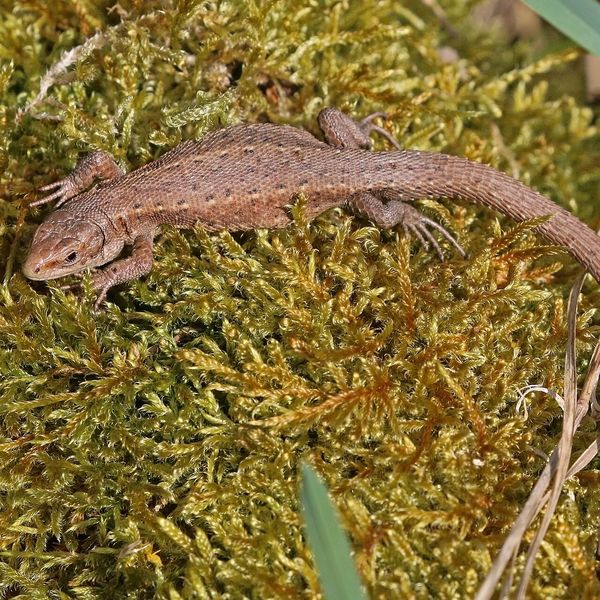
Lives in grass on meadows and forest edges, not on vertical cliffs and walls.
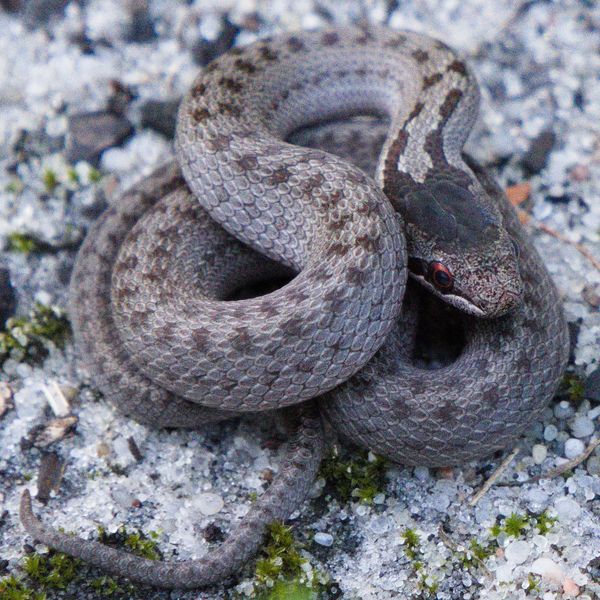
Prefers moist meadows, swamps, and polonynas, not dry warm rocks.
Protection and rules
The species is absent from the Ukrainian Carpathians. In the EU — Annex IV of the Habitats Directive.
FAQ
Does the Common wall lizard live in the Ukrainian Carpathians?
No. In Ukraine, it has only been recorded in Odesa region — near Reni port and Lake Kagul. In the Carpathians, it occurs in Slovakia, Hungary, and Romania.
How to distinguish the Common wall lizard from the swift lizard?
Primarily by habitat: the Common wall lizard prefers vertical cliffs, walls, and rocky screes, while the swift lizard lives in grass on meadows and forest edges. Additionally, the Common wall lizard is slimmer, with a long tail.
Comments
Travellers’ experience: reports, tips, questions.
No one has written here yet. Be the first — your experience helps others.
Similar species
Where to meet it
Mountain ranges: In other countries: 🇷🇴 Almăj and Locva Mountains, 🇷🇴 Trascău and Metaliferi Mountains, 🇷🇴 Bihor-Vlădeasa Mountains, 🇭🇺 Mátra, 🇷🇴 Bucegi Mountains, 🇷🇸 Đerdap and Miroč, 🇸🇰 Greater Fatra, 🇭🇺 Zemplén Mountains, 🇸🇰 Slovak Central Mountains, 🇷🇴 Baiu Mountains, 🇷🇴 Cindrel Mountains, 🇷🇴 Făgăraș Mountains, 🇷🇴 Vrancea Mountains, 🇷🇴 Pădurea Craiului
Trails and peaks near which naturalists recorded the species (GBIF, iNaturalist), matched by altitude and habitat. Sightings are not guaranteed.
Sources
- Wikipedia (en): Podarcis muralis
- Вікіпедія: Ящірка мурова
- Wikipedia (pl): Murówka zwyczajna
- GBIF: Podarcis muralis
- Директива Ради 92/43/ЄЕС про збереження природних оселищ (консолідована редакція)
GBIF · iNaturalist · Wikidata · Distribution data: GBIF.org (CC0 and CC BY records), iNaturalist; names and identifiers: Wikidata (CC0). Text: Karpaty.rocks, checked 11.11.2026.
