Chochołów Wooden Village
A village that has kept its face
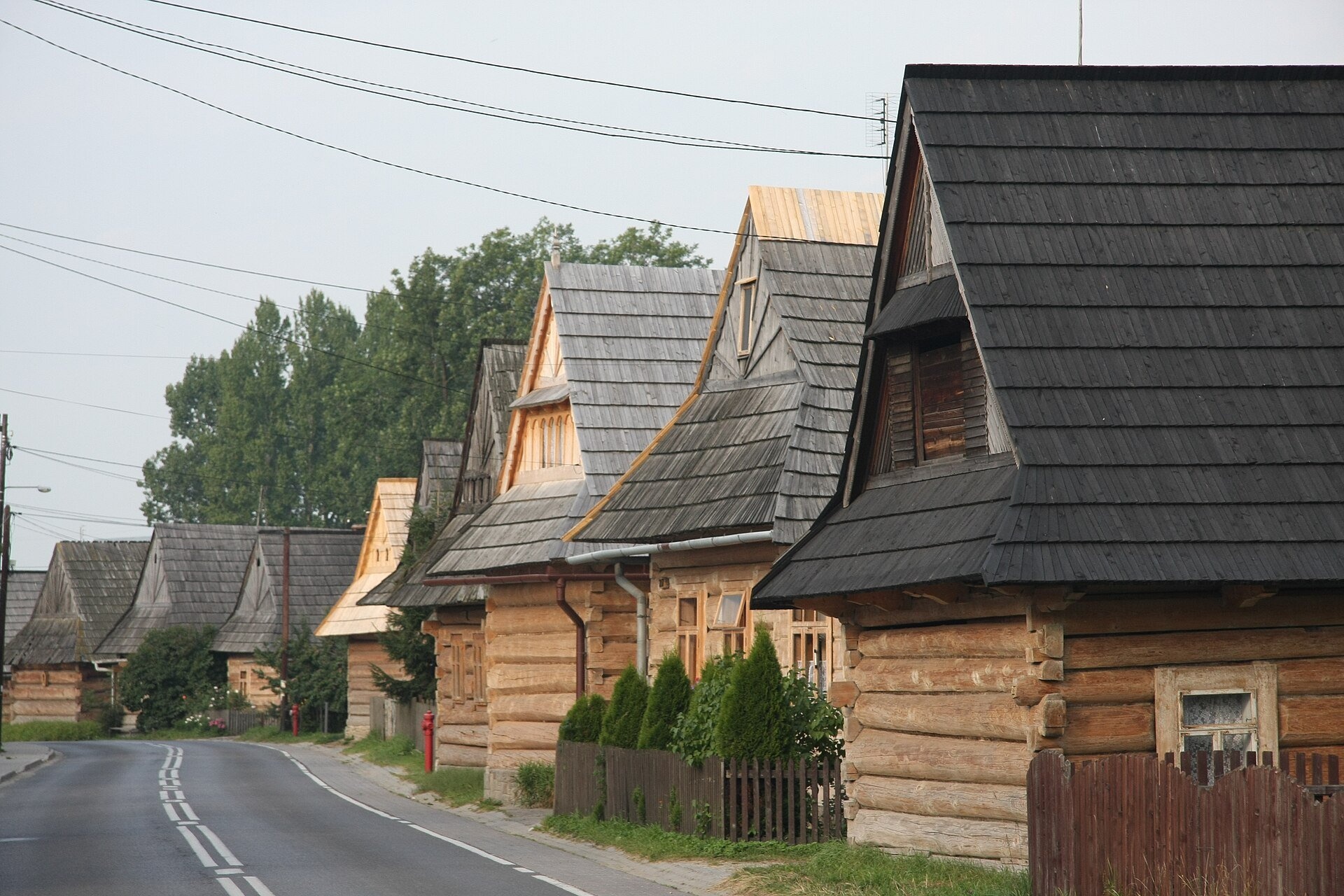
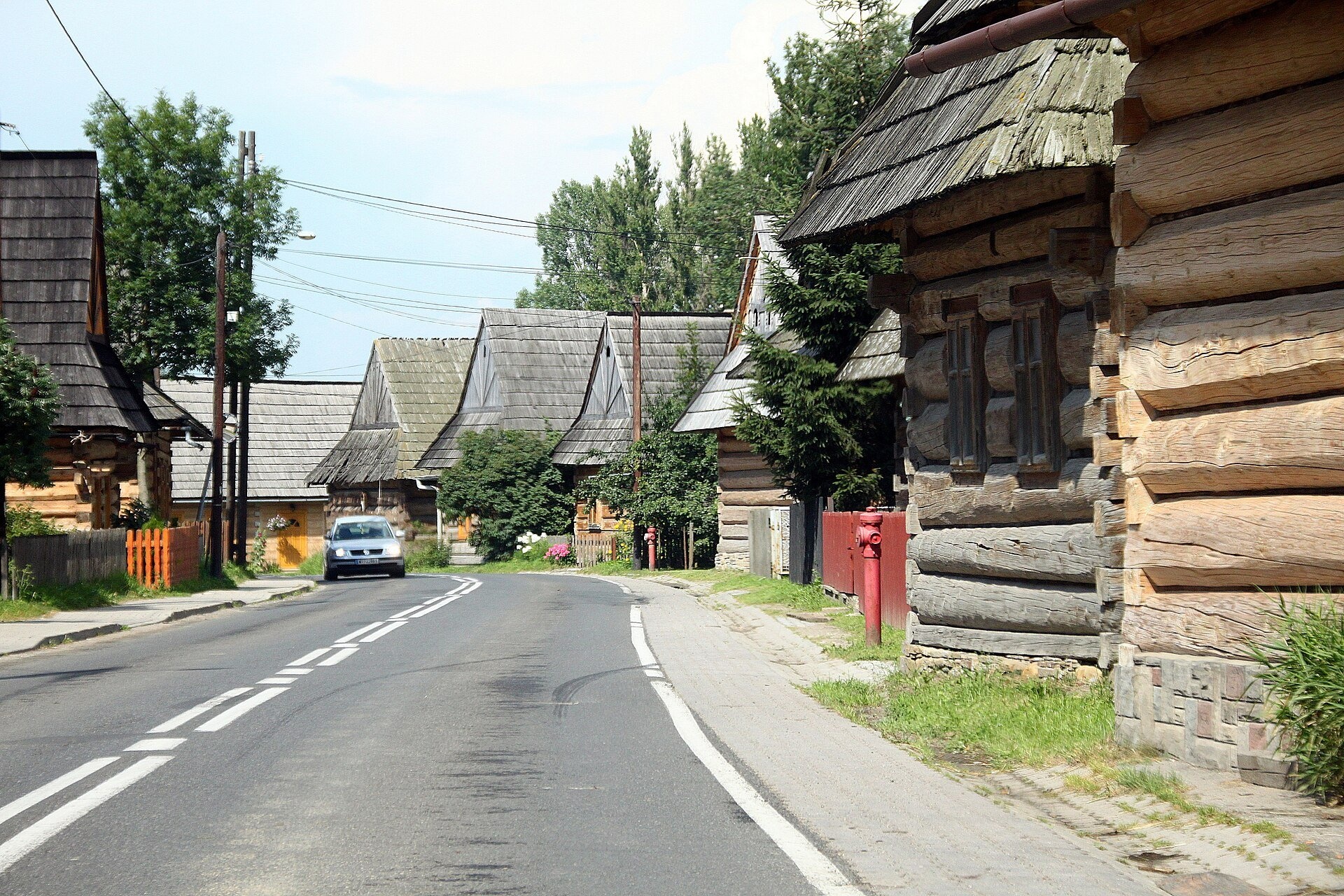
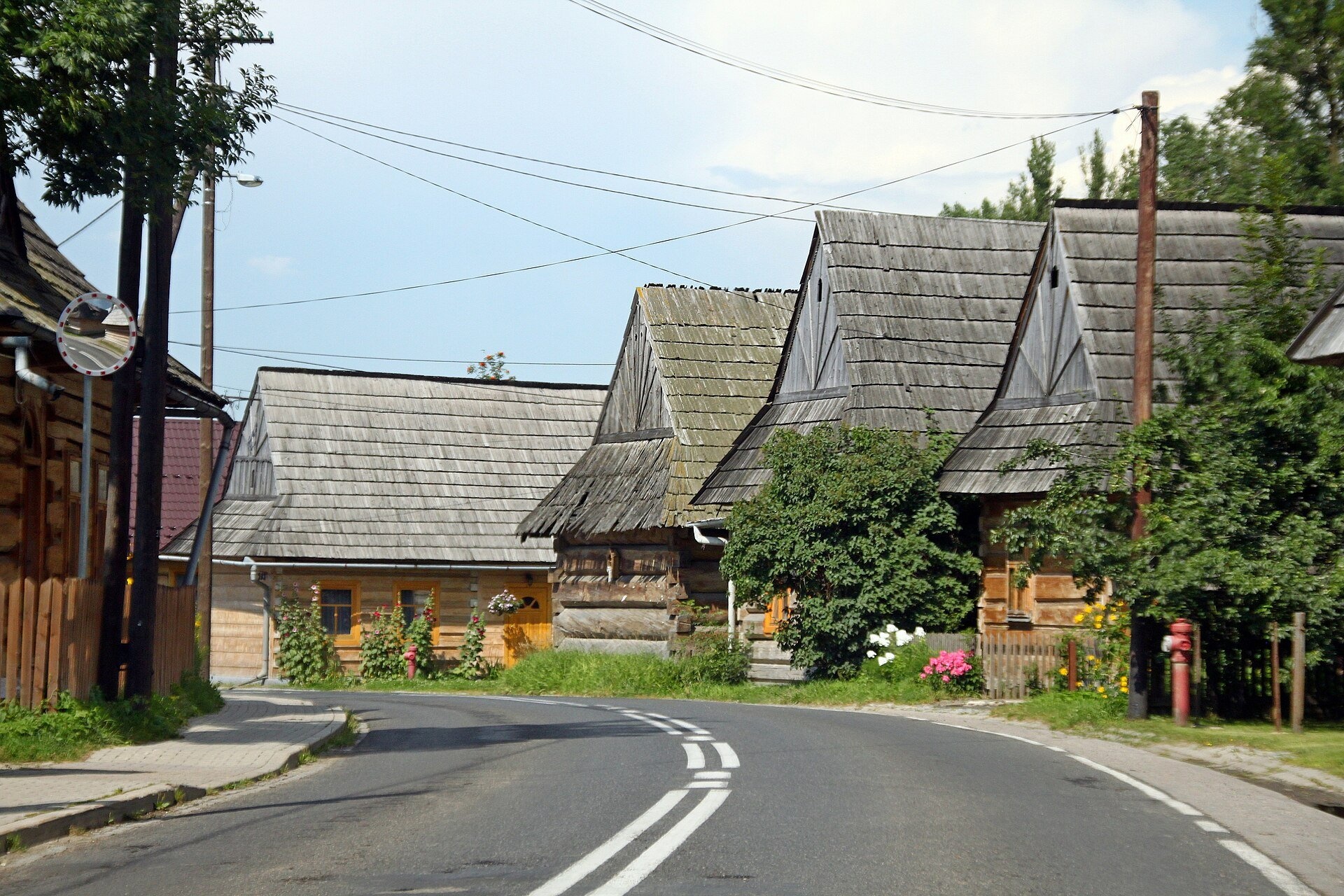
Chochołów is a village in the Podhale region, in the valley of the Czarny Dunajec river, right by the border with Slovakia. Its main street is almost entirely lined with old highlander houses built of thick logs under steep shingle roofs, so a walk here feels like a journey into the past — except that instead of an open-air museum this is a living village, and people still live in these houses. A local custom is to wash the timber walls on the outside with soapy water twice a year, before Easter and at Corpus Christi, which is why the logs look so light and well kept.
The village was founded in 1592 as a royal village. It entered Polish history through the Chochołów Uprising: on the evening of 21 February 1846 around thirty highlanders led by the organist and teacher Jan Kanty Andrusikiewicz and the curate Józef Kmietowicz seized the revenue guard post, the customs house in nearby Sucha Góra and weapons from the forestry offices. The rising against Austrian rule was crushed by 23 February and more than a hundred participants were imprisoned, but they were released in 1848, during the Spring of Nations. Among the insurgents was Jan Krzeptowski, known as Sabała. The event is commemorated beside the church every year on 21 February.
What to see
- The main street of timber houses — best walked from end to end, looking at the carved gables, porches and yards.
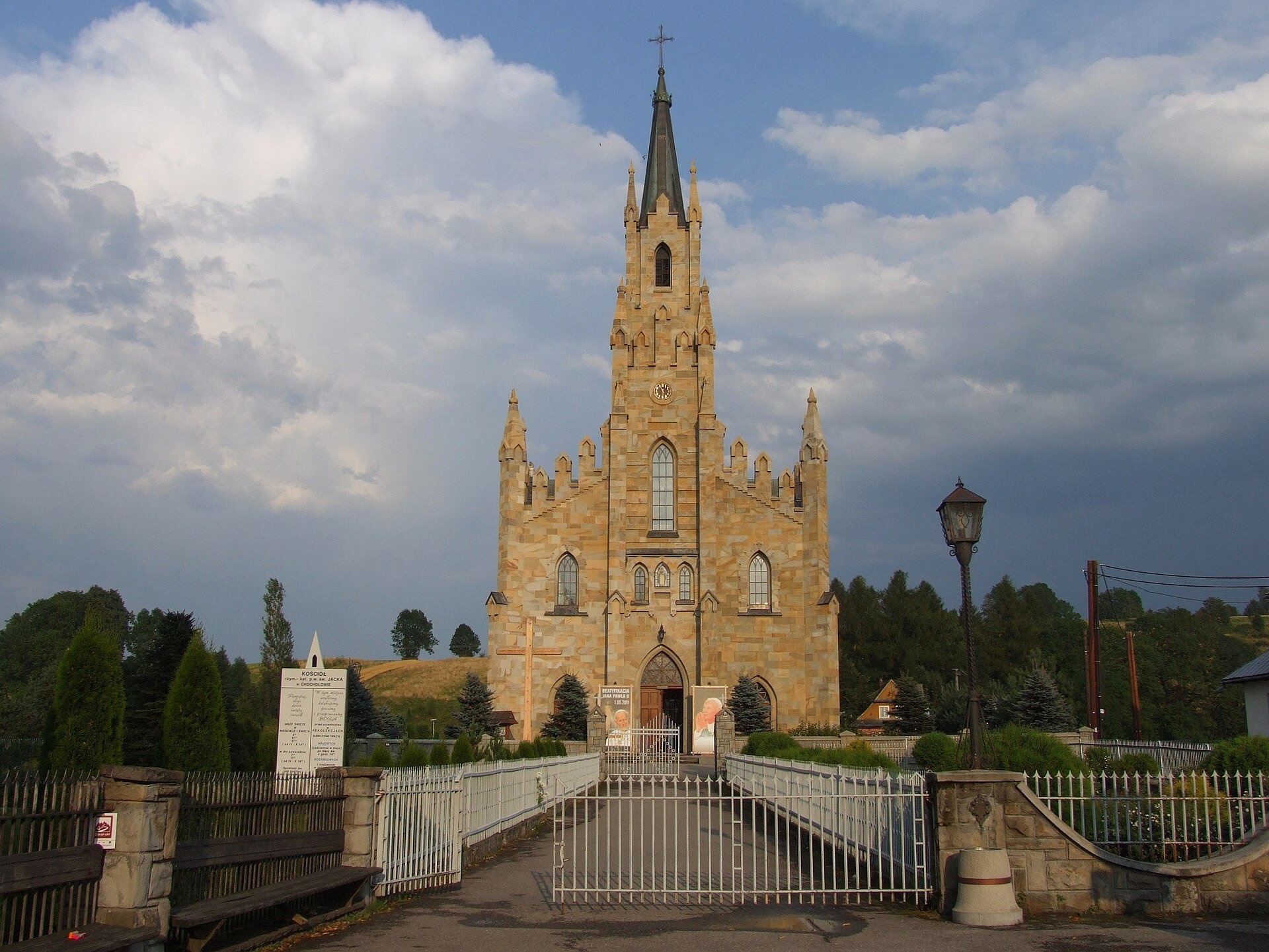
- St Hyacinth's Church — a neo-Gothic stone church built in 1853–1873 to a design by Feliks Księżarski on the initiative of a native of the village, Father Wojciech Blaszyński; its tower is 47 m high and it was consecrated in 1886.
- The 1846 Uprising Memorial on the square by the church, and the statue of St John of Nepomuk, said to be turned with its back to neighbouring Czarny Dunajec, whose inhabitants helped to put down the rising.
- The Chochołów Uprising Museum in the Bafia homestead (Chochołów 75), a branch of the Tatra Museum.
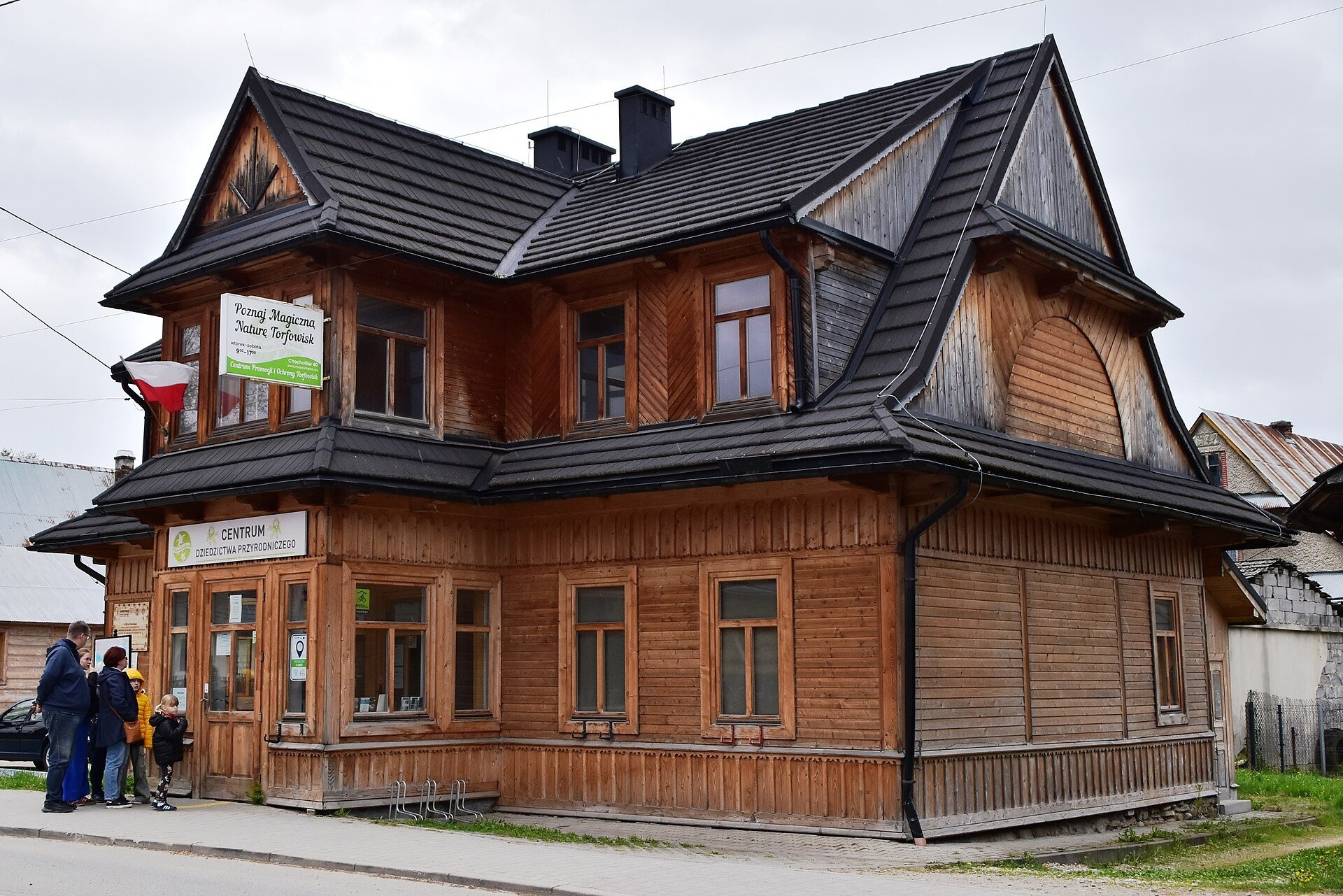
- The Natural Heritage Centre — Peat Bog Museum in an old timber building (opened in 2018), with an exhibition on the bogs of Podhale.
Practical information
Getting there. Chochołów lies on the road from Zakopane via Kościelisko and Witów to Czarny Dunajec, so it is easy to reach by car or by local transport from Zakopane. The former border crossing to Suchá Hora in Slovakia operated until 2007; today the border can be crossed freely. The village is flat and the walk is easy, so it suits families with children and visitors who do not hike. One or two hours are enough for the street and the church, so Chochołów combines easily with a trip to the Chochołowska Valley or the nearby thermal pools.
Museum. As of October 2026 the Chochołów Uprising Museum is closed for conservation work; while it lasts, an exhibition about the uprising is displayed right in front of the building. Once it reopens, the usual Tatra Museum prices will apply: 12 zł, reduced 6 zł, with free entry to the permanent exhibition on Thursdays. Check the current status on the museum website.
Etiquette. Most of the houses are private homes: take photos from the street and do not enter the yards without permission.
Nearby
- Chochołowska Valley — named after the village, which received grazing rights on its meadows in the 16th century.
- Gubałówka — a marked walking and cycling route leads there from Chochołów along the ridge via Tominów Wierch and Pałkówka.
- Kościeliska Valley — the most popular valley of the Western Tatras.
- Ludźmierz Sanctuary — the oldest Marian shrine in Podhale.
Official website: muzeumtatrzanskie.pl
Photos: Aotearoa, CC BY 3.0, Wikimedia Commons; Pankrzysztoff, CC BY-SA 3.0 pl, Wikimedia Commons; Scotch Mist, CC BY-SA 4.0, Wikimedia Commons; Jerzy Opioła, CC BY-SA 4.0, Wikimedia Commons; Jan Majer Palikot, CC BY 4.0, Wikimedia Commons; Maksym Kozlenko, CC BY-SA 4.0, Wikimedia Commons.
Getting there from Ukraine
Border crossings
- Krakovets – Korczowa — road, 24/7
- Shehyni – Medyka — road, 24/7 Pedestrian crossing is not confirmed by the Ukrainian border service — check dpsu.gov.ua before the trip.
- Smilnytsia – Krościenko — road, 24/7
- Hrushiv – Budomierz — road, 24/7
- Mostyska – Przemyśl (rail) — rail, 24/7
By car
Lviv – Zakopane ≈421 km, ≈5 h 10 min without border queues. Route: M-10 Lviv – Krakovets → Krakovets – Korczowa checkpoint → A4 motorway (Rzeszów – Tarnów – Kraków) → Kraków southern bypass → S7/DK7 → DK47 ('Zakopianka') via Nowy Targ → Zakopane. The A4 Katowice – Kraków section (Balice and Mysłowice toll plazas) is tolled, but this route does not use it. In summer and at weekends the DK47 near Zakopane is often congested.
Checked 23.10.2026; border crossing hours and timetables change — check before you travel.
Location on the map
Comments
Trails nearby
All trails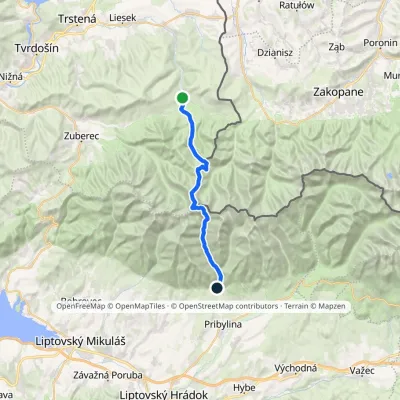 HardTwo-dayMarkedOravice Račková dolina, campsiteElevation profile791–2 053 m23.6 kmascent 1 268 m≈ 8.5 h walking9.8 km from Chochołów Wooden Village
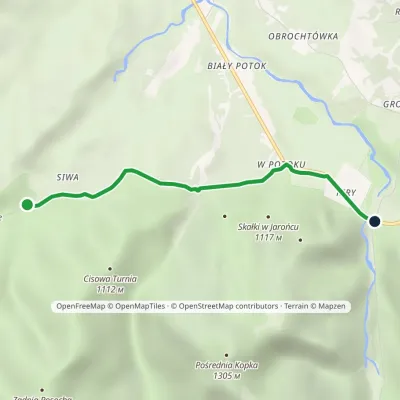 EasyOne-dayMarkedKiry Siwa PolanaElevation profile913–953 m3.1 kmascent 20 m≈ 45 min walking10 km from Chochołów Wooden Village
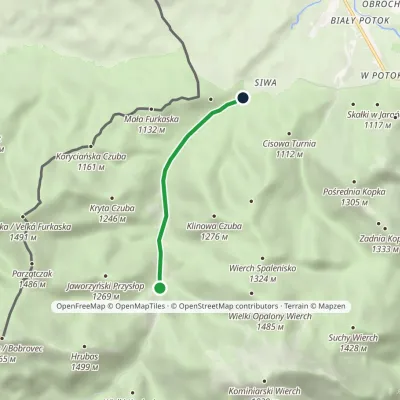 EasyOne-dayMarkedSiwa Polana Dudowa ValleyElevation profile939–1 018 m3.2 km≈ 45 min walking11 km from Chochołów Wooden Village
Nearby attractions
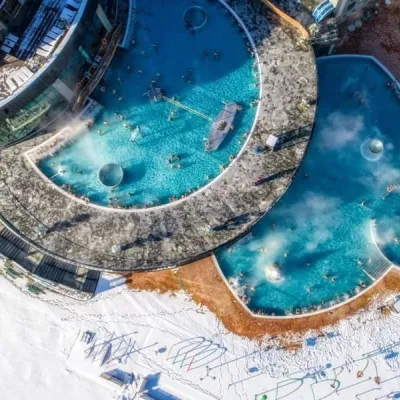 Water parks & thermal poolsChochołowskie Termy2.2 km from Chochołów Wooden VillageChochołowskie Termy stand in the village of Chochołów in the Podhale region, north-west of Zakopane and not far from the Slovak border.
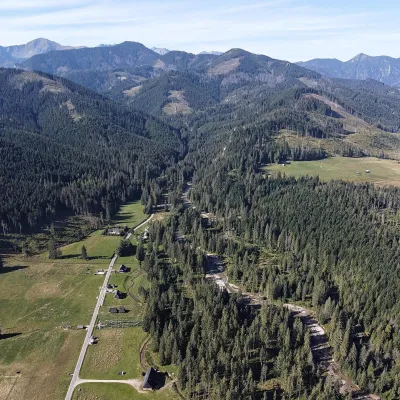 NatureChochołowska Valley10 km from Chochołów Wooden VillageThe Chochołowska Valley lies at the western edge of the Polish Western Tatras and is the longest and largest valley in the country: about 10 km long and over 35 km² in...
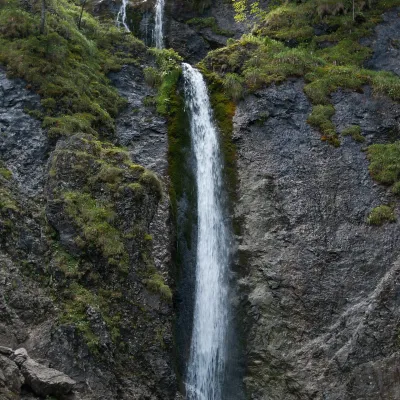 WaterfallSiklawica Waterfall15 km from Chochołów Wooden VillageSiklawica (also Siklawica Strążyska) is a waterfall in the Western Tatras, in the upper part of the Strążyska Valley (strictly speaking in its branch called Mała...
Craft nearby
All craft places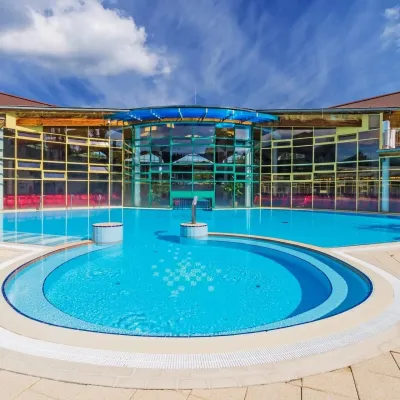 Water parks & thermal poolsMeander Thermal Resort, Oravice9.4 km from Chochołów Wooden VillageMeander Thermal & Ski Resort (formerly Meander Park) is a thermal water park and ski centre in the mountain settlement of Oravice in northern Slovakia, at the foot of...
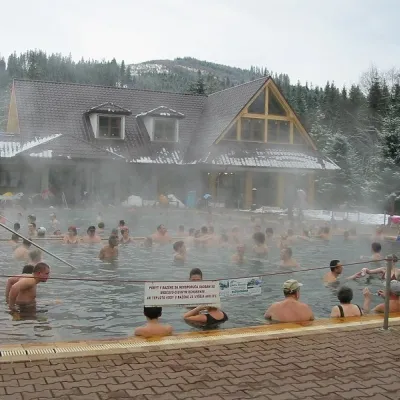 Water parks & thermal poolsOravice thermal pools9.5 km from Chochołów Wooden VillageThe Oravice thermal pools (Termálne kúpalisko Oravice) are the municipal thermal baths in the mountain settlement of Oravice at the foot of the Western Tatras.
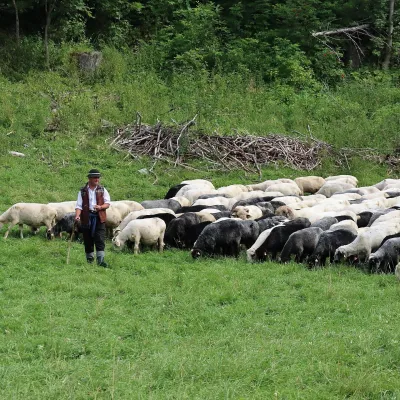 Cheese dairies & pasturesShepherd's Hut in the Kościeliska Valley12 km from Chochołów Wooden VillageJózef Słodyczka's bacówka (shepherd's hut) on the Wyżnia Kira Miętusia glade is probably the most easily reached shepherds' hut in the Polish Tatras.
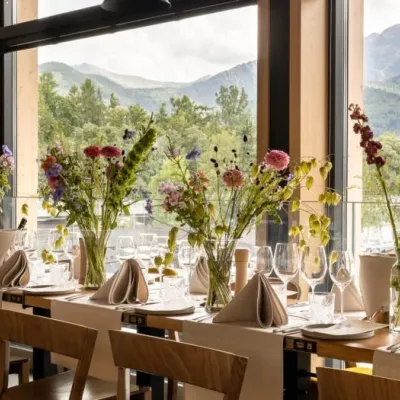 Craft beer & breweriesGwarno Restaurant & Brewery, Zakopane12 km from Chochołów Wooden VillageGwarno is a restaurant with its own small brewery at the foot of Gubałówka in Zakopane. It stands on Na Gubałówkę street right next to the lower station of the...
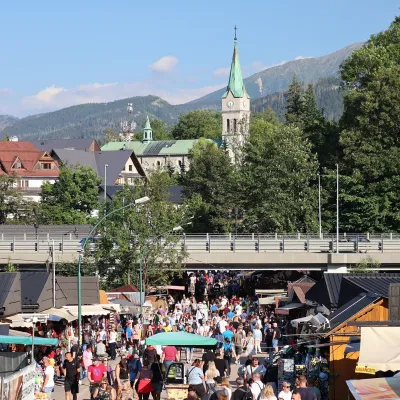 Markets & fairsMarket under Gubałówka12 km from Chochołów Wooden VillageThe market under Gubałówka (Targ pod Gubałówką) is Zakopane's best-known bazaar and probably the most photographed row of stalls in the Polish Tatras.
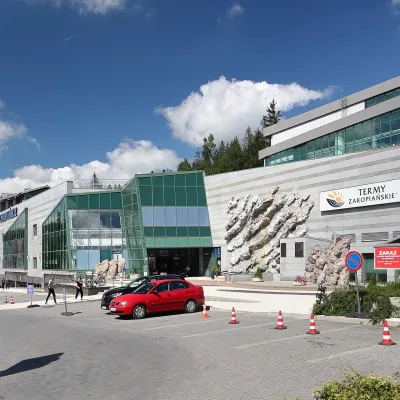 Water parks & thermal poolsTermy Zakopiańskie (Aqua Park Zakopane)14 km from Chochołów Wooden VillageTermy Zakopiańskie is a thermal water park right in Zakopane, on Jagiellońska Street, only a kilometre from Krupówki.
