Wysokie Skałki (Wysoka)
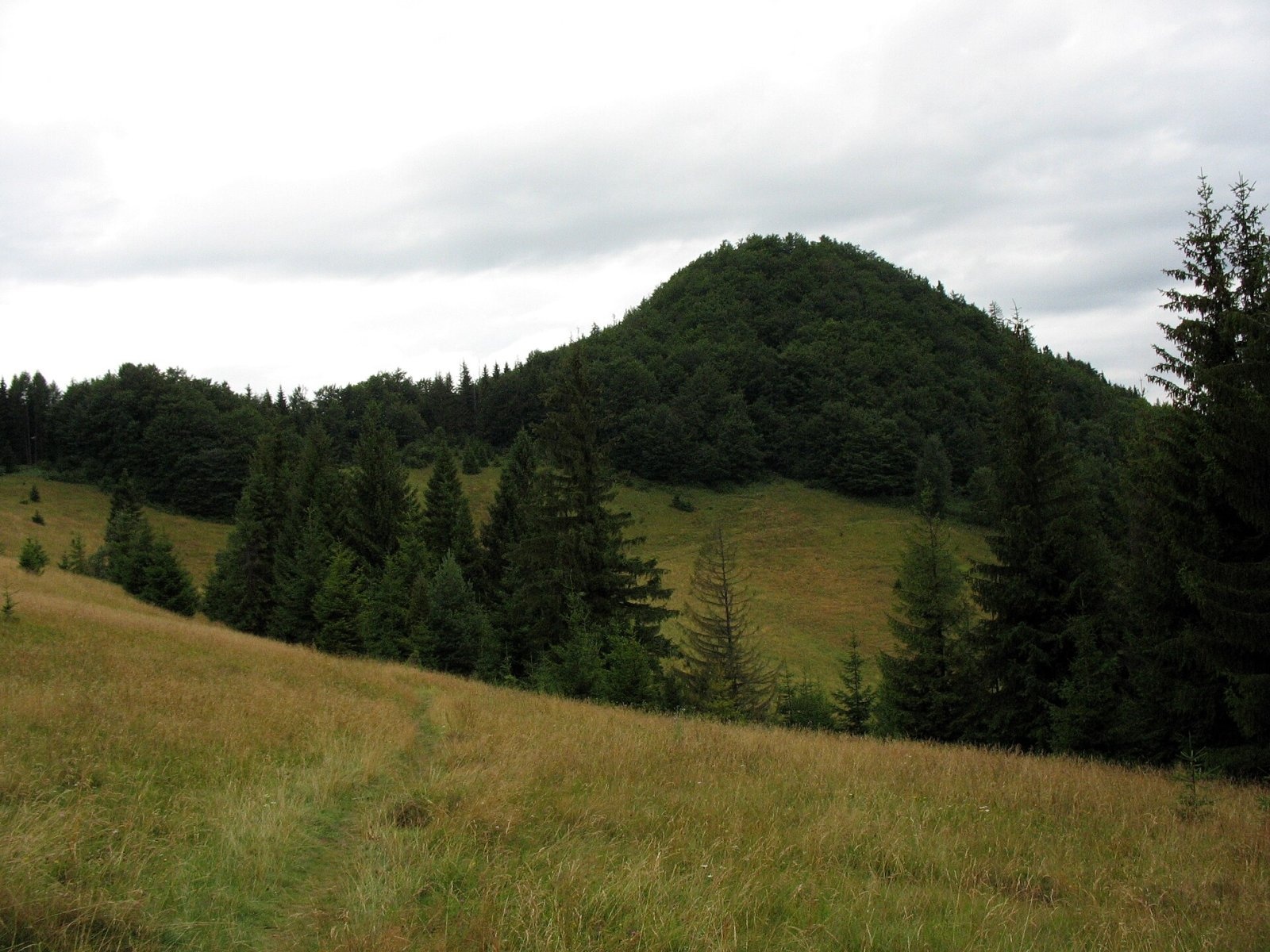
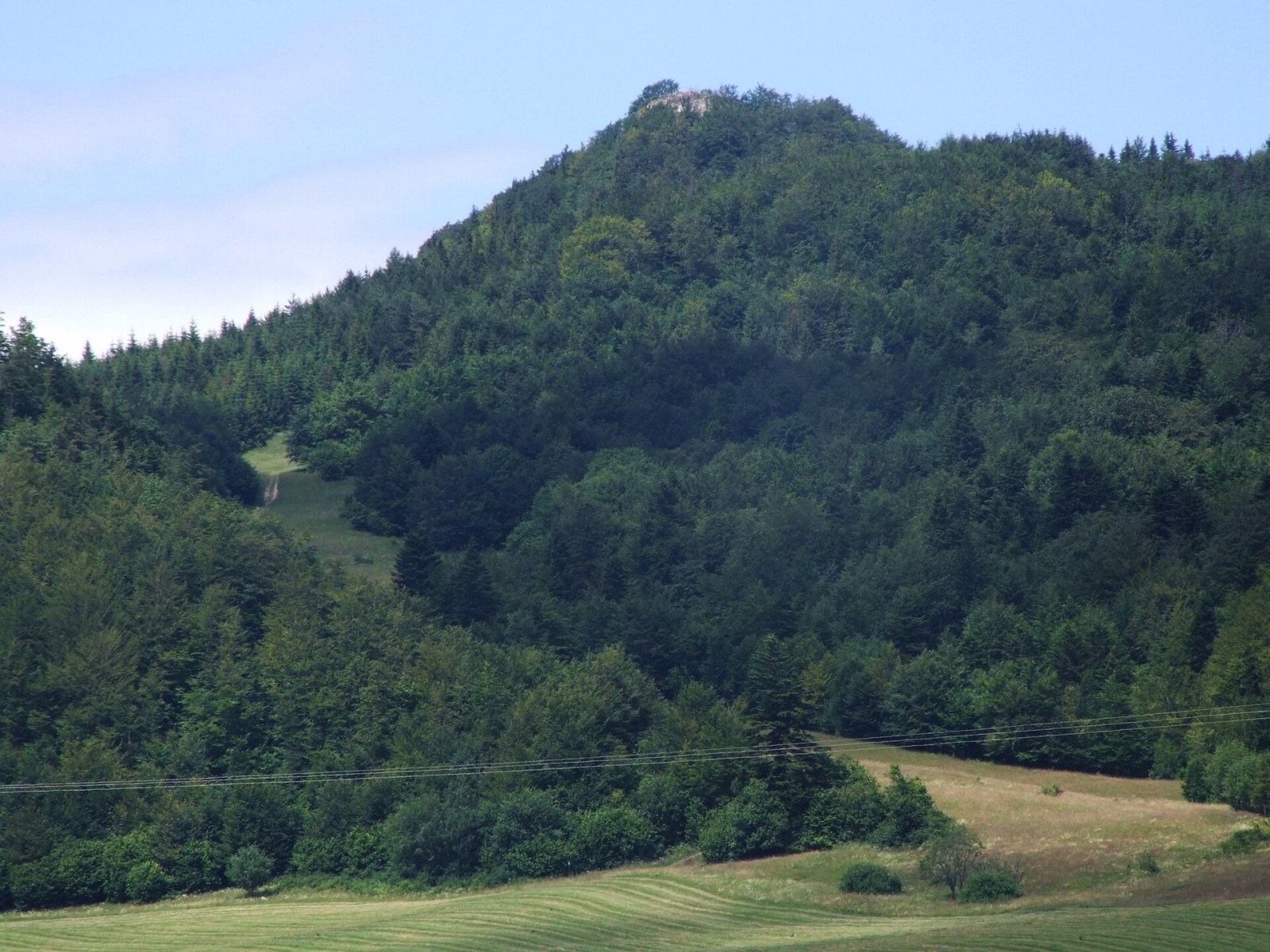
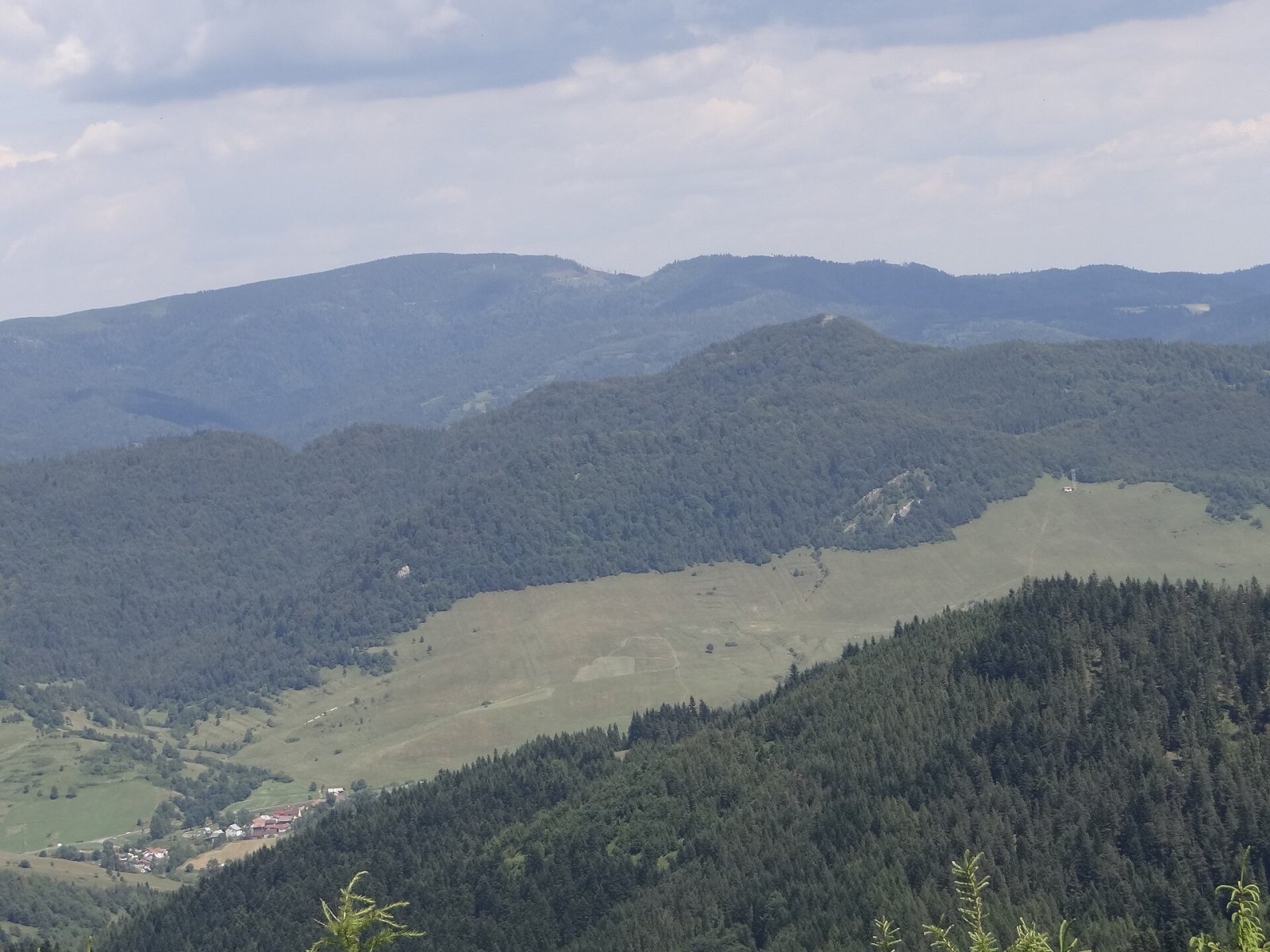
Wysokie Skałki, also called Wysoka (Slovak: Vysoké Skalky), is a 1,050 m summit on the main ridge of the Small Pieniny and the highest point of the entire Pieniny and of the whole Pieniny Klippen Belt. The Polish–Slovak border runs across it: the northern slopes belong to the village of Jaworki (Szczawnica municipality, Lesser Poland), the southern ones to Stráňany in the Stará Ľubovňa district of Slovakia's Prešov Region. Stráňany lies about 1.8 km from the summit, Jaworki roughly 3 km. The mountain is part of the Crown of Polish Mountains, the list of the highest peaks of every Polish range.
On the ridge, Wysokie Skałki sits between Borsuczyny (939 m), separated by the Stachurówki and Kapralowa Wysoka saddles, and Wisielakówka (1,014 m) to the east. To the south the Pieniny meet the Spišská Magura here, at the Stráňanské sedlo (Przełęcz Korbalowa, 730 m), crossed by the road from Červený Kláštor to Hniezdne. Older local names for the peak were Pamiarky and Kiczera; the first probably refers to a triangulation tower that once stood on top.
How to get there / routes
- Green trail from Jaworki through the Homole gorge, the Dubantowska glade and the glade below Wysoka: about 1 h 45 min up, 1 h 15 min down.
- Green trail from the Stráňanské sedlo (border pass on the road from Červený Kláštor): about 1 h 20 min up, 50 min down.
- Blue trail – the Main Pieniny Trail along the Small Pieniny ridge from Szczawnica via Szafranówka and Durbaszka and on via Wierchliczka and the Rozdziela pass to Wielki Rogacz; it passes about 140 m north of the summit.
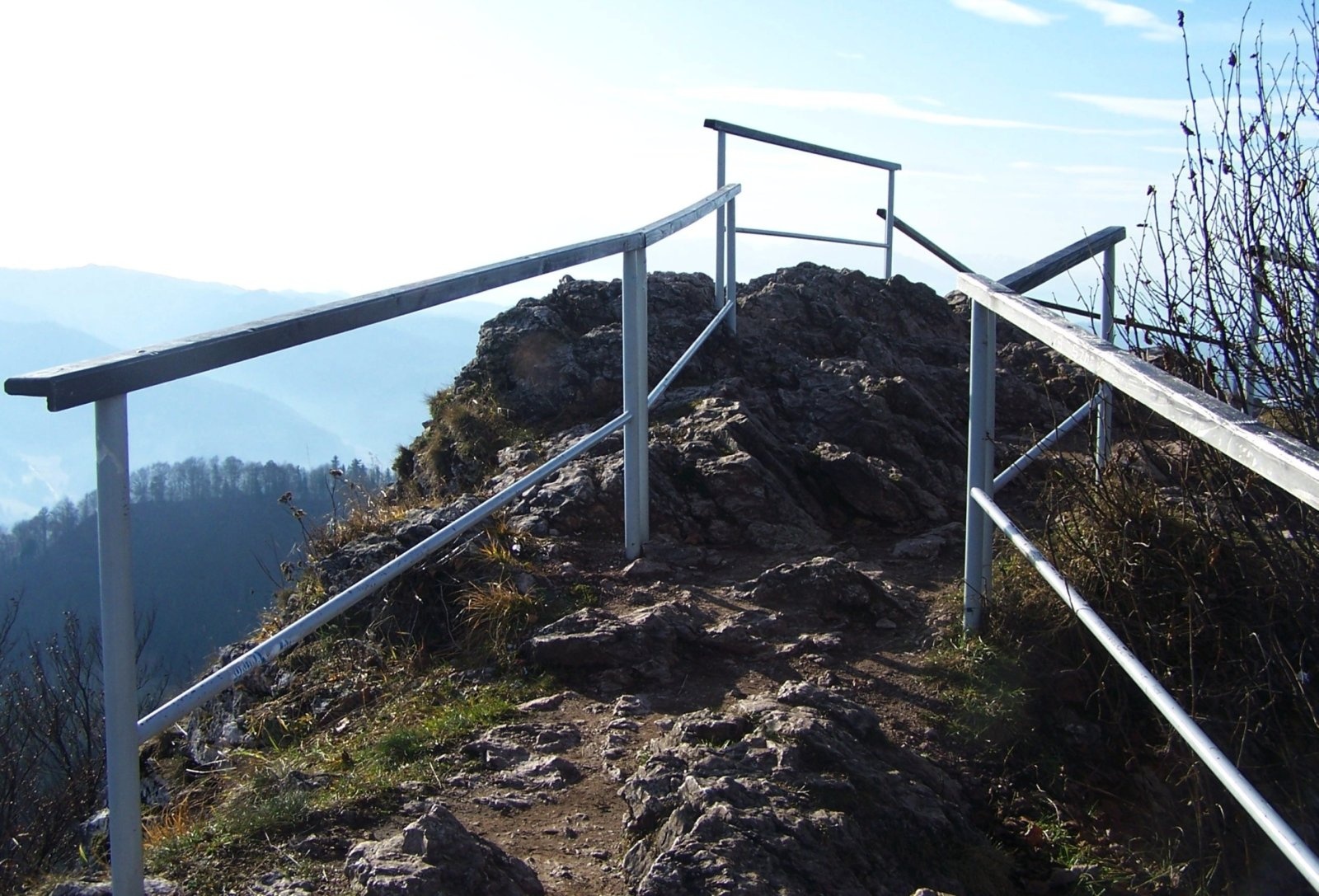
Both green routes meet below the Kapralowa Wysoka saddle, from where a short blue-marked dead-end spur leads to the top. The last section is steep: the path climbs through forest, then up metal stairs with handrails to a small viewing gallery and up another flight onto the rocky dome. The summit itself is fenced with railings.
What you can see from the summit
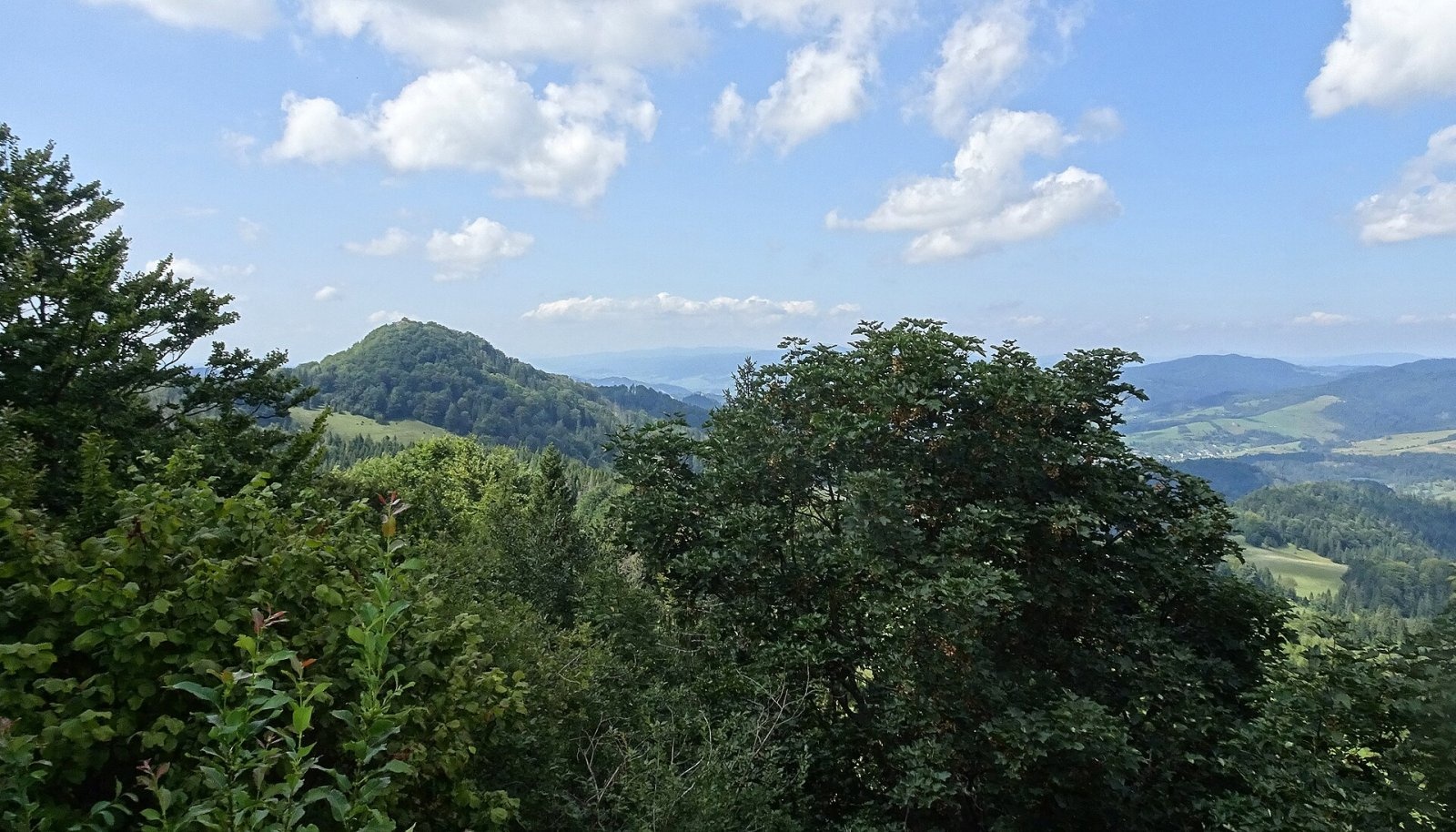
The slopes are wooded and only the rocky dome rises above the spruce forest, so the view opens from the railed gallery on top. It takes in the Tatras, Babia Góra, the Radziejowa range of the Beskid Sądecki, the Spišská Magura, the Levoča Hills and the Pieniny themselves; Slovak sources also mention the Čergov range. To the west the ridge continues to neighbouring Durbaszka, while to the south the valleys drain towards the Poprad.
Nature and history
The summit is built of red crinoidal limestone. To the east and south-east the dome drops in cliffs 5–20 m high, and on the western crest stand the separate Szurdakowa and Fidrykowa rocks. The whole mountain is protected: the southern slopes falling to the Horbalový potok valley lie in Slovakia's PIENAP national park, and on the north-western slope the Wysokie Skałki nature reserve was created in 1961 to protect the only surviving patch of high-montane spruce forest in the Pieniny. Rare species recorded here include European bugbane (Cimicifuga europaea) and woolly thistle (Cirsium eriophorum), protected mosses and, in 2019, the rare crown fungus Sarcosphaera coronaria. The Polish part of the mountain lies outside the Pieniny National Park, which covers the central Pieniny.
The highest peak of the Pieniny was known long ago: a mining document of 1739, from a time when ore was prospected here, describes it as the highest and round mountain with a rock on top "like a castle", hard to reach even on foot. The first winter ascent on skis was recorded in 1929 by Marian Gotkiewicz and companions.
Safety, season and rules
The routes are technically easy and open all year, but the final section is steep and the metal stairs and limestone become slippery after rain and in winter. Hold the railings, stay inside the gallery fence and do not linger on the exposed dome in a thunderstorm. On the Slovak side PIENAP rules apply – stay on marked trails; the same applies in the Polish reserve. The border inside the Schengen area can be crossed freely, but carry an identity document.
The Polish side of the Pieniny is covered by the mountain rescue service GOPR (Podhale group): call 985 or +48 601 100 300, or 112; installing the «Ratunek» app is a good idea. On the Slovak side call the Mountain Rescue Service HZS on 18 300 (+421 18 300) or 112.
Interesting facts
- Wysokie Skałki is the highest point not only of the Pieniny but of the whole Pieniny Klippen Belt arching across Poland and Slovakia.
- The Polish and Slovak heights almost coincide: 1,049.9 m and 1,049.8 m.
- The old name Pamiarky is thought to come from a triangulation tower that once stood on the summit.
Photos: Mariusz Rzepkowski (MariuszR), CC BY-SA 2.5; Jerzy Opioła, CC BY-SA 4.0; Jerzy Opioła, CC BY-SA 4.0; Downar, CC BY-SA 4.0; Jerzy Opioła, CC BY-SA 4.0; Jakub Hałun, CC BY-SA 4.0; Grzegorz W. Tężycki, CC BY-SA 4.0 — Wikimedia Commons.
Getting there from Ukraine
Border crossings
- Krakovets – Korczowa — road, 24/7
- Shehyni – Medyka — road, 24/7 Pedestrian crossing is not confirmed by the Ukrainian border service — check dpsu.gov.ua before the trip.
- Smilnytsia – Krościenko — road, 24/7
- Hrushiv – Budomierz — road, 24/7
- Mostyska – Przemyśl (rail) — rail, 24/7
By car
Lviv – Szczawnica ≈384 km, ≈5 h 25 min without queues: M-10 → Krakovets – Korczowa → A4 to Brzesko (≈198 km) → DK75 to Nowy Sącz → DW969 via Stary Sącz and Łącko to Krościenko nad Dunajcem → Szczawnica. ≈306 km, ≈4 h from the border.
Checked 23.10.2026; border crossing hours and timetables change — check before you travel.
Location on the map
Water and shelter nearby
- Spring below Vysoké Skalky / Wysoka350 m · Not verified · 886 m
- Schronisko pod Durbaszką1.8 km · Standing · 834 m
- Spring below Homole1.8 km · Not verified · 701 m
- Spring below Watrisko2.2 km · Not verified · 902 m
- Biała Woda Cabin2.9 km · Not verified · 644 m
Comments
Trails via Wysokie Skałki (Wysoka)
All 1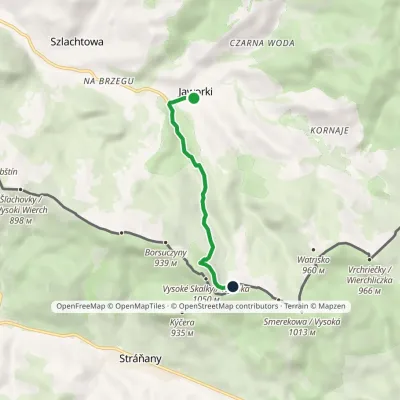
Nearby attractions
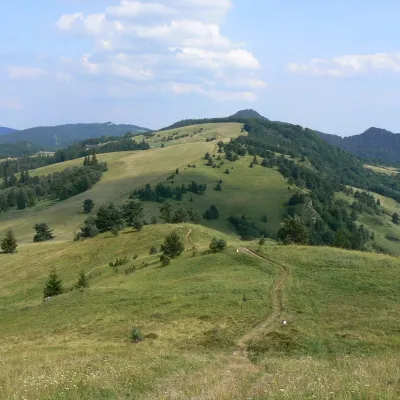 PeakDurbaszkaaltitude 934 m1.6 km from Wysokie Skałki (Wysoka)Durbaszka is an inconspicuous 934 m summit on the main ridge of the Small Pieniny (Małe Pieniny), in the eastern part of the Pieniny.
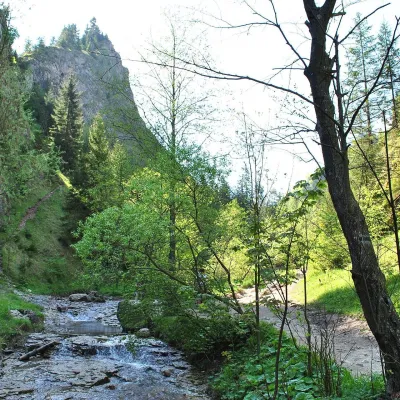 NatureHomole Gorge2.5 km from Wysokie Skałki (Wysoka)The Homole Gorge (Wąwóz Homole) is one of the most beautiful rocky gorges in Poland. It lies in the Little Pieniny, in the Lemko village of Jaworki near Szczawnica.
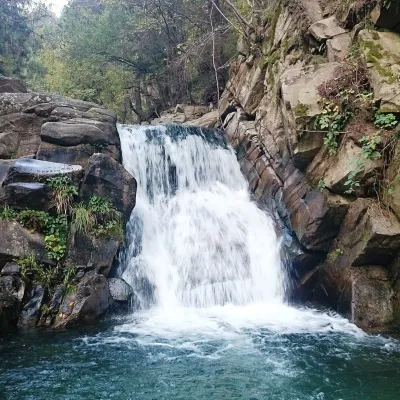 WaterfallZaskalnik Falls7.3 km from Wysokie Skałki (Wysoka)Zaskalnik is a small but very picturesque waterfall on the Sopotnicki stream (Sopotnicki Potok) near the spa town of Szczawnica.
Craft nearby
All craft places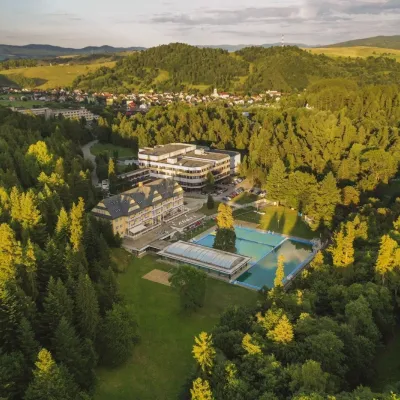 Water parks & thermal poolsVyšné Ružbachy Spa: Izabela Mountain Pools and Indoor Thermal Pool8.3 km from Wysokie Skałki (Wysoka)Vyšné Ružbachy is one of Slovakia’s oldest spas. It lies on the south-eastern slope of the Spišská Magura at about 617 m, surrounded by coniferous forest that merges...
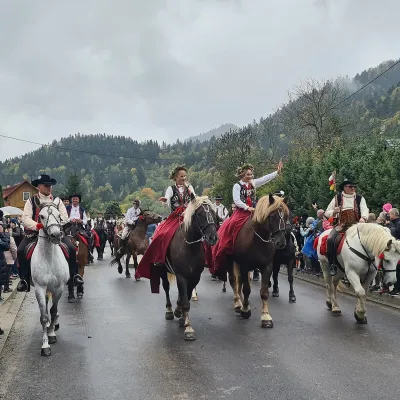 Markets & fairsAutumn Redyk in Szczawnica: sheep drive, oscypek and shepherds8.4 km from Wysokie Skałki (Wysoka)Redyk is an old Carpathian shepherding custom: in spring the flocks are driven up to the mountain pastures (hale), and in autumn, after the cheese-making season, they...
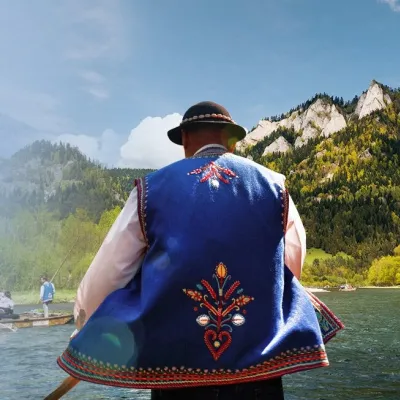 Ethno tours & guidesGoral raftsmen of Červený Kláštor: wooden-raft trip on the Dunajec10 km from Wysokie Skałki (Wysoka)Between Červený Kláštor and Lesnica the Dunajec cuts a deep, winding gorge through the limestone Pieniny, and here the river becomes the border between Slovakia and...
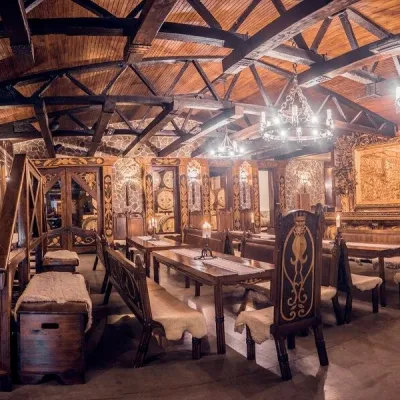 Craft producersNestville Distillery, Hniezdne — Home of the First Slovak Whisky11 km from Wysokie Skałki (Wysoka)This tradition is the basis for BGV, a company founded in 2001, which built the Nestville Distillery here.
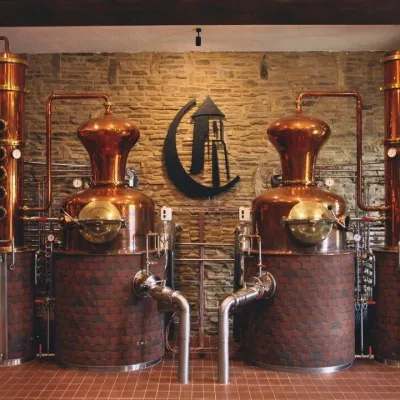 Craft producersCastle Distillery below Ľubovňa Castle: fruit spirits and tastings12 km from Wysokie Skałki (Wysoka)Stará Ľubovňa is a town in northern Spiš, overlooked by Ľubovňa Castle. For more than three and a half centuries Ľubovňa was one of the Spiš towns pledged to the...
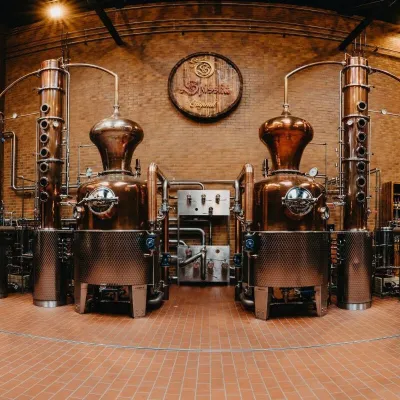 Craft producersSpišská Pálenica, Stará Ľubovňa: distillery tour and Spiš borovička14 km from Wysokie Skałki (Wysoka)Spiš boasts perhaps the oldest history of distilling in Europe: at the hillfort of Myšia Hôrka near Spišský Štvrtok, part of a distillation vessel from around 1500 BC...
