Sądecki Ethnographic Park (Nowy Sącz open-air museum)
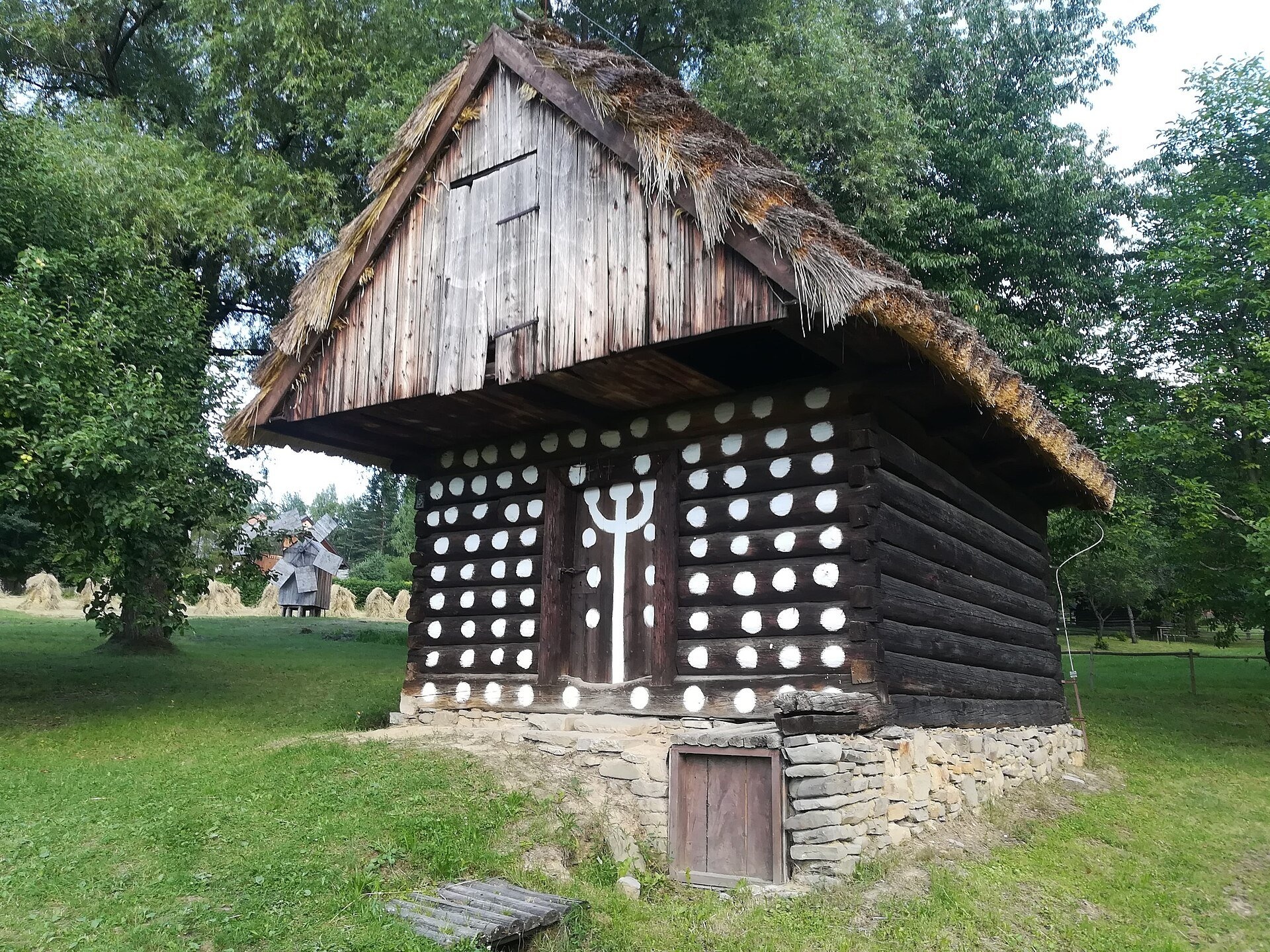
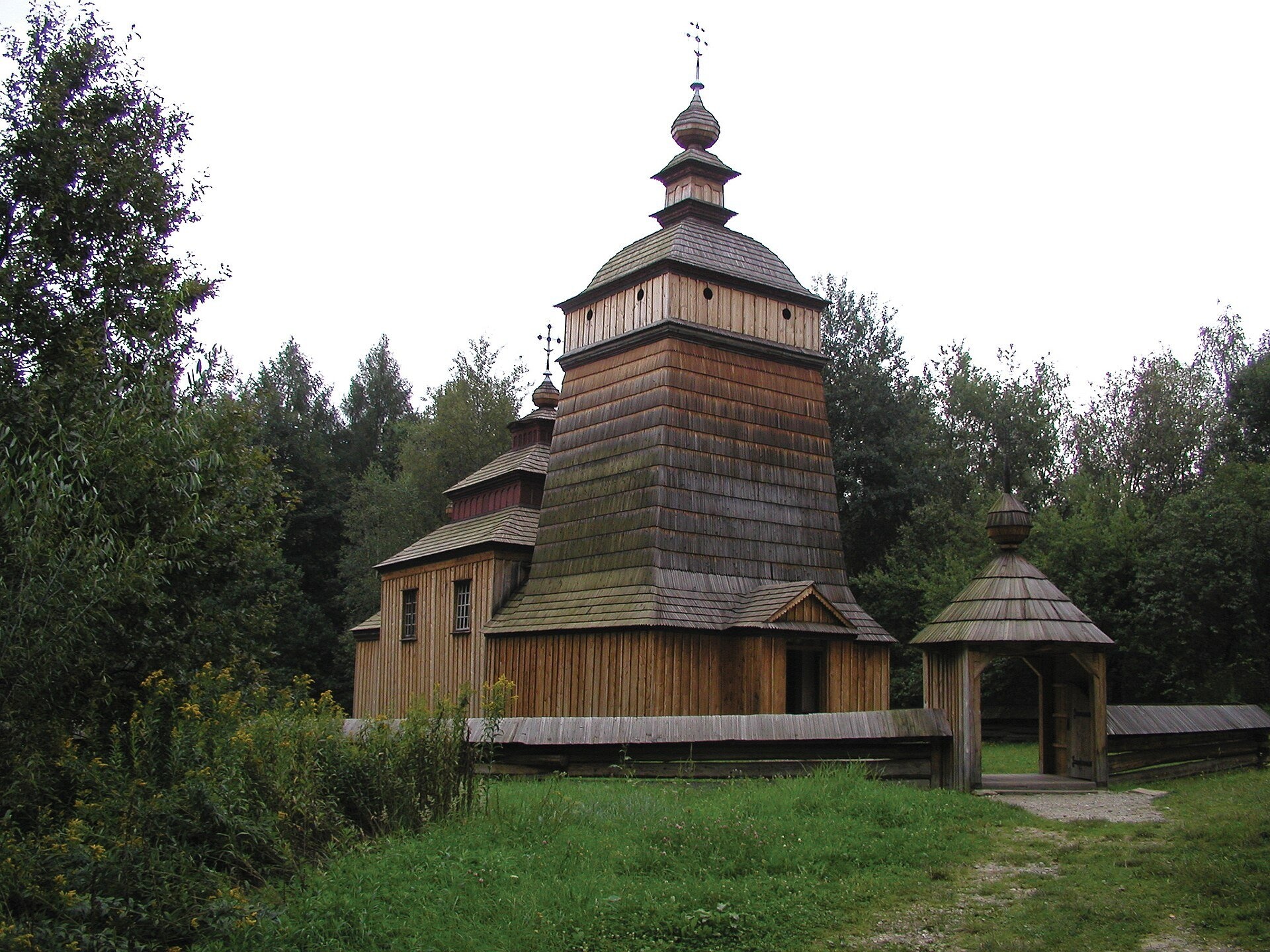
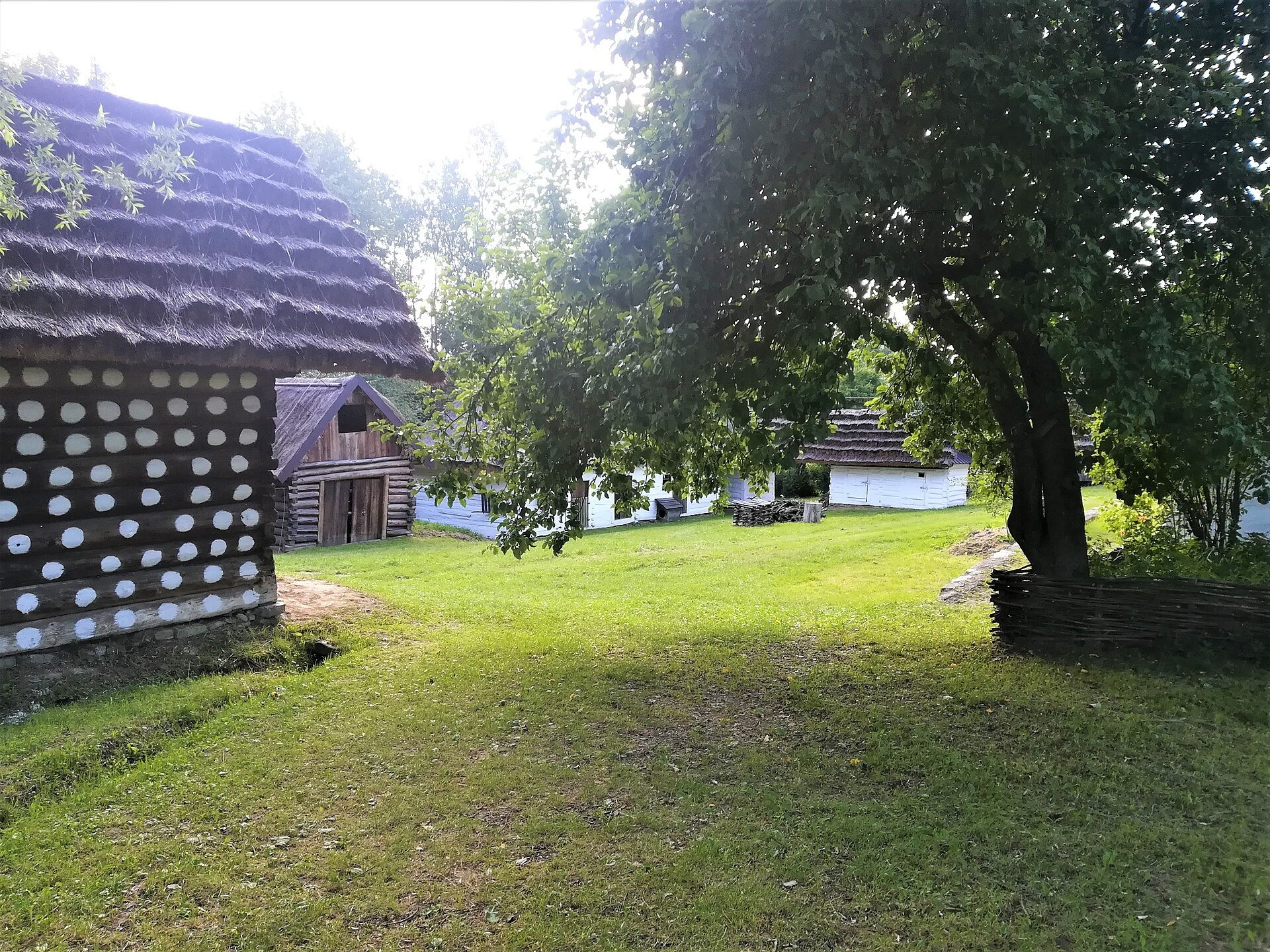
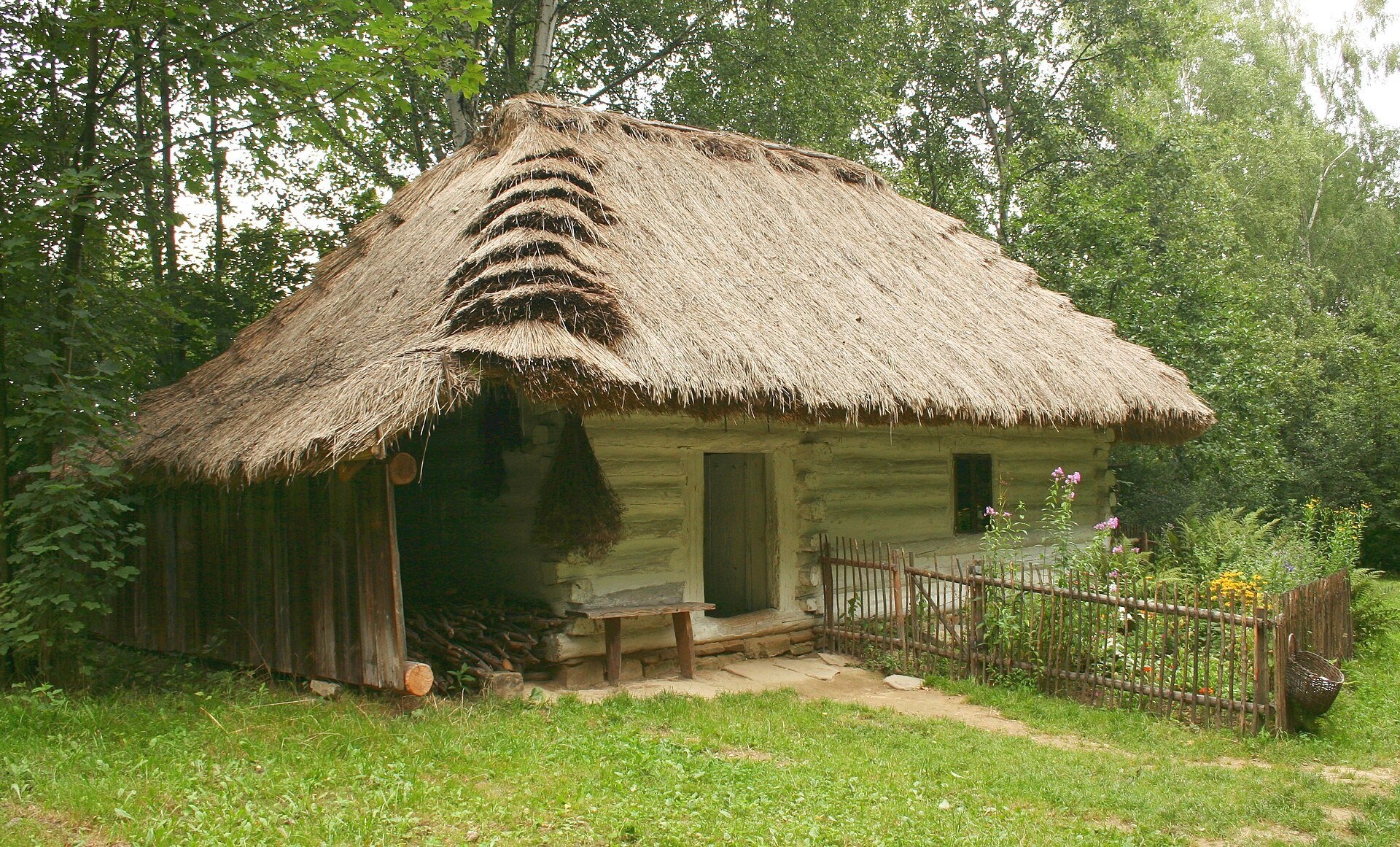
The Sądecki Ethnographic Park (Sądecki Park Etnograficzny) in Nowy Sącz is the largest open-air museum in the Małopolska region. Across roughly 20 hectares on the edge of the city stand several dozen wooden and brick buildings brought from all over the Sącz Land: peasant farmsteads, a noble manor house, a manor farm, craft workshops, a windmill and three 18th-century places of worship — a Roman Catholic church, a Greek Catholic church and a Protestant church. The museum opened in 1975 and is run by the Museum of the Sącz Land (Muzeum Ziemi Sądeckiej, formerly the District Museum in Nowy Sącz).
What makes this skansen special is that it tells the story not of one people but of everyone who lived in the valleys of the Dunajec and the Poprad. Separate sectors are devoted to three Polish ethnographic groups — the Sącz Lachs, the Pogórzanie and the Sącz Highlanders — as well as to the Lemkos, the German colonists and the Carpathian Roma. The houses show how poor and wealthy families lived and how everyday life changed from the 18th to the early 20th century.
What to see
- The Lemko sector — an 18th-century church from Czarne and cottages from Lemko villages; there is an exhibition on Lemko tar trading, a craft based on selling tar and lubricants that the Lemkos carried far beyond the Carpathians.
- The 17th-century manor house from Rdzawa with rare painted interiors, and the manor farm next to it.
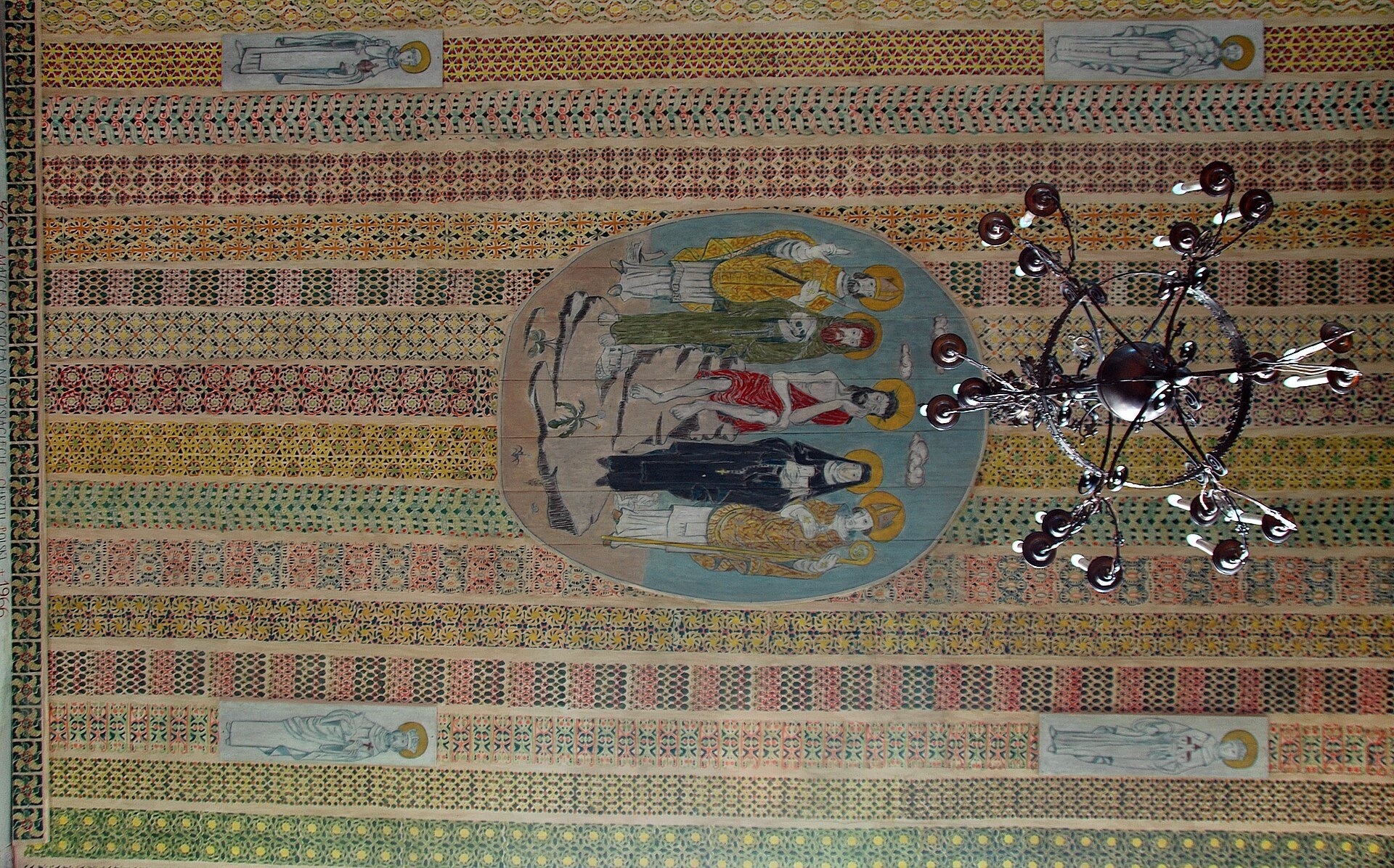
- The church from Łososina Dolna with its painted ceiling, and the Protestant church from Stadła (1809), moved here after a fire in 2003.
- The German colonists' sector — brick farmsteads from Gołkowice Dolne, built by the descendants of settlers invited to Galicia by Emperor Joseph II at the end of the 18th century.
- The Roma settlement at the edge of the forest, the village school from Nowy Rybie, a smithy, an oil mill, apiaries, wayside shrines and wells.
- The Galician Town (Miasteczko Galicyjskie) — a reconstruction of a small market square with a town hall, pharmacy, post office, tailor's workshop, fire station and inn; opened in 2011, it is now a separate branch of the museum.
In summer the skansen hosts demonstrations of old crafts and regional cooking, workshops and folk festivals, so it is a good place to visit with children.
Practical information
Since 1 May 2026 the only entrance to the skansen is from ul. Lwowska 226 — through the Galician Town or the German colonists' sector (the entrance from ul. Długoszowskiego is closed because of construction work). Next to the Galician Town there is a large free car and coach park, and tickets for the skansen are sold there too. City buses nos. 25 and 27 stop nearby.
From 1 May to 15 October the park is open Tuesday to Sunday, 10:00–18:00 (interiors until 17:45, last entry 16:30). From 16 October to 30 April it opens Tuesday to Sunday, 9:00–15:00 (last entry 14:00), but only as a walk around the grounds without entering the houses. Closed on Mondays and on some public holidays.
A high-season ticket costs 23 zł (reduced 17 zł, family 69 zł); a combined ticket for the skansen and the Galician Town costs 32 zł. Off season it is 13 zł, or 27 zł combined. On Tuesdays entry to the grounds is free. A guided tour in Polish or English costs 150 zł per group. A smartphone audio guide is available. Information as of October 2026.
The grounds are hilly and the paths unpaved; the houses have high thresholds and low doors, so prams and wheelchairs will find it difficult. An accessible entrance, ticket office and toilet are on the Galician Town side. Allow at least two to three hours for the visit.
Nearby
A few kilometres to the south lies Stary Sącz with its historic market square and the Poor Clares' convent, and the Poprad valley leads to the ruins of Rytro Castle and the spa town of Krynica-Zdrój. To the west, in the Pieniny, are Szczawnica and the Dunajec raft trip.
Official website: muzeum.sacz.pl
Photos: MOs810, CC BY-SA 4.0, Wikimedia Commons; mik Krakow, CC BY-SA 2.0, Wikimedia Commons; Przykuta, CC BY-SA 3.0, Wikimedia Commons; Krzysztof Stadnik, CC BY-SA 3.0 pl, Wikimedia Commons; Pesell, CC BY-SA 4.0, Wikimedia Commons; Gorofil, CC BY-SA 4.0, Wikimedia Commons.
Getting there from Ukraine
Border crossings
- Krakovets – Korczowa — road, 24/7
- Shehyni – Medyka — road, 24/7 Pedestrian crossing is not confirmed by the Ukrainian border service — check dpsu.gov.ua before the trip.
- Smilnytsia – Krościenko — road, 24/7
- Hrushiv – Budomierz — road, 24/7
- Mostyska – Przemyśl (rail) — rail, 24/7
By car
Lviv – Nowy Sącz ≈335 km, ≈4 h 25 min without queues: M-10 to Krakovets → Krakovets – Korczowa → toll-free A4 via Rzeszów and Tarnów to Brzesko (≈198 km) → DK75 to Nowy Sącz (≈47 km). ≈257 km, ≈3 h from the border. Via Shehyni – Medyka (Przemyśl, DK28, DK77 to the A4) ≈348 km, ≈4 h 50 min.
Checked 23.10.2026; border crossing hours and timetables change — check before you travel.
Location on the map
Comments
Trails nearby
All trails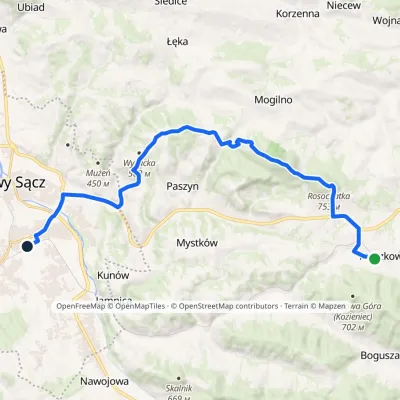 ModerateTwo-dayMarkedPtaszkowa station Nowy Sącz stationElevation profile294–753 m20.8 kmascent 488 m≈ 6 h walkingunder 1 km from Sądecki Ethnographic Park (Nowy Sącz open-air museum)
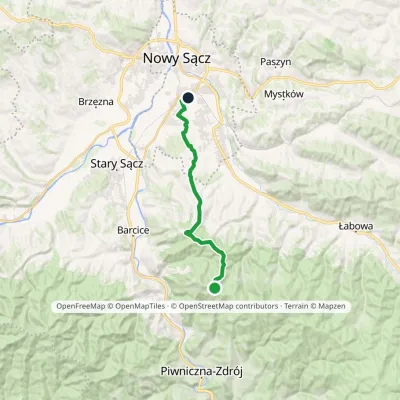 ModerateOne-dayMarkedNowy Sącz MakowicaElevation profile304–938 m17.1 kmascent 112 m≈ 4.5 h walking2.8 km from Sądecki Ethnographic Park (Nowy Sącz open-air museum)
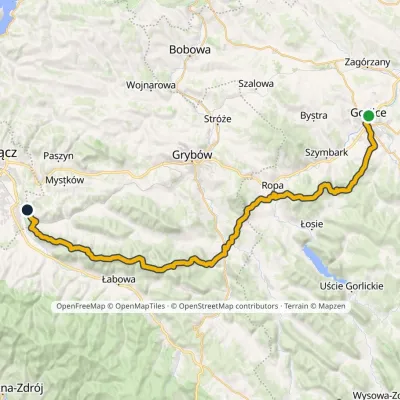 HardMulti-dayMarkedGorlice JamnicaElevation profile282–888 m48.1 kmascent 1 748 m3.5 km from Sądecki Ethnographic Park (Nowy Sącz open-air museum)
Nearby attractions
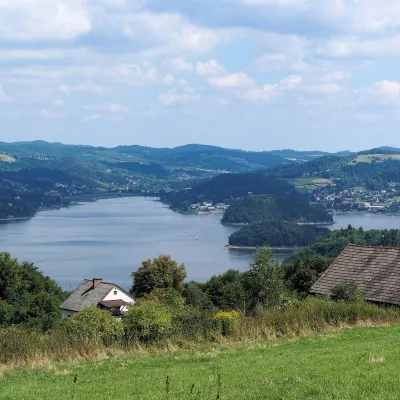 LakeLake Rożnów (Jezioro Rożnowskie)Tabaszowa13 km from Sądecki Ethnographic Park (Nowy Sącz open-air museum)Lake Rożnów (Jezioro Rożnowskie) is a reservoir on the Dunajec in Lesser Poland, about 12 km north of Nowy Sącz.
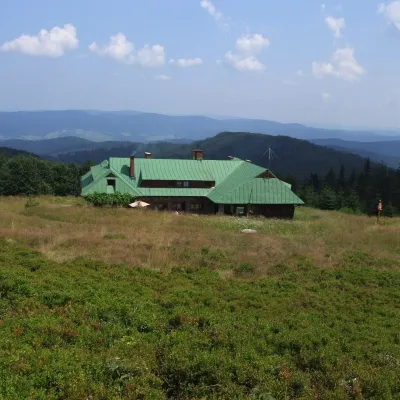 Mountain meadowHala ŁabowskaUhryńaltitude 1 061 m17 km from Sądecki Ethnographic Park (Nowy Sącz open-air museum)Hala Łabowska is a large glade in the Sącz Beskids (Beskid Sądecki), in the middle part of the Jaworzyna Krynicka range, at about 1,060 m.
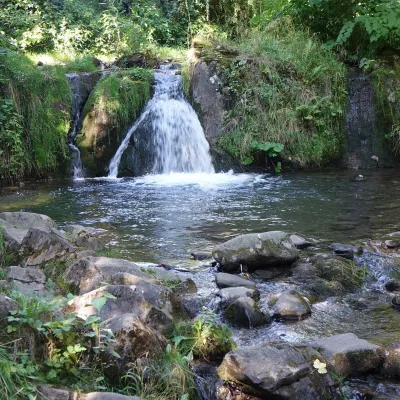 WaterfallŁomniczanka WaterfallŁomnica-Zdrój19 km from Sądecki Ethnographic Park (Nowy Sącz open-air museum)Łomniczanka Waterfall (Wodospad na Łomniczance) is a natural waterfall on the stream of the same name in the village of Łomnica-Zdrój, in the commune of Piwniczna...
Craft nearby
All craft places Craft beer & breweriesPersonall Kraft Brewpub, Stary SączStary Sącz8 km from Sądecki Ethnographic Park (Nowy Sącz open-air museum)Personall Kraft is a family-run brewpub in Stary Sącz where the beer is brewed right in the dining hall: the big brewing vessels are visible from the tables.
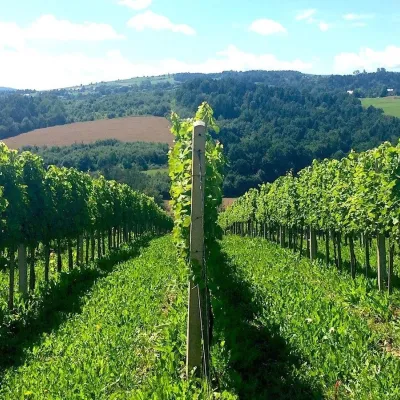 Wine & tastingsChodorowa vineyard near Grybów: tour and wine tastingChodorowa14 km from Sądecki Ethnographic Park (Nowy Sącz open-air museum)The Chodorowa vineyard (Winnica Chodorowa) lies in the hills of the Rożnów Foothills (Pogórze Rożnowskie), a few kilometres from the small town of Grybów in the...
 Markets & fairsFasolowe Żniwa in Rożnów: the Piękny Jaś bean harvest festivalRożnów17 km from Sądecki Ethnographic Park (Nowy Sącz open-air museum)The Dunajec valley around Lake Rożnów is famous for the large white “Piękny Jaś” (Beautiful Johnny) bean. “Fasola Piękny Jaś z Doliny Dunajca” holds EU Protected...
 Honey & meaderiesSądecki Bartnik Beekeeping Farm, StróżeStróże17 km from Sądecki Ethnographic Park (Nowy Sącz open-air museum)Sądecki Bartnik in the village of Stróże near Grybów is one of Poland's best-known beekeeping farms. The family business was founded in 1973 by Anna and Janusz...
 Honey & meaderiesBarć Apiary in Kamianna, the Beekeepers' VillageKamianna18 km from Sądecki Ethnographic Park (Nowy Sącz open-air museum)The Barć ("Bee Tree") apiary in the Lemko village of Kamianna, between Krynica-Zdrój and Nowy Sącz, is one of Poland's best-known beekeeping places, and Kamianna is...
 Markets & fairsBobbin Lace Festival in Bobowa: lace fair and workshopsBobowa18 km from Sądecki Ethnographic Park (Nowy Sącz open-air museum)Bobowa — one of the oldest settlements in the Biała river valley between Tarnów and Nowy Sącz, about 25 km north-west of Gorlice — is considered Poland's capital of...
