Viscri Fortified Church: a UNESCO Saxon village
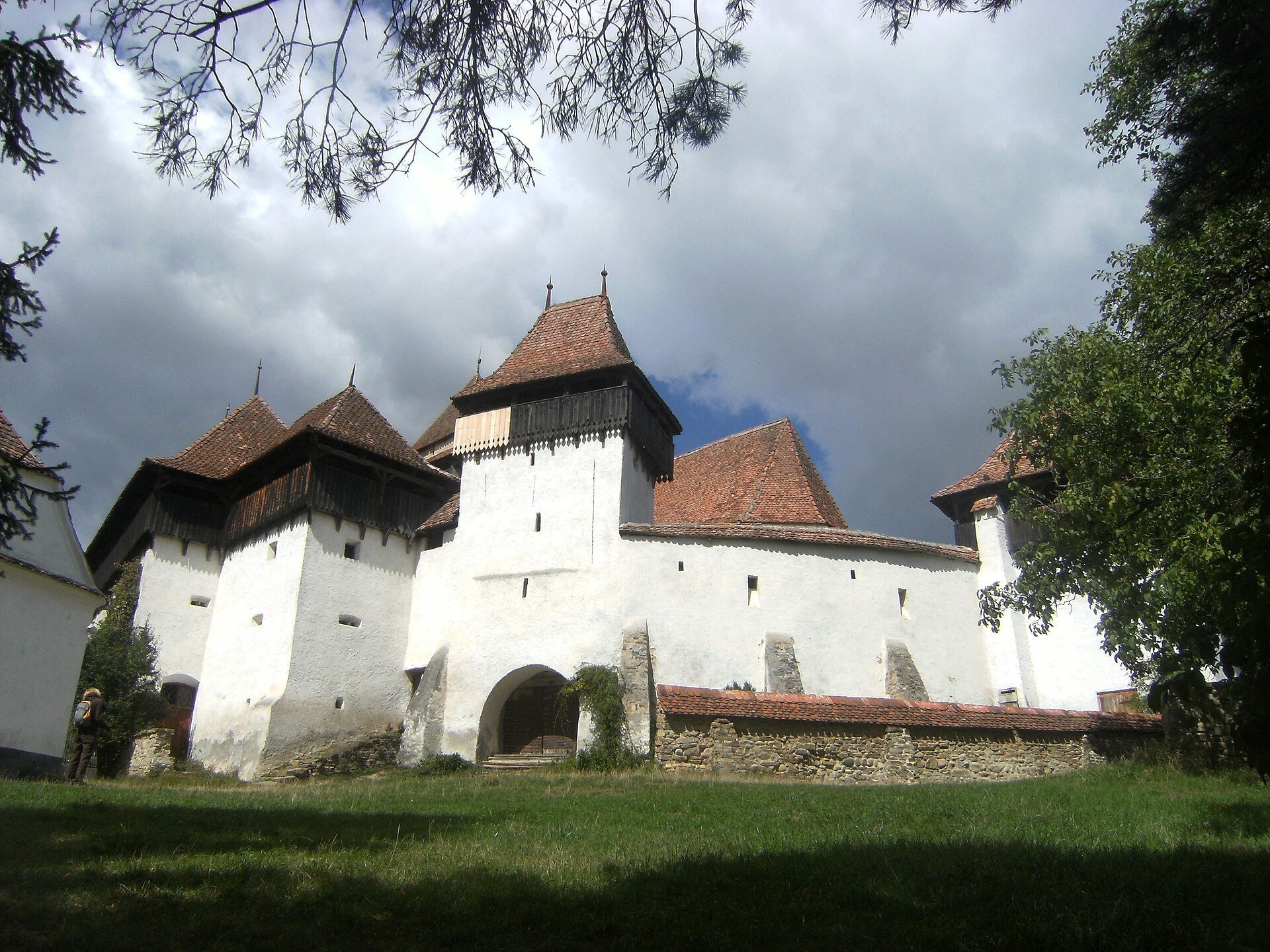
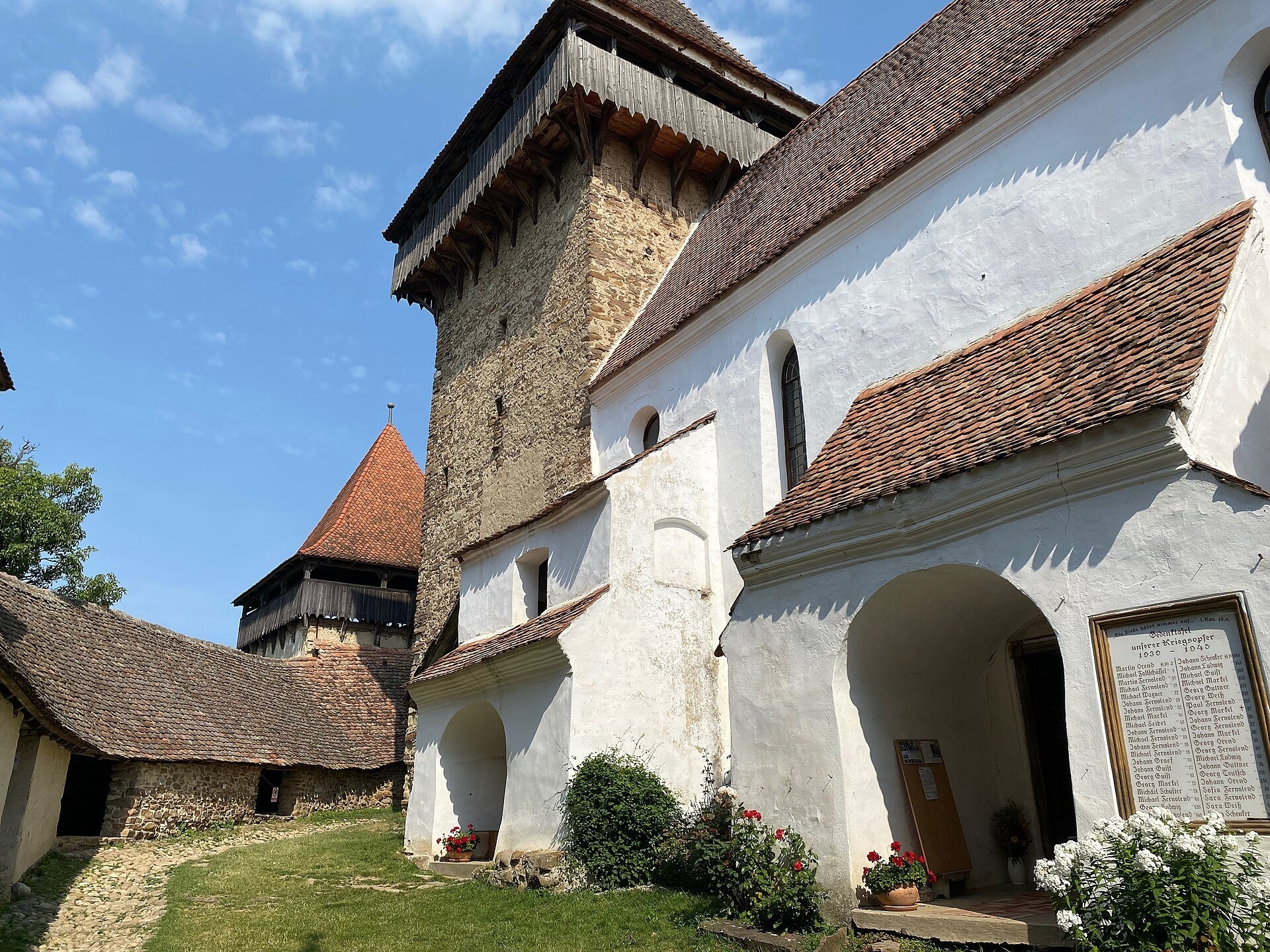
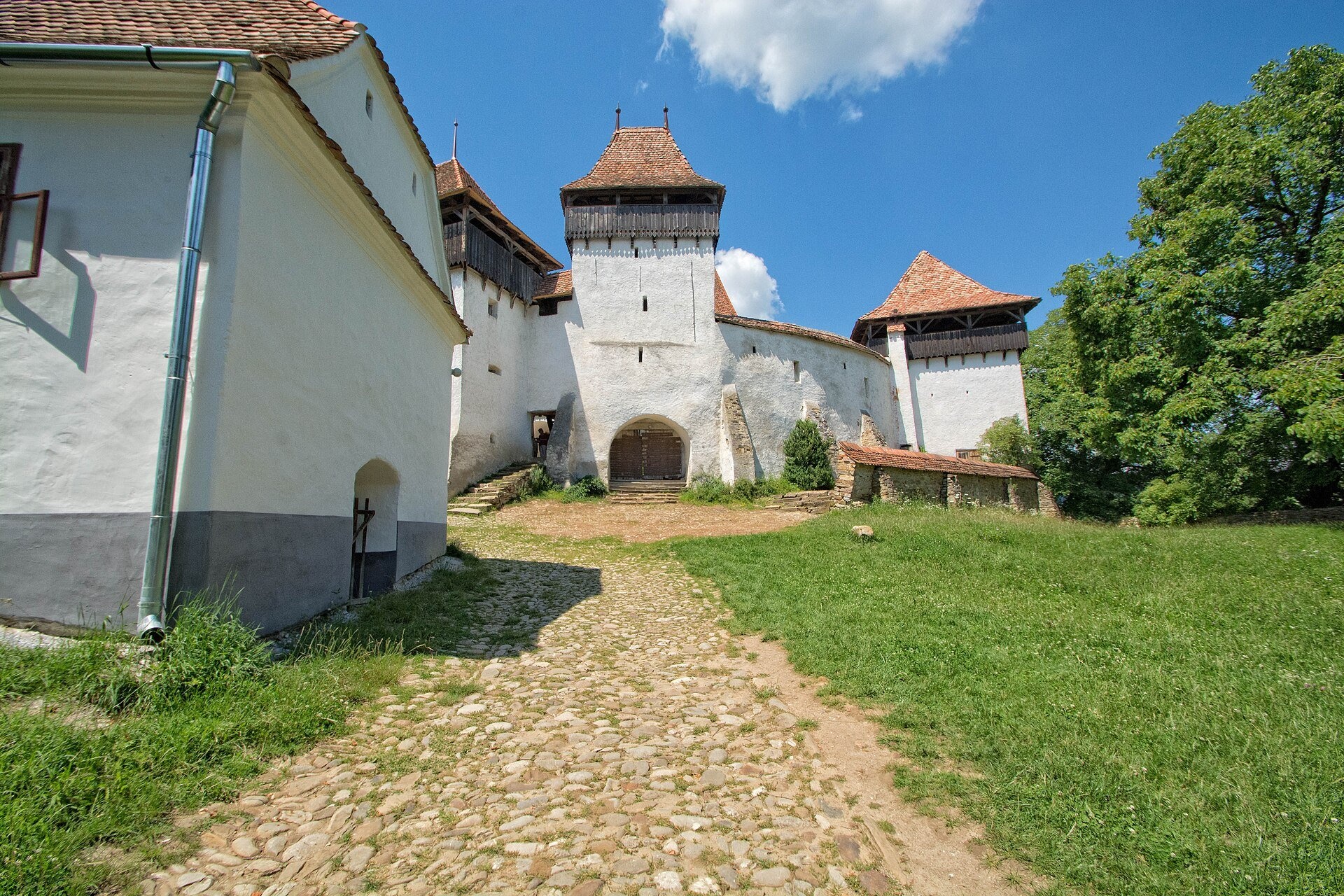
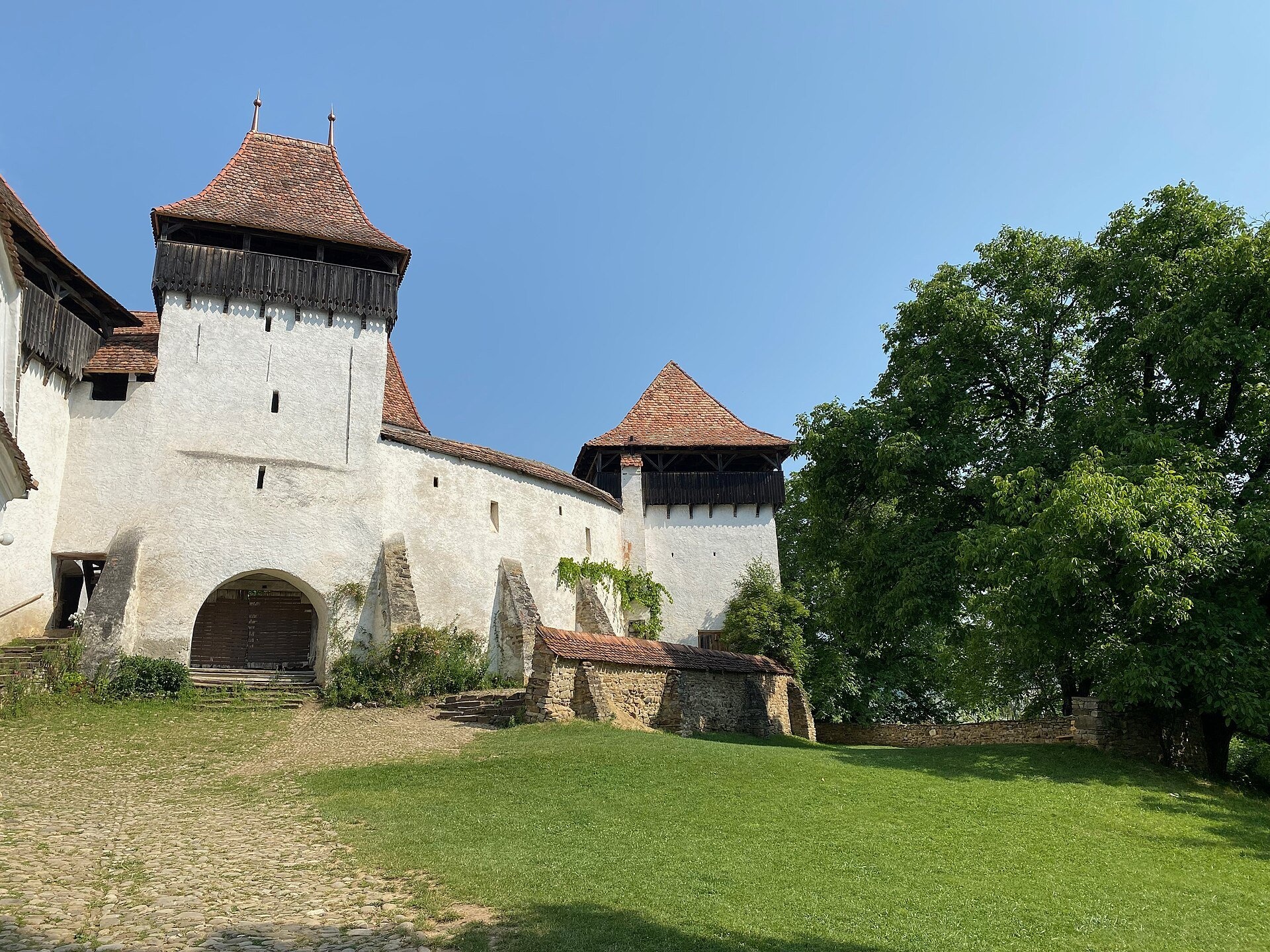
The fortified Evangelical church in the village of Viscri (German Deutsch-Weißkirch, Hungarian Szászfehéregyháza) is perhaps the most photogenic of the Saxon fortresses of Transylvania. The white church with its massive tower stands on a hill above a village whose blue- and ochre-painted houses with tall gates line one long street. Since 1999 the church and the village have been part of the UNESCO World Heritage site «Villages with Fortified Churches in Transylvania» (inscribed in 1993, extended in 1999).
From a Romanesque chapel to a fortress
The first small Romanesque church was built by the earliest Székely settlers; later the village passed to the Transylvanian Saxons. Around 1500 the church was fortified: the nave was lengthened and joined to a freestanding keep on the west side, which probably belonged to an early noble family. The tower was raised with a bell storey and a defensive walkway, and a defensive storey was built over the chancel (it was removed in 1743).
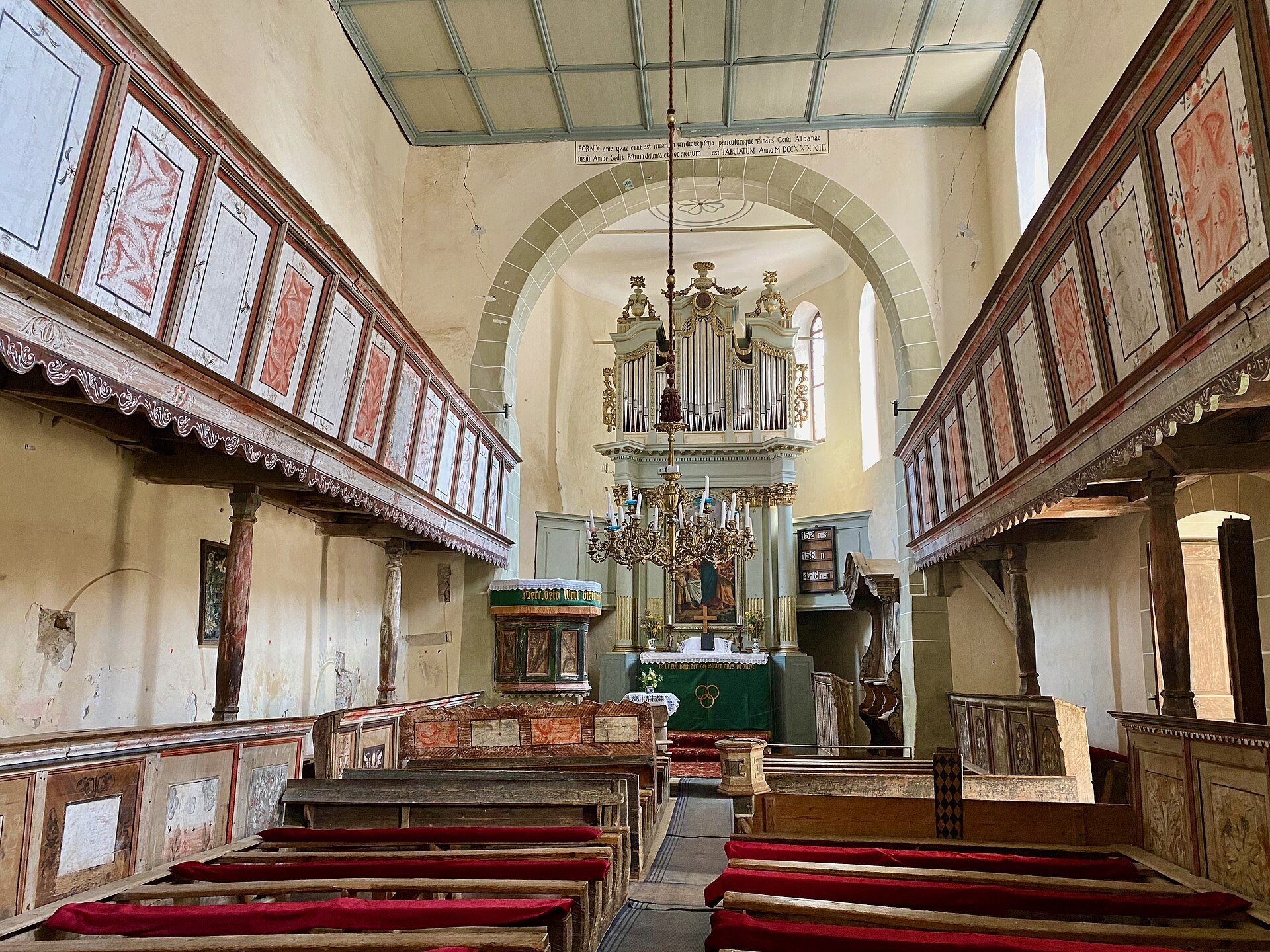
In the early 16th century the church was surrounded by a ring wall about 7 metres high, and in the 17th century it was strengthened with towers and a walkway. When the danger had passed, the walkway was replaced with storerooms where each family kept its grain. The plain interior keeps a painted wooden ceiling of 1743. After the mass departure of the Saxons in the early 1990s the village emptied; since 2000 the Mihai Eminescu Trust has worked with the villagers to restore houses using traditional techniques, and Viscri has become an example of quiet cultural tourism. King Charles III of Britain also has a house here.
Why go
Viscri preserves the complete picture of a Saxon village of the early 19th century — not just a monument but a whole settlement, with its rhythm of life and horses and carts in the street. The view of the fortress from the hills above the village is especially lovely in the morning. A visit to the church combines well with a walk through the village, a cart ride or a bike ride.
What to see
- The keep — the oldest defensive part; from the bell storey you see the village and the surrounding hills.
- The church with Romanesque remains, the painted ceiling of 1743 and the simple pews of the Saxon community.
- The ring wall with towers, the defensive walkway and the later grain stores.
- The museum collection in the fortress rooms — Saxon household objects and folk costume.
- The village itself with its blue façades, gates and farmsteads restored using traditional methods.
Practical information
Viscri lies away from the main roads: from the DN13 Brașov — Sighișoara road turn off near the village of Bunești, then about 7 km on a local road. It is about 90 km from Brașov and about 40 km from Sighișoara. From Ukraine the nearest route is via the Porubne — Siret border crossing (about 430 km to Viscri). The community asks visitors to leave cars in the village car park and walk to the church, which keeps the street peaceful. Take your rubbish with you and book services in advance.
The church is open daily in the warm season and less in winter; exact hours and prices are not officially published, so check before you go. This is a working Lutheran church: please be quiet. The stairs up the tower are steep and narrow. Allow about an hour for the church and another hour or two for the village.
Nearby
- Rupea Fortress on its basalt hill — about 25 km away.
- Saschiz fortified church with its clock tower (UNESCO).
- The historic centre of Sighișoara (UNESCO).
- Other Saxon villages with fortified churches between Rupea and Sighișoara, such as Bunești and Criț.
Official website: viscri.ro
Photos: Anamaria Sidonia Ravar, CC BY-SA 3.0 ro, Wikimedia Commons; Josep Renalias Lohen11, CC BY 4.0, Wikimedia Commons; Daria Virbanescu, CC BY-SA 4.0, Wikimedia Commons; The yoowe, CC BY-SA 3.0 ro, Wikimedia Commons; Superchilum, CC BY-SA 4.0, Wikimedia Commons.
Getting there from Ukraine
Border crossings
- Porubne – Siret — road and pedestrian, 24/7
- Diakivtsi – Racovăț — road and pedestrian, 24/7 No freight traffic.
- Krasnoilsk – Vicovu de Sus — road and pedestrian, 08:00–20:00 Cars up to 3.5 t and pedestrians only; not 24/7.
- Solotvyno – Sighetu Marmației — road and pedestrian, 24/7 Passenger traffic only: vehicles up to 3.5 t with up to 9 seats, pedestrians.
- Diakove – Halmeu — road, 24/7 No pedestrian crossing.
By car
Chernivtsi – Brașov ≈395 km, ≈7 h 03 min (via Diakivtsi – Racovăț); Rakhiv – Brașov ≈419 km, ≈7 h 24 min (via Solotvyno – Sighetu Marmației); Uzhhorod – Brașov ≈522 km, ≈8 h 39 min (via Diakove – Halmeu). Times without border queues, our road routing (GraphHopper, OSM).
Checked 03.11.2026; border crossing hours and timetables change — check before you travel.
Comments
Travellers’ experience: reports, tips, questions.
No one has written here yet. Be the first — your experience helps others.
Video 2
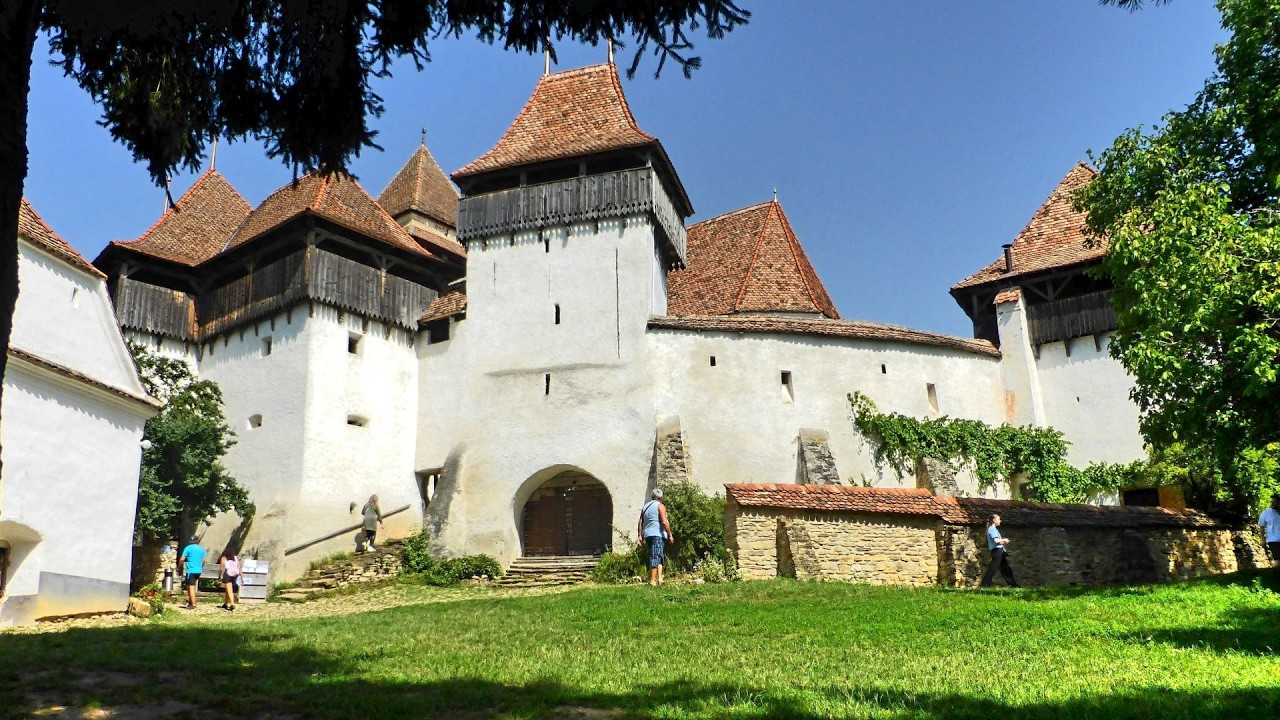 Biserica evanghelică fortificată din Viscri (Județul Brașov, Transilvania)Lucian Ionescu
Location on the map
Nearby attractions
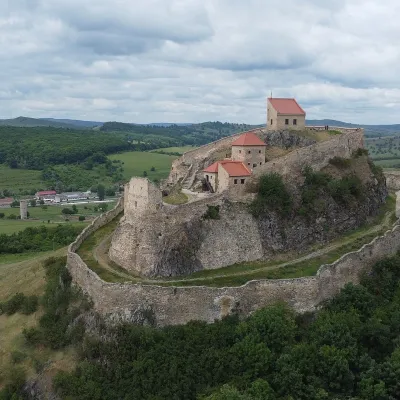 CastleRupea Fortress: a Saxon refuge on a basalt cragRupea9.7 km from Viscri Fortified Church: a UNESCO Saxon villageRupea Fortress (Cetatea Rupea; German Burg Reps, Hungarian Kőhalmi vár) stands on a basalt hill about 120 metres high on the western edge of the small town of Rupea,...
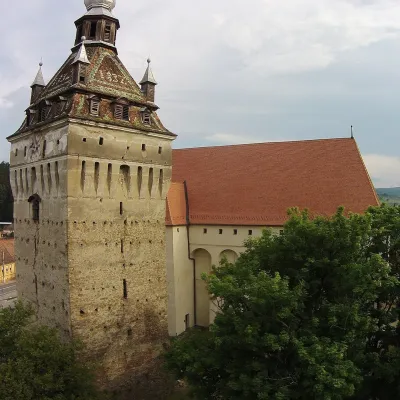 ChurchSaschiz Fortified Church: clock tower and UNESCO siteSaschiz18 km from Viscri Fortified Church: a UNESCO Saxon villageThe fortified Evangelical Church of St Stephen in the village of Saschiz (German Keisd, Hungarian Szászkézd) stands right by the road between Brașov and Sighișoara, so...
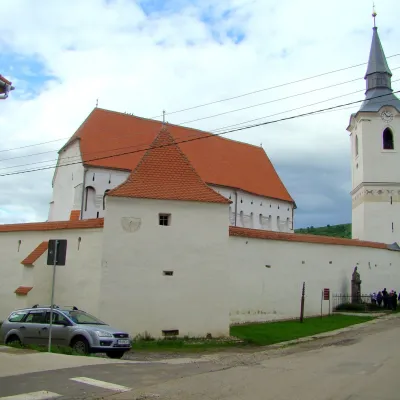 ChurchDârjiu Fortified Church: the «Bacon Fortress», UNESCODârjiu18 km from Viscri Fortified Church: a UNESCO Saxon villageThe fortified church in the village of Dârjiu (Hungarian Székelyderzs) in Harghita County is one of the few fortress churches of Transylvania built not by the Saxons...
Craft nearby
All craft places Wine & tastingsPálinka Jamy distillery: fruit pálinka in Odorheiu SecuiescOdorheiu Secuiesc31 km from Viscri Fortified Church: a UNESCO Saxon villageOdorheiu Secuiesc (Hungarian: Székelyudvarhely) is a historic town in the Târnava Mare valley in the west of Harghita County, long regarded by the Székelys as their ...
 Craft producersGALFFIS chocolate manufactory in Odorheiu SecuiescOdorheiu Secuiesc33 km from Viscri Fortified Church: a UNESCO Saxon villageBean-to-bar chocolate in the heart of Székely Land Odorheiu Secuiesc (Hungarian: Székelyudvarhely) is known above all for its history, schools and Székely traditions,...
 Water parks & thermal poolsBăile Homorod: the Lobogó and Mária iron springs in the Harghita MountainsBăile Homorod44 km from Viscri Fortified Church: a UNESCO Saxon villageBăile Homorod (Hungarian Homoródfürdő) is a small spa village in Harghita County, administratively part of the town of Vlăhița.
