Densuș Church: a stone church built of Roman blocks
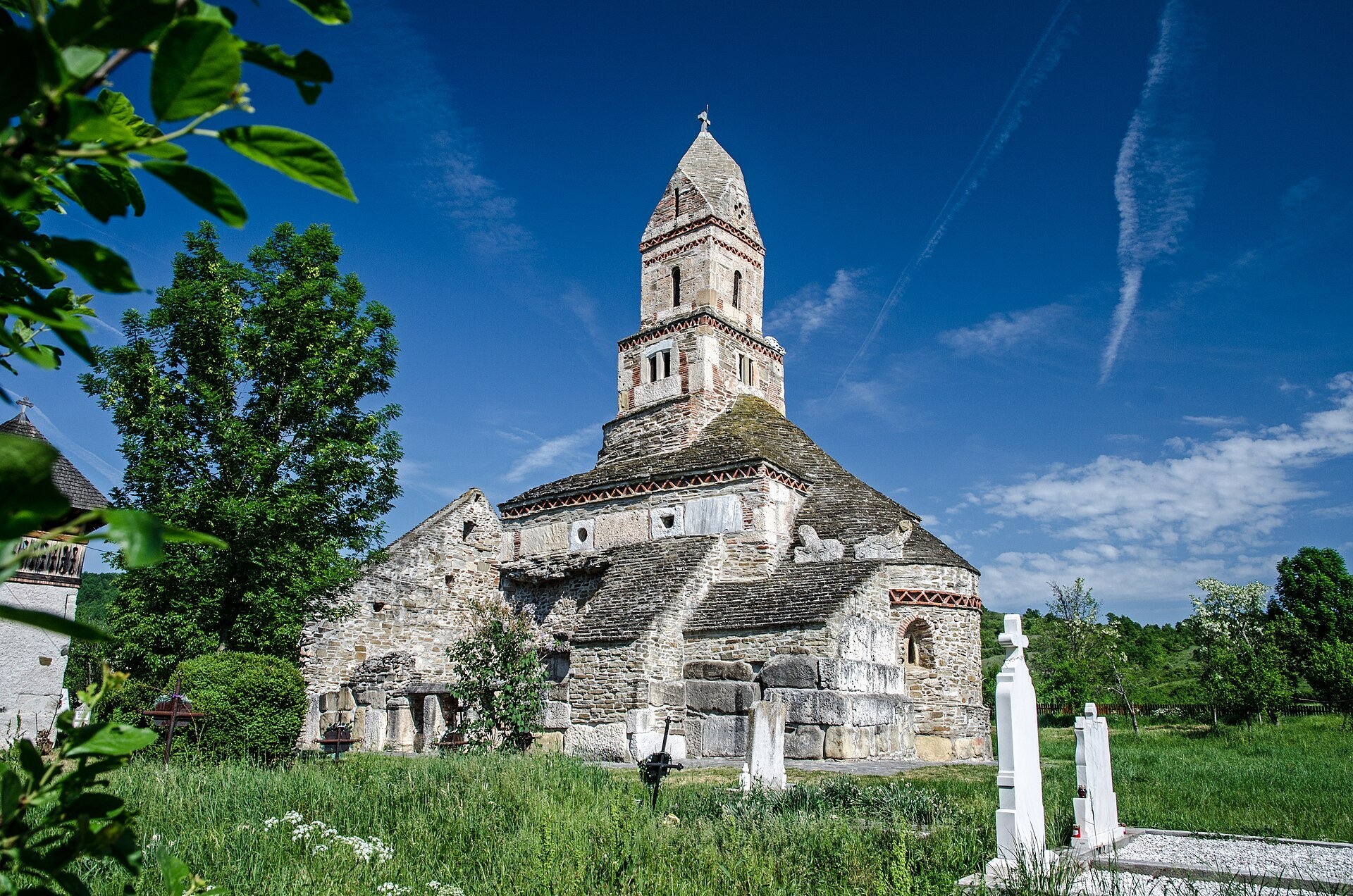
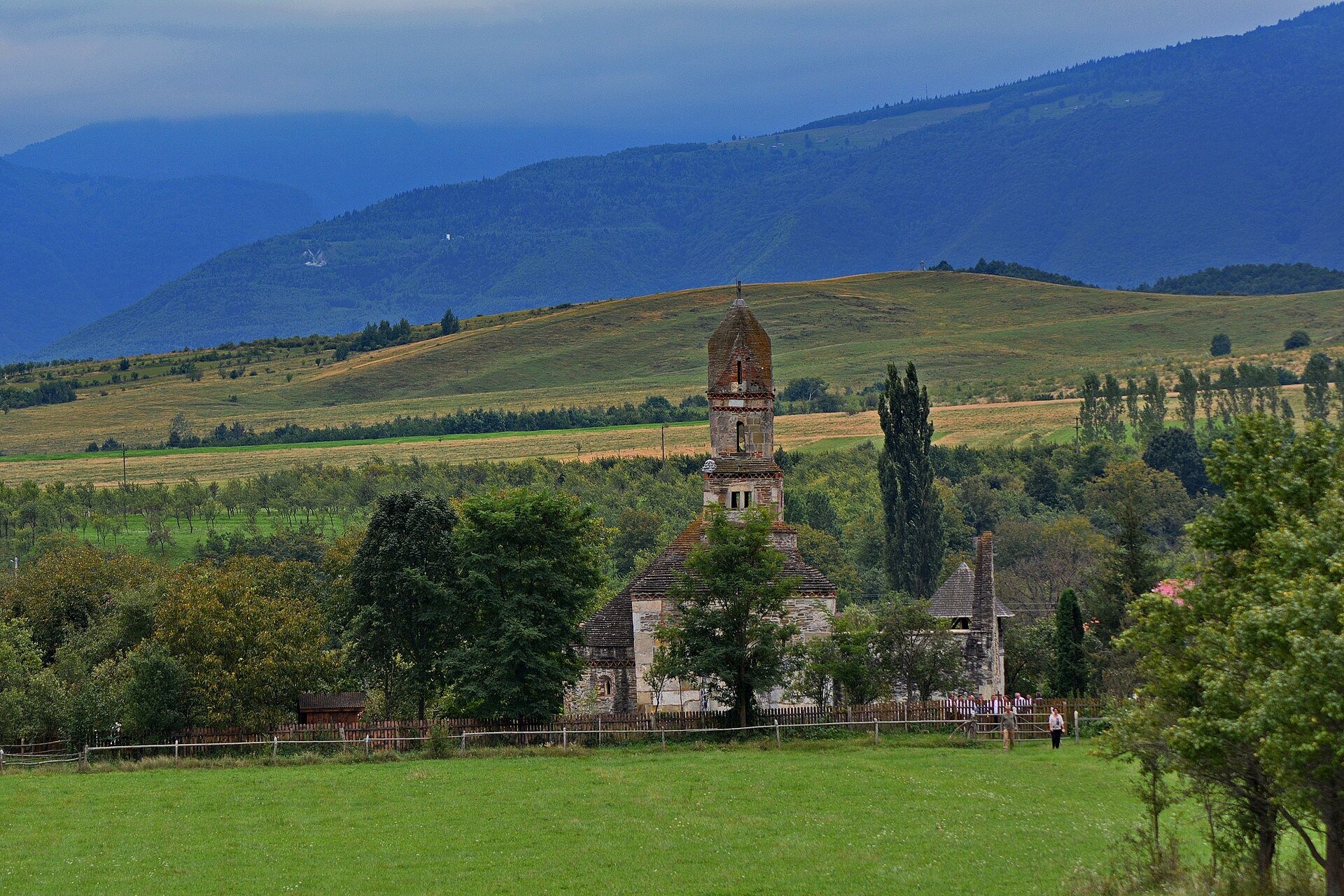
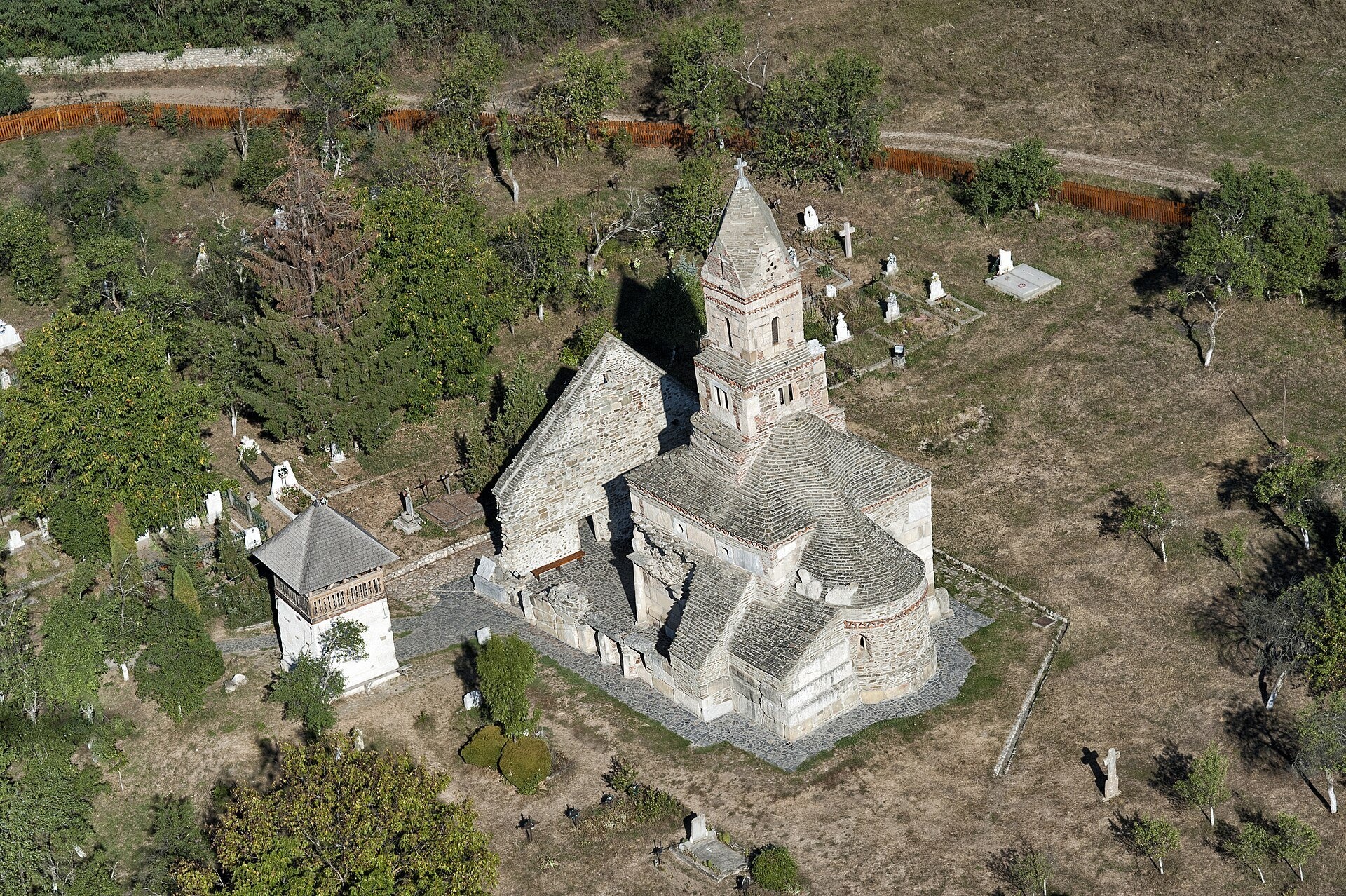
A church made of the Roman capital's stones
St Nicholas Church (Biserica Sfântul Nicolae) in the village of Densuș in the Hațeg Country (Țara Hațegului), Hunedoara County, is one of the oldest stone churches in Romania and probably the strangest-looking. It was built of dressed stones, columns, gravestones and altars taken from the ruins of Ulpia Traiana Sarmizegetusa — the capital of Roman Dacia, a few kilometres away. The historian Nicolae Iorga called it a church «without equal in the whole Romanian world».
Specialists in medieval architecture place the church among the stone churches of local Romanian knezes of the 12th–14th centuries and link it with the Mușina family of Densuș; it is most often dated to the second half of the 13th century. An older hypothesis held that a Roman tomb lay at its core, but archaeologists have not confirmed it. The earliest priest known by name, Dalc, is mentioned in 1360. Inside, frescoes from 1443 survive, mainly by master Ștefan, one of the first Romanian painters known by name; among them is a rare image of Christ in Romanian folk dress. In the 16th century the church served a Calvinist congregation for a time and the paintings were whitewashed; they were later cleaned, and some were uncovered during research in 1961–1962. In the late 19th century the half-ruined church was nearly demolished, but in 1870 it was declared a monument. Today it is an active Orthodox church with two feasts — St Nicholas and the Prophet Jeremiah.
Why go
Densuș is a rare chance to see how medieval builders turned ancient ruins into a church: Latin inscriptions, carved frames and column fragments show in the walls, and stone lions sit on the roof. The church stands in a village churchyard against the backdrop of the Retezat Mountains, and the view alone is worth the trip. Densuș also lies on the way between Hațeg and Ulpia Traiana, so it is easy to combine with the Roman capital.
What to see
- The four-storey stone tower rising directly above the square nave.
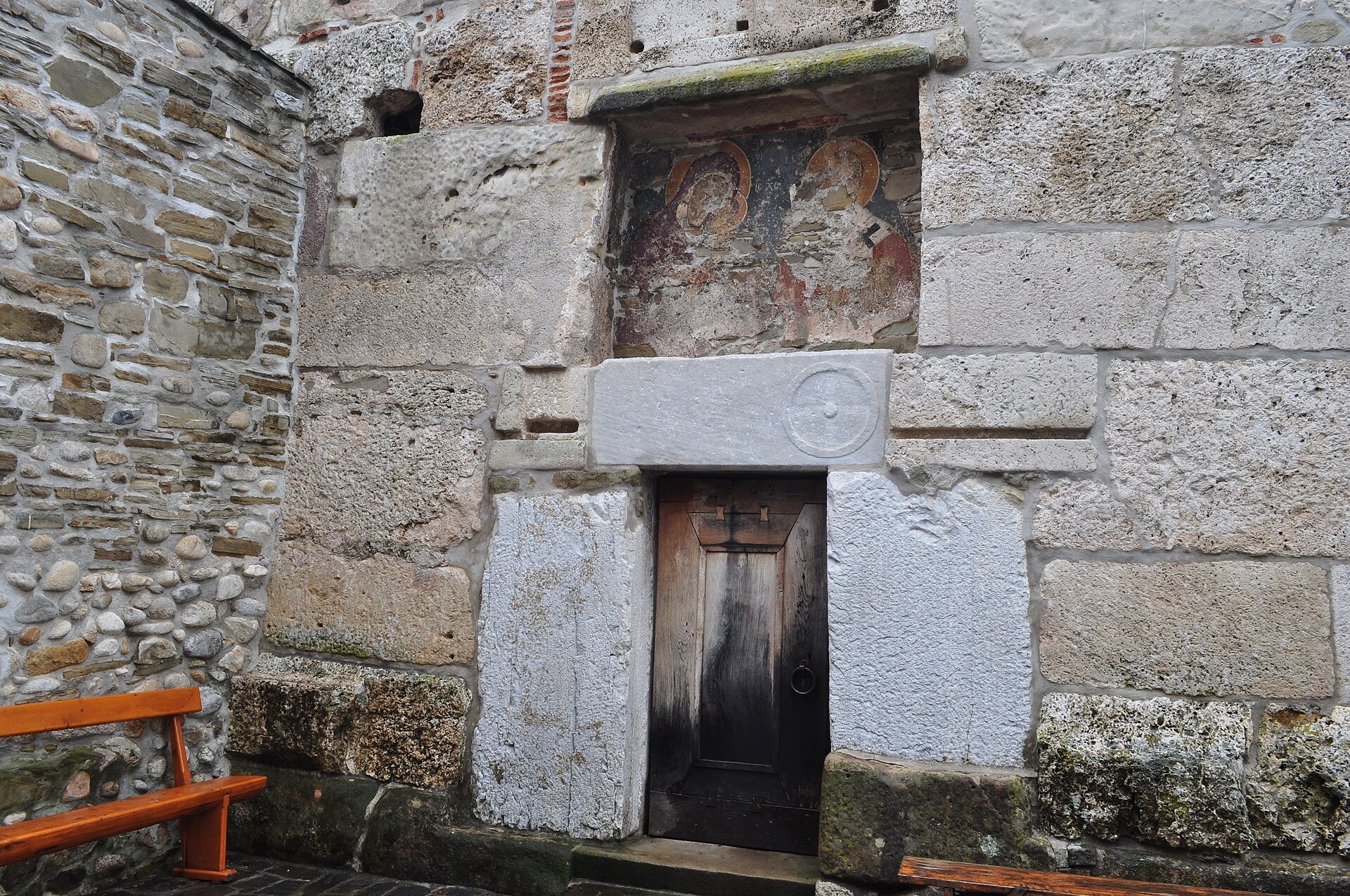
- Roman stones in the walls — inscribed blocks, slabs and carved pieces that are easy to spot as you walk around.
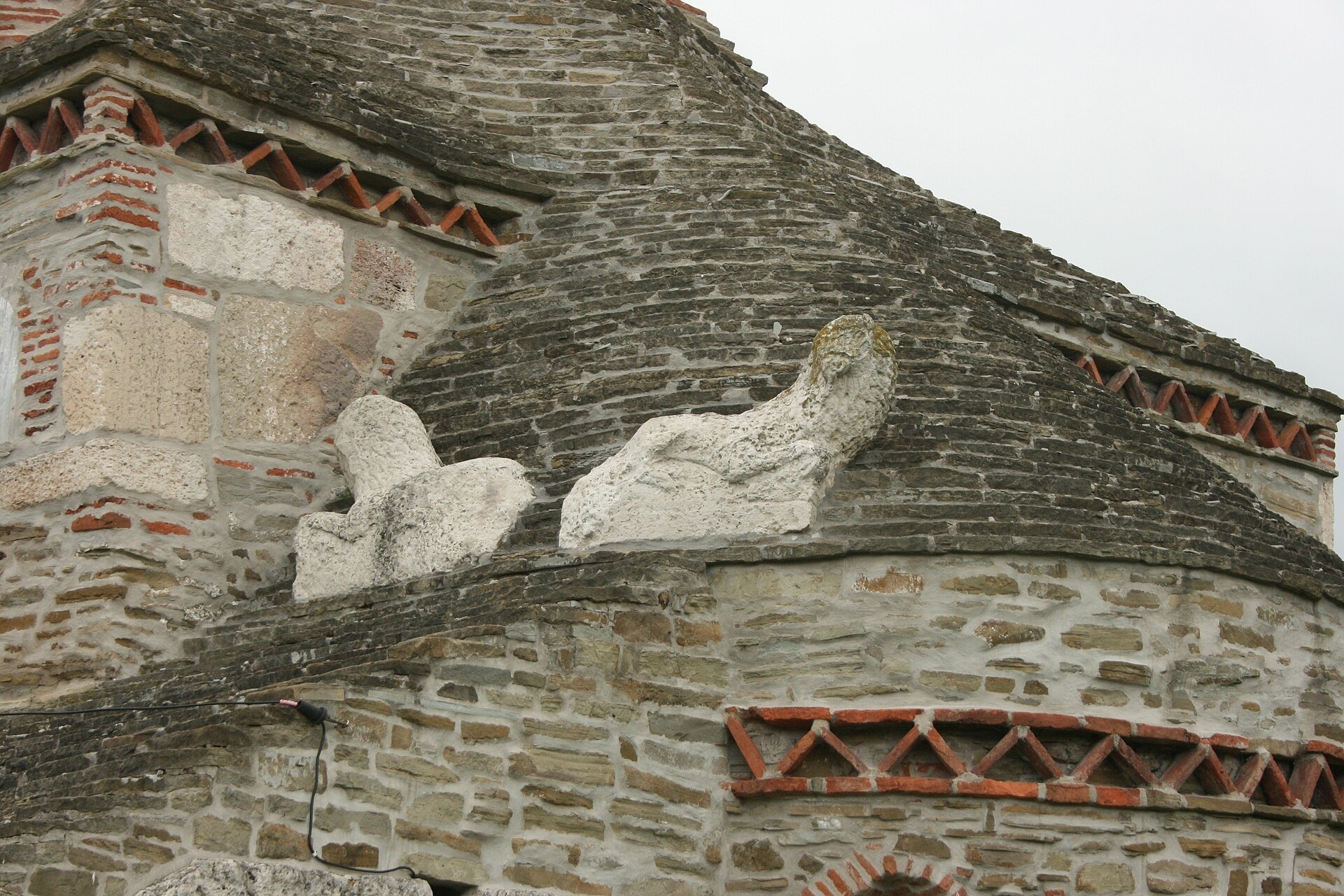
- Stone lions on the apse roof — also of Roman origin.
- Four pillars in the nave, each made of two Roman altars stacked on top of each other.
- The frescoes of 1443 by master Ștefan, including Christ in Romanian folk dress.
- The stone-slab roof and the view of Retezat from the churchyard fence.
Practical information
The church stands in the centre of the village of Densuș, about 12 km from the town of Hațeg and about 8 km from Ulpia Traiana Sarmizegetusa; the town of Hunedoara is about 35 km away and Deva about 50 km. Densuș is easiest to reach by car, as public transport is infrequent. From Ukraine: via Solotvyno — Sighetu Marmației, then via Cluj-Napoca, Deva and Hațeg, about 420 km.
This is an active parish church, so follow the usual rules: shoulders and knees covered, quiet, and it is better to postpone a visit during a service. No fixed visiting timetable or official prices are published — the door is not always open, so check before you go, for example through the local parish or the Hațeg Geopark tourist information. The church itself is small; seeing it outside and inside takes 30–45 minutes. There is parking near the church.
Nearby
- Ulpia Traiana Sarmizegetusa — the Roman capital of Dacia, where the church's stones came from, about 8 km.
- Prislop Monastery in a wooded valley near Hațeg, about 20 km.
- Corvin Castle in the town of Hunedoara, about 35 km.
- The «House of Volcanoes» centre (Casa Vulcanilor) of the Hațeg UNESCO Geopark in Densuș itself.
- The Retezat massif: Peleaga peak and the Lolaia waterfall.
Photos: Sebastian Mierzwa, CC BY-SA 4.0, Wikimedia Commons; Mihaibursesc, CC BY-SA 4.0, Wikimedia Commons; Popescu Camelia, CC BY-SA 3.0 ro, Wikimedia Commons; Ionut Vaida, CC BY-SA 3.0 ro, Wikimedia Commons; Monicaburghelea, CC BY-SA 3.0 ro, Wikimedia Commons; Adrian Alexandru Gheorghe, CC BY-SA 4.0, Wikimedia Commons; Razvan Socol, CC BY-SA 3.0 ro, Wikimedia Commons.
Getting there from Ukraine
Border crossings
- Porubne – Siret — road and pedestrian, 24/7
- Diakivtsi – Racovăț — road and pedestrian, 24/7 No freight traffic.
- Krasnoilsk – Vicovu de Sus — road and pedestrian, 08:00–20:00 Cars up to 3.5 t and pedestrians only; not 24/7.
- Solotvyno – Sighetu Marmației — road and pedestrian, 24/7 Passenger traffic only: vehicles up to 3.5 t with up to 9 seats, pedestrians.
- Diakove – Halmeu — road, 24/7 No pedestrian crossing.
By car
Rakhiv – Petroșani ≈450 km, ≈6 h 36 min (via Solotvyno – Sighetu Marmației); Ivano-Frankivsk – Petroșani ≈584 km, ≈8 h 55 min (via Solotvyno – Sighetu Marmației); Chernivtsi – Petroșani ≈539 km, ≈9 h 19 min (via Krasnoilsk – Vicovu de Sus). Times without border queues, our road routing (GraphHopper, OSM).
Checked 03.11.2026; border crossing hours and timetables change — check before you travel.
Comments
Travellers’ experience: reports, tips, questions.
No one has written here yet. Be the first — your experience helps others.
Video 3
 Biserica de piatră de la Densuș – Țara Hațegului #IstoriiAscunse @TVRTMTVR Timişoara


Location on the map
Trails nearby
All trails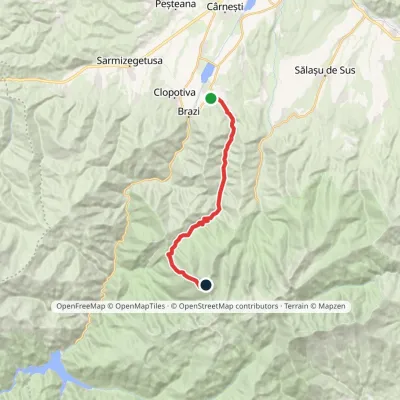 HardOne-dayMarkedRâu de Mori Retezat PeakElevation profile501–2 482 m19.4 kmascent 1 984 m≈ 8 h walking10 km from Densuș Church: a stone church built of Roman blocks
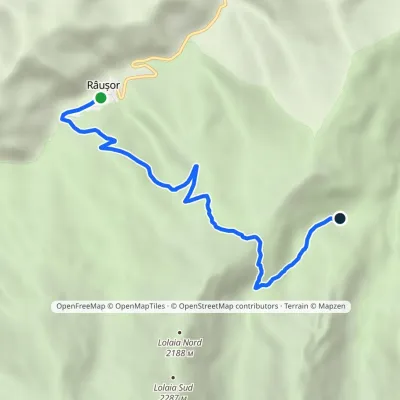 ModerateOne-dayMarkedRâușor Pietrele HutElevation profile1 178–1 825 m6.4 kmascent 647 m≈ 2.5 h walking19 km from Densuș Church: a stone church built of Roman blocks
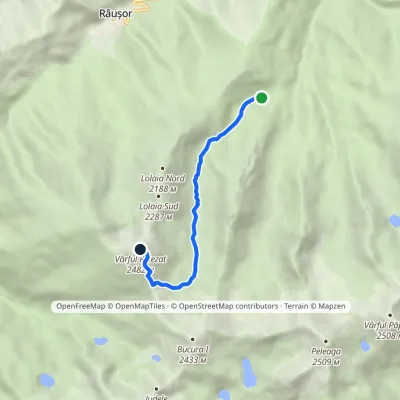 HardOne-dayMarkedPietrele Hut Retezat PeakElevation profile1 489–2 482 m5.9 kmascent 993 m≈ 3 h walking20 km from Densuș Church: a stone church built of Roman blocks
Nearby attractions
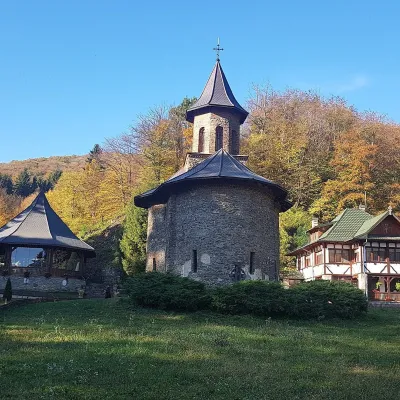 ChurchPrislop Monastery: a 16th-century monastery near HațegSilvașu de Sus6.5 km from Densuș Church: a stone church built of Roman blocksPrislop Monastery (Mănăstirea Prislop) lies in a quiet wooded valley near the village of Silvașu de Sus, which belongs to the town of Hațeg, in Hunedoara County.
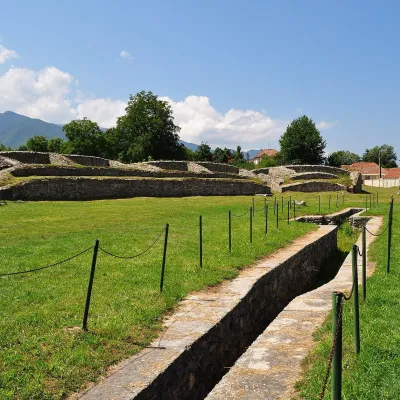 Historic siteUlpia Traiana Sarmizegetusa: capital of Roman DaciaSarmizegetusa7.4 km from Densuș Church: a stone church built of Roman blocksUlpia Traiana Sarmizegetusa is the ruin of the first and largest city of the Roman province of Dacia. It lies in the Hațeg valley at the foot of the Retezat Mountains,...
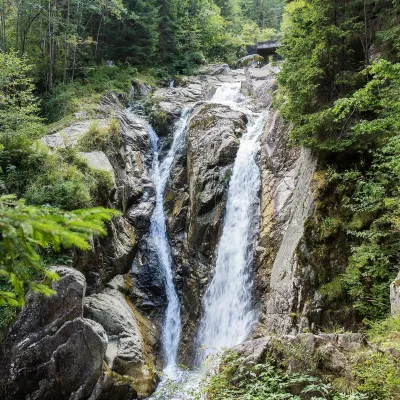 WaterfallLolaia Waterfall (Cascada Lolaia)Nucșoara · Retezat Mountains19 km from Densuș Church: a stone church built of Roman blocksheight 15 m1 085 m above sea levelLolaia Waterfall (Cascada Lolaia) lies in the northern part of Retezat National Park, in Hunedoara County, on one of the park's busiest routes — the road from the...