Large thyme
For information only, not medical advice. Do not self-medicate — consult a doctor. Many Carpathian medicinal plants are protected and must not be collected.
About
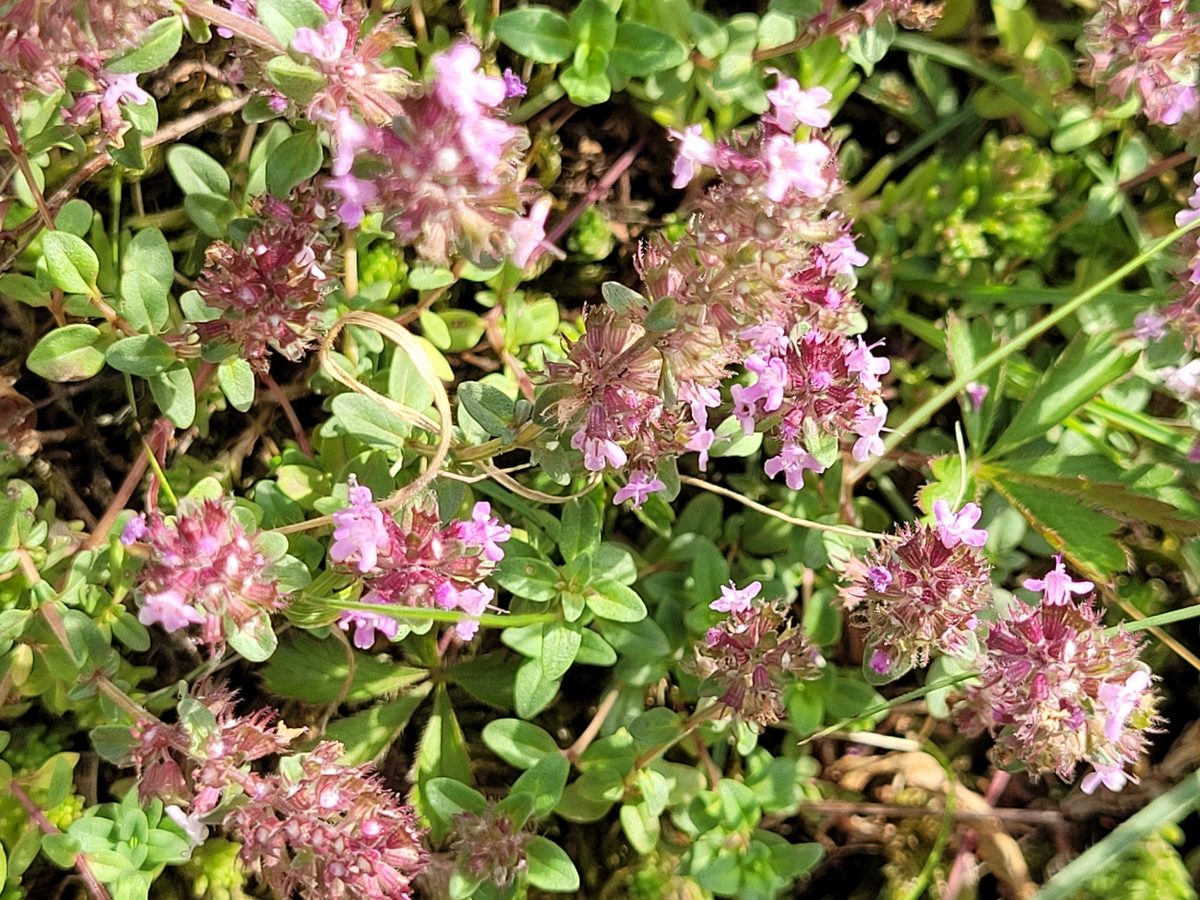
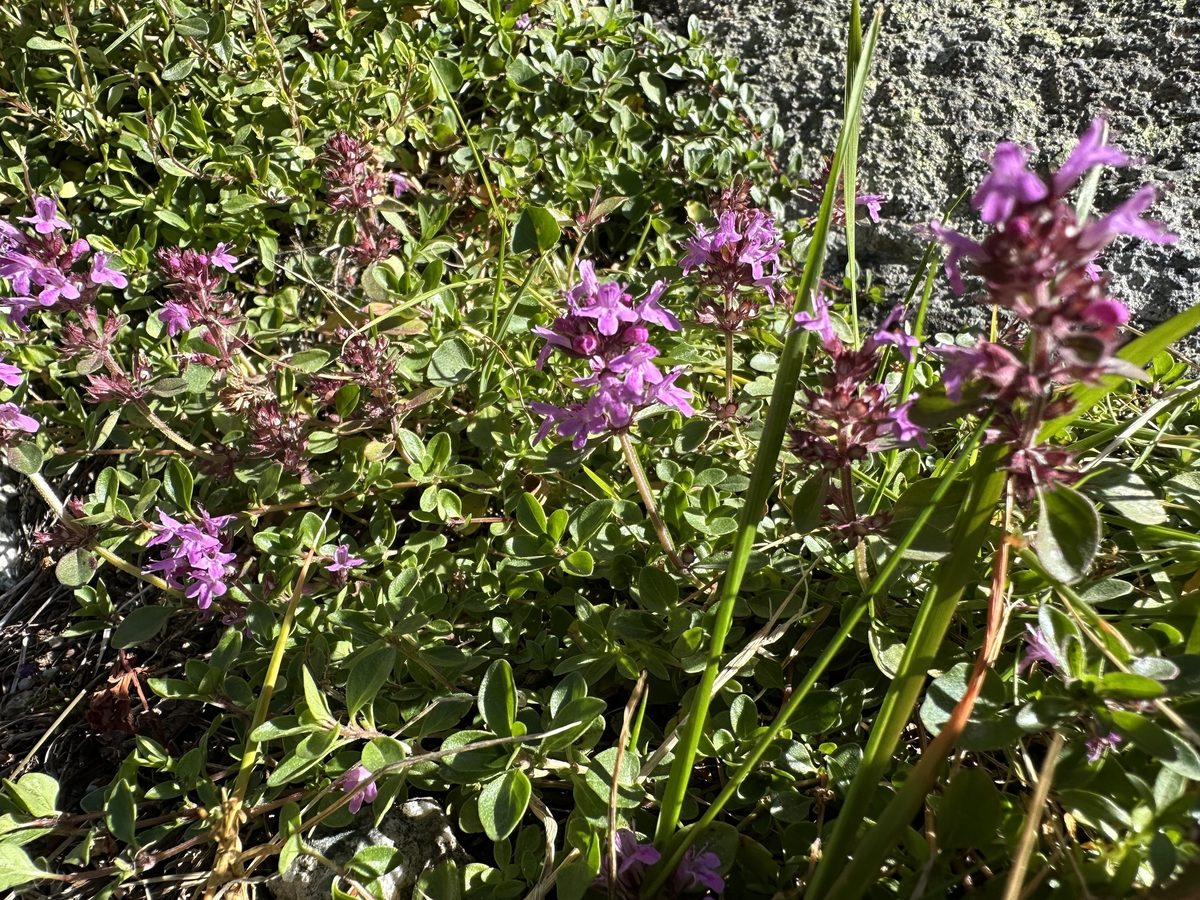
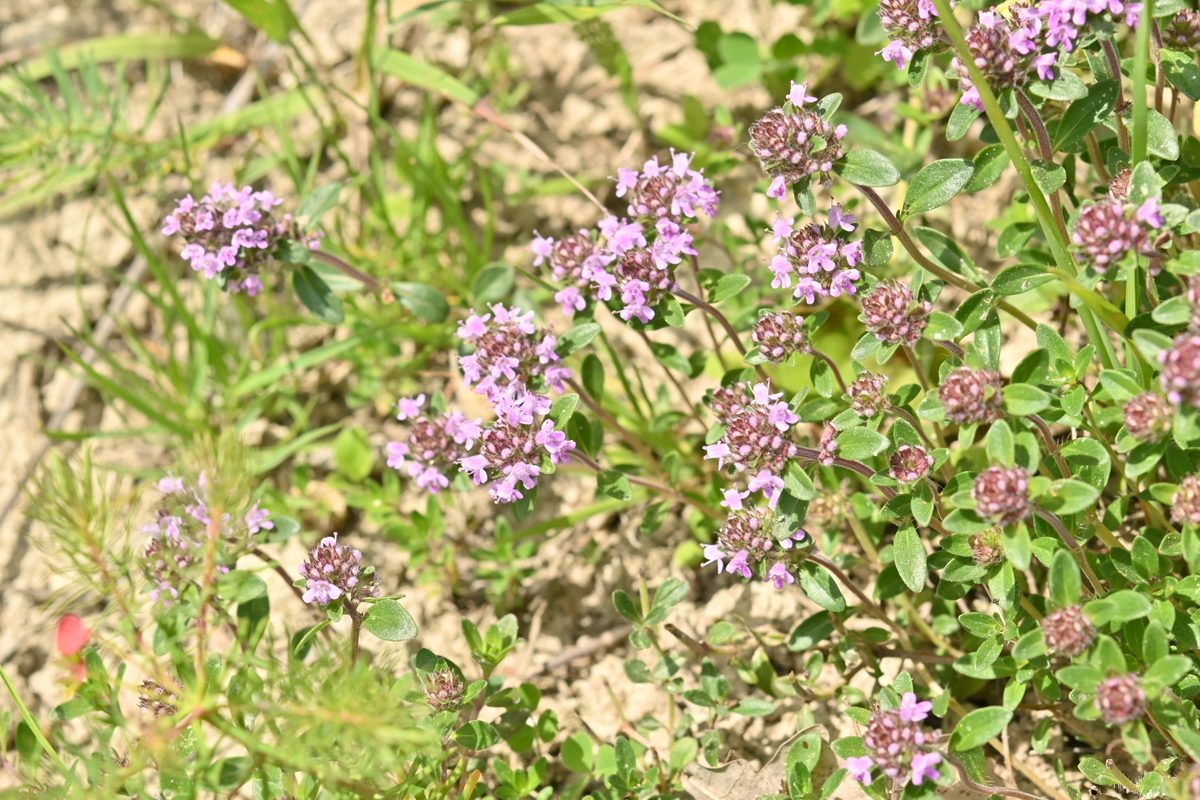
Thyme is a low semi-shrub that sprawls across the ground, forming aromatic pink-purple carpets. In the Carpathians, the most common is Large thyme. It grows on dry sunny slopes, rocky places, in meadows, along the edges of paths, and on polonynas, from foothills to high mountains. In Ukraine, this species is also found in Prykarpattia, Polissia, and in the northern Forest-Steppe.
Stems are 10–30 cm tall, woody at the base, square in cross-section, and hairy only along the edges. Leaves are small, ovate, opposite, with oil gland dots. Flowers are small, pink or light purple, gathered in head-like inflorescences at the tops of the stems. Just brushing against the plant releases its characteristic spicy aroma.
Large thyme blooms from June to August, and in the mountains, sometimes into September. For tea, the flowering tops are traditionally cut in dry sunny weather when the plant is most fragrant, and dried in the shade. It is important not to uproot thyme: the mat will quickly regenerate.
Several closely related thyme species grow in the Carpathians, distinguished only by minor features, and high-altitude species can be found on polonynas. All of them are fragrant and have no dangerous lookalikes. On forest and meadow slopes, thyme is an important nectar plant, always buzzing with bees and bumblebees.
Where in the Carpathians

The map shows where naturalists recorded the species (GBIF, CC0 and CC BY records), not every place it lives. The Ukrainian Carpathians are less studied, so a blank area does not mean the species is absent.
- Countries
- Slovakia · Czechia · Ukraine · Poland · Romania · Hungary · Austria
- Mountain ranges
- Slovak Ore Mountains, Strážov Mountains, Low Tatras, Slovak Central Mountains, White Carpathians, Kysuce Beskids, Lesser Fatra, Volovec Mountains, Greater Fatra, Low Beskids
- Altitude belts
- Foothills (below 600 m) · Beech forests (600–1200 m)
When to see it
| Jan | Feb | Mar | Apr | May | Jun | Jul | Aug | Sep | Oct | Nov | Dec | |
|---|---|---|---|---|---|---|---|---|---|---|---|---|
| Flowering | ||||||||||||
| Fruit |
From naturalists’ observations in the Carpathians (iNaturalist, research grade): the darker the cell, the more often the species is seen that month.
In folk tradition
Flowering tops are traditionally dried and brewed as tea, added as a spice.
Protection and rules
Not protected. For personal use, it can be collected outside of nature reserves and protected areas of national parks; cut the tops, do not uproot the plant.
FAQ
When to collect thyme?
During flowering, most often in June — July. Flowering tops are cut in dry sunny weather, without uprooting the root, and dried in the shade.
Where does thyme grow in the Carpathians?
On dry sunny slopes, rocky places, meadows, and polonynas, from foothills to high mountains.
Where to see it
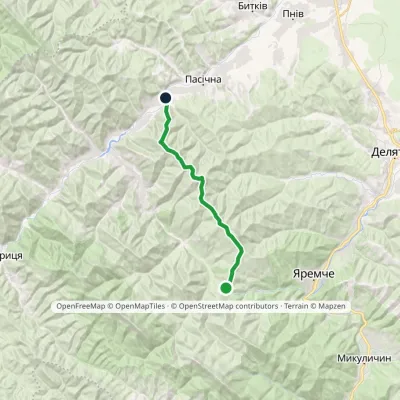 ModerateTwo-dayMarkedPasichna village Pereslop PassElevation profile548–1 324 m17.3 kmascent 1 085 m≈ 6.5 h walking
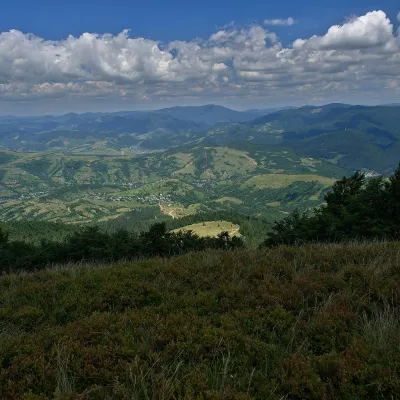 PeakMount Menchul (Mizhhiria)Sopkyaltitude 1 247 m · Borzhava rangeMenchul is a 1,247 m summit in the south-eastern part of the Polonyna Borzhava massif in Zakarpattia Oblast.
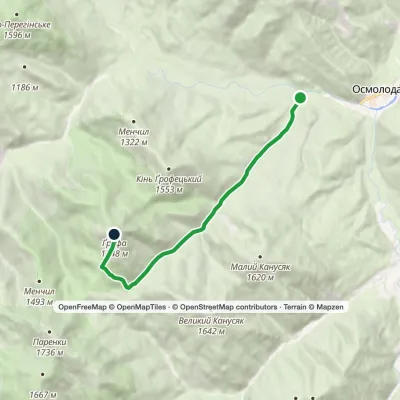 ModerateOne-dayMarkedOsmoloda Mount Grofavia Kotelets, PlistseElevation profile747–1 748 m9.8 kmascent 1 001 m≈ 4.5 h walking
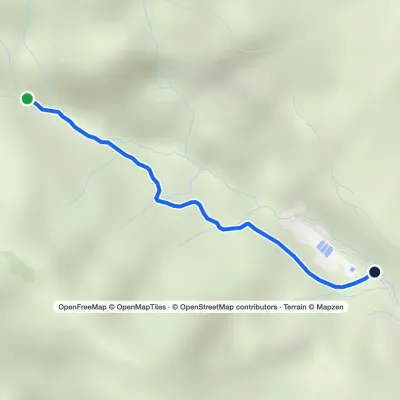 EasyOne-dayMarkedPerechyn Plishka WaterfallElevation profile241–416 m2 kmascent 9 m≈ 30 min walking
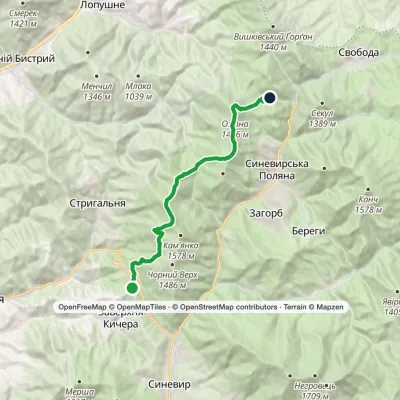 ModerateTwo-dayMarkedSynevyr Pass Lake Synevyrvia Mount OzernaElevation profile851–1 521 m17 kmascent 1 112 m≈ 6.5 h walking
 EasyOne-dayMarkedOsmoloda Mount GorganElevation profile721–1 579 m9.6 kmascent 13 m≈ 2.5 h walking
Similar species
Sources
- Вікіпедія: Чебрець широколистий
- Wikipedia (en): Thymus pulegioides
- Wikipedia (pl): Macierzanka zwyczajna
GBIF · iNaturalist · Wikidata · Distribution data: GBIF.org (CC0 and CC BY records), iNaturalist; names and identifiers: Wikidata (CC0). Text: Karpaty.rocks, checked 09.11.2026.
