Museum "Nature of the Galician Land" of the Halych National Nature Park
In 2006, the museum was moved to the main homestead of the Halych National Nature Park. Today, the exhibition is presented in three halls with a total area of 80 m2.
To enter the museum, you must pass under an arch that symbolizes the gates to the "Temple of Nature" and is a copy of a natural arch of gypsum origin, located in the area of Zamok, near the village of Podillya. Stepping into the softly lit hall of the museum, you find yourself in the realm of Her Majesty – Mother Nature. Before you, the dioramas, showcases, and stands present the Halych National Nature Park in miniature with its unique and typical natural complexes.
Visitors get acquainted with the history of the emergence of nature conservation in the region and the establishment of the Halych National Nature Park in 2004.
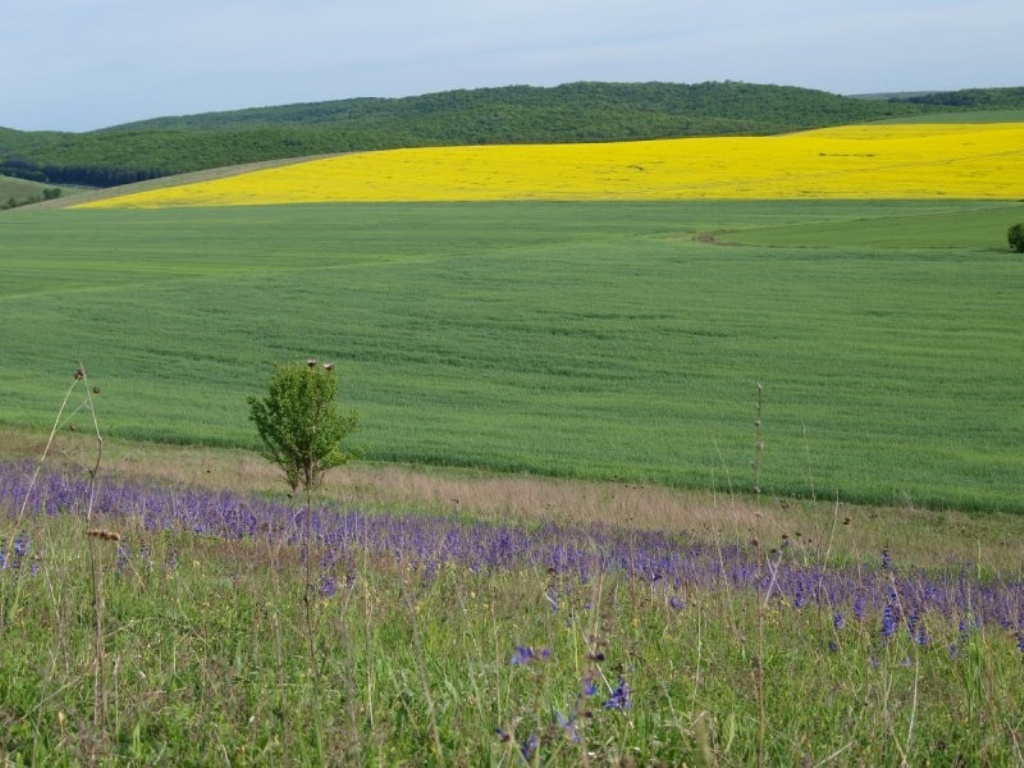
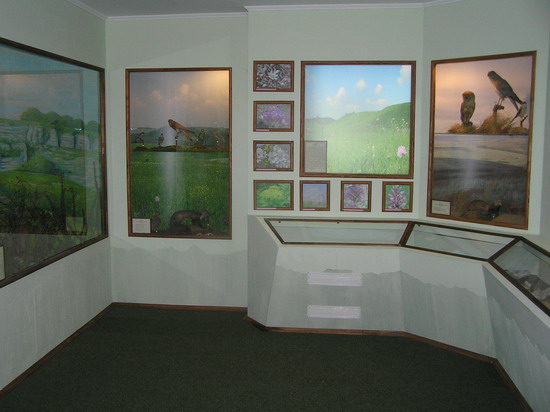
The first hall is dedicated to steppes, which are rare ecosystems in the Ivano-Frankivsk region, found only in its east. The diorama of the area Kaminy, located on the outskirts of the village of Mezhyhirtsi, attracts attention with expertly crafted stuffed steppe birds and mammals, photographs, and herbariums of steppe plants. Here, paleontological and mineralogical collections are also displayed. The diorama of the area "Pomjarki" presents a composition with a brown bear and a wild cat, which were obtained at the end of the 20th century.
The tour transitions from the steppe hall to the entomological gallery. Here, there are four large showcases with insects. The first one features a variety of colorful butterflies, along with a huge collection of beetles. A special pride of the entomological collection is the steppe bug, which was caught in 2008 in the area of Kasova Hora (near the city of Burshtyn) – the first time since Polish scientists saw it there back in the early 20th century!
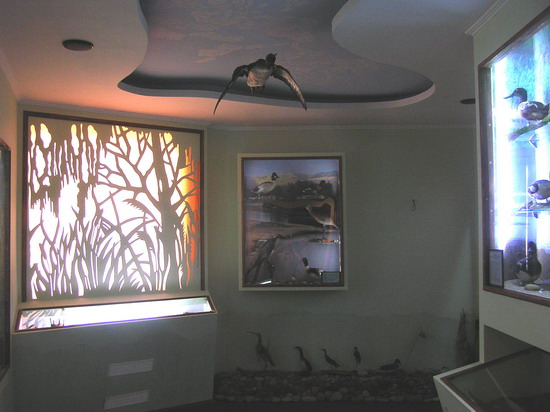
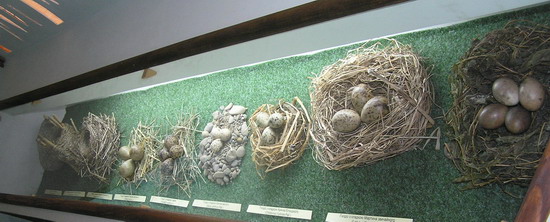
Next is the hall of wetland ecosystems. Here, museum visitors learn about the rich fauna and flora of the second largest river in Ukraine, the Dniester, the Burshtyn Reservoir, fish breeding ponds, and numerous backwaters. The diorama with a view of the Dniester, a large collection of stuffed water and marsh birds, as well as their nests with clutches of eggs, creates a strong impression on visitors.
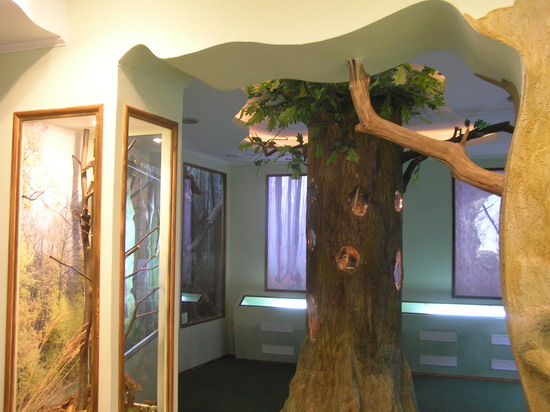
The museum's biggest highlight is the recreated forest ecosystem in three dioramas. Here stands a huge old oak with many hollows – a multi-storey residence for forest animals: squirrels, dormice, martens, bats; birds: owls, woodpeckers; insects: wild bees, beetles. Young naturalists once again clearly see that nothing superfluous exists in nature, and this is something to remember.
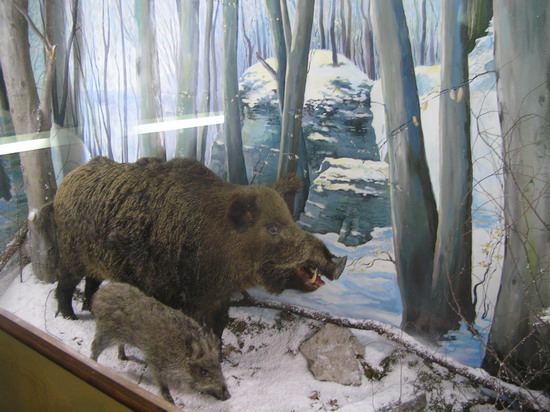
One of the dioramas recreates a summer forest with roe deer and badgers, a multitude of birds whose songs are enjoyed by visitors through built-in loudspeakers. Another diorama with a giant wild boar and a small piglet, birds - wintering birds, mistle thrush, and a large sparrowhawk beautifully reveals the winter landscape in the area of Verbivtsi. While observing the diorama depicting a fox with its cubs, museum visitors have the opportunity to discuss the usefulness or harmfulness of such forest animals as foxes, wolves, badgers, martens, and others.
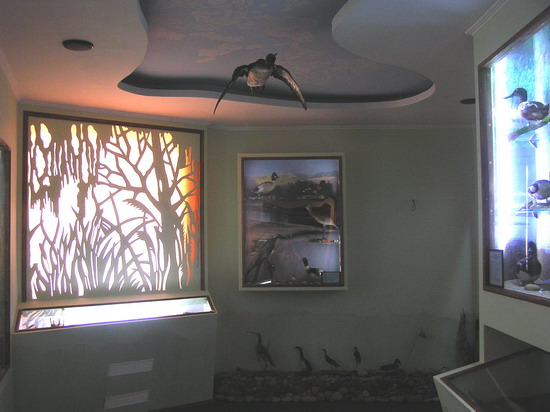
A special feature of the museum is that some of the exhibited specimens were collected during the lifetime of Count Volodymyr Didushytskyi - some of them are already over one and a half centuries old!
The museum "Nature of the Galician Land" is located in a convenient place - on the route of the tourist trail "Krylos" (the former capital of the Galician-Volhynian principality) - "Starostynskyi Castle" - "Center of Halych" and attracts both local residents and city guests. It serves as a powerful scientific base for students of higher educational institutions focused on natural sciences and schoolchildren in the region.
Museum visitors have the opportunity to understand the necessity of preserving nature and using its resources sparingly. Here, everyone feels that the old approach to nature, in an attempt to take as much as possible from it, leads to the destruction of invaluable natural resources, threatening not only nature but also the very existence of humanity. The only way out is to live in harmony with nature.
Opening hours: daily from 9 AM to 4 PM.
On weekends and holidays: from 10 AM to 3 PM.
The museum has been included in the list of facilities checked for accessibility for people with disabilities.
Accommodation around Museum "Nature of the Galician Land" of the Halych National Nature Park:


Nearby hiking trails near Museum "Nature of the Galician Land" of the Halych National Nature Park:
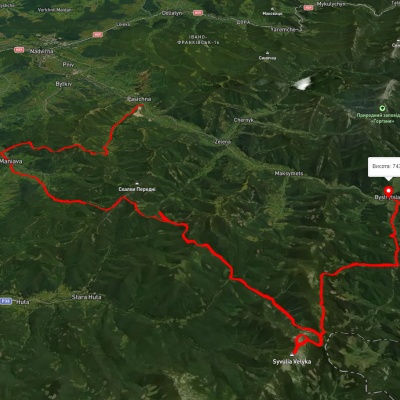
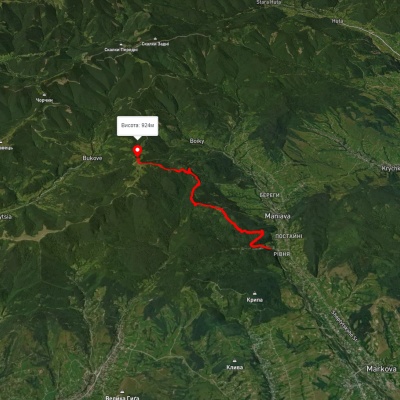
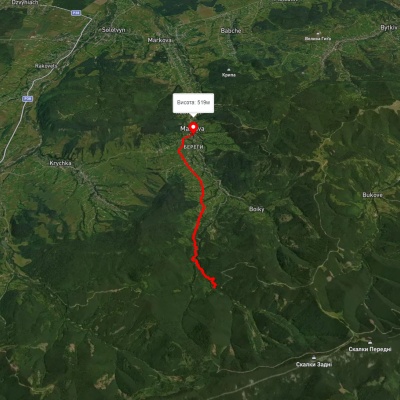
Which trails pass by Museum "Nature of the Galician Land" of the Halych National Nature Park?
We suggest these hiking trails through or near Museum "Nature of the Galician Land" of the Halych National Nature Park: Pasichna village, via Maniava village, Maniava Waterfall and Mount Velyka Syvulia to Bystrytsia village, Maniava village - Monastyretska polonyna, Maniava village – Maniava Waterfall, Huta village – Pasichna village, Pasichna village, via Mount Syniachka to Yaremche, Dora village, via Mount Syniachka, Pereslip Pass, Turshuhuvata polonyna and the Yavirnyk ridge to Yaremche