Červený Kláštor — Carthusian monastery in the Pieniny
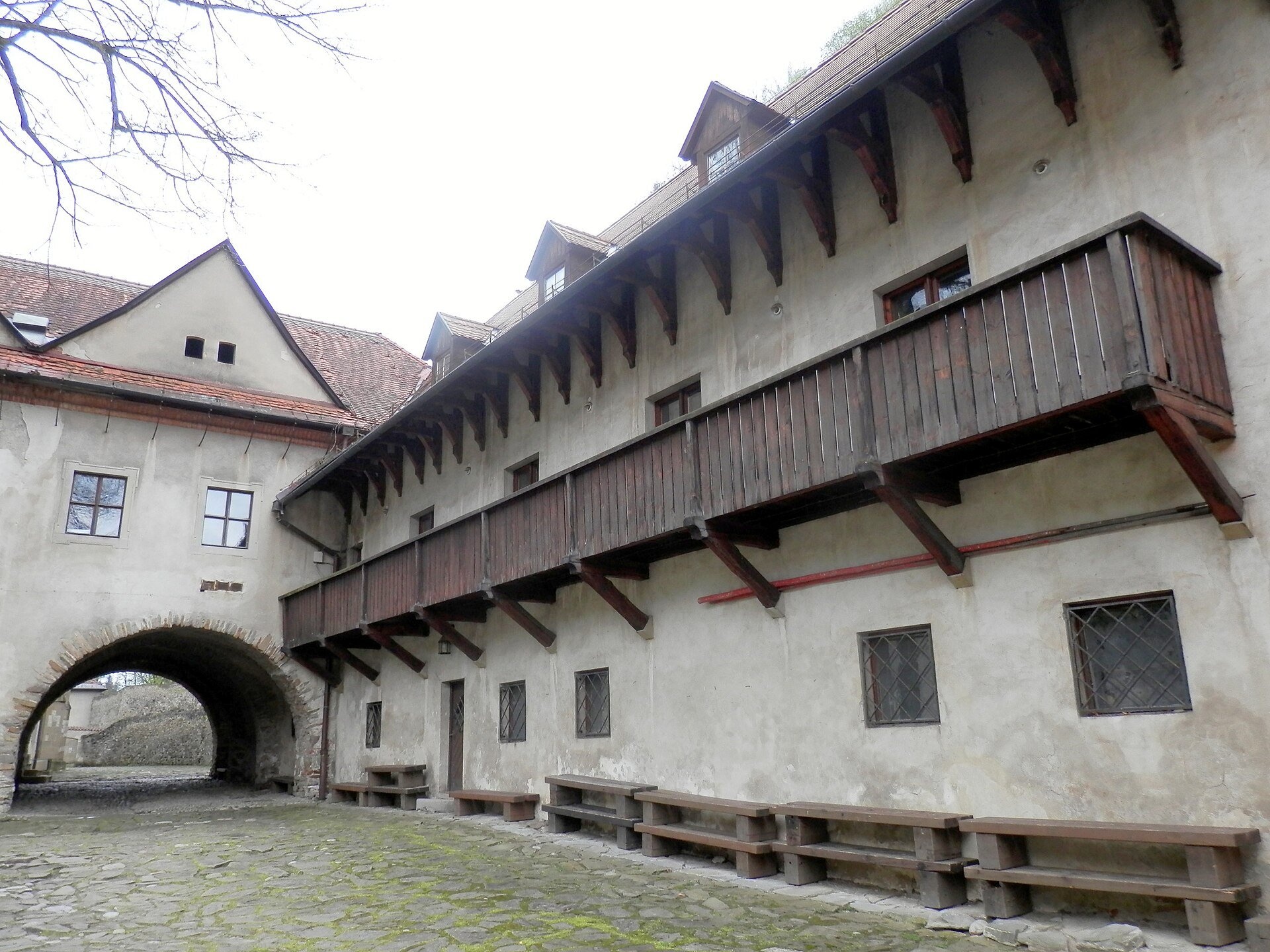
A monastery of “silent” monks on the Dunajec
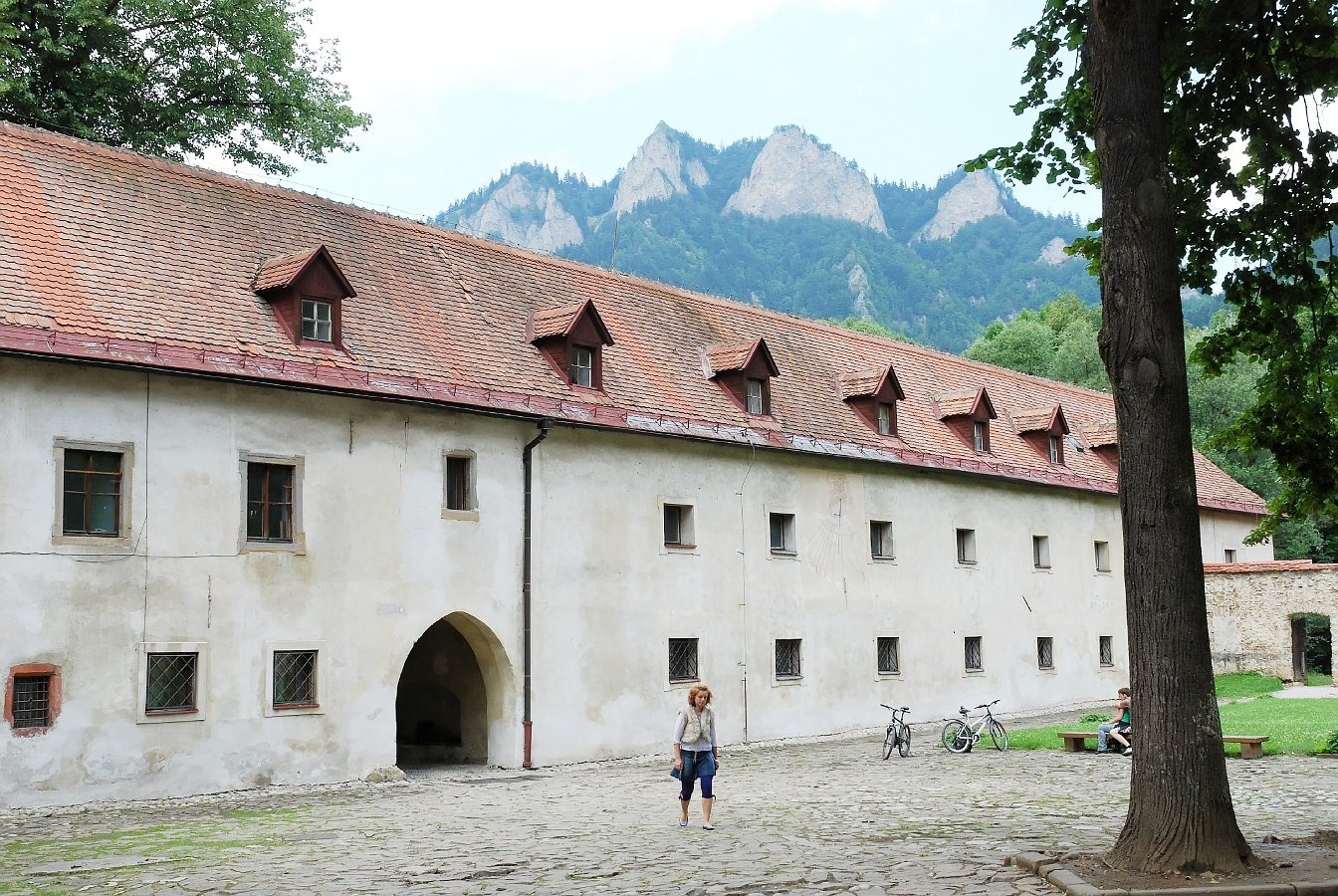
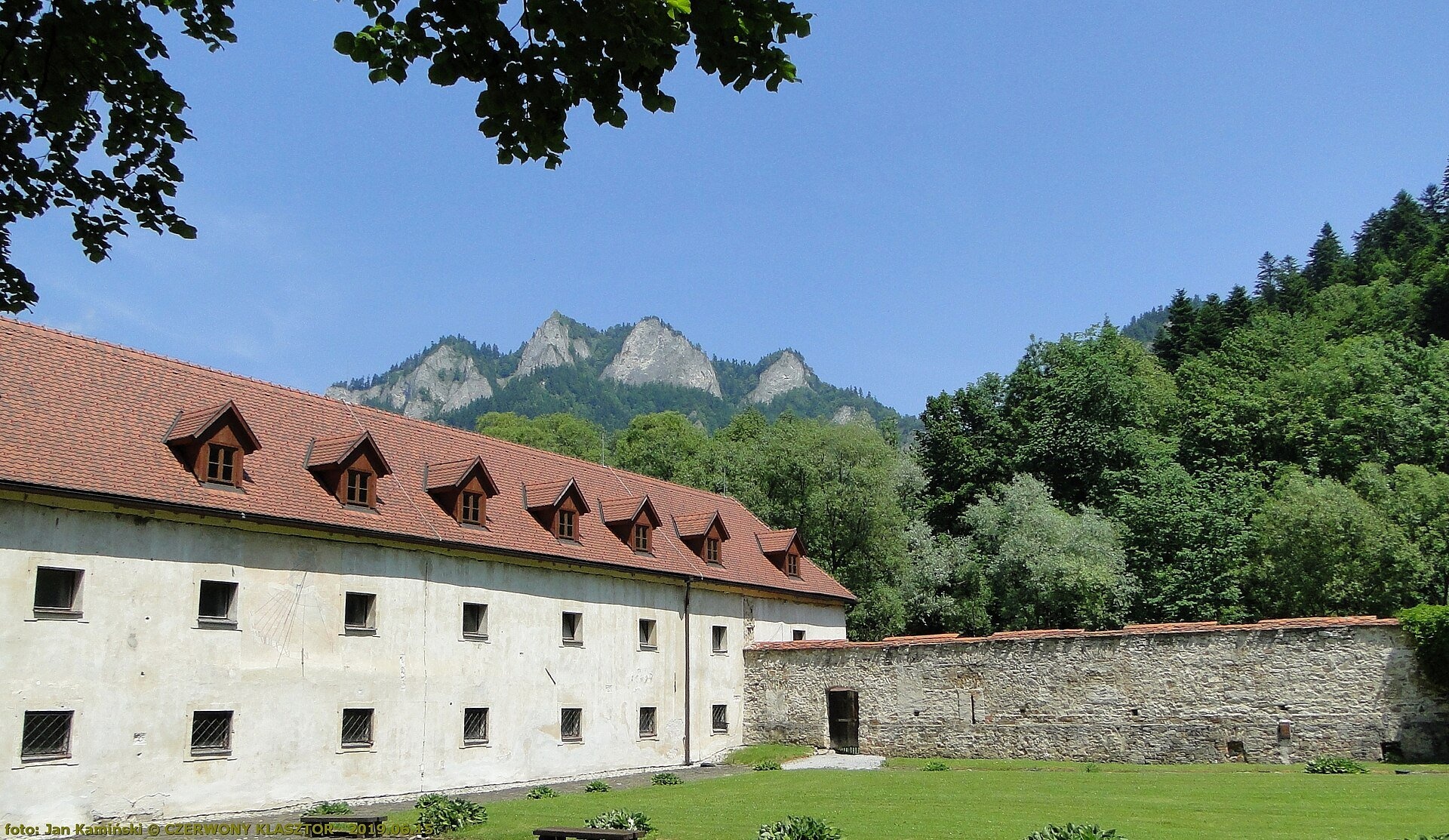
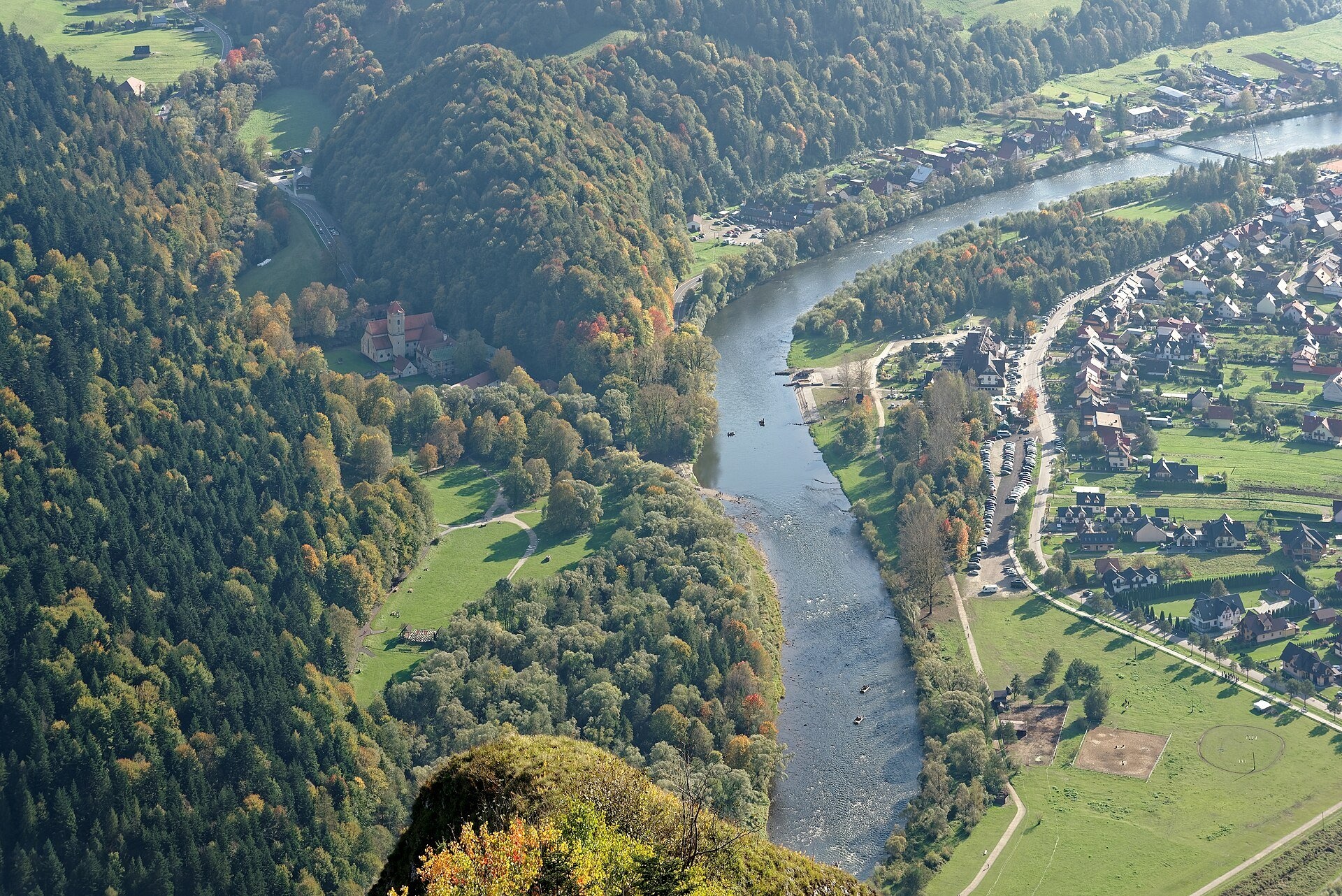
Červený Kláštor (“Red Monastery”) is a village and former monastery on the Slovak bank of the Dunajec, right opposite the Three Crowns cliffs in the Pieniny. The monastery came about through a dramatic story: a Spiš nobleman named Kokoš killed the son of a rival family, and in 1307 an arbitration court in Levoča ordered him, among other things, to found or support six monasteries. In 1319 he gave the village of Lechnica to the Carthusians, and in 1320 King Charles Robert confirmed the foundation charter. For a long time it was therefore called the Lechnica Charterhouse; the present name probably comes from its red roof tiles.
The Carthusians lived in strict silence, each in his own hermitage house with a small garden. The monastery held rights to fish the Dunajec, run a mill and brew beer. The monks left in the 1560s, and in the early 18th century the Camaldolese arrived and rebuilt the house in Baroque style. Two figures of Slovak culture are linked with them: Father Romuald Hadbavný, translator of the Camaldolese Bible, and Brother Cyprian, an apothecary and herbalist who compiled a herbarium. Legend says Cyprian built a flying machine and took off from the Three Crowns, but an angel struck him down with lightning — and so, supposedly, the Monk rock was formed. In 1782 the monastery was dissolved under the reforms of Joseph II, and in 1907 it burned down. Today it is a national cultural monument — one of the few surviving examples of Carthusian and Camaldolese monastic architecture in Slovakia and one of the easternmost sites of these orders in Europe.
What to see
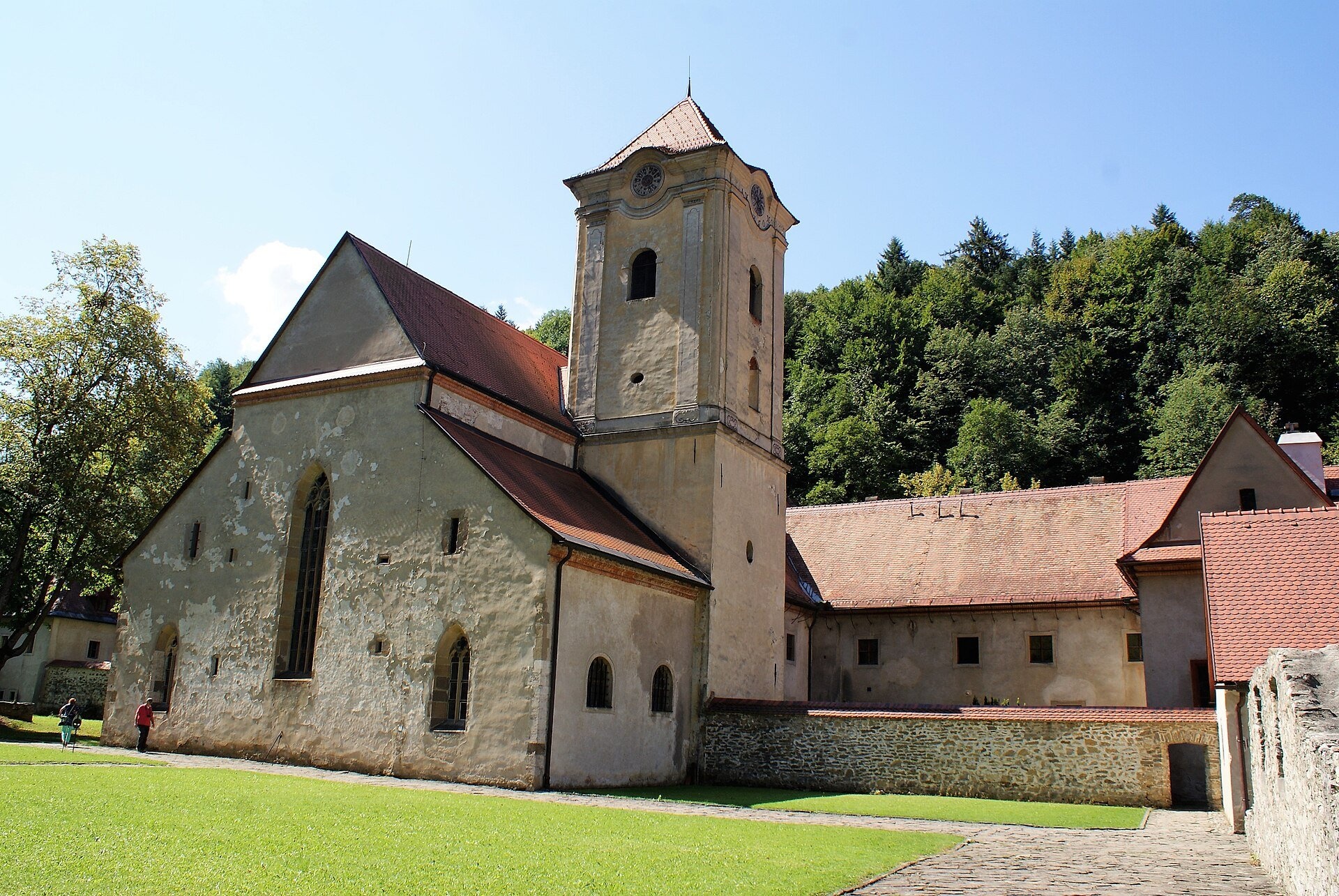
- The Gothic Church of St Anthony the Hermit with Baroque stucco and wall paintings by Italian masters; the tower was added only in 1750, as Carthusian churches had no towers.
- A monk’s house inscribed “1719” — bedroom, oratory, a workroom with an 18th-century pharmacy exhibition, and a woodshed.
- The archaeological exhibition in the prior’s house, the bell tower with a Baroque sundial, and the medieval refectory with wall paintings.
- The museum exhibition on the history of the monastery and the life of the Gorals of Zamagurie, with an audio guide.
Practical information
The museum is open all year, every day: in summer from 8:00 to 18:00 or 19:00, in May 9:00–18:00, in spring and autumn 9:00–17:00 (Sundays and Mondays until 16:00) and in winter 9:00–16:00; last entry is one hour before closing (as of October 2026). Tickets cost €7 for adults, €5 for seniors 65+ and students, €4 for children aged 6–17; under-6s go free.
There is no railway in the village. Buses stop right by the monastery (stop “Červený Kláštor, múzeum”) — from the direction of Stará Ľubovňa, Poprad, Spišská Stará Ves and the Lysá nad Dunajcom border crossing. Drivers park at private paid car parks along the main road; parking inside the monastery grounds is forbidden. The courtyards are level, so the visit suits families and older people.
Next to the village the Slovak Dunajec raft trips on wooden rafts begin (boarding at Majere and at the start of Červený Kláštor, season roughly April to October), and along the river runs the Pieniny path for walkers and cyclists through the Dunajec gorge to Lesnica. Check raft prices on site.
Nearby
From the Polish bank you can see the Three Crowns, and the Polish Dunajec raft trip ends in Szczawnica. To the east, above the Poprad, is Ľubovňa Castle with its open-air museum.
Official website: muzeumcervenyklastor.sk
Photos: PPawel, CC BY-SA 3.0, Wikimedia Commons; Kamorek, CC BY-SA 4.0, Wikimedia Commons; Pavol Svetoň, CC BY-SA 4.0, Wikimedia Commons; Jakub Hałun, CC BY-SA 4.0, Wikimedia Commons; Ing.Mgr.Jozef Kotulič, CC BY-SA 4.0, Wikimedia Commons; Peter ivancik, CC BY-SA 4.0, Wikimedia Commons.
Getting there from Ukraine
Border crossings
- Uzhhorod – Vyšné Nemecké — road, 24/7
- Malyi Bereznyi – Ubľa — road, 24/7 For cars and buses; pedestrians not confirmed by the Ukrainian border service, lorries up to 3.5 t.
- Mali Selmentsi – Veľké Slemence (pedestrian) — pedestrian, 09:00–21:00 Kyiv time Pedestrians and cyclists only; inconvenient for the Tatras without onward transport.
- Chop – Čierna nad Tisou (rail) — rail, 24/7
By car
From Lviv ≈382 km, ≈5 h 15 min without queues: M-10 → Krakovets – Korczowa → A4 to Brzesko → DK75 to Nowy Sącz → DK87 via Piwniczna-Zdrój to the internal Schengen crossing Piwniczna – Mníšek nad Popradom → I/68 to Stará Ľubovňa (≈304 km, ≈3 h 50 min from the Ukrainian border). From Uzhhorod ≈183 km, ≈3 h: Vyšné Nemecké → I/19 to Košice → D1 to Prešov → I/68 via Sabinov and Lipany to Stará Ľubovňa. Via Uzhok and Ubľa ≈408 km, ≈6 h 55 min. The D1 requires an e-vignette (eznamka.sk).
Checked 23.10.2026; border crossing hours and timetables change — check before you travel.
Location on the map
Comments
Trails nearby
All trails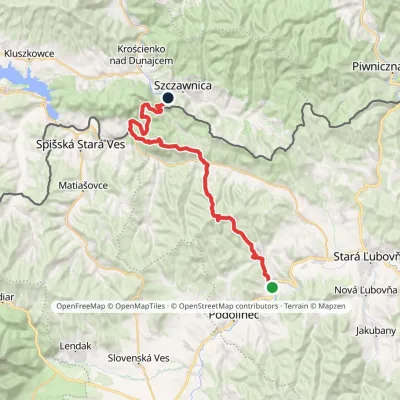 HardMulti-dayMarkedPieninská cestaElevation profile428–1 085 m33 kmascent 1 002 m≈ 10.5 h walkingunder 1 km from Červený Kláštor — Carthusian monastery in the Pieniny
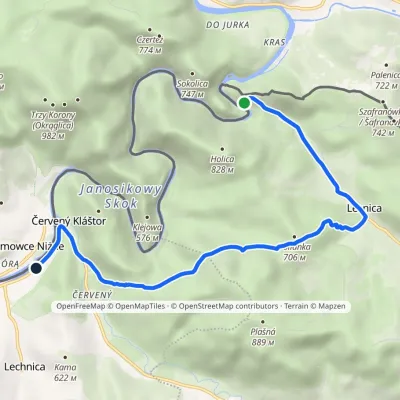 EasyOne-dayMarkedÚstie Lesnického potoka Sromowce NiżneElevation profile447–688 m8.3 kmascent 304 m≈ 2.5 h walkingunder 1 km from Červený Kláštor — Carthusian monastery in the Pieniny
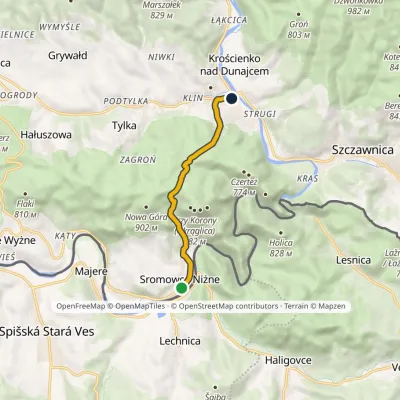 EasyOne-dayMarkedSromowce Niżne Krościenko nad DunajcemElevation profile424–789 m6.5 kmascent 353 m≈ 2.5 h walkingunder 1 km from Červený Kláštor — Carthusian monastery in the Pieniny
Nearby attractions
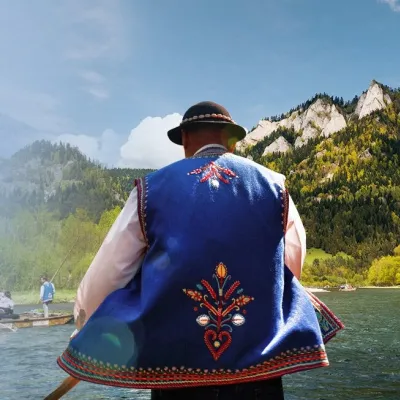 Ethno tours & guidesGoral raftsmen of Červený Kláštor: wooden-raft trip on the Dunajecunder 1 km from Červený Kláštor — Carthusian monastery in the PieninyBetween Červený Kláštor and Lesnica the Dunajec cuts a deep, winding gorge through the limestone Pieniny, and here the river becomes the border between Slovakia and...
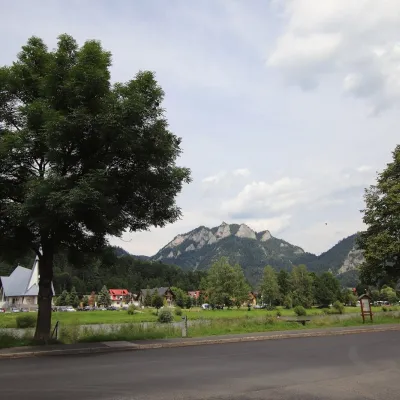 PeakTrzy Koronyaltitude 982 m1.7 km from Červený Kláštor — Carthusian monastery in the PieninyTrzy Korony (“Three Crowns”, Slovak Tri Koruny) is a 982 m mountain, the highest summit of the Central Pieniny and the best-known peak of the whole range.
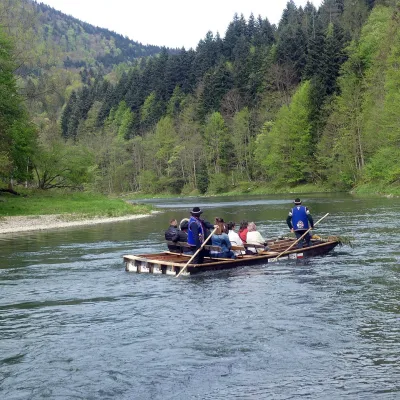 NatureDunajec River Rafting3.5 km from Červený Kláštor — Carthusian monastery in the PieninyRafting down the Dunajec is the best-known attraction of the Pieniny and probably of the whole Polish Carpathians.
Craft nearby
All craft places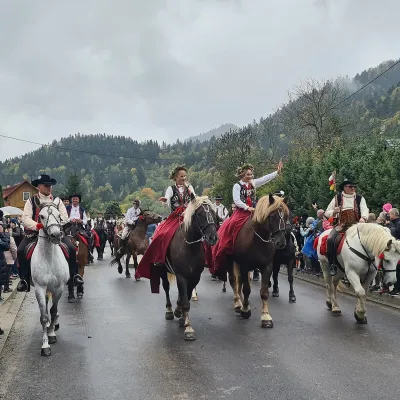 Markets & fairsAutumn Redyk in Szczawnica: sheep drive, oscypek and shepherds4.1 km from Červený Kláštor — Carthusian monastery in the PieninyRedyk is an old Carpathian shepherding custom: in spring the flocks are driven up to the mountain pastures (hale), and in autumn, after the cheese-making season, they...
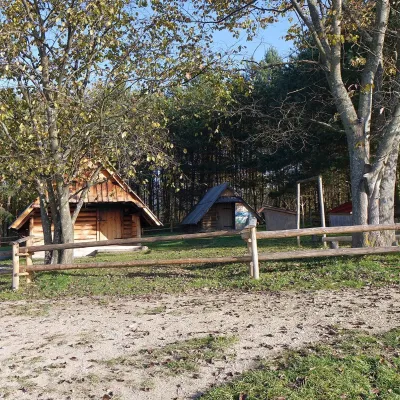 Cheese dairies & pasturesMajerz Meadow Shepherd's Hut, Pieniny National Park: oscypek and żętyca7.3 km from Červený Kláštor — Carthusian monastery in the PieninyMajerz meadow (hala) sits on a 689 m hill between Czorsztyn-Nadzamcze and the village of Hałuszowa, above Lake Czorsztyn.
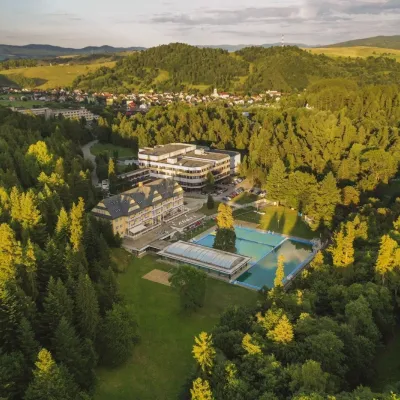 Water parks & thermal poolsVyšné Ružbachy Spa: Izabela Mountain Pools and Indoor Thermal Pool14 km from Červený Kláštor — Carthusian monastery in the PieninyVyšné Ružbachy is one of Slovakia’s oldest spas. It lies on the south-eastern slope of the Spišská Magura at about 617 m, surrounded by coniferous forest that merges...
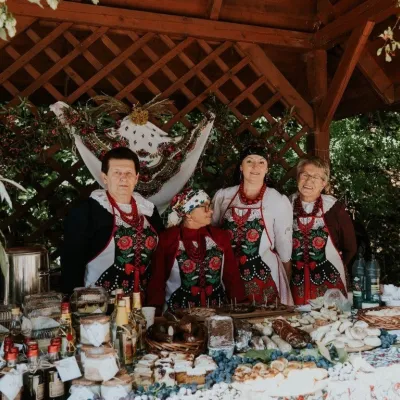 Markets & fairsFruit Harvest Festival in Łącko: village stands, fruit and folklore18 km from Červený Kláštor — Carthusian monastery in the PieninyŁącko, in the Dunajec valley between Stary Sącz and the Pieniny, is one of Poland's best-known fruit-growing areas: the slopes around are covered with apple, pear and...
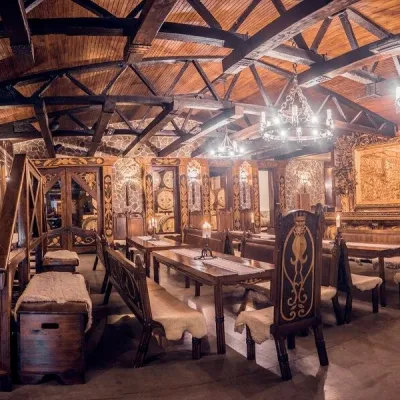 Craft producersNestville Distillery, Hniezdne — Home of the First Slovak Whisky19 km from Červený Kláštor — Carthusian monastery in the PieninyThis tradition is the basis for BGV, a company founded in 2001, which built the Nestville Distillery here.
 Craft producersCastle Distillery below Ľubovňa Castle: fruit spirits and tastings22 km from Červený Kláštor — Carthusian monastery in the PieninyStará Ľubovňa is a town in northern Spiš, overlooked by Ľubovňa Castle. For more than three and a half centuries Ľubovňa was one of the Spiš towns pledged to the...
