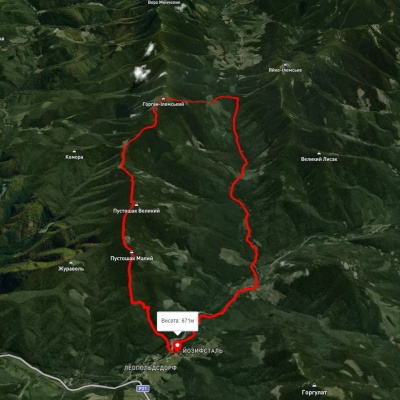
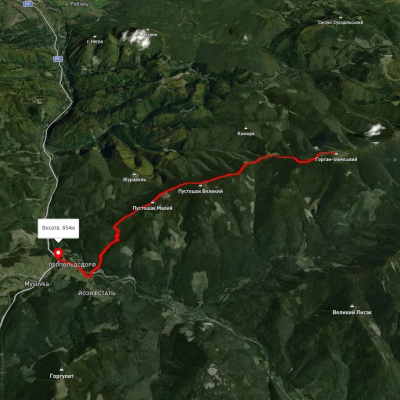
In 1873, Austrian entrepreneur Baron Leopold Popper von Podgari moved the headquarters of his company from Hungary to Galicia. The enterprise harvested and sold timber. The baron established the first sawmill (tartak) in the
village of Vygoda. From the broad railway, narrow-gauge railways were initially laid into the mountains, where horses pulled the timber. This track, 3 kilometers long, connected the sawmill in Vygoda with the tartak in
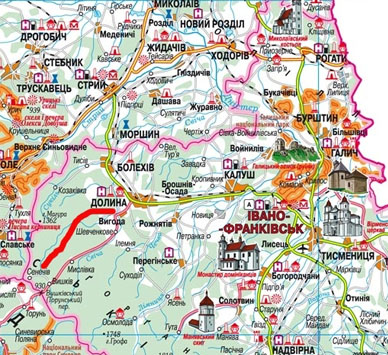
the village of Staryi Mizun in 1890. Thus, the narrow-gauge railway linked the Boykivshchyna region with the timber processing metropolis of Austria-Hungary. The network of narrow-gauge railways became indispensable for harvesting, processing, and selling timber. It spread through the picturesque Horgany mountains, witnessing the grandeur of the Austro-Hungarian Empire, the vicissitudes of war, and partisan adventures, absorbing the color of local folk life and the sweat of the hard work of lumberjacks. Having reached its greatest length and prosperity during Soviet times, by the end of the last century, it began to gradually decline, suffering from both nature and man. On the only fully restored Mizun branch, once solely an industrial narrow-gauge railway, an interesting excursion route
"Carpathian Tram" has now been created. In 2016, its route was organically complemented by the interactive museum of the Vygoda narrow-gauge heritage center.
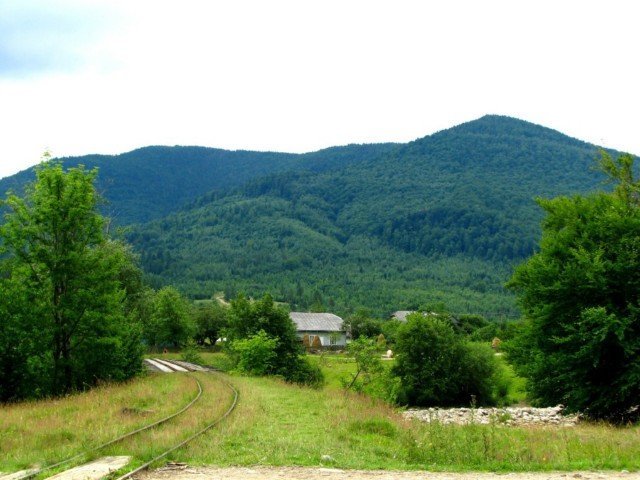
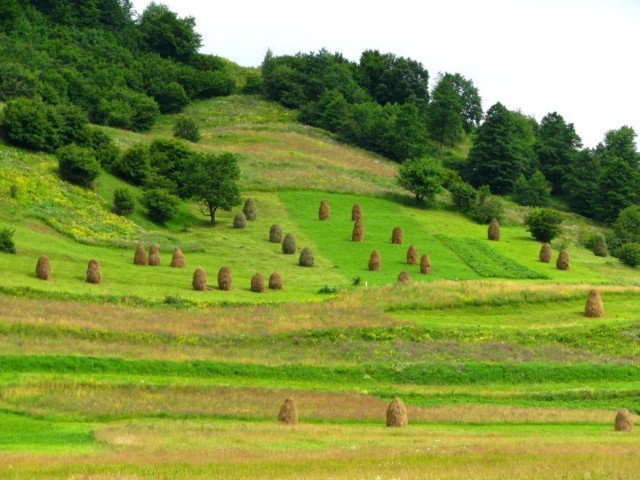
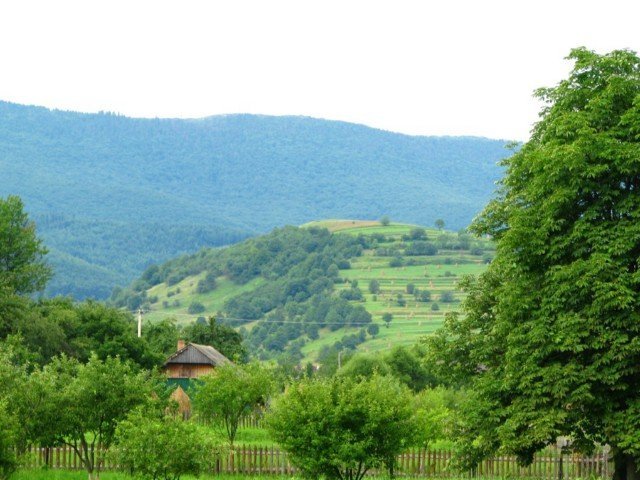
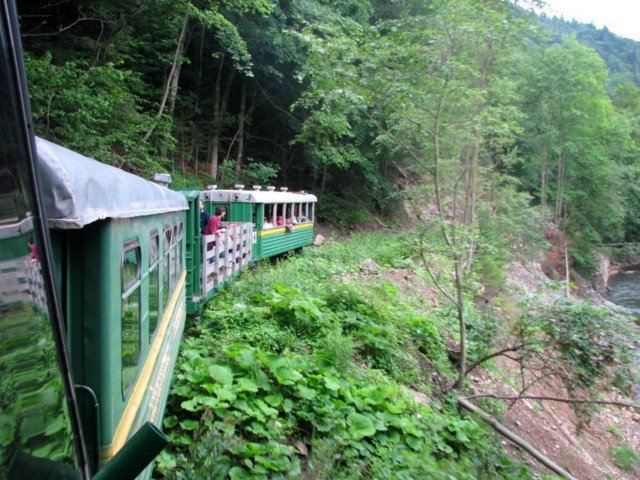
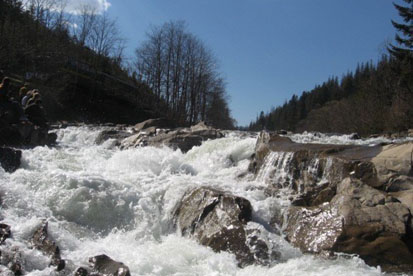
The tram will leisurely take you along the banks of the ecologically clean Mizunka river through fairy-tale places that sometimes turn into true exoticism, especially when the mountains loom over the train, and the track follows the serpentine of the river, passing so close to the edge of the bank that it seems as if the train is about to dive into the water.
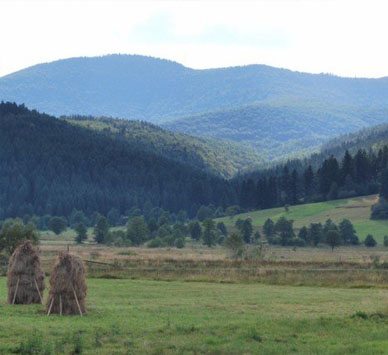
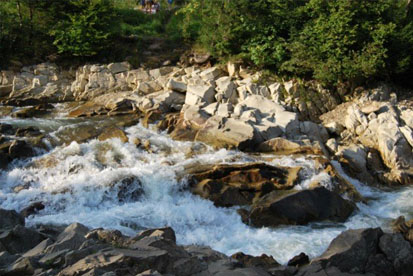
During the journey, you can visit the hydrological natural monument of national significance the "Shirkovets" reserve, taste the healing mineral water from the "Naftusia" spring, and the purest water in the Carpathians from the mountain spring "Dzyurkach". In warm weather, you can swim in the wonderful mountain waterfalls of Mizunka.
Throughout the trip, colorful local guides Lyubomyr Ksenofontovych Yatskiv and Oleg Vasylovych Hutak will ensure that no one is bored, sharing incredible details from the region's history and interspersing them with witty and bright jokes.
At the Solotvyn forestry, you will see a symbolic chapel at the site of the first salt deposits from the early eleventh century, and at the Mundunok stop, you will learn about the peculiarities of ancient logging and inspect old production facilities and forester's lodges. And much, much more interesting!
The journey on the "Carpathian Tram" also includes other route options.
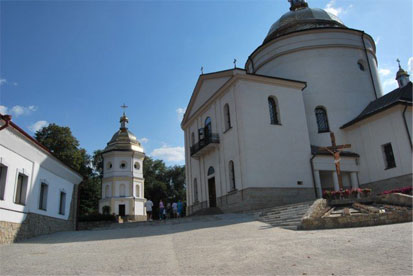
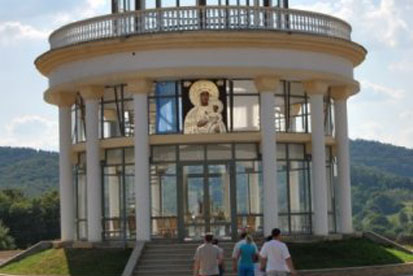
Some interested parties can use the tram not only for excursion purposes. Here, there is an opportunity to order and hold various celebrations and even weddings, turning them into a complete adventure! It is possible to plan a visit to the Goshiv Men's Monastery, known for its miraculous icon of the Mother of God on Yasna Hora.
Before the train departs, tourists can optionally visit the café and order lunch; the same can be done in advance by phone.
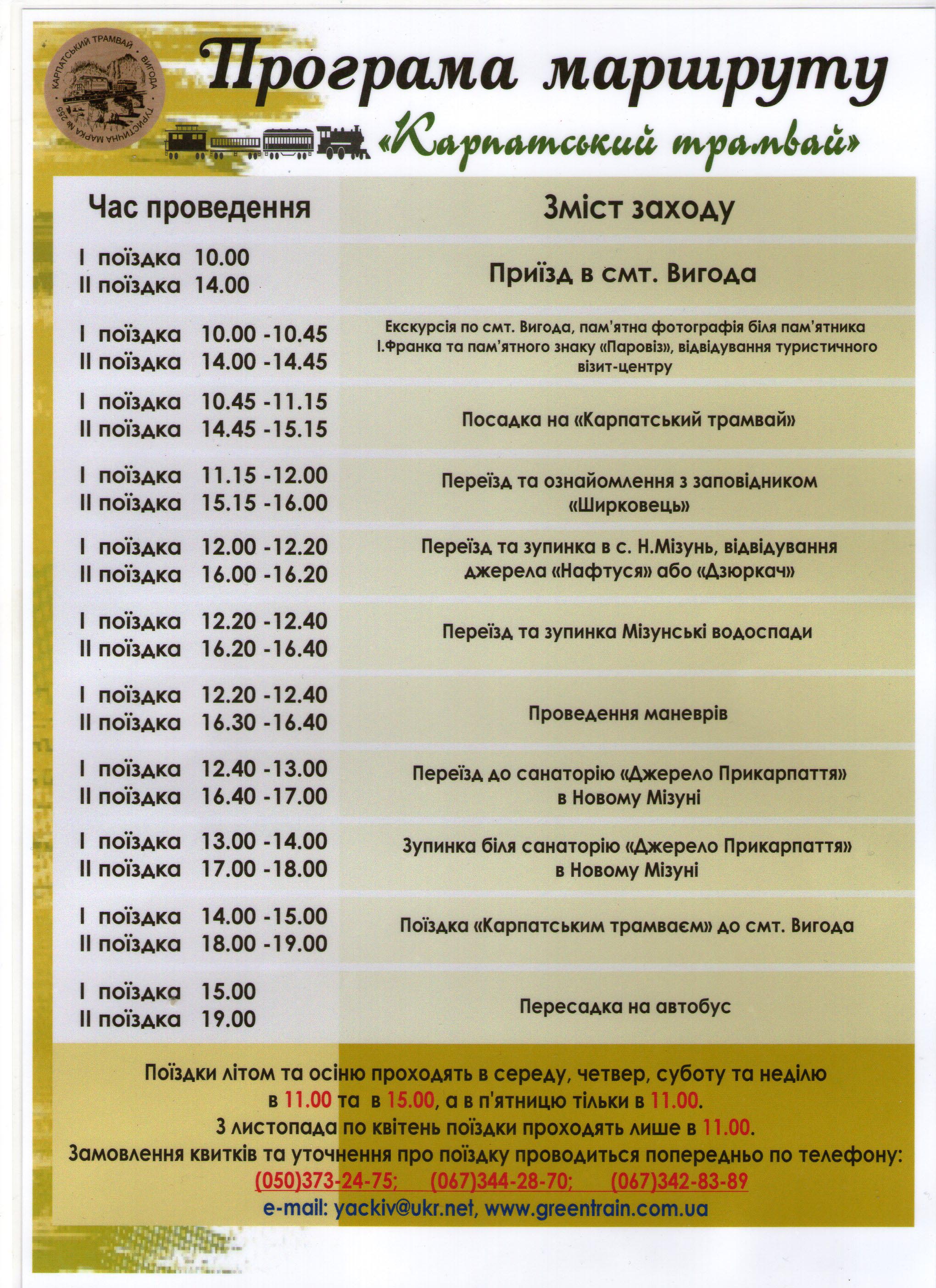
11:00 and 15:00 – Excursion on the narrow-gauge railway "Carpathian Tram", Vygoda – Dubovyi Kut accompanied by a guide who tells about the history of the railway, the history and traditions of the Carpathian region, etc.
Stops along the way, visiting sites:
Transfer and familiarization with the reserve
the "Shirkovets" swamp (7 km), transfer to the stop
Novyi Mizun and visit
the "Horyanka" mineral water spring (2 km), transfer and stop in
the "Dubovyi Kut" area and conduct maneuvers (5 km), return on the "Carpathian Tram" to the stop
"Mizun Waterfalls" (2 km), transfer to the stop
the "Dzyurkach" spring (1 km), transfer to the stop
the "Sanatorium" in Novyi Mizun (2 km), return on the "Carpathian Tram" to
the town of Vygoda (9 km).
...The bus covers the distance from Ivano-Frankivsk to Vygoda in two hours. Departure from the bus station at 8:30. We enter a typical Prykarpattia settlement. Twenty years ago, due to powerful timber processing enterprises, Vygoda was considered a promising industrial center. Now tourism is being developed here.
The first stop is near the monument to Ivan Franko. A short lecture on where exactly in the Carpathians to look for traces of the Great Kameniar. We take photos and head to the center of the settlement. Meeting (probably not by chance) the trio of musicians. The lively "Hutsulka" almost from the first beats engages foreign guests. We dance in the middle of the road. Cars stop, but do not honk.
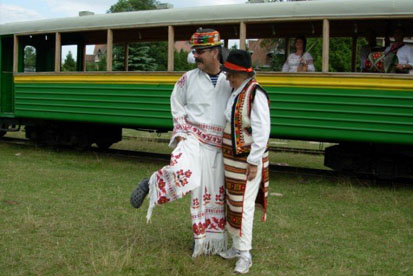
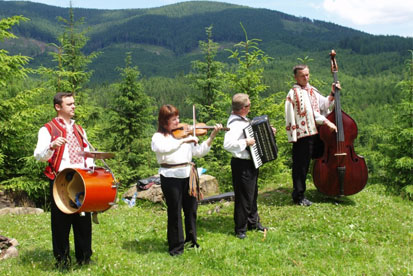
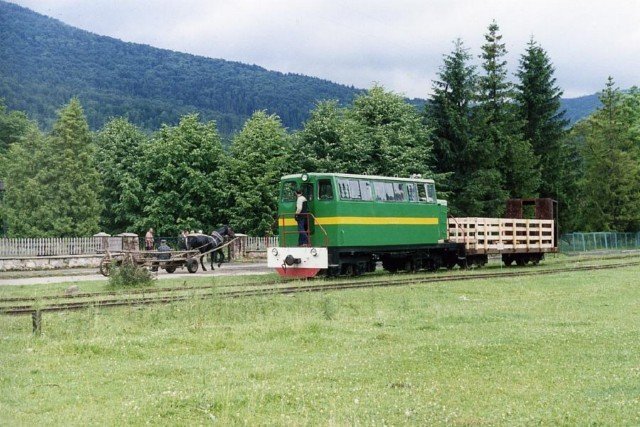
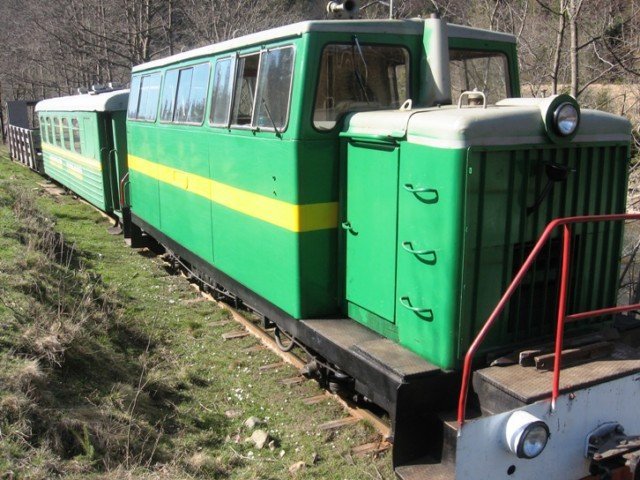
Here comes the characteristic sigh of the locomotive - the "Carpathian Tram" is served. Foreigners choose the closed carriage. Almost all Ukrainians prefer the open platform - regardless of the drizzling rain. The diesel emits some completely automotive "fa-fa". Mr. Yatskiv somewhat awkwardly explains that the real steam whistle is under repair. We set off. The mountains slowly loom over us.
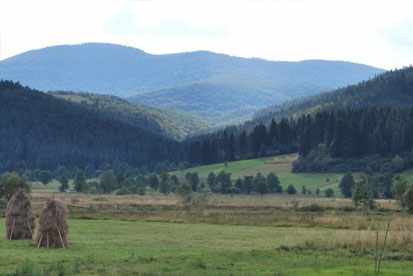
The track winds along the banks of the Mizunka river, jumping from bank to bank. To the next stop in the Shirkovets area, the train crosses four bridges (there are more than thirty on the way). On the right, the slopes of the mountains approach so closely that one can closely examine the patterns of moss on the Horgany stones. Trees thrust wet branches into open windows. On the left side along the railway, houses line up. Fences, gardens, woodpiles, haystacks, clotheslines, chickens, dogs, cows, frames of baby carriages, old trucks - all this guests actively photograph.
Through the last bridge, the train emerges into an open area. Our guide urges the group to find the cross on the highest hill. "This is Mount Monastyr. In the 16th century, there was a real fortress here," Mr. Lyubomyr tells. "At that time, Tatars roamed the Carpathians, burning villages and taking mountain people captive. The enemies surrounded the monastery on the mountain, but the monks did not surrender to the infidels. The residents of the monastery prayed fervently for three days and three nights. And a miracle happened: at dawn on the fourth day, the mountain trembled, opened up, and hid the people. The Tatars were frightened and fled. And the local people erected a cross here in memory of this." The translator recounts the tale in English, and the tourists take notes.
"On the right side -
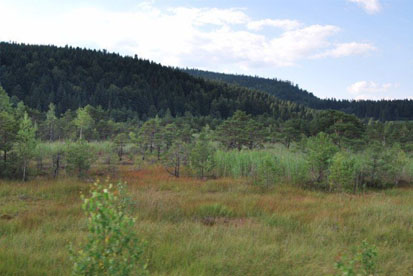
the Shirkovets swamp", the guide announces. We quickly examine the hydrological natural monument of national significance. For the first time, we see a sundew - a flower that eats small insects. We all sniff the bog myrtle - on warm summer days, all domestic animals faint from its smell near the swamp. Good thing it’s not summer yet!
The next fifteen minutes, Lyubomyr Yatskiv describes the movements of various armies through this area during World War II. Outside the windows are still deserted sanatoriums of Mizunya. Probably, in summer the resort comes alive...
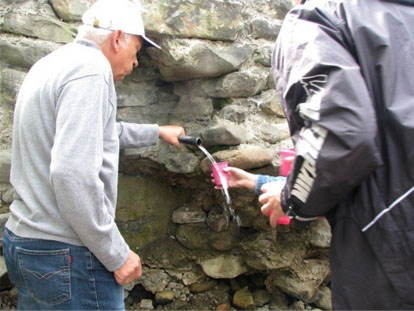
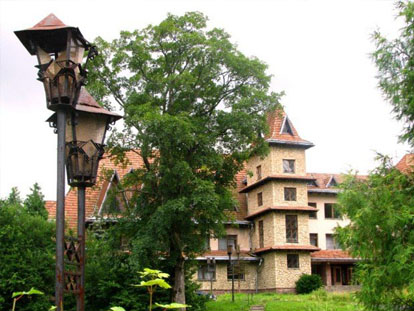
The next station is the "Horyanka" well. It is a two hundred meter walk to the mineral water spring of the "Naftusia" type in Novyi Mizun. A powerful stream of water gushes from a pipe embedded in the rock on the riverbank. Mr. Yatskiv hands out plastic cups - "for tasting". The water has a distinct taste of oil. "Is there anything stronger?" the blacksmiths persistently inquire of our expedition leader. In response, he smiles slyly and leads the group to the first house on the side street. A table instantly appears in the yard, with a bottle of moonshine and a glass. The host invites, and tourists taste it.
At the
Mizun Waterfalls, no one gets out anymore. The festival of blacksmiths continues - brave guys dance the hopak on the platform. We arrive at the "Dubovyi Kut" stop. The program includes a climb to the pasture and an excursion to the aerial bridges. A half-hour stop is announced. The train maneuvers - we need to switch to another branch and head back. We have covered only thirteen of the thirty kilometers of the route. "Further begins the real exoticism," Mr. Yatskiv tells. "The mountains loom over the train, the track follows the serpentine of the river and passes so close to the edge of the bank that it seems as if the train is about to dive into the water..." We want to go further. But it’s time to return to make it to Vygoda before dusk.
Picnic on the roadside, another "fa-fa" of the locomotive, and the countdown of the return journey begins. The walk was obviously successful.
Travel Options
There are several travel options. Usually, trips on the Carpathian Tram follow the classic four-hour route. The start of the route is at 11:00 to 15:00, or from 15:00 to 19:00 (read the description in the "route description" section further in the "travel options").
The mountain route with stops "Carpathian Tram" usually takes eight hours — from 10:00 to 18:00. From Vygoda through Shirkovets, Staryi and Novyi Mizun, Dubovyi Kut, Solotvyno, Mundunok, and Sobol - to the Magura area.
At the Solotvyn forestry, tourists will visit a chapel built at the site of the first salt deposits of the eleventh century. At the Mundunok stop, they talk about the peculiarities of ancient logging, arrange a tour of old production facilities, and forester's lodges. At the final stop, they lay out a picnic. On the way back, one can visit the ornithological reserve in the Dzyurkach area. And from Novyi Mizun, they climb to the pasture near Mount Lysa (1134 meters).
The journey on the "Carpathian Tram" also includes other route options. The railway trip can be combined with several days of hiking to the peaks of Menchul (1450 meters), Yayko-Ilemske (1679 meters), along the paths of liberation struggles to Vyshkiv Pass (930 meters). Tourists can also order a general excursion program in the Dolyna district - bus trips to the Dovbush Rocks reserve, to Lake Synevyr, to Goshiv Monastery on Yasna Hora, to the "Boykivshchyna" museum in Dolyna.
From 01.05.2019, the ticket price for adults is 200 UAH, and for children under 14 years is 75 UAH.
To get from Lviv to the town of Vygoda – 125 km. Buses heading to Khust depart from the main railway station. Travel time is 3 hours, or by bus from Stryi which departs at 9:20.
To get from Ivano-Frankivsk to the town of Vygoda – 75 km. A minibus runs from the regional center to the village of Dolyna (departure time – 09:25).
Department of Tourism of LLC "Uniplyt" and LLC "Carpathian Tram", Ivano-Frankivsk region, Dolynskyi district, town of Vygoda
Call from 10:00 to 12:00 and from 15:00 to 18:00.