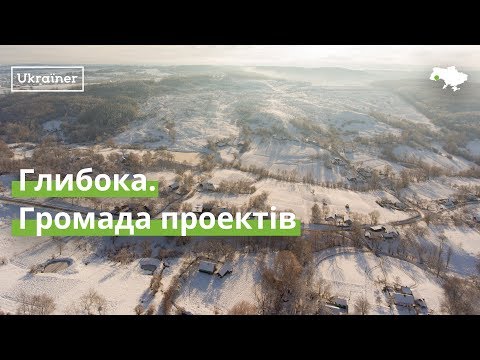
Hlyboka
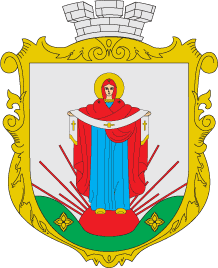
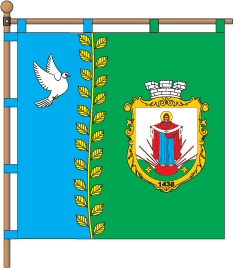
The first written mention of Hlyboka dates back to 1438. It is described as a deserted area on the "Black Polyana", and in a charter of the same year, the Moldovan ruler Ilya I granted the area called Hlyboka to the court judge Petro Gudyma.
It is believed that the name of the settlement comes from its location-the village lies in a deep hollow. In 1490, the chronicles mention that the church of Hlyboka became part of the Radivtsi diocese, and in 1491 the Moldovan ruler Stephen III approved the transfer of the village of Hlyboka to the court judge Judca by his charter. For a long time, Hlyboka lands and farmland were the property of feudal lords and monasteries.
In 1774, Hlyboka, like the rest of Bukovyna, passed from Turkey to Austria. Hlyboka flourished when the Habsburg monarchy took over the Hlyboka region. In the mid-nineteenth century, a distillery was built here and the construction of the Chernivtsi-Vadul-Siret-Suchava railway, which ran through the village, began, and later a new railway line Hlyboka-Storozhynets-Berehomet was laid.
Unfortunately, the existing guidebooks to Bukovyna that describe this region do not pay attention to the sights of Hlyboka at all, focusing primarily on Bila Krynytsia and the ancient wooden churches in Lukovytsia or Poliana. However, there is also something to see in Hlyboka. The Austrian era left a number of buildings from the nineteenth and early twentieth centuries in the center of the town, which stand out against the background of faceless Soviet-era boxes and modern private homes of the town's residents.
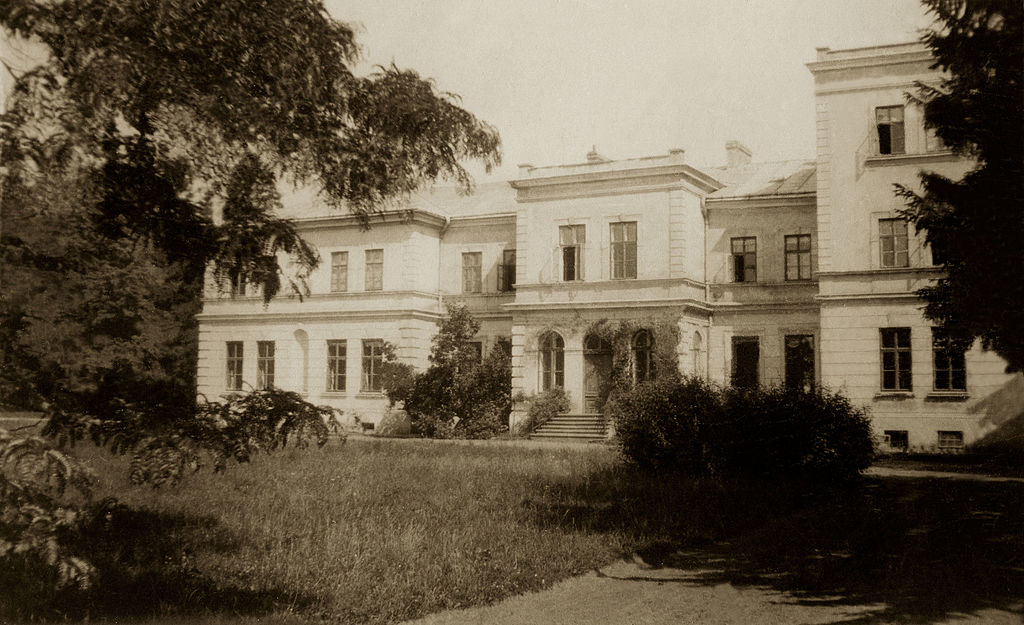
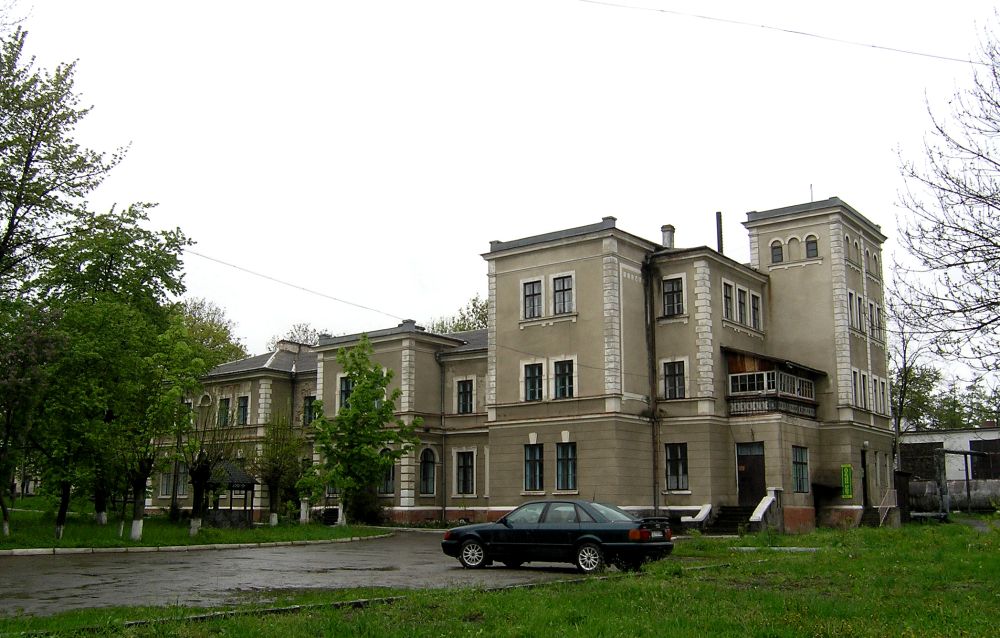
At the beginning of the twentieth century, the most influential family in Hlyboka was the Polish landowners Skibynetski. The architectural face of the town, which has partially survived to this day, is associated with the name of Mr. Skibynetskyi. The three-story house of the Skybynetskyi family has been preserved at 24 Shevchenka Street. Unfortunately, the reconstructions that took place in Soviet times significantly distorted the house. Today it looks more like an administrative building, and only the pitched roof reminds us of its century-old age. Today, the house houses the children's department of the central district hospital.
On Hlybotska Street, the Church of Our Lady of Sorrows, built in 1906, is worth a visit. The lion's share of the funds for its construction was allocated by the same Mr. Skibinetskyi, a generous and highly educated man who did a lot for his town and its residents. The church is small, but it attracts with its unusual facade architecture, the pediment of which resembles two staircases that seem to lead to its top. The church was closed by the Communists in 1946, and the holy images were taken with them by Polish emigrants. In Soviet times, the church building served as a movie theater, a mini-power plant, and a district archive. In 1993, it was returned to the Roman Catholic community. In the same year, holy images returned to the church from abroad.
In addition to the Roman Catholic church in Hlyboka, there is the Orthodox Church of the Holy Intercession, built in 1908. It is located on Hlybotska Street not far from the church. A prayer house of Evangelical Christians is located in the building of the former German church on Pionerska Street, built in the middle of the nineteenth century.
A number of old houses have been preserved on Tsentralna Street. House number 91, built by German colonists in the late nineteenth century, houses the central district library. Almost across the street is a small two-story building with a balcony, built in the middle of the century before last. The district archive is located here (92 Tsentralna St.).
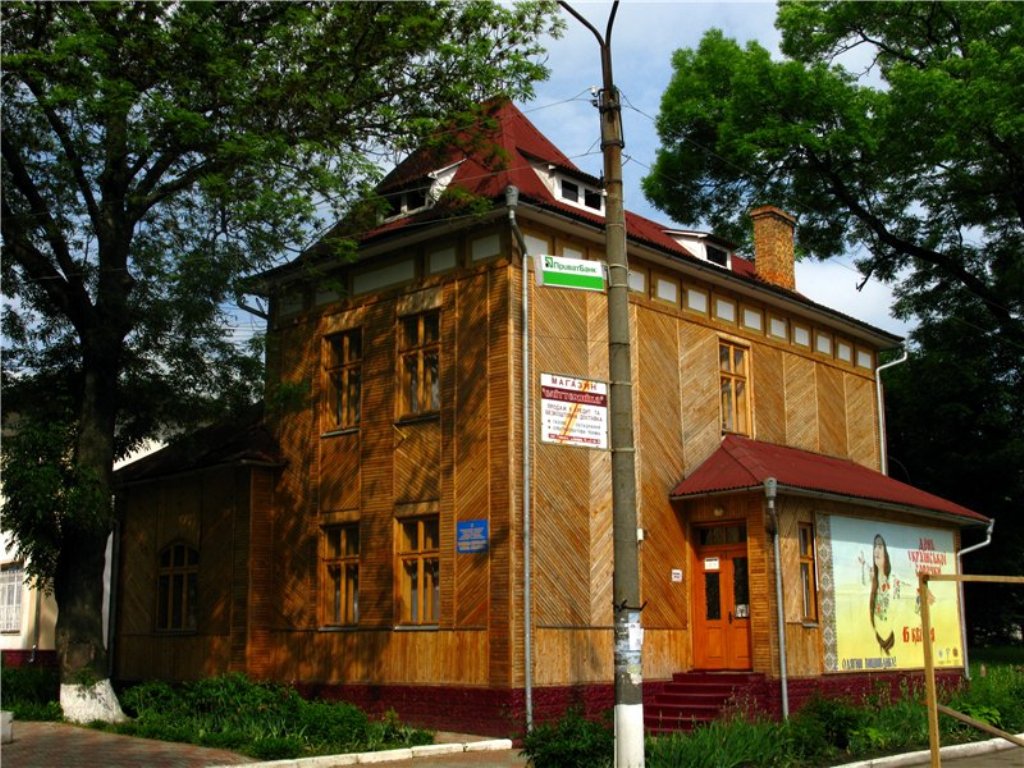
The one-story building of the music school (late nineteenth century) is interesting, facing two streets at once, forming a kind of tower with a balcony at their corner. The wooden house at 96 Tsentralna Street houses the local history museum, which collects antiques and exhibits telling about the history and development of the village and the district.
The central square of Hlyboka is surrounded by tall, light modern buildings that give the town an urban look. It is home to monuments to Taras Shevchenko, the Fighters for the Freedom of Ukraine, and Afghan soldiers. Every year on St. Basil's Day, one of the most colorful Malanka celebrations in Bukovyna takes place on Hlyboka's central square, and in recent years it has turned into a competition for the best Malanka.
In 1956, Hlyboka was transferred to the category of an urban-type settlement. The Warsaw-Chernivtsi-Bucharest railway passes through the village. The population is 9.8 thousand people.
There is a bicycle route "Forest": Hlyboka - Dymka - Mykhailivka - Chervona Dibrova - Hlyboka
Duration: 5 hours. Route length: 30 km. Height gain: 47 м.
The route starts near the Hlyboka bus station, passes through the railway crossing in the direction of Dymka, then across the Malyi Kotovets River, through the forest back to the village, to the road to Mykhailivka. At the crossroads behind the village turn right, at the crossroads turn left to the road that leads to Hlyboka and the trailhead.
On the route you can visit:
- museums in the villages of Dymka and Chervona Dibrova;
- a wooden church in Mykhailivka;
- forests of the region.
What to visit
Landmarks, museums and places of interest near Hlyboka.
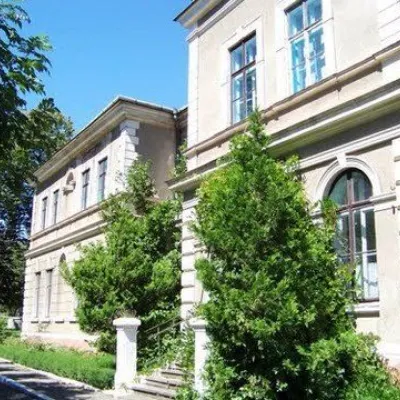 ArchitecturePalace of the Skibinetsky familyHlybokaunder 1 km from the centreOne of the coziest Bukovyna palaces, the Skibinetsky estate, has been preserved in the village of Hlyboka in the Chernivtsi region.
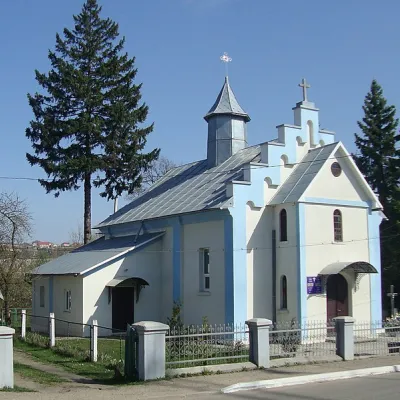 Historic site"Church of Our Lady of Sorrows" HlybokaHlybokaunder 1 km from the centreThe first written mention of the village of Hlyboka dates back to 1438, in 1919-1940 it was called Adynkata, since 1940 it has been the center of the Hlyboka district,...
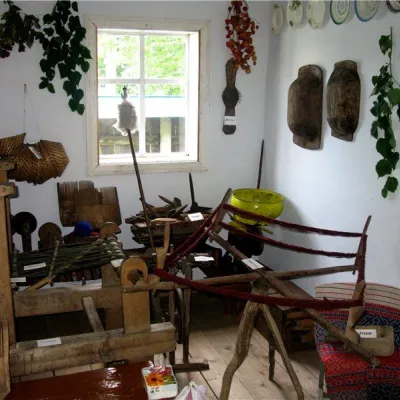 MuseumMuseum of local loreStaryi Vovchynets10 km from the centreThe museum complex is the largest in Chernivtsi region among public museums in terms of area, number and variety of antiquities and themes.
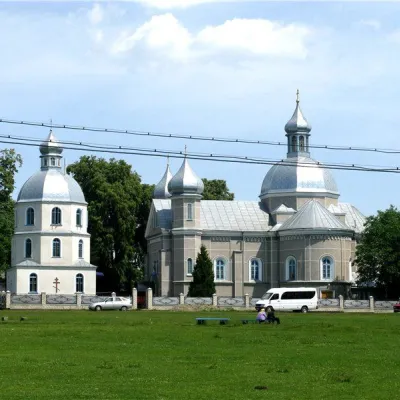 ChurchChurch of the Nativity of the Virgin MaryStaryi Vovchynets10 km from the centreIn the village of Staryi Vovchynets, you can visit the Church of the Nativity of the Virgin Mary, built in 1900.
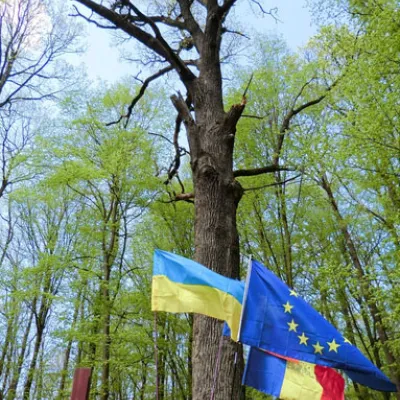 NatureOak by Stefan cel Mare, Valya KuzminaHlyboka district11 km from the centreThe historic oak tree, which is more than half a millennium old and is said to have been planted by Moldovan voivode Stefan the Great, grows in the Valya-Kuzmin forestry.
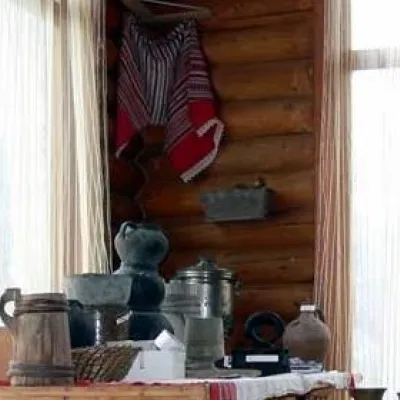 MuseumMuseum of World Old BeliefsBila Krynytsia13 km from the centreIt is home to a community of Old Believers who moved there back in the days of Peter the Great. These people have preserved their customs and traditions to this day.
Where to stay
Hotels, guesthouses and cottages in and around Hlyboka.
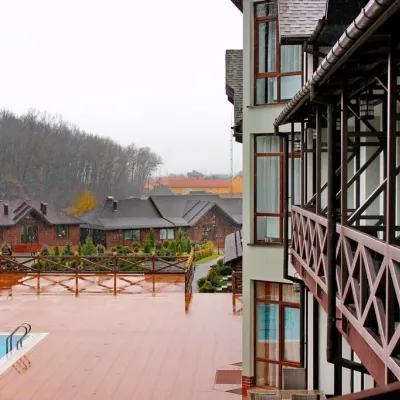 HotelHotel and Restaurant Complex "Georg Park" (Tarashany)Tarashany7.5 km from the centrePoolSaunaBBQNearby: Oak by Stefan cel Mare 4.2 kmChurch of Our Lady of Sorrows 7.5 km
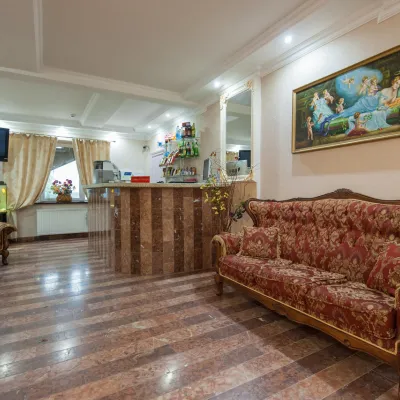 HotelHotel "LeoTon" ChernivtsiChernivtsi20 km from the centreParkingWi‑FiTransferNearby: Armenian Church 3.2 kmSoborna Square 3.4 km
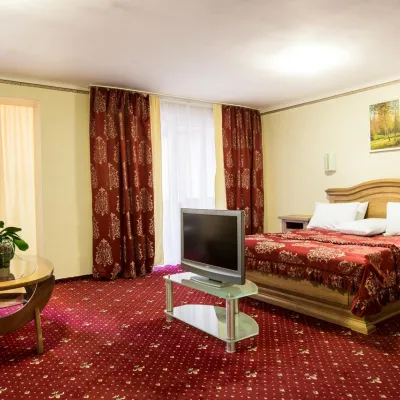 HotelHotel "Bukovyna" Chernivtsi ****Chernivtsi21 km from the centrePoolSaunaSPANearby: Armenian Church 1.3 kmSoborna Square 1.4 km
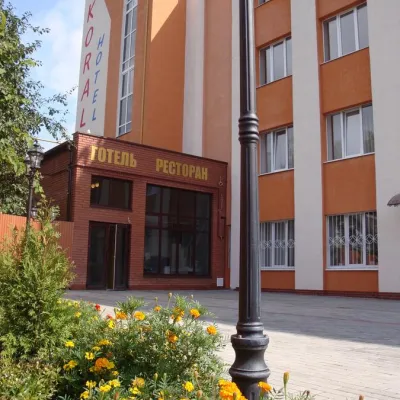 HotelHotel-Restaurant Complex "Koral" ChernivtsiChernivtsi22 km from the centreSaunaBBQParkingNearby: Armenian Church 2.8 kmSoborna Square 3.2 km
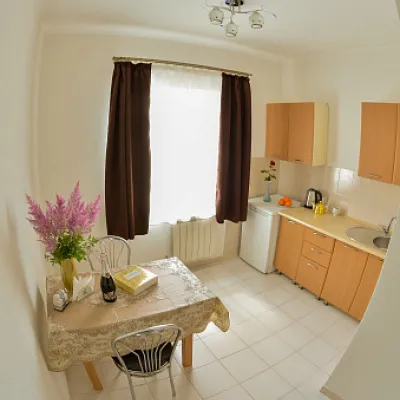 Hostel"Grand Hostel" Chernivtsi Prutska, 24Chernivtsi23 km from the centreParkingWi‑FiTransferNearby: House-ship 900 mArmenian Church 1.5 km
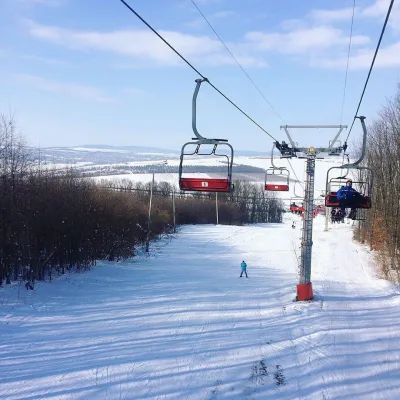 Ski resortSki Resort "Soniachna Dolyna" BoyanyBoiany25 km from the centrePoolSaunaBBQ
Peaks nearby
All peaks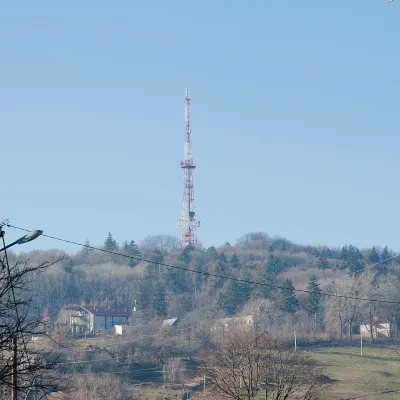 PeakMount TsetsynoChernivtsialtitude 537 m23 km from the centreTsetsyno is the highest hill of the Chernivtsi Upland, 537 m high (538 m according to other data). It rises on the western outskirts of Chernivtsi, near the Rosha...
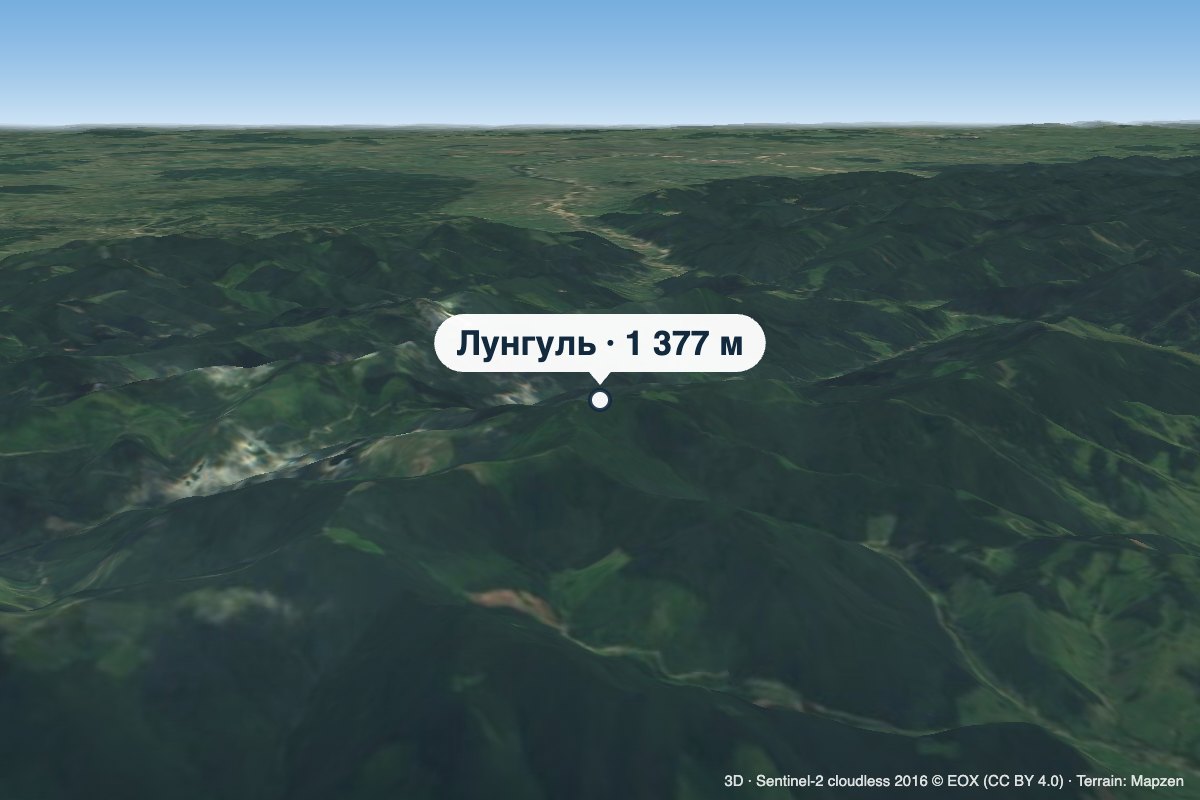 PeakMount LunhulRuskaaltitude 1 377 m49 km from the centreLunhul is a 1,377 m summit (1,377.4 m exactly) in the Pokuttia-Bukovyna Carpathians. It stands on the boundary of the former Vyzhnytsia and Putyla districts of...
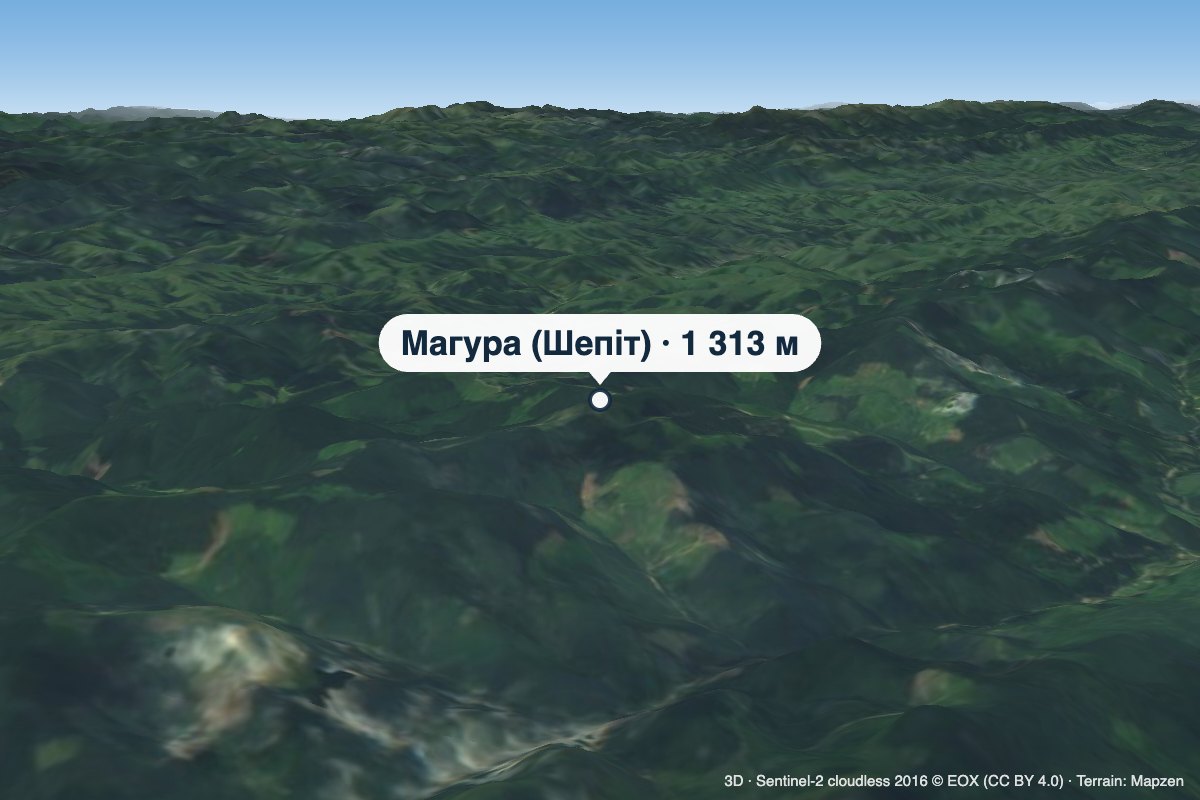 PeakMount Mahura (Shepit)Dolishnii Shepitaltitude 1 313 m · Pokuttia-Bukovyna Carpathians range51 km from the centreMahura is a 1,313 m mountain in the Pokuttia-Bukovyna Carpathians, on the Dovhyi Hrun ridge. It lies in the Vyzhnytsia district of Chernivtsi Oblast, south of the...
What's nearby
Video