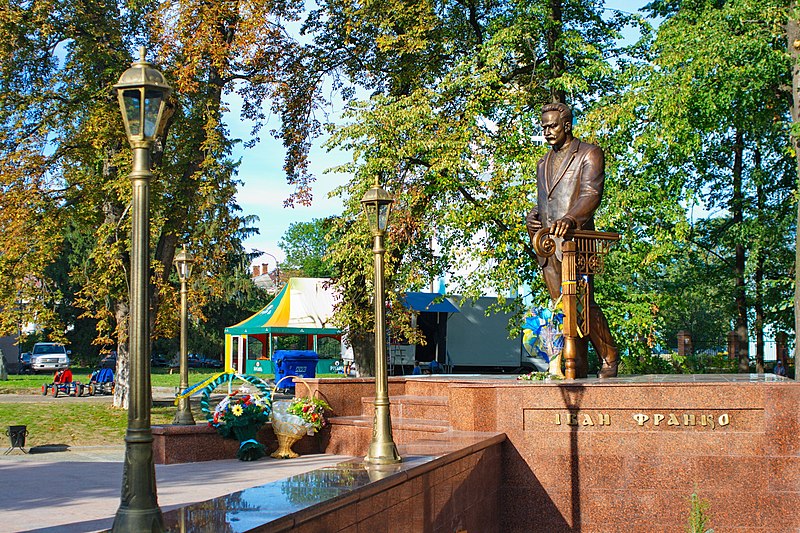
Monument to Ivan Franko, Kolomyia
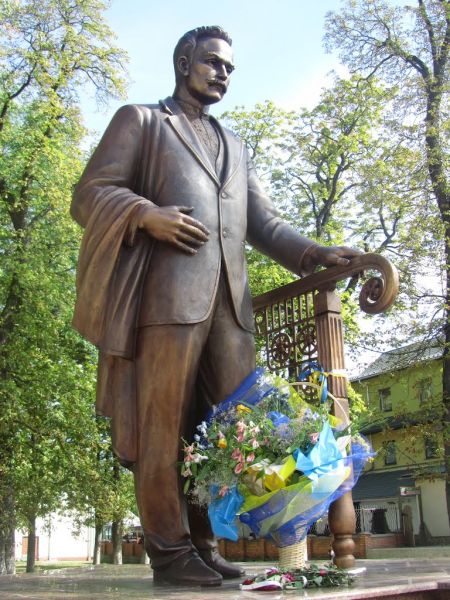
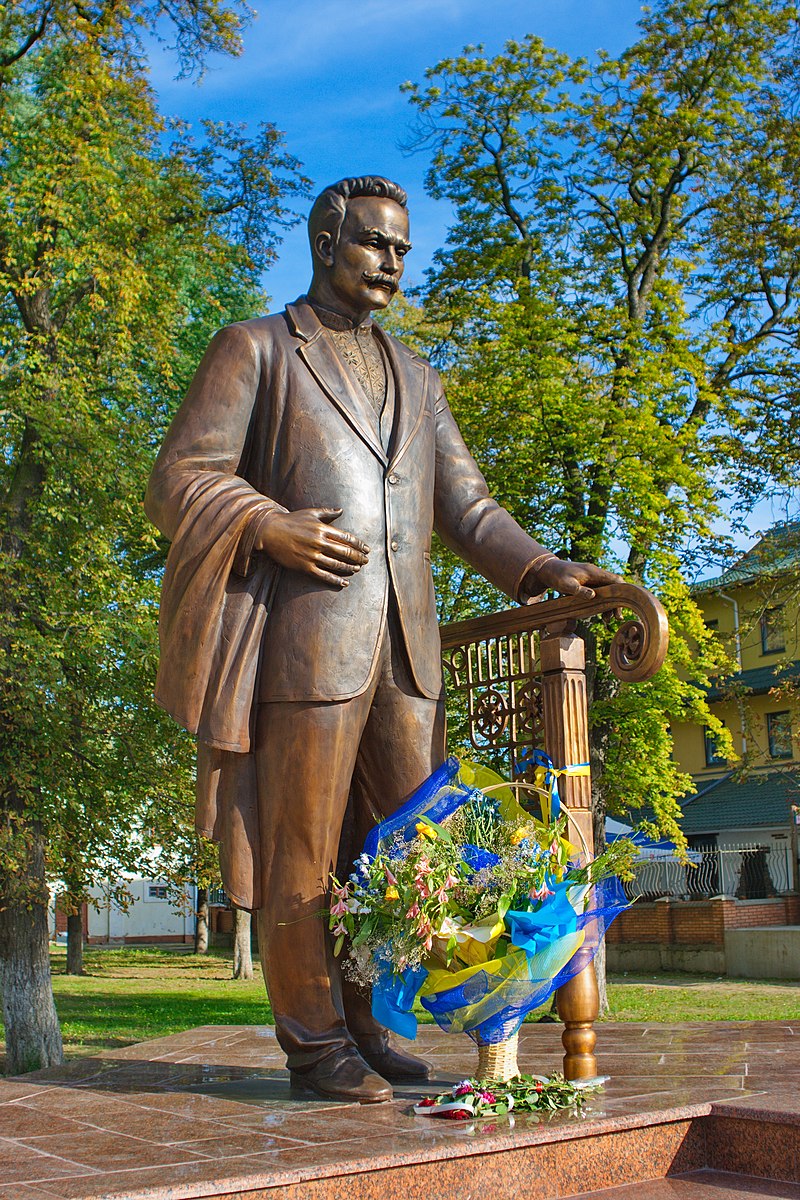
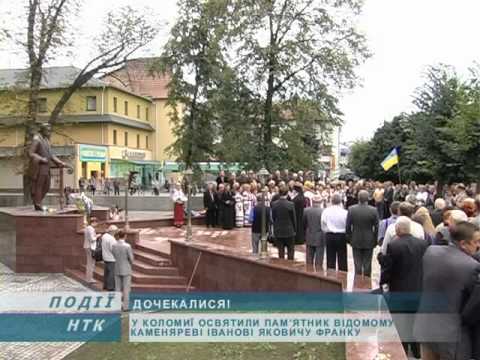
Monument to Ivan Franko in Kolomyia - a monument to the prominent Ukrainian writer, poet, scholar, and thinker Ivan Yakovych Franko in the city of Kolomyia in the park on Vyacheslav Chornovil Street, opened on August 27, 2012, to commemorate the 156th anniversary of his birth. The sculptors of the monument are Vasyl Andrushko (Kolomyia), a member of the National Union of Artists of Ukraine, and Vasyl Hurmak (Lviv), a professor at the Lviv National Academy of Arts, with the project architect being Oleg Prits (Kolomyia), and the contractor for the pedestal construction being Volodymyr Ivaniuk (Kolomyia). According to the authors' concept of this monument, Franko seems to be moving towards the people, descending the steps from the ages into the present, and with his thoughtful gaze, he calls for reflection and an unyielding struggle for Ukraine, which permeated his entire life. The nearly three-meter monument was cast in bronze by the Lviv company "PikArt".
On August 27, 2011, at 14:00, the cornerstone was laid by the city authorities and the governor. The installation of the monument was planned for one year to coincide with the next city day. In the autumn of 2011, work was underway to establish the square for the monument. The estimated budget for all works was approximately 1 million hryvnias (around $125,000 at that time). The project included the arrangement of a renovated park of the same name around the monument.
This is one of the few monuments where one truly wants to stop, stand, and mentally communicate with this extraordinary person. The sculptural composition is built in such a way that Ivan Franko seems to truly walk through Kolomyia, holding a cloak in one hand and leaning on the railing with the other.
Franko is very closely associated with this city. Researchers of his life and work have calculated that Franko visited Kolomyia fifteen times. Here he wrote the novella "At the Bottom", "Free Sonnets", "Thoughts of a Proletarian", "Spring Songs", "Eternal Revolutionary". In Kolomyia, the works of Ivan Franko "Ivan Vyshensky", the story "For the Home Hearth", the brochure "What is Progress" with criticism of Marxism, and several of his books were first published. His first acquaintance with the city took place on March 1, 1880. In his memoirs, he wrote: "In the winter of 1880, having no means to live in Lviv, I went to the village, to the Kolomyia district, where I was to receive a private lecture". Ivan Franko traveled to the village of Beresiv Nyzhniy to the folk teacher Kyrylo Henyk to prepare him for the exam. The poet arrived in Kolomyia two days earlier, where he met with Olha Roshkevych and her husband. For two days, Ivan Franko was surrounded by the Ozarkevych couple; they even attended a ball at a restaurant and danced together with Olha, communicating a lot, which later gave rise to unnecessary gossip... On March 4, Franko met with Kyrylo Henyk, and together they went to the teacher's village. On the way, they stopped in the village of Yabluniv at an inn. At that moment, a gendarme entered and, seeing an unfamiliar man, asked for documents. Franko had arrived in Kolomyia on a free travel document of a stranger, a railway worker. He had no documents of his own, and since Kyrylo Henyk was under police surveillance, his guest was arrested and sent back to Kolomyia. Franko was accused of involvement in an assassination attempt on the village mayor of Moskalyivka, near Kosiv, which had occurred in those days.
The investigation lasted until mid-May. In total, Franko spent 98 days in the Kolomyia prison, after which the county elder ordered him to be taken to his destination "shupasom", that is, in a convoy, to finally humiliate him. On June 11, the gendarme took Ivan Franko by train to Stanislav, from where he was escorted under supervision to Stryi, and then to the police prison in Drohobych. In his novella "At the Bottom", the writer will write: "This transport through police arrests in Kolomyia, Stanislav, Stryi, and Drohobych belongs to the most difficult moments of my life".
Later, Franko visited the city on the Prut River many more times with educational missions. He also came to Kolomyia for treatment; his wife was operated on and treated here. In Kolomyia, Ivan Franko and Mykhailo Pavlyk published the newspaper "Khliborob". Kolomyia was very dear to the poet.
It was in Kolomyia that Kameniar wrote the "Hymn" ("Eternal Revolutionary"), set to music by Mykola Lysenko, "At the Trial", "Blow, Wind, Over This Prison", "Everywhere Truth is Being Destroyed", "To My Friends from Prison", and other poems from the cycle "Thoughts of a Proletarian". In 1912, Ivan Franko read his immortal poem "Moses" to the Kolomyia residents at the People's House (now the premises of the savings bank). In Kolomyia, his works "From Heights and Depths", "Zakhary Berkut", "Crossroads" were first published.
On this occasion, the cultural project "Kolomyia is Our City" released a commemorative postcard in two versions: colored and in sepia. The postcard was released under number 29 in the series of anniversary postcards titled: "Kolomyia - Our City". The author of the postcard is the Kolomyia doctor Mykola Hanushchak, who presented his artistic vision of the monument to the community, although the original monument has a different appearance.
The famous Kolomyia Franko scholar Ivan Bilynkevych recounted that Ivan Franko even contemplated the idea of buying the house of the famous printer Mykhailo Bilois in Kolomyia and moving there for permanent residence. In 1893, the writer's wife came to Kolomyia to inspect this house on Hrushevskoho Street, but it was not meant to be... And only many, many years later did the great Kameniar "settle" in the quiet park near the Kolomyia Town Hall. Forever. (Yosyp Marukhniak. Kolomyia).
Accommodation around Monument to Ivan Franko, Kolomyia:


Which trails pass by Monument to Ivan Franko, Kolomyia?
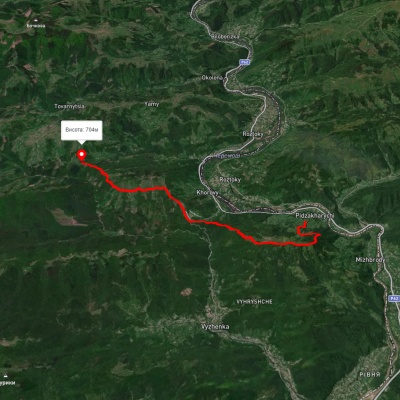
We suggest these hiking trails through or near Monument to Ivan Franko, Kolomyia: Sheshory – Rosokhata, Opryshky Road, Kosmach village, via Mount Rotylo, Mount Hrehit and Mount Bila Kobyla to Bukovets village, Mykulychyn village, via Mount Khorde and Mount Rotylo to Kosmach village, Nimchych Pass – Protiate Kaminnia, Medvezhyi tract – Mount Kuratul

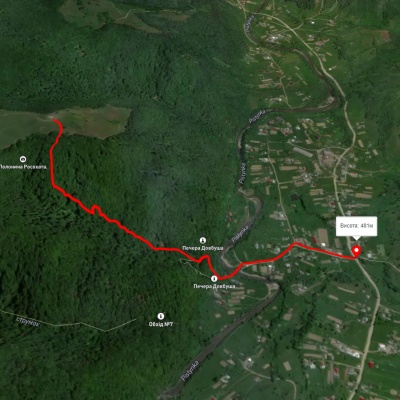
Sheshory – Rosokhata
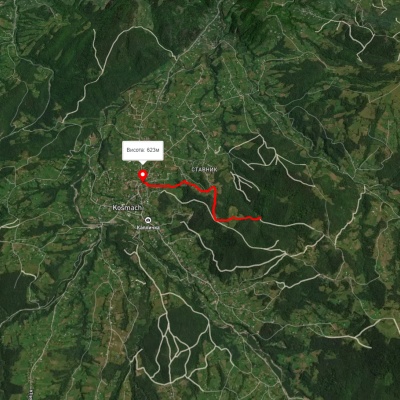
Opryshky Road
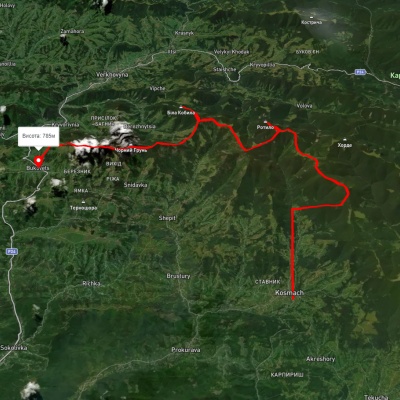
Kosmach village, via Mount Rotylo, Mount Hrehit and Mount Bila Kobyla to Bukovets village
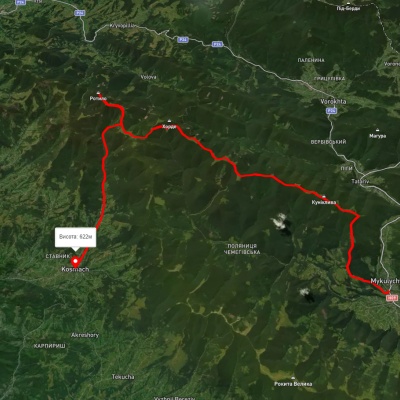
Mykulychyn village, via Mount Khorde and Mount Rotylo to Kosmach village