Jordanesti
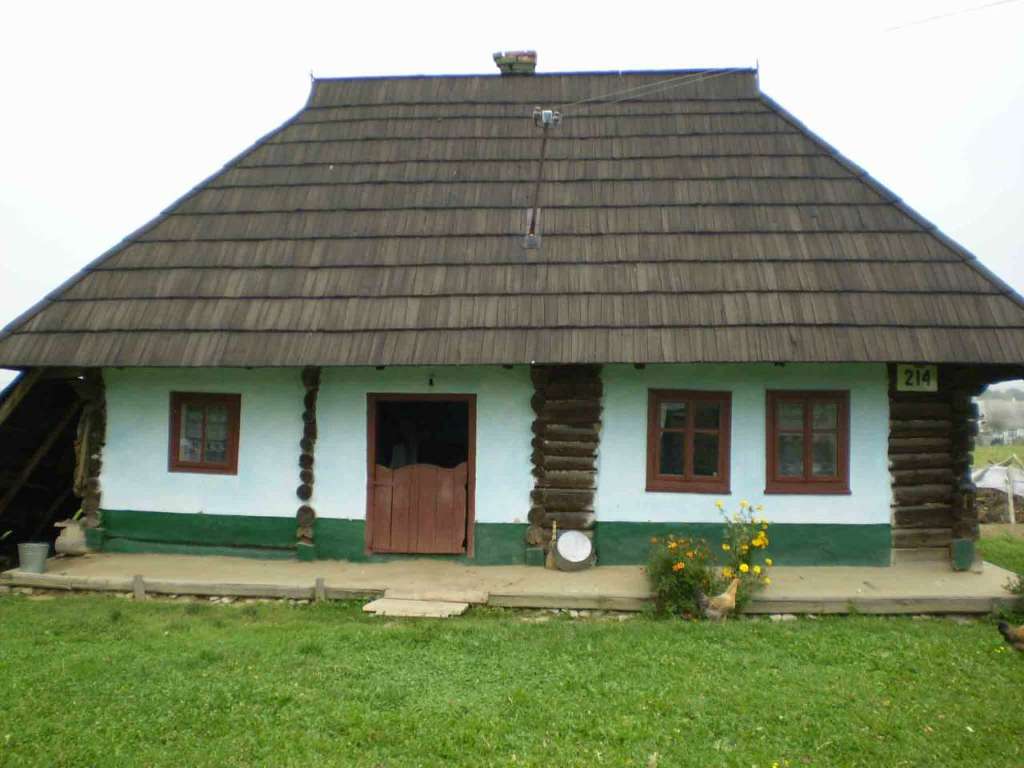
Jordaneshty is a village in the Chernivtsi region, Hlyboka district, Ukraine. The population is 2263 people. The village is located in the Seret valley and has been known since 1524. In the Soviet period it was called Pidlisne. It borders on the villages of Ropcha in Storozhnynetskyi district and Karapchiv and Kupka in Hlyboka district. The total area of the village is 926.08 hectares. The national basis of the village is Romanians. The village is beautiful, fascinates with the sincerity of its inhabitants and its history.
It was first mentioned in the documents of 1692 as "Ardanesti". Another document that mentions the village of Iordanesti is a letter from Sandul Hazdeu dated January 19, 1747. It informs about the distribution of S. Hadzheu's property to his children: Vasil, Maria, Roxane, and Safta. According to this document, the village of Iordanesti was transferred to Maria. Another document concerning the Hadzheu family, "Analy Dobroju" translated from German, states that the village of Iordanesti is located in the Suceava district. For a long time, the village of Iordanesti was passed from one Hadzheu to another, and the main village was given to the monastery in Putna. Having drawn up a family tree of the Hadzheu family, they came to the conclusion that they were relatives of the famous Romanian writers Alexandru Hadzheu and Bogdan Petrichei Hazdeu. On November 3, 1751, Captain Toader Bedelice, following the emperor's order, went to the neighboring village of Karapceva to determine the boundaries of the village of Iordanesti. And on September 23, 1757, Hadzheu received a document from Stefan Stirce, Toader Kalmutski, and Pavel Marun, which states that by order of His Majesty Dinu Cantacuzino, the village of Iordanesti in Suceava County borders on the villages of Ropca (80 odgones) and Karapcea. In 1784, 66 families lived in the village. The population was increasing: 1848 - 1268 people, 1925 - 2184 people, 1937 - 2603 people, 1997 - 2240 people, 2007 - 2295 people. In the document "Schematismus der griechisch - orintalichen Bucovinaer Dsocese" of 1848, it was stated that the village of Jordanesti had 1268 inhabitants, more than Karapchiv 648 inhabitants and Prosika 540 inhabitants, but less than Ropcha 1322 inhabitants.
In August 1871, the great Romanian poet Mihai Eminescu passed through the village of Iordanesti on his way to Putna. From the 1937 Monthly of the Bukovyna Metropolis we learn that the village's population was 2603 people (680 families) and that there were schools on the right and left banks of the Seret.
Until 1946 the village was called Yordaneshty. Since 1946, the name of the village was changed to Pidlisne. There are two versions of the origin of this name among the villagers. The first one is that the village was named so because of the amazing forests growing on all sides, and the second one is in honor of the surname of the secretary of the village council, Pidlisna, who got along very well with the representatives of the then authorities. In the 1930s, a men's choir of 50 men, led by Ilya Tovstiuka, was formed in the village. The choir won prizes in various competitions. In 1931, it won a bronze medal at a competition organized by the Armonia Society, and in 1932, a silver award.
The image of the Holy Archangels Gabriel and Michael symbolizes the ancient church in the village (1780), consecrated in the name of the Holy Archangels Gabriel and Michael, which was restored in 1898 with a new church that still exists today. The Holy Archangels are amulets and patrons for the residents of Jordanesti.
Golden linden branches with flowers emphasize the great Orthodox holiday of Green Sunday, which was established in Jordanesti in 1790. Green Sunday is also known as the Day of the Village, on which the Orthodox church and the villagers' homes are decorated with linden branches and flowers.
The silver narrow beam reminds us of the Siret River, which flows through the village. The image of a wheel on a support immersed in a wavy base recalls the existence of a water mill in the village, which was mentioned in documents from 1961. In the nineteenth century, the mill in Yordanesti was the only one on the Siret River from Storozhynets to Kamianka, and peasants from neighboring villages came here to work. Flour milling in the village is developed and in demand, and today the mill is in working order.
The silver sheep's head symbolizes the developed sheep breeding in the village. The village craftsmen make unique smoked buz and vurda from the sheep's dairy products according to old recipes, following the secrets of their ancestors, and are famous in the area and beyond.
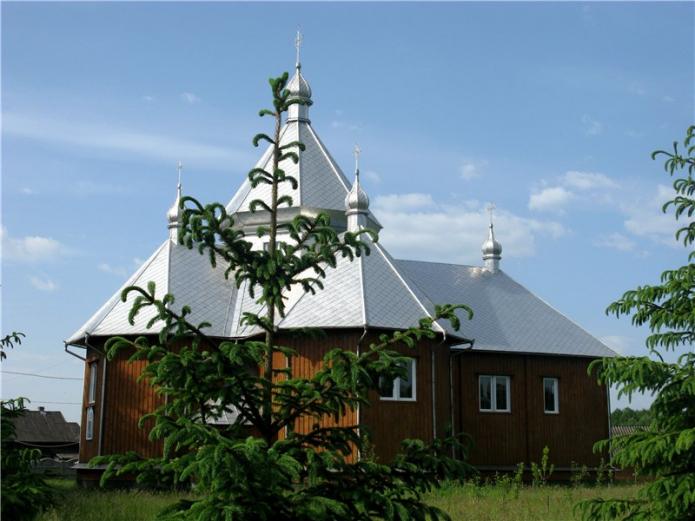
It is famous for the longest suspension bridge in Bukovyna. This masonry bridge over the Seret, built in 2000, is 138 meters long. In the village, you can see the wooden cross-shaped one-story church of the holy archangels Michael and Gabriel (1898) and a nice chapel built in 1997 in memory of the victims of Stalin's repressions.
The village community is proud of its hardworking people. A potential investor may be attracted by the vacant land, the Siret River and forest lands. Green tourism is actively developing. Embroidery, woodworking, and sheep breeding are the most popular crafts outside the village.
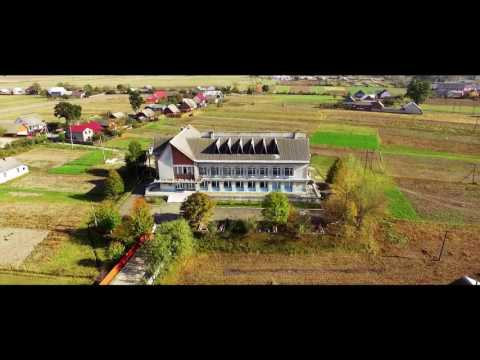
In 1968 the village was electrified. In the early 80s, a shop, a car fleet, a cultural center, which still houses the village council and a library, were built. By the Resolution of the Presidium of the Verkhovna Rada of Ukraine No. 133/95-PV of March 2, 1995, the historical name "Yordaneshty" was returned to the village of Podlesne. Over the past decade, Yordanesti has been growing younger and building up. Many private shops have appeared, striving to implement European standards of service.
There are 24 registered individual entrepreneurs engaged in trade, catering, transportation services, plowing and cultivation of land.
There is a medical institution in the village - a paramedic and obstetric station. There is a community center named after Cipriane Pormubescu, with an area of 270 square meters. The cultural center is designed for 350 seats. There is a dance group "Codrii", which has repeatedly surprised the residents of our village and the district with its performances, and a men's choir "Fii Arboroasei", which has also repeatedly surprised listeners and viewers with its performances on television.
The village library "Arboroasa" operates on the territory of the village, with a reading room for 16 people. The book stock is 9,600 copies. There are also school libraries in the secondary schools No. 1 and No. 2, where students can borrow textbooks and program literature. There is a village stadium in the village, which hosts district football competitions.
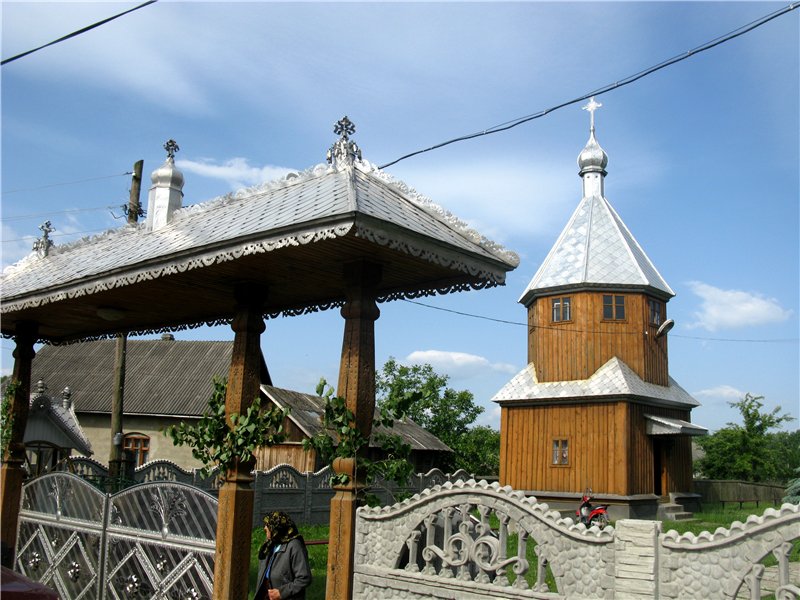
St. Michael's Church, built in 1898, is the guardian of the village residents. In 1999, a chapel-memorial dedicated to the political repressed was built.


Which hiking trails pass through or near Jordanesti?
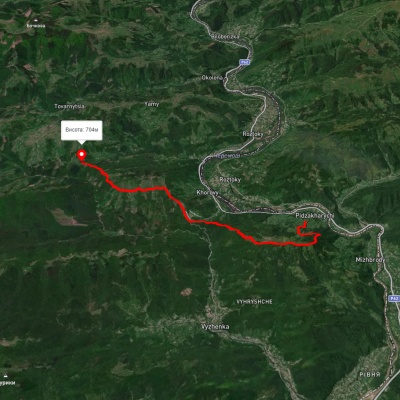
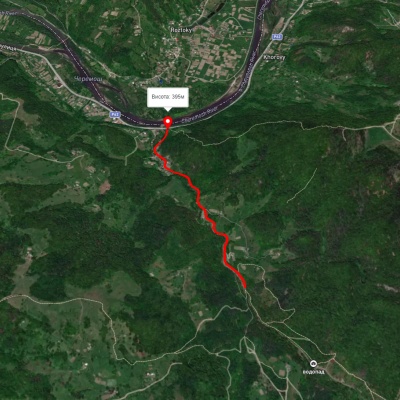
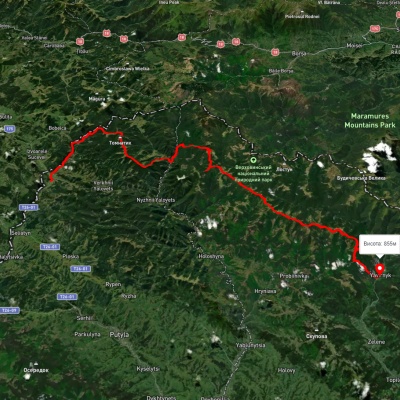
We suggest these hiking trails through or near Jordanesti: Nimchych Pass – Protiate Kaminnia, Smuharski Waterfalls, Shepit village, via Mount Yarovytsia, Mount Pnivie and Mount Masnyi Pryslip to Shybene village, Shepit village – Mount Yarovytsia, Nyzhnii Yalovets village, via Mount Yarovytsia to Shypit village