Ozhevo
Ozheve is a village in Ukraine, in the Sokyryany district of the Chernivtsi region. According to the data of 1859, 764 people (370 males and 394 females) lived in the owner's village of Khotyn district of Bessarabia province, there were 126 households, and there was an Orthodox church. As of 1886, the owner's village of Sekuryanska volost had a population of 700 people, 126 households, and an Orthodox church.
The village of Ozheve is located to the south of Novodnistrovsk. It has a village council. The population is about 1100 people. Geographically, Ozheve is located within Northern Bessarabia. Accordingly, it is ethnic Moldovan land. Since 1812, Ozheve (along with the whole of Bessarabia) was part of the Bessarabian province of the Russian Empire.
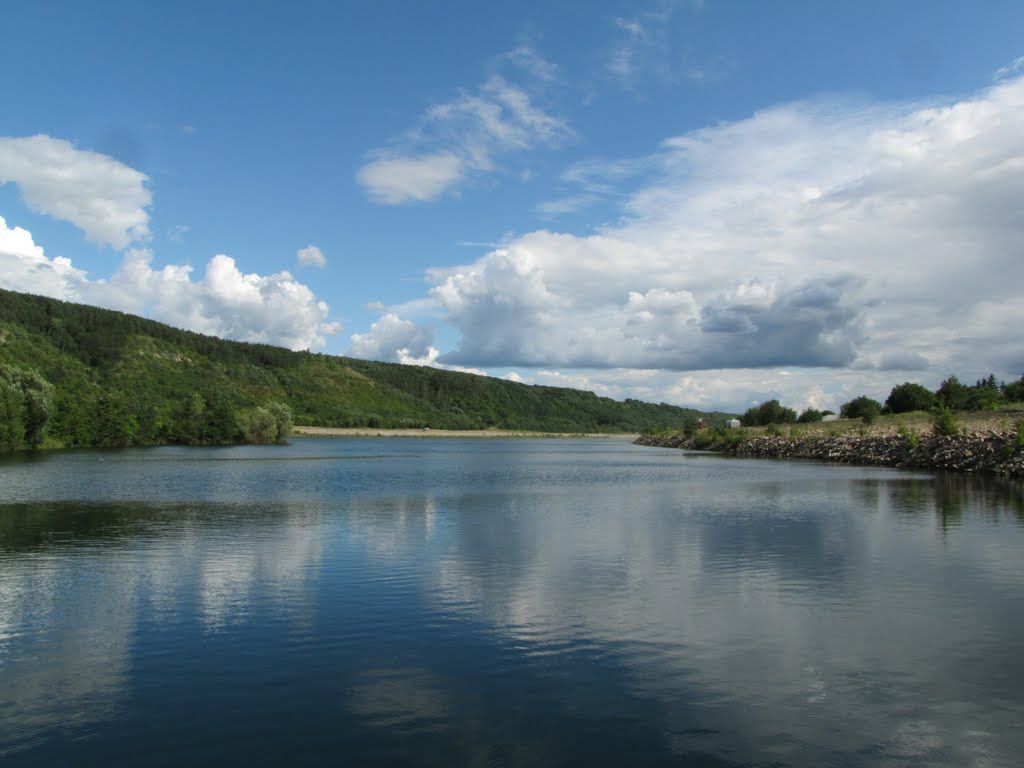
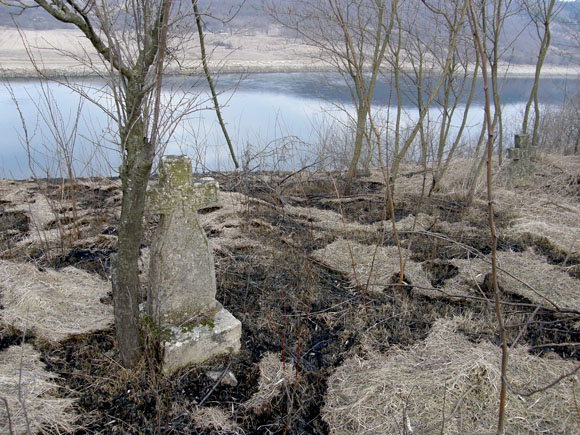
Ozheve lies on the very picturesque terraces of the Dniester Valley. The lower part of the village is located near the Dniester River. Two old cemeteries have been preserved in the village. They are very interesting cemeteries. One is Ukrainian. It dates back to the 19th century. The other is a Romanian military cemetery. The Ukrainian cemetery is located on the high bank of the Dniester. Actually, I wasn't sure that it was Ukrainian until I made out the inscriptions on a few mossy crosses. The inscriptions read in Russian "Here rests...". Of course, this is not Russian, but a church language, but these inscriptions convinced me that it was not Moldovans who were buried in the cemetery.
This cemetery is very old. But it is so picturesque, mysterious, and somehow... cheerful, or something. A quote from The Puritans by the Scottish genius Sir Walter Scott can be safely applied to it: "Here, as always in a cemetery, one feels a kind of solemn reverence, but there is nothing burdensome or unpleasant mixed in with it, which is invariably felt when visiting other cemeteries. For many years now, there have been [almost] no burials here, and the grave mounds that rise above the flat surface are covered with the same thin carpet of velvety sod as everything else around them. The monuments, of which there are only seven or eight (there are more in Ożów), are half gone into the ground and overgrown with moss. There is not a single fresh grave here that could disturb the sober clarity of our reflections with a reminder of recent grief, nor is there lush, luscious grass that imposes on us the thought that it owes its God-given gloomy splendor to the rotting, decomposed, disgusting remains beneath it. Daisies peeking out of the sod here and there, and the bells bending over them, receive their pure food from the dew of heaven, and their blooms do not evoke any repulsive or depressing images. Of course, death has been here, and its footprints are before us, but so much time has passed since they were imprinted that they have been wiped away and do not inspire us with horror. Reflection suggests that there is nothing in common between those who sleep in these graves and us, except that they were once what we are now, and if their ashes have dissolved into Mother Earth and are no longer inseparable from her, then the same transformation will one day befall us." It can't be said better.
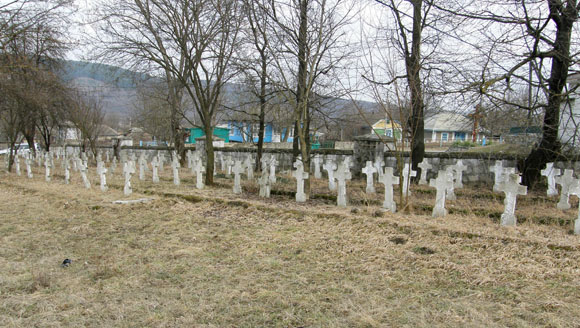
The Romanian cemetery appeared in the village in 1941. At that time, the "old border" of the USSR, heavily fortified by the defenses of the Stalin Line, ran along the Dniester. At that time, Romania was an ally of Nazi Germany. The main forces of the Romanian army attacked and forced the Dniester just in the area of Ozhev. On the Soviet (Ukrainian) side of the Dniester, the Romanians were met with heavy machine gun fire. They suffered heavy losses. It happened in July 1941.
450 dead soldiers and officers of the Romanian army were buried in Ojova. The privates were placed in two trenches, while the officers were buried in separate graves. Later, the cemetery was landscaped and architecturally ennobled. An obelisk and a memorial cross were made of sandstone, and the cemetery took on the appearance of a war memorial.