Synagogue, Horodenka
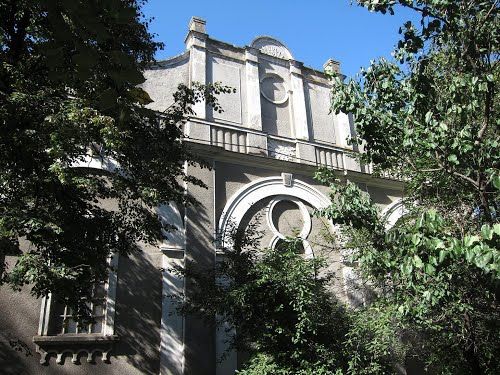
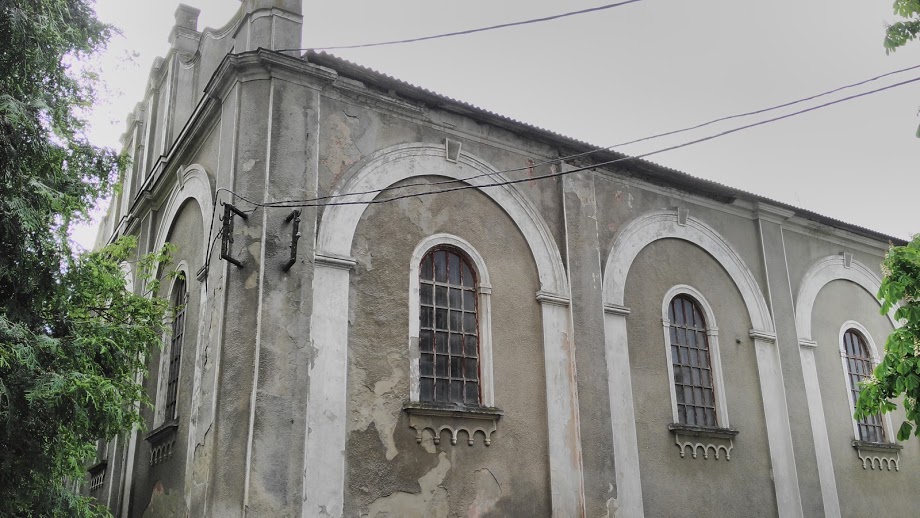
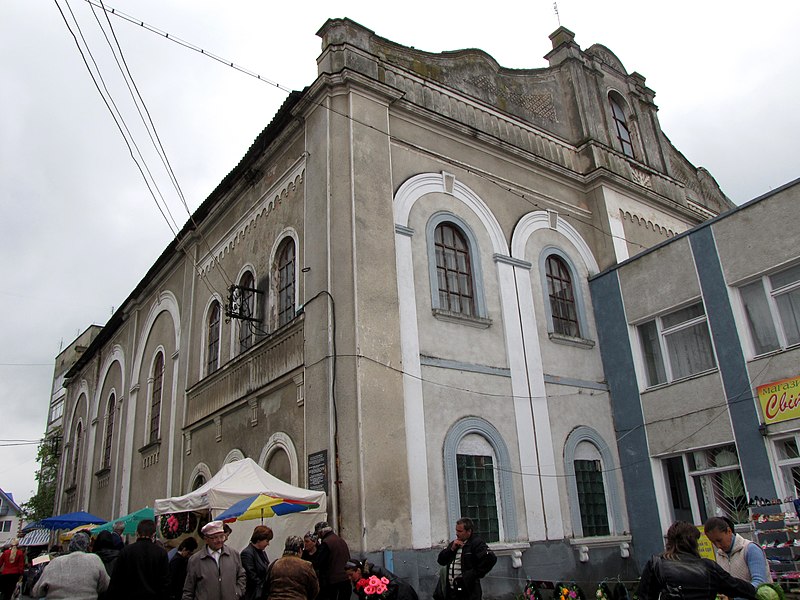
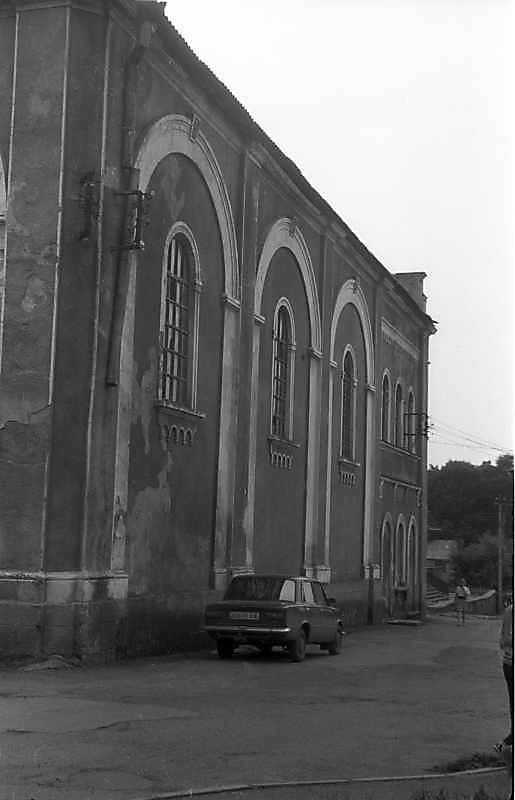
One of the most interesting witnesses to history that can show how the town of Horodenka in Ivano-Frankivsk Oblast once lived is the ancient Great Synagogue, built in 1743. It was the Jewish community that played a significant role in the history and culture of Horodenka.
It is known that the first synagogue in Horodenka was built in 1743, when magnate Mykola Potocki granted the local Jewish community permission to engage in merchanting and crafts, and also allocated a place for a synagogue and cemetery.
In the 18th and 19th centuries, the town grew and developed. According to statistics, virtually every third resident of Horodenka before the beginning of the 20th century was Jewish.
During the 1760s, a group of Hasidism supporters emerged in Horodenka. One of the leaders of the movement was Nachman of Horodenka, the closest disciple of the founder of Hasidism, Israel Baal Shem Tov. That is why the small village of Horodenka is one of the most important places for the followers of this branch of Judaism.
There were several synagogues here. There are versions that the Great Synagogue, which has survived to this day, was rebuilt in 1885 on the site of an older building. According to other sources, it was built at the turn of the 19th and 20th centuries. A religious school for boys, a heder, was founded at the synagogue, and a Jewish school operated in the town in 1898-1914.
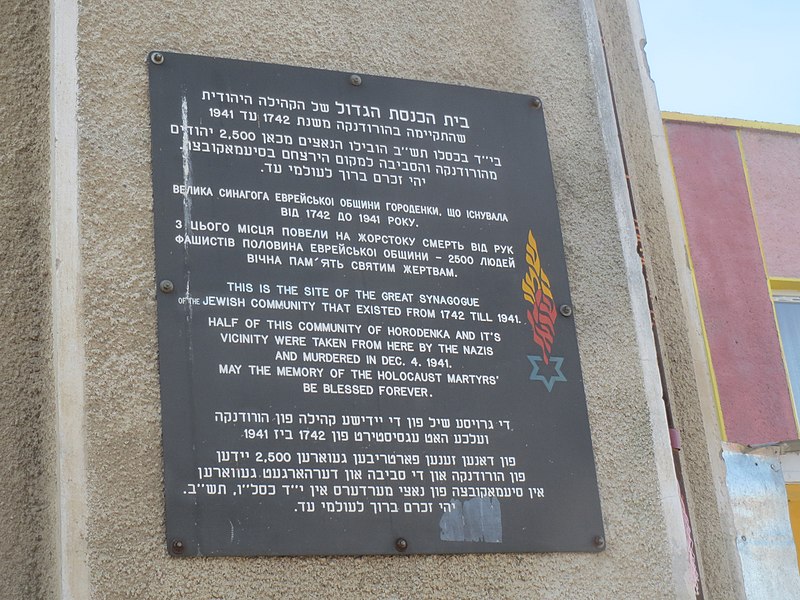
The 20th century was difficult for both the sacred buildings of Horodenka and its inhabitants. Most of the Jewish population perished during the Holocaust. A memorial plaque on the facade of the Horodenka synagogue reminds us of this. It reads: "The large synagogue of the Jewish community of Horodenka, which existed from 1742 to 1941. From this place, half of the Jewish community, 2500 people, were led to a brutal death at the hands of the Nazis. Eternal memory to the holy victims."
Thus, after the war, the Jewish shrine was deserted and abandoned for some time. Later it was rebuilt and a butter factory was set up in its premises, and even later it was converted into a gym, which is still in operation today.
The size of the synagogue is really large, being located on two floors. Its arched windows are high above the ground. The front and rear facades of the building are decorated with triangular figured pediments with stucco moldings, and the side walls have pseudo-arches of white color that enliven the overall appearance of the building.
In general, the architecture of the synagogue was somewhat distorted by the addition of a sports school, as was often done with religious buildings in Soviet times. Throughout its history, the synagogue building has been rebuilt several times, and as a result, it has hardly retained its original appearance.
By the way, nearby you can see another monument of Horodenka's Jewish history: the Beth Midrash school, built in 1909, located at 17 Gagarina Street. It also houses one of the premises of the sports school, and its general appearance indicates that it needs repair.
The large synagogue is located in Horodenka, at 1 Rynkova Street. This is the very center of the city, near the market, so the majestic synagogue building immediately attracts attention. You can easily reach Horodenka from Ivano-Frankivsk, where buses often run in this direction.
Horodenka is a town and district center in the Ivano-Frankivsk region, on the lands formerly known as Pokutia. The first written mention of Horodenka dates back to 1195. In 1668, the town received the Magdeburg Law. Horodenka was a part of the Ruthenian Voivodeship centered in Lviv and belonged to the Kolomyia starosta of the Polish-Lithuanian Commonwealth. In 1772 (after the first partition of the Polish-Lithuanian Commonwealth), the Horodenka region, as part of Galicia, was occupied by Austria-Hungary. During the Austro-Hungarian occupation, two monasteries were liquidated in Horodenka, and in 1788 the first secular school was opened with German as the language of instruction.
Location on the map
Comments
Nearby attractions
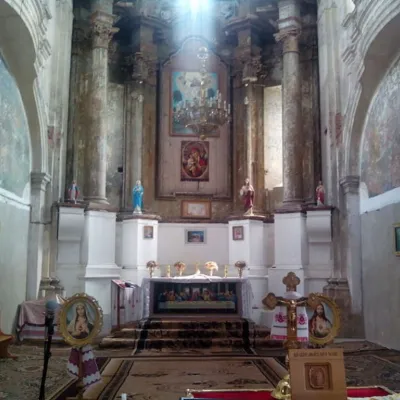 ArchitectureChurch of the Immaculate Conception of the Virgin Mary and cells of 1769, HorodenkaHorodenkaunder 1 km from Synagogue, HorodenkaIn 1743, Mykola Potocki erected a Catholic church in Horodenka, the Church of the Immaculate Conception of the Virgin Mary.
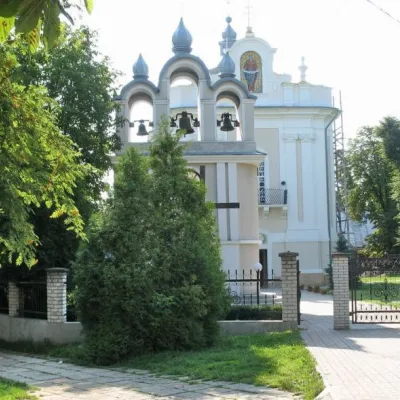 ChurchChurch of the Assumption of the Blessed Virgin Mary, HorodenkaHorodenkaunder 1 km from Synagogue, HorodenkaIn the central part of the town of Horodeka, in a cozy place, there is a stone church of the Assumption of the Blessed Virgin Mary.
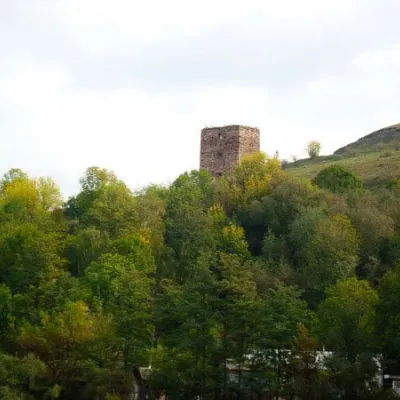 CastleRakovets Castle, RakovetsHorodenka21 km from Synagogue, HorodenkaEvery year there are more and more people traveling around Ukraine in search of unique castles. There are many "promoted" castles, such as Mukachevo Castle, St.