Velykyi Kuchuriv
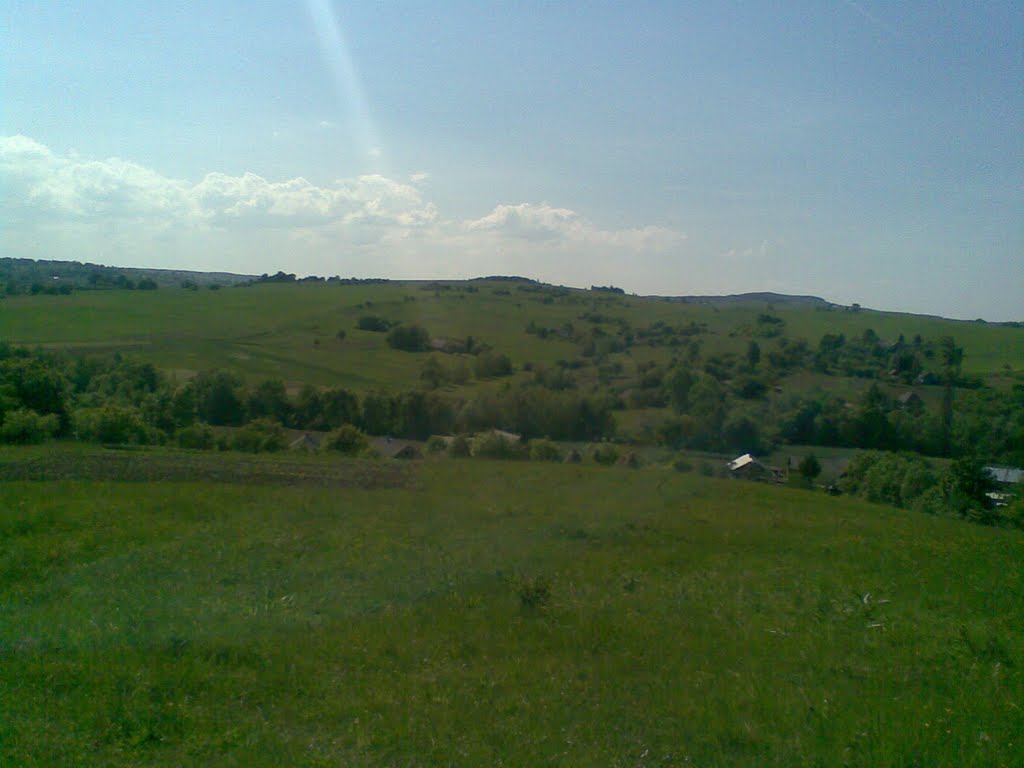
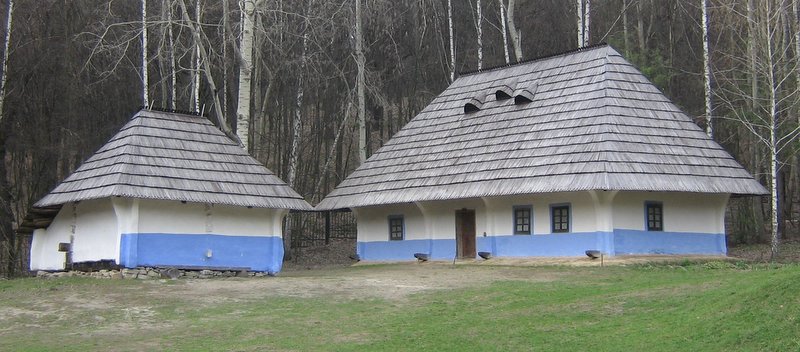
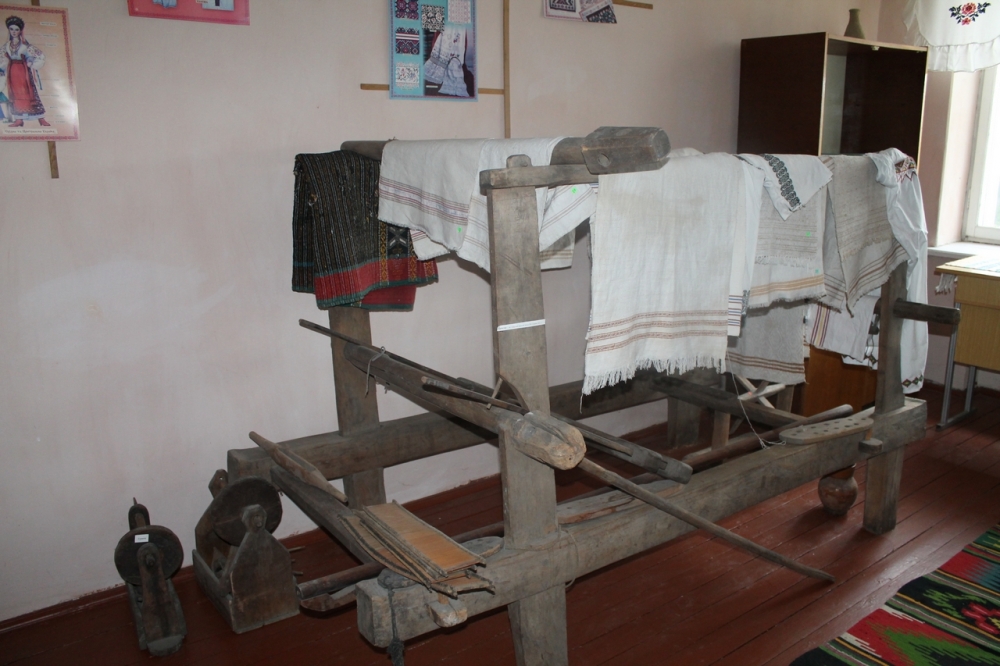
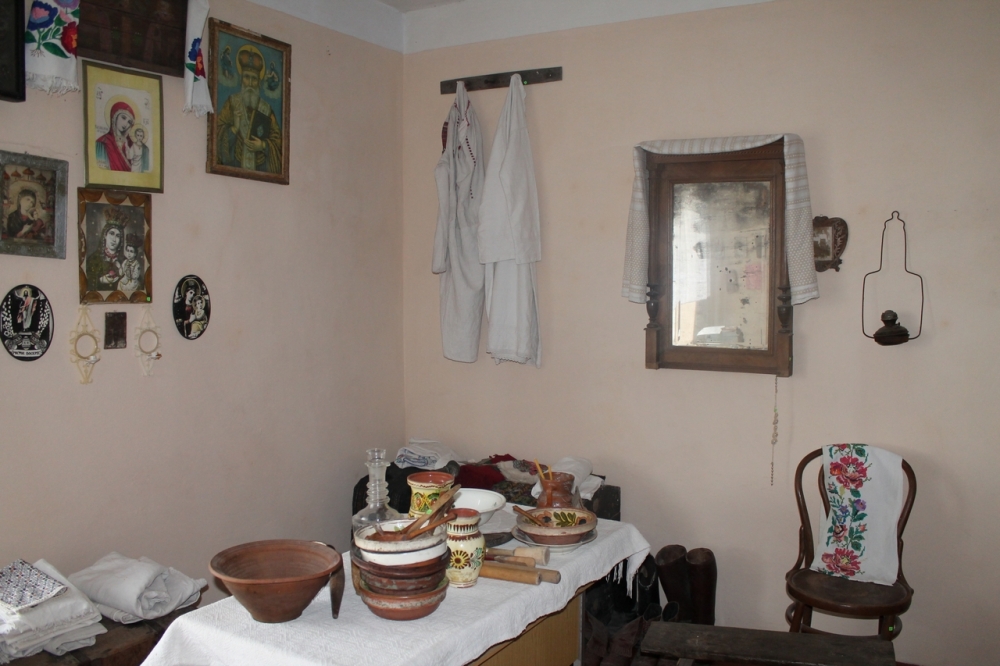
Velykyi Kuchuriv is a village in Ukraine, the center of the Velykyi Kuchuriv village territorial community of the Storozhynets district , Chernivtsi region. It is located 7 km from the regional center - the city of Chernivtsi and 18 km from the district center - the city of Storozhynets. The total area of the settlement is 3041 hectares. The village is crossed by the railway built in 1869, which connects the city of Chernivtsi with Suceava of the Republic of Romania. There are also Chernivtsi-Hlyboka and Chernivtsi-Storozhynets highways. The population is 3 556 people (2001).
The village consists of more than twenty corners: Korovlya, Rutka, Shysh, Kulma, Hilyvykyi Hirb, Selyshche, Krynka, Bavky, Bahnya, Vynnyi, Turluk, Klityshne, Rypy, Ploskiv, Tatarshchyna, Horb, Vorotyshche, Hlysnyi, Vivoz, Horaitsia, Stinka, Dibrova. Three rivers flow through the village: Dereluy, Verkhivets, and Korovlya. In the center of the village, on the left bank of the Derehluy River, the remains of Trypillian culture settlements (III millennium BC) were found, and in the Stinka and Selyshche tracts - Carpathian mound cultures (III-VI centuries).
Velykokuchuriv village council is located in the very center of the village, which includes the villages of Velykyi Kuchuriv and Hodyliv. There are two educational institutions in the village. Velykyi Kuchuriv secondary school of I-III levels and Hodyliv educational complex, village district hospital, paramedic and obstetric station, music school, children and youth sports school, House of Culture in V. Kuchuriv village and club in Hodyliv village. Godyliv, two branches of the library system (Velykyi Kuchuriv and Godyliv), two post offices, a branch of the Savings Bank of Ukraine, a forestry, two pharmacies, a veterinary station, the Transnistrian Research Station of Horticulture, and Velykokuchurivske.
Today, more than 30 private trade and catering establishments operate on the territory of the village council, as well as a village consumer society that not only sells goods but also provides meals for children in schools. The Chance shopping center, Imperial restaurant, and Little Paris restaurant are very successful and have a significant impact on the socio-economic development of the village. The following religious associations operate on the territory of the village: the Orthodox Church of Ukraine and the Russian Orthodox Church, Christians of the Evangelical Faith, Evangelical Christian Baptists.
According to archaeological data, the village has existed since the XIV century. It is believed to have been founded by immigrants from the village of Kuchurov (now Malyi Kuchuriv, Zastavna district) who moved here and retained the name of the old village, which later received another name - Malyi Kuchuriv, and the new settlement - Velykyi Kuchuriv. The first mention of the village can be found in historical sources in 1422, when the Moldovan ruler Oleksandr Dobryi presented Velykyi Kuchuriv to the boyar Bohush. After that, for several centuries, the village passed from hand to hand of voivodes and boyars, secular and spiritual feudal lords, who sold or gave it to each other. In 1552, the village again became the property of a Moldovan lord, who later sold it to the Putna Monastery for 400 gold pieces. Later, the Moldovan owners repeatedly issued charters confirming the monastery's rights to Velykyi Kuchuriv and the villagers' duties in its favor.
New Year's Eve malanka
Customs, rituals, and traditions have come down to us from antiquity, and they are carefully passed down from generation to generation. Most of them are of a pagan nature. Our ancient ancestors, using certain rituals, ceremonies, and spells, testified to their unity with nature, called upon good spirits to solve certain problems, or, on the contrary, drove away evil spirits that allegedly brought "spoilage" to livestock and people, and even interfered with natural forces. One of these rituals is malanka on New Year's Eve (old style) from January 13 to 14. So nowadays, in the time of revival of forgotten traditions, revival of cultural heritage, Malanka has become a kind of carnival in every village, it brings people together, unites them, cheers their souls in such a difficult time. That's why people look forward to caroling and malanka with great anticipation and a certain emotional trepidation. The boys prepare for malanka in advance. They enthusiastically sew outfits for "pure malanka" or "digania," make masks, assign roles, and learn the words to ritual songs. The kalfs (leaders of the bachelor communities) hire musicians in advance and arrange a venue for the dantsu (dancing).
The name of this spectacle comes from the name of the girl Malanka (Melanka). Older people, especially women, always express their dissatisfaction when boys dress up as a particular character for "digania". This is probably where the expression comes from: "As fey (beautiful) as death on a malanka". In general, deeply religious and elderly people do not go to malanka themselves, and they do not allow their children to go there, explaining that this "digania" is inhabited by evil spirits. A digania, or unclean malanka, consists of characters whose faces are covered with various masks: grandfather, grandmother, gypsy, gypsy woman, death, devils, bears.
"Sarzha", "Clean", or as it is sometimes called "Panska", malanka consists of characters whose faces are open. It consists of a kalfa officer (a guy with considerable experience in malanka) or several of them. It is the kalfa officer who directs the malanka players to the houses of the villagers where they will perform, collects money in a "briftashka" (bag) or in a kasa (wooden box), dances with the girls if they sing carols, and determines the time of the malanka. In some villages, the kalfa is a Malanka character, a sailor officer. He wears a regular military uniform with accelerants, shoulder straps of a colonel or general, decorating them with "toroks", lamps, orders and medals. Previously, a helmet was worn on the head, made of cardboard and covered with foil. From the middle of the twentieth century, Malanka officers wore a military cap that was embroidered with specks (beads) by the boy's mother or sister. In the village of Velykyi Kuchuriv, there can be two or three officers in a malanka. Each of the officers carries a turkalo (whistle), which announces the arrival of Melanka to the owner's yard and calls all the malanka players and attendants to order with a turk.
A young man with a handsome face is chosen to play the role of Melanka (the young woman). He puts on an embroidered white shirt made of homespun cloth, a white cloak over it, a spider scarf on his head, then a white homespun towel to which a wreath of artificial flowers is attached, and colorful kodas (ribbons) are attached to the wreath. On the lower part of the body, she puts on a humpbacked shirt or dress with a white ribbon in the middle. On her feet she puts on shoes or boots. In his hand he carries an embroidered trustya, which contains candles, matches and other necessary things. The malanka also includes the following characters: a shandar (gendarme), an angel, a Jew scourer, usually dressed in a sardak or a regular soldier's overcoat with black, clean epaulets, and a tall cylinder made of cardboard on his head. In his hands he holds a carbine made of wood, and instead of a belt, he is girded with a chain to which bells were attached. Shandar wore a modern police uniform. Among the characters of Malanka were 5-7 Turks who wore chakas, a kind of headdress with a frame made of vine twigs covered with colored paper, inside of which there is a lighted candle, and wore crossed colored homespun kolanchyks over their clothes. Another character of the Malanka was an angel who wore a white embroidered shirt, girded with colorful kolanchyks, and a "wig" of well-combed white sheep's wool, over which he wore a crown made of cardboard and covered with foil. Wings were tied behind the shoulders and also covered with foil. Until the 70s of the XX century, the characters of Malanka also included a priest who wore a long black robe and a glued-on beard. The presence of such an actor in the Malanka caused dissatisfaction and indignation among Christian believers, and therefore, with the departure of atheistic ideology, this actor disappears. The angel (agnel) and the priest did not carol, but imitated the consecration of the house.
In Velykyi Kuchuriv, there are several malanka carols: "big" and "small". The "big" malanka consists of boys aged 14-18, sometimes even older. Participants of the "small" malanka are 10-14-year-old boys. In the 1930s, according to Marivutsa Ivanovna Hodovanets, born in 1931, a resident of the village of Velykyi Kuchuriv, up to 50-70 participants took part in the "big malanka". In the first half of the twentieth century, the malanka consisted of a jineral (general, kalfa), a young woman, 6 Turks (light bearers), an agnel, a priest, a shandari, and several Jews. The pure melanka is accompanied by musicians consisting of trumpet, trombone, accordion, and drum. In the first half of the 20th century, the musicians included cymbals, violin, and tambourine.
The appearance of a clean melanka in the yard is accompanied by the blowing of officers' whistles, a musical march, and the arrival of the digania is announced by the slapping of garapnyky (whip blows) and various shouts such as: "Is the master at home or not? Can we sing carols?", "Let the malanka in the house!". As a rule, permission was obtained from the owner of the house or from one of the family members to go carolling. Malanka begins with the carol "Hoy, Tsylchyk!".
Then the malankars congratulate the host on the holiday, and the host, in turn, gives the officer a fee for the greeting. In the first half of the twentieth century, the shandar collected all the money. Mostly, the malanka paid 10-15 lei each. If there was a girl in the house where the malanka was being given away, she would pay the fee (in the 1930s, 20 lei, and for a wealthy owner, a "rich girl," even 50 lei). However, the kalfa must first dance with her several dances in the yard. As a rule, they dance a fast dance. Without changing their clothes, they would go to each other's houses until they reached the Jordan River.
Throughout the entire malanka, the sarzha ("clean" malanka) is accompanied by the digania ("unclean" malanka), which consists of bears, gypsies, doctors, grandparents, death, and other characters. A special role is played by a character who informs the owners of the house several houses in advance about the arrival of the melanka, and also retells local rumors and "lies" in poetic and humorous form. A "pure" malanka usually starts and ends the malanka at a crossroads.
In Velykyi Kuchuriv, around noon on January 14, malanka, sarzha, and digania, as well as villagers and their guests, gather in the center of the town, on the square. A circle is made in the middle of the crowd, where the digania stands in the first row, crouching and "holding" the circle, followed by the villagers, who each cheer for their own bear. The bears enter the circle to measure their strength. The bears are chosen by strong guys, mostly those who play sports, so as not to let the bachelor community down in their corner. The winner is the one who has put his opponent "on the ground". The bear that wins the most times is named the strongest and retains this title until Malanka the following year. Traditionally, it was the bear from the Gorb corner. In Velykyi Kuchuriv, only unmarried boys can be bears. If you break this tradition, you can get a good scolding from the halda.
During this procession, other characters of the digania are grandfathers dressed in a sardak or coat, with a trista over their shoulder, a kuchma or hat on their head, shoes and stilts made of rubber, a stick or chain in their hands, a mask on their face, and a huge pipe in their mouth. Women also wore a cloak, a gobotka, with stilts on their feet, a headscarf or a homespun towel, a "swaddled child" in their hands, devils dressed in all black, made a tail, held a pitchfork and a pot of burning tar, and in death - all white clothes, a scythe in their hands, policemen dressed in regular police uniforms and made up their faces so that no one could recognize them, doctors dressed in white coats with white caps on their heads, carrying suitcases with a large red cross on them, sometimes bringing homemade stretchers to provide "emergency care". All of the disguised characters are performing comic domestic scenes. Each of the characters tries to gather as many spectators around him as possible.
At the end of the malanka, on the evening of January 14, in Velykyi Kuchuriv, there is a dance organized by the kalfa officers for a share of the money raised during the malanka. They hire musicians. Sometimes they also set up tables with drinks and snacks, treating everyone who comes to the dance. In Velykyi Kuchuriv, there are danitsy. In the first half of the twentieth century, hosts were invited to a danits party during the rounds of the Malanka. Long after midnight, songs and melodies, witty jokes and laughter will be heard, leaving good memories of St. Basil's Day in many hearts. On January 13 and 14, older people used to watch the weather closely, determining the connection between the weather on this day and the weather on certain days of the annual calendar. Accordingly, signs were developed: what Malanka is like, Peter and Paul will be like; if it is sunny and thawing on January 13, it will be a warm summer. As for January 14, frost on this day means a slushy year, and severe frost and little snow - a good harvest.
Culture of Velykyi Kuchuriv village
The Romanian authorities oppressed Ukrainian culture in every possible way, restricting the admission of Ukrainians to work and schools, and trying to forcibly Romanize them. It was forbidden to speak Ukrainian in schools, institutions, and even on the street. Velykyi Kuchuriv had 5 churches and two Jewish prayer houses. In order to Romanize the Ukrainian population in Velykyi Kuchuriv, a center of Romanian culture called "Oleksandr Dobryi" was established. It was led by priest V. Rakoche. The school was also subordinated to the same goals, where education was conducted exclusively in Romanian.
During the Soviet period, the villagers had the opportunity to attend interesting performances of Chernivtsi, Chisinau, Lviv, Vinnytsia, and other theaters. Velykokuchurivka residents warmly welcomed the poet Maria Poznanska, kobzar Ivan Ivanchenko, novelist Vitalii Petliovyi, and other literary and artistic figures. There were 8 clubs at the House of Culture. The village choir, led by the school director K. T. Kravchuk, was especially popular here. People's lives became richer and more beautiful. New Soviet rituals were introduced into everyday life: New Year's Eve with carols, caroling, seeing off the winter, the harvest festival, and seeing off the Soviet Army. The holidays of cattle breeders and mechanics, which take place in the forest near Lake Hlybochka, have become traditional. The retirement of labor veterans is also interesting. They are given congratulatory addresses and valuable gifts; they are wished happiness and joy.
At that time, the village workers annually celebrated Lenin's birthday. Lenin's readings, themed concerts, and performances by amateur groups were held. The younger generation of Velykokuchuriv residents were admitted to the ranks of the Komsomol and the Pioneers. Village clubs hosted meetings with old communists, organizers of Soviet power in the village and district, and active participants in the German-Soviet war.
Velykyi Kuchuriv celebrated the holiday of the reunification of Northern Bukovyna with Soviet Ukraine and the birthday of the collective farm on June 28. On this day, field and farm workers and guests from neighboring collective farms would gather. To the sound of music, the flag of the holiday was raised, the results of the competition were summarized, and the winners were honored and given valuable gifts. Then an amateur concert was organized and mass festivities took place.
Velykokuchurivka residents cherish the memory of their fellow villagers who gave their lives for the freedom and independence of their homeland during the German-Soviet War. In 1965, a monument of Glory to the fallen soldiers was erected in the village.
Children have the opportunity to receive music education at the music school in Velykyi Kuchuriv, which was expanded in 2008 to increase the number of classes by renovating the former polyclinic.
At present, the community center hosts amateur art groups involving young people and school-age children. The cultural workers periodically hold reporting concerts and competitions, from which the best performances are selected to participate in district and regional cultural events. The House of Culture in Velykyi Kuchuriv village was built in 1972 and is currently in a satisfactory condition. In 2006-2008, the auditorium was repaired, the stage equipment was replaced, and the windows were replaced with metal-plastic ones. Repairs of the façade began, and the slate roof was replaced with metal tiles.
The seven-pointed figure of the Trinity
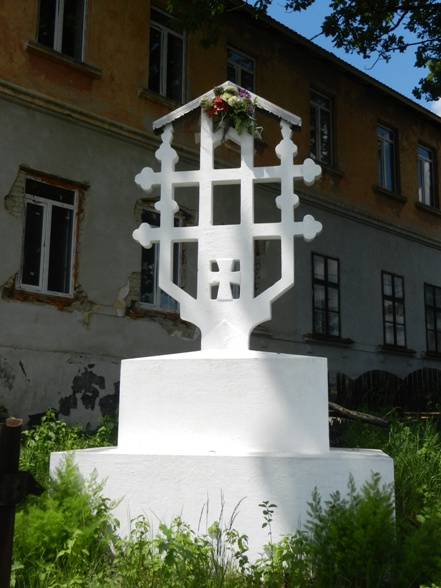
One of the attractions of Velykyi Kuchuriv is the Seven-Crossed Trinity Figure, which was built seventy years ago, when the village was ruled by the Romanian Boyar, near the Velykyi Kuchuriv school. The Trinity stands on a two-tiered pedestal. The figure of the seven-seated Trinity is 2.05 meters high and 1.4 meters wide. If you look at it from the outside, you can find seven Christian crosses in its geometric shape. This historical monument has its own history of appearance in Velykyi Kuchuriv near the school. In the 30s and early 40s, a native of the neighboring Moldovan village of Voloka, Pavlencu Nicolae, was the school principal in the village. And so he decided to erect this monument in honor of the teacher Heorhii Cilaru, who died in World War II. It was 1941, and in 1942 the figure of the Trinity was cast. In early 1943, it was placed near the school and consecrated. According to the stories of the villagers, the monument looked like this. In the middle of the Trinity, as if in a frame, on the front side was an icon of Christ hugging little children to Himself. Below it were written in Romanian the words from the chapter of Matthew, verse 14: "Leave the little children and let them come to me." On the reverse side was an image of the Mother of God.
Source: Wikipedia.org
What to visit
Landmarks, museums and places of interest near Velykyi Kuchuriv.
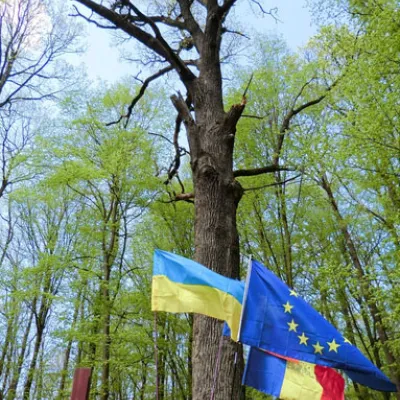 NatureOak by Stefan cel Mare, Valya KuzminaHlyboka district9.4 km from the centreThe historic oak tree, which is more than half a millennium old and is said to have been planted by Moldovan voivode Stefan the Great, grows in the Valya-Kuzmin forestry.
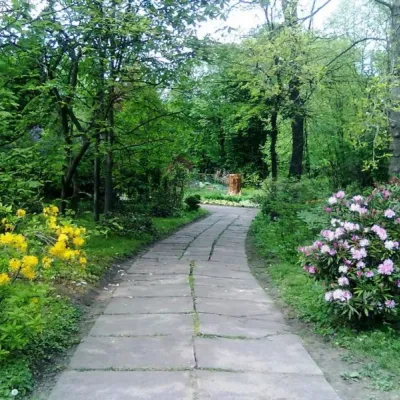 Nature"Arboretum and Botanical Garden of Chernivtsi National University" ChernivtsiChernivtsi9.8 km from the centreThe Botanical Garden of Chernivtsi National University is a protected area of national importance in Ukraine.
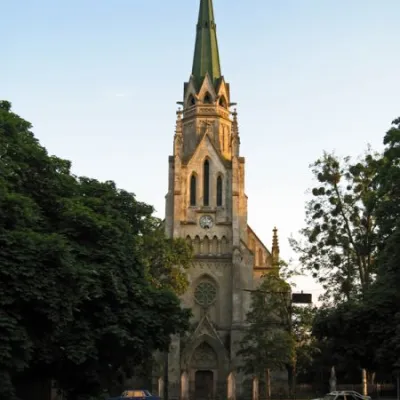 ArchitectureJesuit Church (Sacred Heart of Jesus), ChernivtsiChernivtsi10 km from the centreThe Church of the Sacred Heart of Jesus is a Jesuit church in Chernivtsi. It is a monument of neo-Gothic architecture of the 19th century.
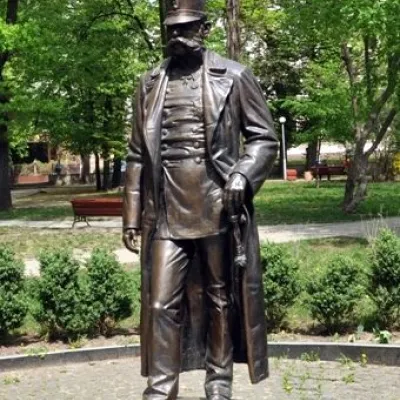 Historic siteMonument to Franz Joseph, ChernivtsiChernivtsi10 km from the centreThe monument to the Austrian Emperor and King of Hungary Franz Joseph I, during whose reign Chernivtsi experienced a flourishing economy, was unveiled on October 3,...
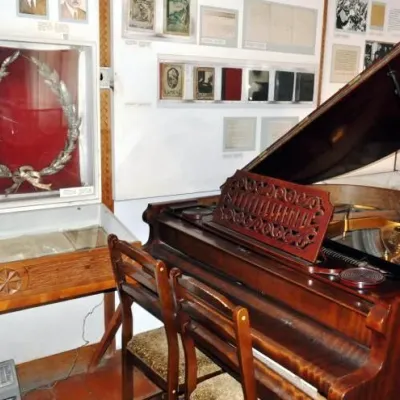 MuseumLiterary and Memorial Museum of Olha Kobylianska, ChernivtsiChernivtsi11 km from the centreThe opening of the museum was dedicated to the writer's birthday on November 27. She lived in this house from 1925 until her death on March 21, 1942.
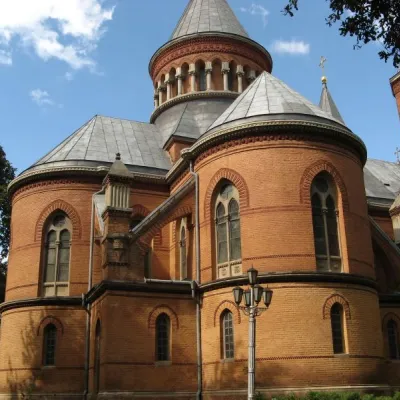 ChurchArmenian Church, ChernivtsiChernivtsi11 km from the centre
Craft nearby
All craft places Crafts & workshopsBukovynskyi Local Makers' Shop, ChernivtsiChernivtsi11 km from the centreBukovynskyi is a new craft and gift shop in the very heart of Chernivtsi, at 13 Hoholia Street, a few steps from pedestrian Olha Kobylianska Street.
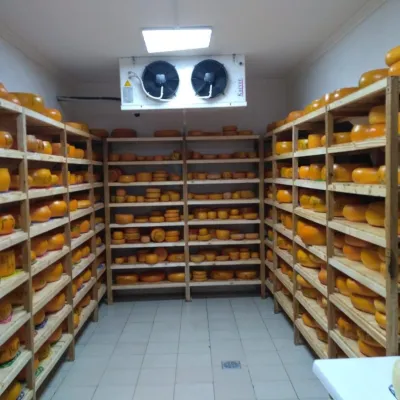 Cheese dairies & pasturesDobri Gazdy Cheese Dairy, MykhailivkaTarashany11 km from the centreDobri Gazdy cheese dairy in the village of Mykhailivka is one of the best-known food stops in Bukovyna and a fine example of how a community can breathe new life into...
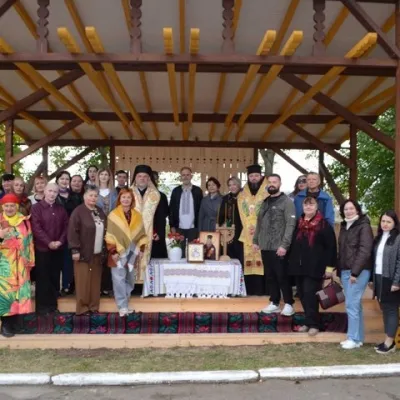 Crafts & workshopsFolk Craft Workshops at the Bukovynian Centre of Culture and Arts, ChernivtsiChernivtsi12 km from the centreThe Bukovynian Centre of Culture and Arts is the main hub of folk art in Chernivtsi Oblast. It stands on Dominik Hill in the Klokuchka district, at 1-A Yosyfa Hlavky...
Where to stay
Hotels, guesthouses and cottages in and around Velykyi Kuchuriv.
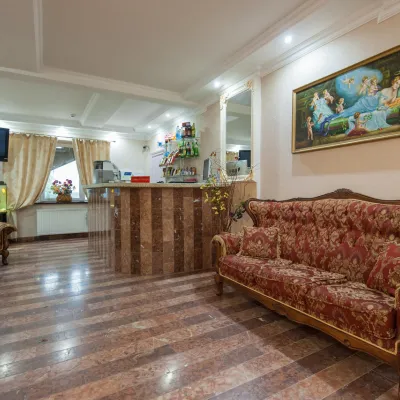 HotelHotel "LeoTon" ChernivtsiChernivtsi9.7 km from the centreParkingWi‑FiTransferNearby: Armenian Church 3.2 kmSoborna Square 3.4 km
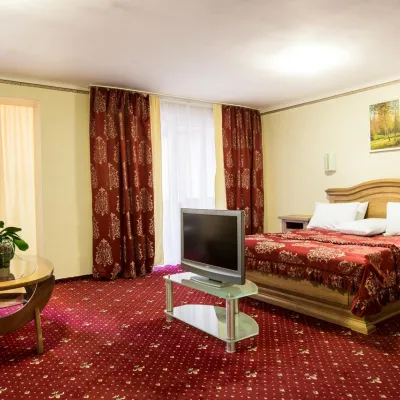 HotelHotel "Bukovyna" Chernivtsi ****Chernivtsi9.8 km from the centrePoolSaunaSPANearby: Armenian Church 1.3 kmSoborna Square 1.4 km
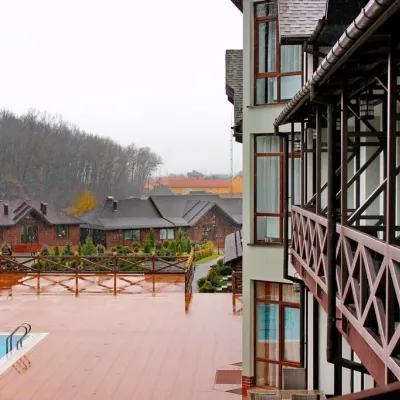 HotelHotel and Restaurant Complex "Georg Park" (Tarashany)Tarashany11 km from the centrePoolSaunaBBQNearby: Oak by Stefan cel Mare 4.2 kmChurch of Our Lady of Sorrows 7.5 km
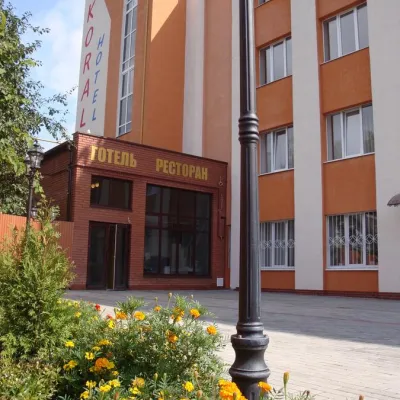 HotelHotel-Restaurant Complex "Koral" ChernivtsiChernivtsi12 km from the centreSaunaBBQParkingNearby: Armenian Church 2.8 kmSoborna Square 3.2 km
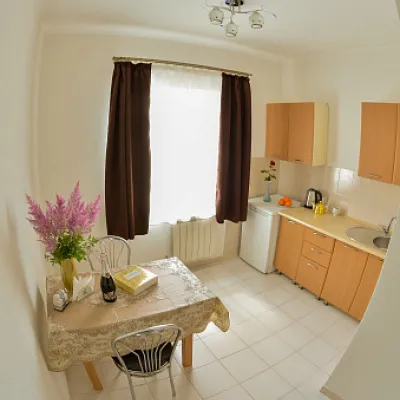 Hostel"Grand Hostel" Chernivtsi Prutska, 24Chernivtsi12 km from the centreParkingWi‑FiTransferNearby: House-ship 900 mArmenian Church 1.5 km
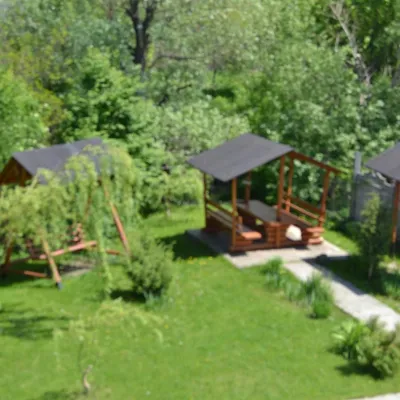 HotelHotel "Pride" MykulychynMamaivtsi17 km from the centreHotel "Pride" is located in the village of Mykulychyn, 9 km from Chernivtsi and 41 km from the "Myhovo" resort.Nearby: St. John's Church 1000 mChurch of St. John of Dukla 5.4 km
Peaks nearby
All peaks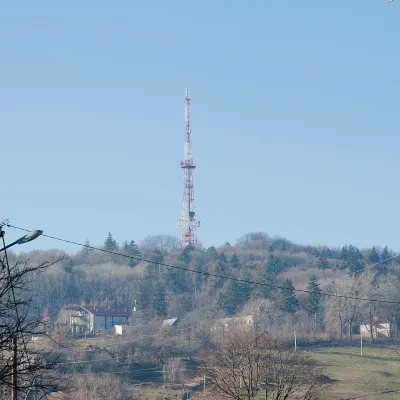 PeakMount TsetsynoChernivtsialtitude 537 m11 km from the centreTsetsyno is the highest hill of the Chernivtsi Upland, 537 m high (538 m according to other data). It rises on the western outskirts of Chernivtsi, near the Rosha...
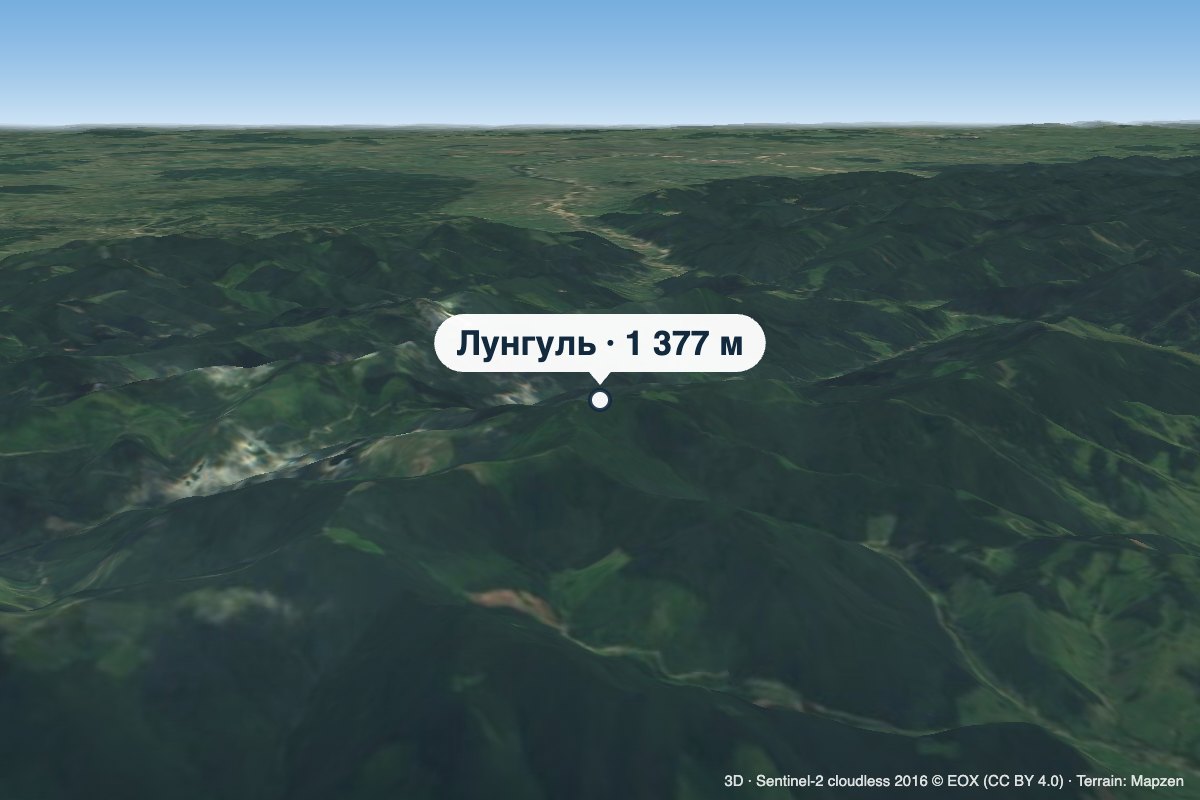 PeakMount LunhulRuskaaltitude 1 377 m52 km from the centreLunhul is a 1,377 m summit (1,377.4 m exactly) in the Pokuttia-Bukovyna Carpathians. It stands on the boundary of the former Vyzhnytsia and Putyla districts of...
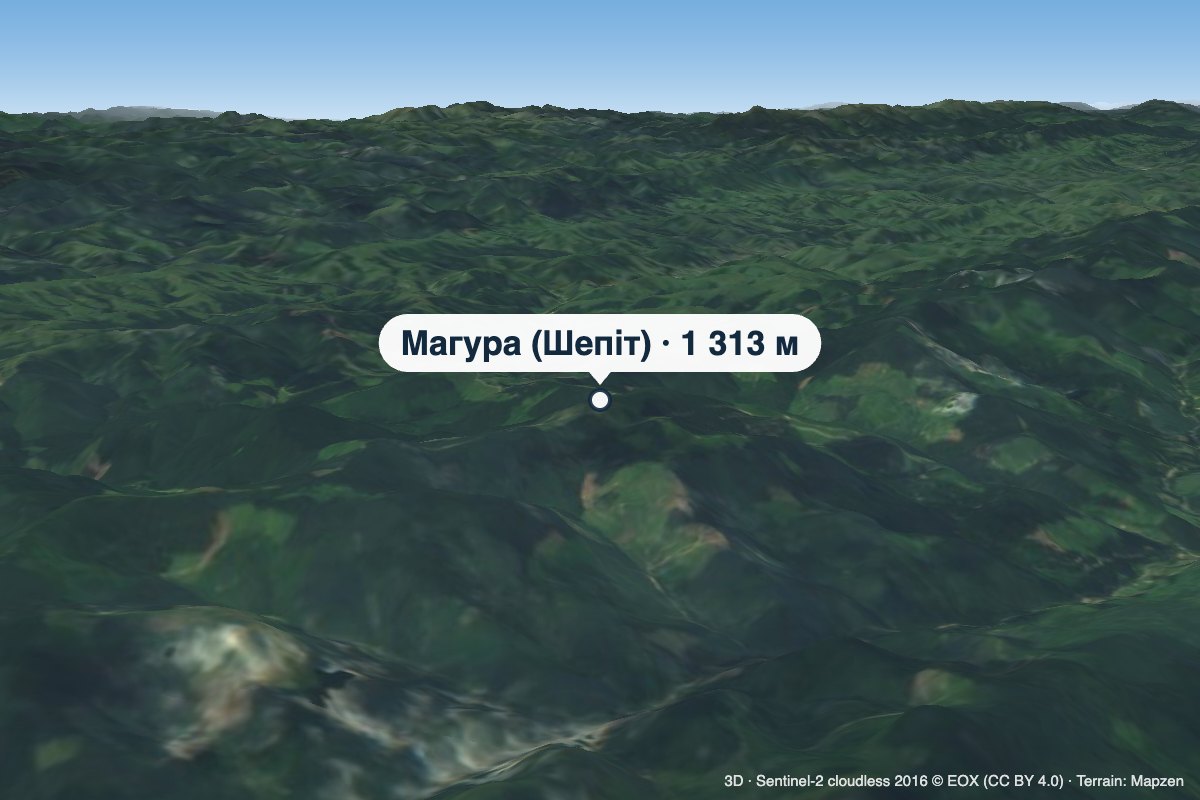 PeakMount Mahura (Shepit)Dolishnii Shepitaltitude 1 313 m · Pokuttia-Bukovyna Carpathians range53 km from the centreMahura is a 1,313 m mountain in the Pokuttia-Bukovyna Carpathians, on the Dovhyi Hrun ridge. It lies in the Vyzhnytsia district of Chernivtsi Oblast, south of the...