Bojans
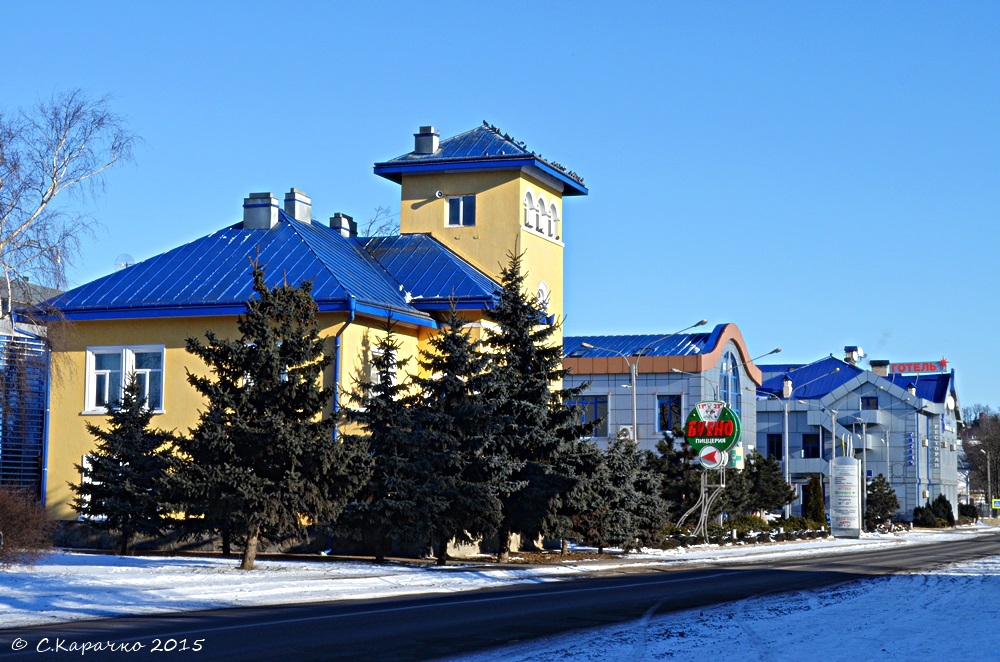
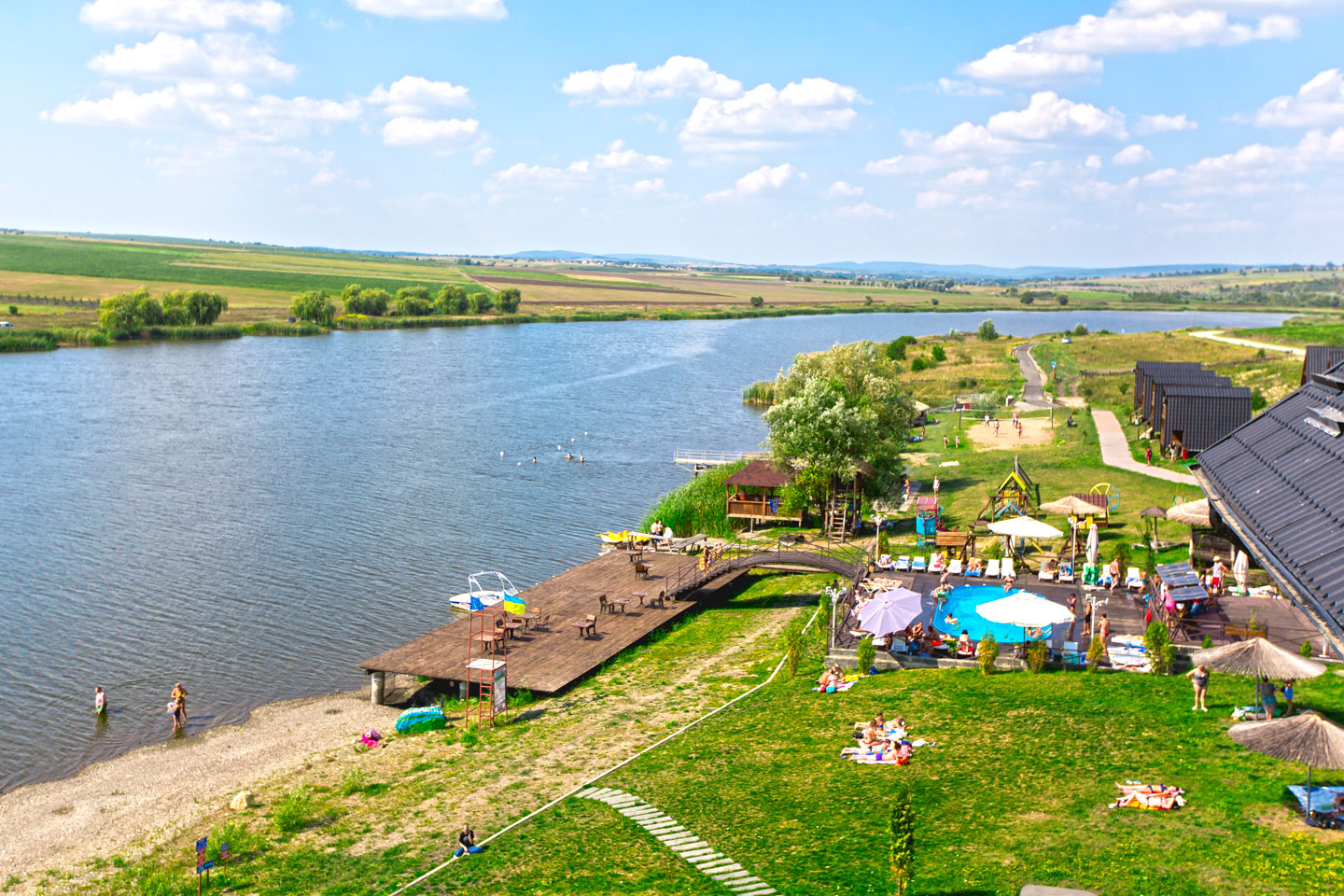
Boyany is a village in Ukraine, in the Novoselytsia district of the Chernivtsi region. The population is 4290 people. The village is located on the left bank of the Prut River, 12 km from Novoselytsia at an altitude of about 158 meters above sea level. The Chernivtsi-Larga railway passes through the village (Boyany stopping point and the asphalt road Chernivtsi-Novoselytsia. The village is home to the ski resort "Sonyachna Dolyna".
It was the ancestral estate of Ion Neculce, a Moldavian warden in the seventeenth century.
To the northwest of the village, near the river Gukiv, traces of the Trypillian culture of the III millennium BC were found. In the same area there are remains of an Early Iron Age settlement of the first millennium BC. Early Slavic settlements of the Cherniakhiv culture (II - VI centuries AD) were discovered on the southeastern outskirts of the village on the left bank of the Hukiv River and 2 km to the northwest, on the right bank of the same river. There are also traces of several settlements dating back to the XII-XV centuries. Archaeological research has shown that the modern settlement emerged around the 12th century. At that time, the Prut valley was a trade route from Galicia to Moldova. The village probably owes its origin to this route.
The village of Boyany has been a part of Moldova since its creation in the historical region of Bukovyna. According to a local legend published by Professor Vasile Bizovi, the village was founded 900 years ago on the lawn of a forester who raised cattle. The clearing was expanded when the land was cleared of forests during the reign of Alexander the Good, resulting in the formation of a village called Great Boiani (Romanian: Boianul Mare). In the Middle Ages, the trade route connecting the cities of Yassy and Chernivtsi passed through this village.
The village was first mentioned in writing in a document dated April 8, 1528, issued to Petru Rares, the ruler of the Principality of Moldova. On April 3, 1560, the ruler Alexandru Lepuşnian issued a decree dividing the village of Boiani between the children and grandchildren of the Stircea brothers. The village was divided into 3 parts: the upper part (now the Hlynica corner), the middle part (Hukiv) and the lower part (the site of the present village). In the next hundred years, the middle and lower parts of the village were sold several times, passing from hand to hand.
In 1636, Isac Stârcea was forced to give the governor Gavrilas Mateiaş the upper third of Boyany, a prosperous mill, and the village of Lezanii, because he had stolen "1360 gold pieces, furs, fox fur, etc." Two years later, the owner Vasyl Lupul secured Mateiş's ownership of these estates.
In the second half of the eighteenth century, the village belonged to the family of Ion Neculcea, a Moldovan chronicler. His father married in 1670 Katrina, the daughter of the boyar Iordache Cantacuzino, one of the richest landowners in seventeenth-century Moldova. As a dowry for her wedding, Katrina received 21 estates, including several villages in northern Moldova (Boiani, Cernovita, Bochkivtsi, Grozintsi, and others).
In 1702, Ion Neculcea shared his mother's inheritance with his sisters, but Boyany remained his. After Neculcea lost in the Battle of Stănilești (1711), his property was confiscated and handed over to the grand magistrate Lupu Costache. In 1720, Neculce was allowed to return to Moldova and began to sue Lupu Costache's son, Iordache, convincing the government to return his estate to him. Later he discovered that his property had been bought by the descendants of Isaac Stirce, who came with new documents. In order to develop the entire estate, he bought shares owned by Styrche's heirs.
In January 1775, as a result of neutral relations, during the military conflict between Russia and Turkey (1768-1774), the Habsburgs (today's Austria) received a part of Moldavian territory, the area known as Bukovina. After the annexation of Bukovina by the Habsburg Empire in 1775, the village of Boiani was part of the Duchy of Bukovina, governed by the Austrians and belonging to the Sadagura district.
In 1775, due to the fact that Boyany was involved in military operations, an Austrian customs office was established here. The residence of the inspector of the customs service of Bukovyna and Podillia was located in the village. In 1780, the village had five mills and two shops. When the Austrians annexed Bukovyna, Vasile Neculce, who owned the village, remained in Moldova. In 1782, he substantiated his ownership at the Austrian Boundary Commission of Bukovina (founded in 1781), a commission headed by Colonel Metzger and including two other representatives, Ion Calmuţchi and Alexandru Ilsche. Since Vasile Neculce could not manage his property remotely, on April 26, 1792, he leased the village of Boiani and half of his property to Ion Calmuţchi, who was the owner of the Kalinesti property on Cheremush.
As a result of the difficult economic situation, some residents began to emigrate to Canada in the late 80s of the nineteenth century; during the whole year of 1913, at least 983 people were forced to leave the village. The migrants settled in Alberta and founded a village with the same name, Boyany.
After the union of Bukovina with Romania on November 28, 1918, the village of Boiany was part of Romania, in the county of Chernivtsi. At that time, most of the population was Romanian, and there were also Ukrainian and Jewish communities. Because the front line passed through the village, Boyany was almost completely destroyed. Only two houses remained intact. In the interwar period, a court and branches of the League of Culture worked here.
In July 1941, Romania gave back the lost territories under the Molotov-Ribbentrop Pact. After the Romanian troops entered the village, some villagers forced 80 Jews out of their homes and brought them to the center of the village, where they were shot by Romanian soldiers who were in the village. The Jews were buried in a mass grave, where the remains were moved in 1976 to the cemetery of the village of Stroeşti.
In March 1944, Northern Bukovyna was again occupied by the USSR and the Ukrainian SSR. One day in the summer of that year, all men aged 18 to 40 were gathered in the center of the village, taken by force from the village, put on trains, and taken to labor camps near Lake Onega, not far from the USSR's border with Finland.
Since 1991, the village of Boyany has belonged to the Novoselytsia district of the Chernivtsi region as part of independent Ukraine.
Currently, there are 3 churches in Boiany, two schools (including the "Ion Neculce" gymnasium with this status since 1990), which teaches Romanian and Ukrainian languages. There is a modern hotel ("Bukovynska Zirka") - it was opened in 2003, a supermarket ("Dzhereltse") - a restaurant ("Prince") and several shops, a recreation center ("Sonyachna Dolyna").
Attractions.
- Orthodox Church of the Assumption of the Blessed Virgin Mary - built between 1830-1838 of stone and brick in the center of the village, on the site of another church, which was built by the chronicler Ion Nekulche. In this church, the priest Irakli Porumbescu, the father of the famous composer Ciprian Porumbescu, served from March 1857 to April 1859. The church was looted during the First World War by Russian soldiers. As a result of donations from believing villagers, the church was repaired and re-consecrated on December 31, 1920. After the annexation of Northern Bukovyna by the USSR, the authorities tried to close the Romanian Orthodox Church, but the faithful were against it, warning that they would guard the church day and night. Particularly noteworthy is the parish priest Borys Tsapa, who served in this community for 50 years. Next to the church there is a small museum where you can see gifts from the villagers at the holy place: old icons, old books, etc.
- Greek Catholic Church of the Nativity of the Blessed Virgin Mary - After the revolution of 1848, in 1856, some peasants began to rebel against the landlord and the Orthodox priest in the village because they were forced to work on their estates. So they turned to the Greek Catholic priest from Sadhora, Fr. Klymentii Hlibovitskyi, and thus 911 people joined the Greek Catholic Church. It is noteworthy that Romanian historians look for internal reasons for this transition, such as local residents' dissatisfaction with exploitation, but rather the intrigues of Greek Catholics or Austrian propaganda directed against the Romanian Orthodox Church in Bukovyna, although the Church was not Romanian at that time, but officially the Diocese of Bukovyna. In particular, this is how the events in Boiany are shown in the work of Professor Simion Reli (1928). The historian Ion Nistor gave a more adequate interpretation of this situation: he explained that the transition of the inhabitants of Boyany and Ridkivtsi to unity with Rome occurred because of "the peasants' dissatisfaction with the manners of Orthodox priests." At the same time, Nistor called those who had converted Romanians for national reasons, keeping silent about Rusyns-Ukrainians. During the Soviet era, the Greek Catholic community of Boyany was persecuted by the totalitarian regime, but revived in independent Ukraine.
- The Roman Catholic Church was built between 1884-1887 and consecrated on June 12, 1887. After the occupation of Northern Bukovyna by Soviet troops, the church was closed and turned into a shed with wood and coal, church objects (including objects of worship, bells and other religious objects) disappeared, and the last priest, Bronislaw Gobowski, fled with his parishioners to Poland. A hospital sector was established here, and in 1972 a kindergarten was opened. In 1989, the restoration of the church began with the efforts of the village's Catholics. The church was re-consecrated in 1994. Next to the church there was the "House of Poland" (a reading and fraternal aid ward) with four rooms, built in 1922 of wood, and a 50-acre Polish cemetery dating back to 1887.
- The ruins of the synagogue - built in 1889 and destroyed during World War II. Nearby is a 28-hectare Jewish cemetery.
- The monument to Ion Neculcea, dedicated to the great Moldovan businessman, was designed by D. Horshkovsky.
- Monument to the victims of communist oppression (deported to Siberia and Onega).
We recommend visiting in Bojans


Проживання в Bojans

Accommodation in Bojans, with:
Planning to grill a barbecue and spend time with friends outdoors in Bojans?
If you are interested in venues with a gazebo in Bojans, take a look: Ski Resort "Soniachna Dolyna" Boyany
Looking for a cottage with a sauna and a plunge pool or tub in Bojans?
If you are interested in venues with a sauna and a plunge pool or tub in Bojans, check out these options: Ski Resort "Soniachna Dolyna" Boyany
Which hotels or cottages in Bojans have an indoor swimming pool?
If you are interested in venues with an indoor swimming pool in Bojans, check out these options: Ski Resort "Soniachna Dolyna" Boyany