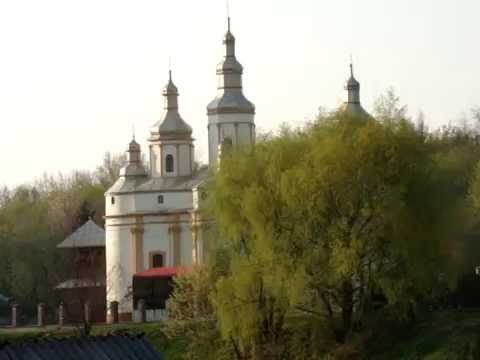
Church of the Nativity of the Blessed Virgin Mary "Gorecha", Chernivtsi
Historical monuments in Chernivtsi have been preserved not only in the city center. It so happened that the oldest stone building in the city was historically located not in the city itself, but in its suburbs, which became part of the city in the 60s. We are talking about the Church of the Nativity of the Blessed Virgin Mary, which is located in the Horech district, which used to be a small settlement.
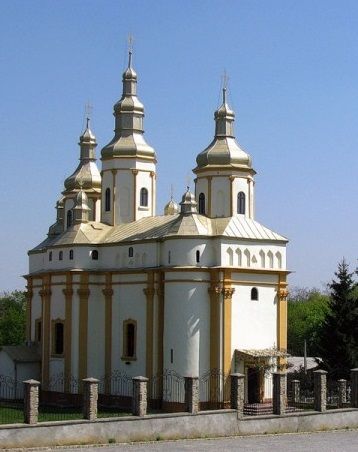
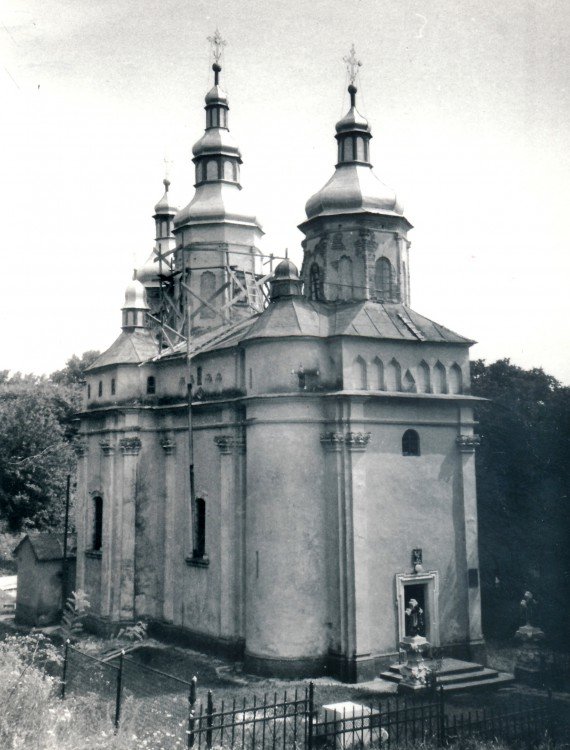
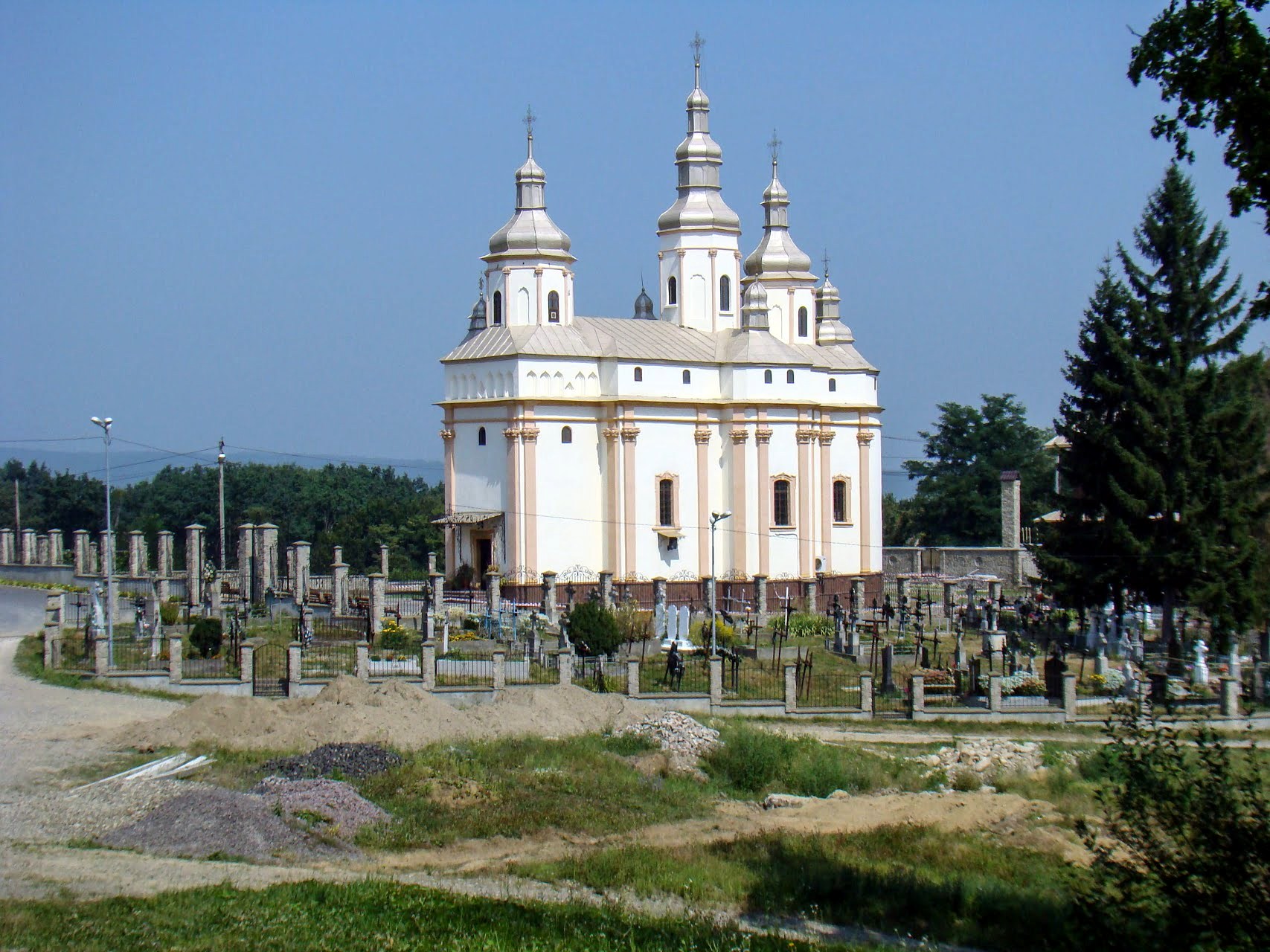
The Church of the Nativity of the Blessed Virgin Mary is the oldest brick Orthodox church in modern Chernivtsi. In the literature, it is often called "Nativity of the Virgin" or "St. George's". Consecrated in honor of the Nativity of the Blessed Virgin Mary, it also has the chapels of St. George the Victorious and St. Barbara. Barbara. The church was recognized as an architectural monument in 1912.
In the 18th century, the surrounding land was donated to the monastery. The Church of the Nativity was built on its territory. In the early 1760s, on the site of the old wooden church, the abbot of the Horecha Monastery, Artemon (Kinitskyi), founded a new monastery church in honor of the Nativity of the Blessed Virgin Mary. Many influential people provided organizational and financial support for the construction of the religious building. The Moldovan metropolitans of the time, Jacob (Putniansky) and Gabriel (Kallimaki), took an active part. Donations were made by the ruler Hryhorii III Gica and the Russian Empress Catherine II. In 1767 the newly built church was consecrated.
After Bukovyna became part of Austria-Hungary, the monastery was closed and the church became a parish church. Any construction work in it was prohibited without the knowledge of the authorities. It was heavily damaged during the First World War, but was completely repaired afterwards.
During the Soviet period, the church functioned. It was last restored in 1992. 3 years later, the Horecha Monastery resumed its activities and it became a monastery church again.
"The Church of the Nativity of the Blessed Virgin Mary of the Horeca Monastery was built in the Baroque style, with a harmonious combination of Ukrainian and Moldovan architectural styles. The construction of the temple was also designed for a possible defense purpose: massive outer walls (1.5 m), a battle gallery along the second tier, and narrow windows. Like the vast majority of Bukovynian Orthodox churches of the 16th-18th centuries, the Church of the Nativity of the Virgin Mary was built in the form of an elongated rectangle. The three exedra attached to it (a large altar abyss and two smaller side ones) form a "shamrock" characteristic of Moldovan church construction.
A significant difference between the church of the Horeca Monastery and the Bukovinian churches of the time (domeless or with one top) is the presence of seven different-sized domes. Three large domes with light drums are of practical importance, and four small ones have a decorative function. The façade decoration and the subtle drawing of architectural elements show the features of Ukrainian Baroque. The old monastery bell tower, located in the southeastern part of the courtyard, complements the church's exterior. The two-tiered frame bell tower, covered with a pitched roof, was built simultaneously with the church. Its first tier is covered with hewn timber, the second is open. The copper bells for the bell tower were cast (1773-1774) at the Sadahursky mint by order of Abbot Artemon (Kinitsky). However, during the First World War, the Austrian authorities, who felt an urgent need for non-ferrous metals, requisitioned the old monastery bells to be melted down in Hungary.
The interior of the church is impressive, having remained almost pristine. The three-arch colonnade that separates the front part of the nave enhances the disclosure of the church's interior space. The upper tier, which houses the chapels of St. George and St. Barbara, is reached by an ancient staircase. Barbara, is reached by an ancient spiral staircase. Of particular value are the fresco paintings that cover the walls, domes, and vaults. In particular, the Babynka has preserved paintings of the 18th century: the frescoes "The Last Judgment" and "The Miracle of St. George and the Serpent."
There is a legend that in 1823, during a meeting of the emperors of Austria and Russia in Chernivtsi, the church was visited by Emperor Alexander I, who loved to walk around the city. But none of his Austrian subjects knew him. One day he was stopped by gendarmes and demanded to see his documents, which confused the king.
It is not known why he was walking to the church in Horecha, but he was unlucky here too: dogs attacked him in the courtyard, and he had to drive them away with a chain torn from the fence around the church. The family of the local sexton chased the dogs away. But the king kept the stick, and according to legend, it was kept in the church for a long time. The king also donated 50 gold ducats to the church.
The church is located at 1 Troianivska Street. From the city center, you need to take trolleybus #4 from the Sadovskoho Street stop to the Museum of Folk Architecture and Rural Life, which is located nearby. If you are traveling by car to Kamianets-Podilskyi or Khotyn, the church is located just before the bridge over the Prut River.
Opening hours: The Church of the Nativity of the Virgin Mary belongs to the monastery and is constantly functioning.
Chernivtsi is the capital of Bukovyna. It is one of the most beautiful and pleasant Ukrainian cities. There is one of the most beautifulrailway stations in the country, theChurch of St. Paraskeva of Serbia, the Church of the Exaltation of the Cross, the ship house, the City Hall (every day at 12:00 a trumpeter plays the melody of "Marichka" from the tower), the Art Museum, then Kobylyanska Street, the German Folk House, the Armenian and Assumption Churches (the oldest stone Ukrainian Greek Catholic Church in Chernivtsi), the Theater Square and the Kobylyanska Theater. Kobylianska Theater Square, Jewish People's House, Chernivtsi University (included in the UNESCO World Heritage List), Turkish Square (Chernivtsi has been a part of Turkey, Modova, Romania, Austria-Hungary, the USSR, Rus, and Ukraine), and a large rover,cozy streets and cobblestone streets, the so-called Drunken Church, Nazariy Yaremchuk's house, then another house-ship, two houses with the same number (Olha Kobylianska lived here), the house where Volodymyr Ivasyuk lived, the pink church - the Cathedral of the Holy Spirit.
Chernivtsi sights
- St. Nicholas wooden church (from 1607, restored in 1954);
- stone Church of St. George on the Bitterroot (1767 in the Baroque style);
- the wooden Trinity Church in Muggles (one thousand seven hundred and seventy-four), moved in 1874 to Kłokuchka;
- wooden Assumption Church on Kaleczanka (1783);
- City Hall with a two-story, 45-meter-high Empire-style tower (1843-1847, architect A. Mykulych), now the City Council;
- Ukrainian Greek Catholic Church (1825-1830 in the Baroque style);
- Byzantine-style cathedral (1844-1864, architect Roll);
- Church of St. Paraskeva in the pseudo-Romanesque style, completed in 1662 (architect A. Pavlovsky);
- residence of Bukovyna metropolitans - since 1956 one of the buildings of Chernivtsi University);
- Armenian Gregorian Church (1869-1875, architect J. Hlavka);
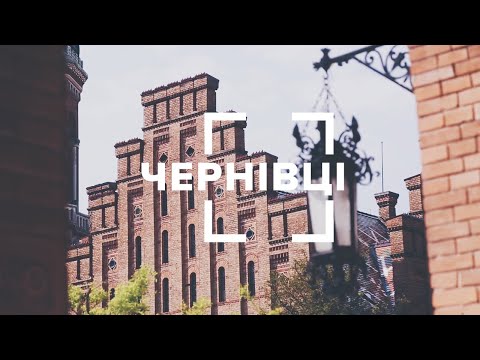
- Chernivtsi University building (1874-1875);
- Jesuit church in the Neo-Gothic style (1893-1894);
- Railway station (1898-1903) in the Art Nouveau style;
- the City Theater (1904-1905, architects F. Fellner and G. Helmer) in the Viennese Baroque style with Art Nouveau elements (now the O. Kobylianska Music and Drama Theater), etc.