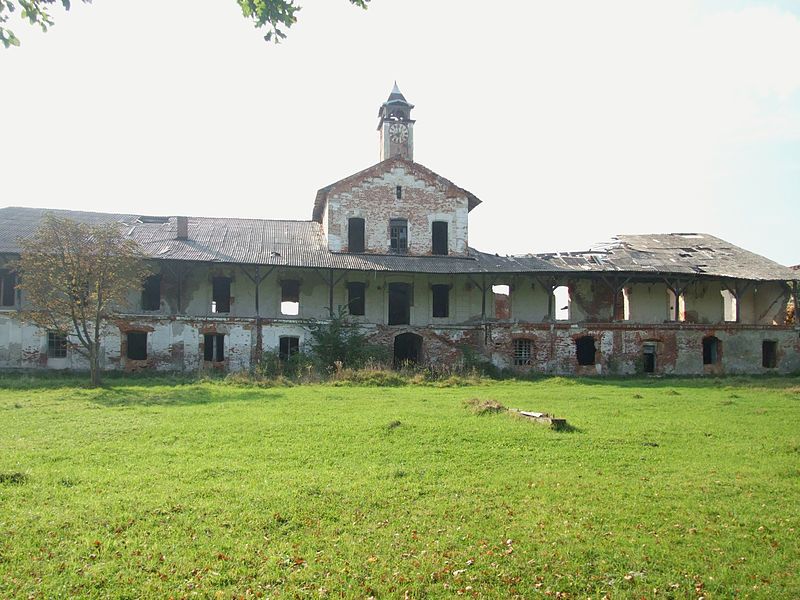
Saltworks, Bolekhiv
For centuries, the fame of Bolekhiv salt spread throughout Europe. And the development of the town itself was partly due to the presence of rock salt deposits.
The first saltworks in Bolekhiv appeared in 1546. It was built on the territory of the Old Baths by Emilia Grosowska. However, salt production in the town began much earlier. The brine was scooped out of wells with ox skins, boiled in special vessels, and then the boiled salt was put into cone-shaped dishes. In these vessels, the salt was finally dried and took on a pyramidal shape. Bolekhiv salt was packaged in such pyramids and exported to Hungary, Poland, and the Baltic countries.
In 1562, Hrosovska's saltworks were razed to the ground by the Tatars. However, in the second half of the 16th century, Mykola Hedzinski restored the salt industry in Bolekhiv, and this saltworks, by the way, brought his family considerable money.
At the beginning of the 18th century, after the end of the Gedzinski family's rule in Bolekhiv, certain parts of the town became the property of several noble families. From the Giedzinski family, the saltworks became the property of Joachim Potocki. In 1789, Potocki transferred his part of Bolekhiv (along with the saltworks) to the Austrian government.
The epochs changed, and with them the technologies of rock salt extraction. The current saltworks building was built in the mid-19th century. This was the period of the greatest prosperity of salt production in Bolekhiv.
During the Soviet era, production at the saltworks was fully mechanized. Salt from Bolekhiv was considered the best, and packages of local salt did not stay in stores for long. In the 1970s, one carload of salt was shipped to Moscow alone every day!
But due to the rise in natural gas prices, salt production in Bolekhiv became unprofitable. Bolekhiv salt was gradually replaced by cheap salt from Donetsk and Zakarpattia.
In 1996, the Dolyna Salt Plant moved to Bolekhiv because the building did not survive the winter and the production had to be moved somewhere else. Bolekhiv salt was in demand. There was hope that the salt-making tradition of Prykarpattia would get a new life, but it didn't happen as expected. Today, the Bolekhiv saltworks building is not in full swing, as the company has proved to be uncompetitive.
The saltworks is located on Sichovykh Striltsiv Street in Bolekhiv. Not far from it is the Church of the Assumption of the Virgin Mary.
Important information! - Experienced guides of the Boikivshchyna (Dolyna) Museum will help you organize sightseeing tours of Dolyna if you want to see the Museum of Insurgent Victory in Dolyna, the old saltworks, the bunker where Ukrainian nationalists were hiding, the Carpathian Tram in Vyhoda, Dovbush Rocks in Bubnyshche, Shyrkovets Sw amp and Mizun Waterfalls near Novyi Mizun or Hoshiv Monastery, Ivan Franko Museum in Lolyn village.
Accommodation around Saltworks, Bolekhiv:


Nearby hiking trails near Saltworks, Bolekhiv:
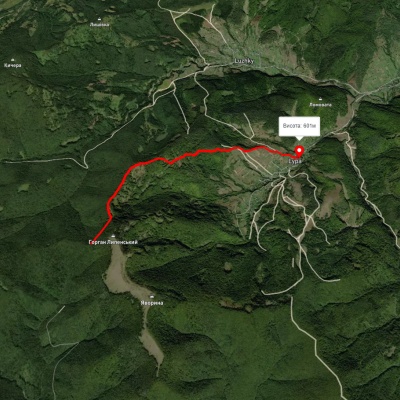
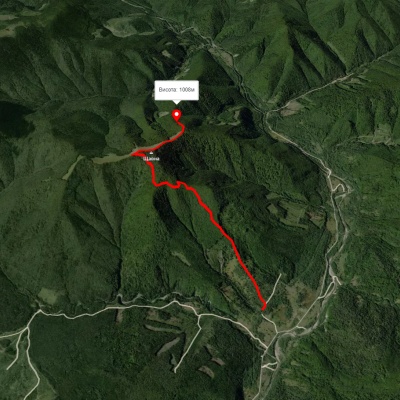
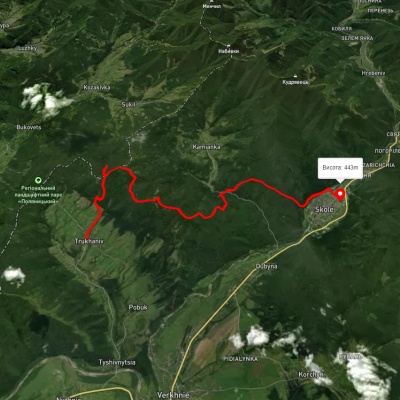
Which trails pass by Saltworks, Bolekhiv?
We suggest these hiking trails through or near Saltworks, Bolekhiv: Lypa village – Yavoryna – Robert's Bunker, Route to Mount Shchavna, Trukhaniv village, via Mount Kliuch, Lake Zhuravlyne and Kamianka Waterfall to Skole, Lybokhora village, via Mount Matahiv to Kozakivka village, Myslivka village, via Mount Yayko-Ilemske and Mount Horhan-Ilemskyi to Myslivka village, Skole, via Mount Parashka, Hurkalo Waterfall and Korchyn village to Verkhnie Synovydne village