Kniazholuka
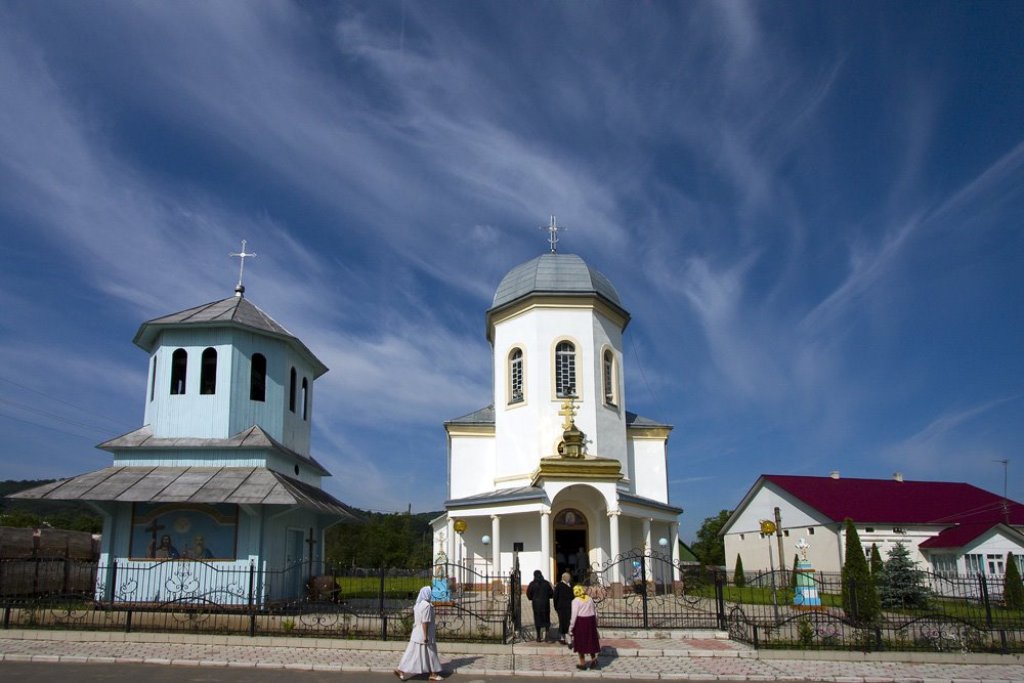
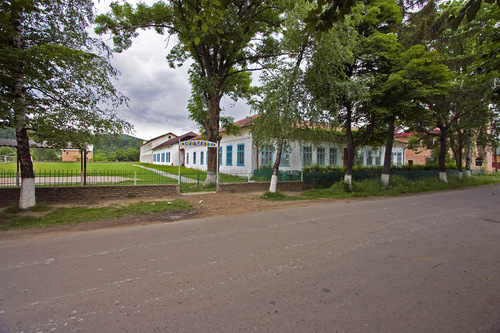
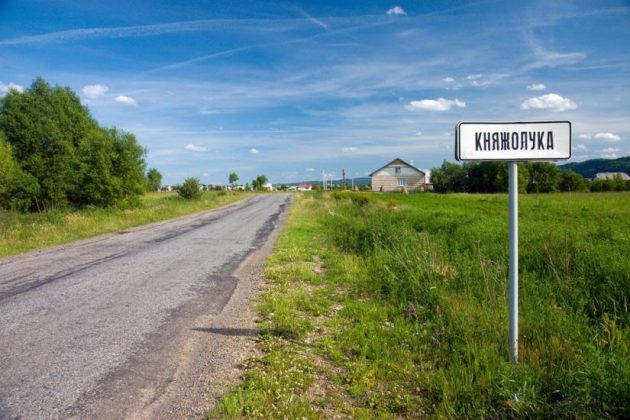
Knyazholuka is a village in Dolyna district of Ivano-Frankivsk region. It is the center of the village council, located 11 km from the district center and the railway station of Dolyna, 71 km from Ivano-Frankivsk and 4 km from the Lviv-Ivano-Frankivsk highway. The village currently has 1,072 yards and 3,238 inhabitants (as of 01.01.2013).
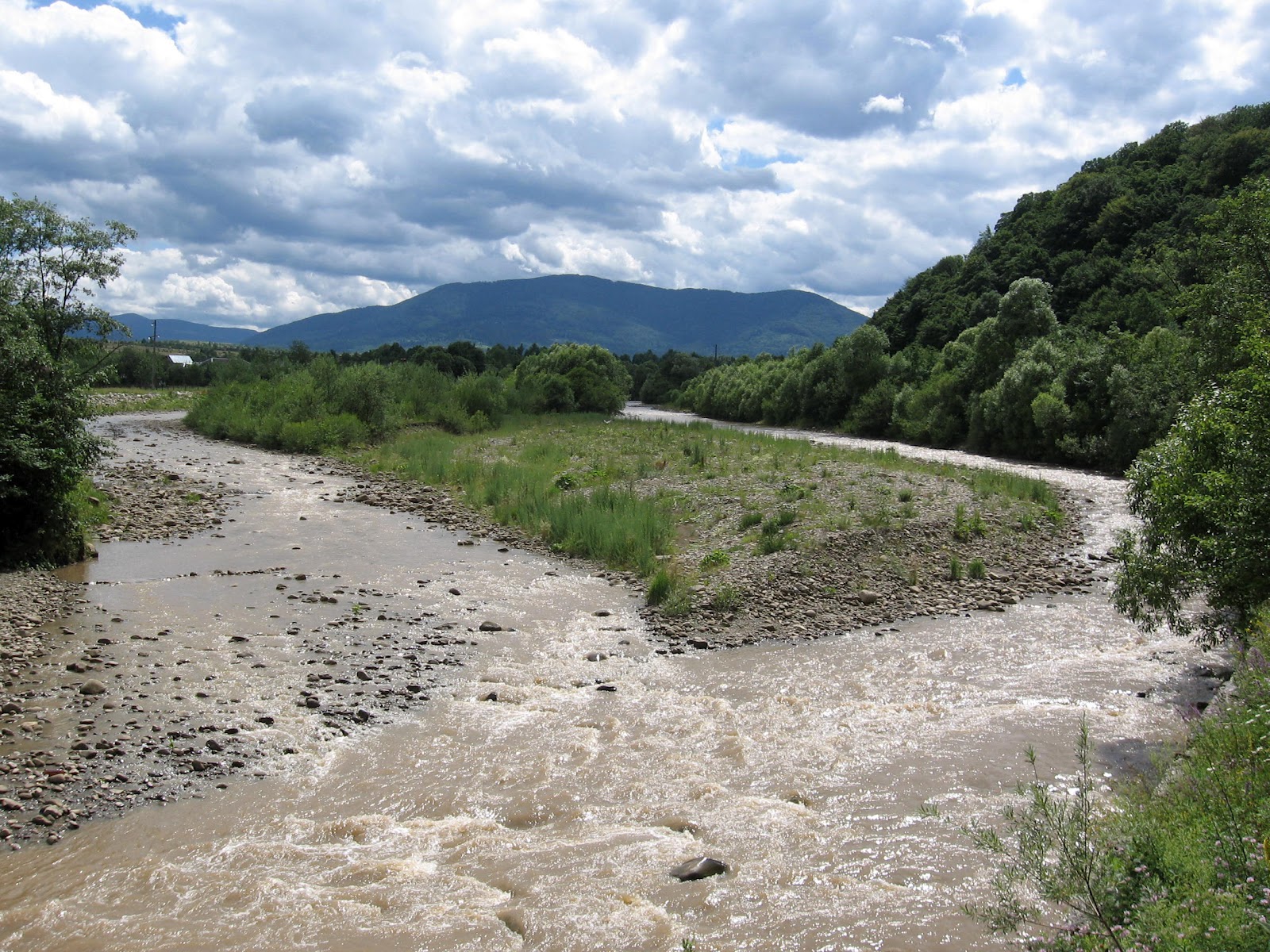
Knyazholuka was first mentioned in written sources in the late fourteenth century. The village is one of the oldest in Dolyna district. It was first mentioned in a charter dated June 29, 1394, which states that King Yahailo gives his servant Danylo Dazhbohovych Zadzerevetskyi several villages in Zhydachiv and Halych parishes and confirms his right to own those villages that he bought or exchanged. Kniazholuka was exchanged for Syakhiv in the Lviv region. From the context of this document, it is known that Knyazholuka, as a settlement, has long existed. The origin of the village's name does not indicate that the founder was one of the Grand Dukes of Galicia. It was probably settled by a feudal landowner who had only a title but no princely powers. In the thirteenth century, a significant number of princes became vassalage to the Duke of Lithuania and gradually lost their state power. Thus, the founder of this settlement was a feudal landowner who was titled a prince. And since the village is located in the meadows on the side of the Svicha River, it was appropriately named Kniazholuka.
The tax register of 1515 documents a priest in the village (thus, there was a church even then) and 2 fields (about 50 hectares) of cultivated land. The plight of the peasants during the rule of the Golden Horde conquerors, Hungarian feudal lords, Austrian barons, and Polish nobility prompted resistance on their part.
It is known that in 1961 (check) 45 villagers of Kniazholuky came to the fields of Mr. (priest) Jan Bratkosky in the village of Hoshiv and reaped 400 bales of grain. In 1657, the peasants of the villages of Kniazholuka, Novoselytsia, and Lypy united and came to the estate of the Ukrainian nobleman Ivan Vitvitskyi and beat his wife, and in 1661 they seized the lord's property in an organized manner.
According to the old-timers, it is known that behind the village, where Hryhorii Hainiuk's house is now located, there was a large gate in the upper part of the village that was closed during the raids of Tatar khans. That is why the Hainiuk family was nicknamed "behind the gate". There is a legend that the mountainous area near Kniazholuka, called Dry Vezha-Zaichysko, was the treasury of the Galicia-Volyn principality.
During the seventeenth century, the peasants repeatedly protested against feudal injustice. The freedom-loving and proud Prykarpattia people did not submit to the enslavers. No one could destroy their culture, language, and love for the land. They waged a heroic struggle against social and national oppression and carried their culture and national traditions through the centuries to the present day.
In the village of Kniazholuka, there is almost the only working water mill in the region, and perhaps in the entire Carpathian region. The old-timers of all the surrounding villages remember this mill well. The carts loaded with grain creaked day and night. To get flour milled, one had to make arrangements in advance and wait almost a week for their turn. Outside of that time, only those who were celebrating weddings or funerals could grind here. Back then, no one said a word. According to the memory of the old people, there were three mills in our village that used to grind grain: the Koch mill, the Digl' s mill, and the Moshman' s mill .
But the one that is still in operation today is the most famous. This is the Moshman mill. There is no trace of the others. Everything was milled here: rye, wheat, oats, barley, beans, peas, beans, and even acorns for pig feed. That's how our grandfathers farmed! A German named Moshman, who built this mill in 1922, left behind a fond memory. Fate did not favor his family. He and his wife raised eighteen children, nine of whom were laid to rest in the earth at a young age. For the six sons who were destined to live, the father built a mill for each of them. In addition to Knyazholuka, the Moshmans ran mills in Stryi, Rozhnyativ, Kalush, and Halych counties. And like the others, there is no trace of them on the river banks. But there is one venerable man who lives in the village and whose imagination still turns the new wooden wheels of the engineering buildings of that time. This is 82-year-old Hainetskyi. It was he, now an old man with thick eyebrows and lively lights in his eyes, who preserved the Knyazholutske mill to this day, working in it for half a century. One after another, the managers and institutions in charge of this ancient craft changed, but the miller remained. He escaped death when they pointed a gun at his chest and survived three major floods.
In August 1991, Hainetskyi had a distant guest. In the afternoon, after loading the truck, he sat down to rest. He looked up and saw a Volga pull up. A gray-haired, well-dressed man gets out of the car and drills his eyes into every nook and cranny of the mill. The miller remembers: I think he came here for a reason. I hear: "Guten Tag". I answered: "Yes. "Guten yes. Slowly I find out that the newcomer is Moshman's grandson. His surname is Henderman (the son of the daughter of the former owner of the estates). He came from Germany to Ukraine as a tourist and came to Knyazholuka for a few hours to see if there was a mill. He was two years old when his grandfather celebrated the first mill in Kniazholuka. And his grandfather took pictures of everything: the table, the carpenter's workbench, the turbine his grandfather had made, the ladle, that broken-down pietz.... And he left.
This is the story of the Knyazholutsk mill on the Svicha River, and this is the life of the old miller, its living witness (data as of 1992). As of 2009, the mill has been preserved, but it is not operational. The miller Hainetskyi died in 1996.


Which hiking trails pass through or near Kniazholuka?
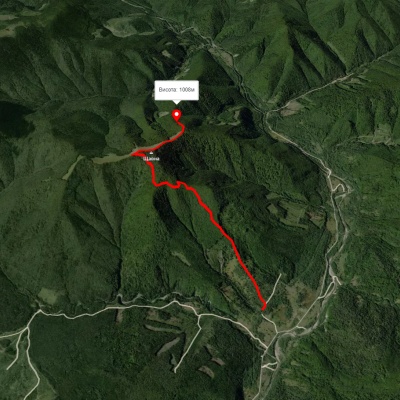
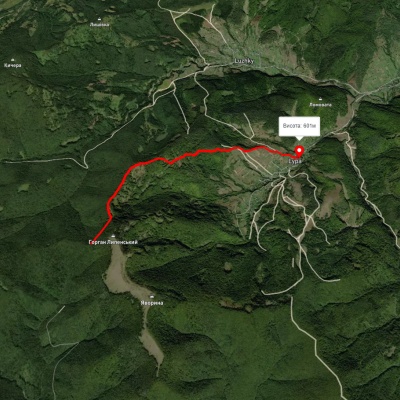
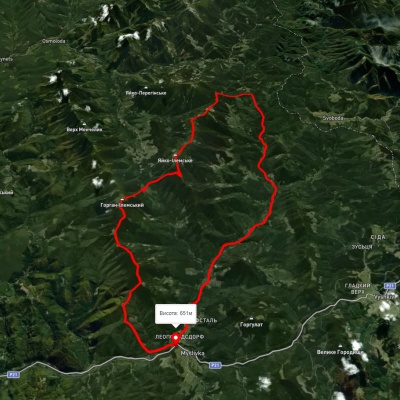
We suggest these hiking trails through or near Kniazholuka: Route to Mount Shchavna, Lypa village – Yavoryna – Robert's Bunker, Myslivka village, via Mount Yayko-Ilemske and Mount Horhan-Ilemskyi to Myslivka village, Myslivka village, via Mount Moloda, Mount Popadia, Svoboda village, Lake Synevyr and Mount Ozerna to Mizhhiria, Myslivka village, via Mount Velykyi Pustushak, Nimetska polonyna and Mount Horhan Ilemskyi to Osmoloda village, To Mount Horhan Ilemskyi