Sloboda-Bolekhivska
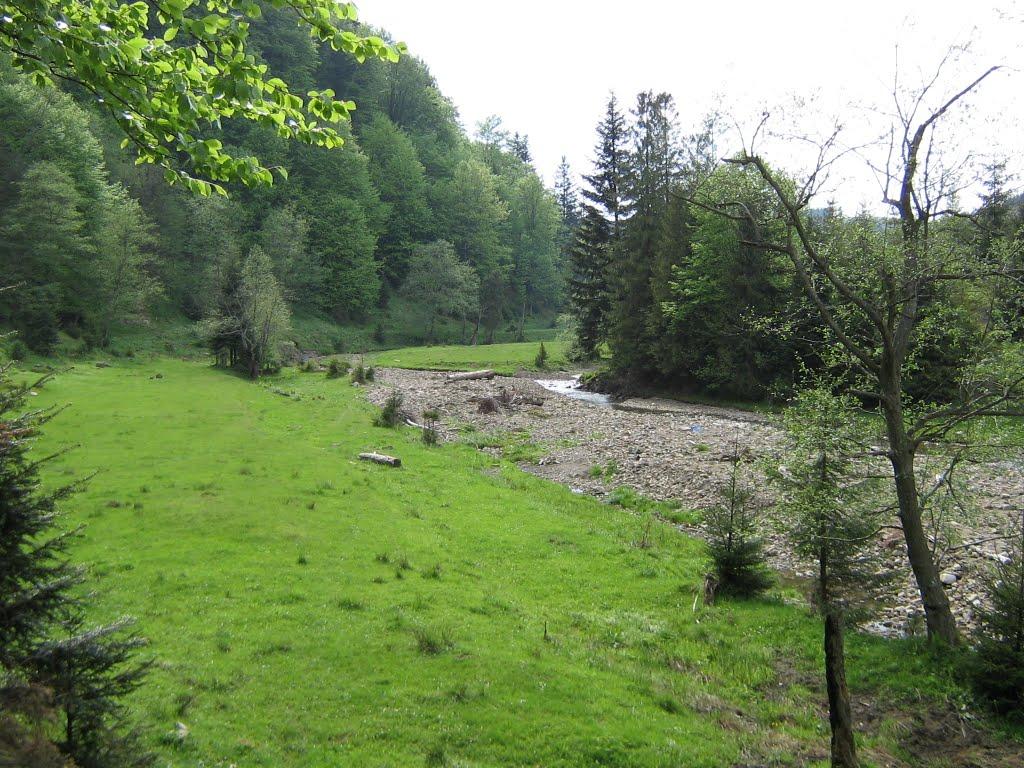
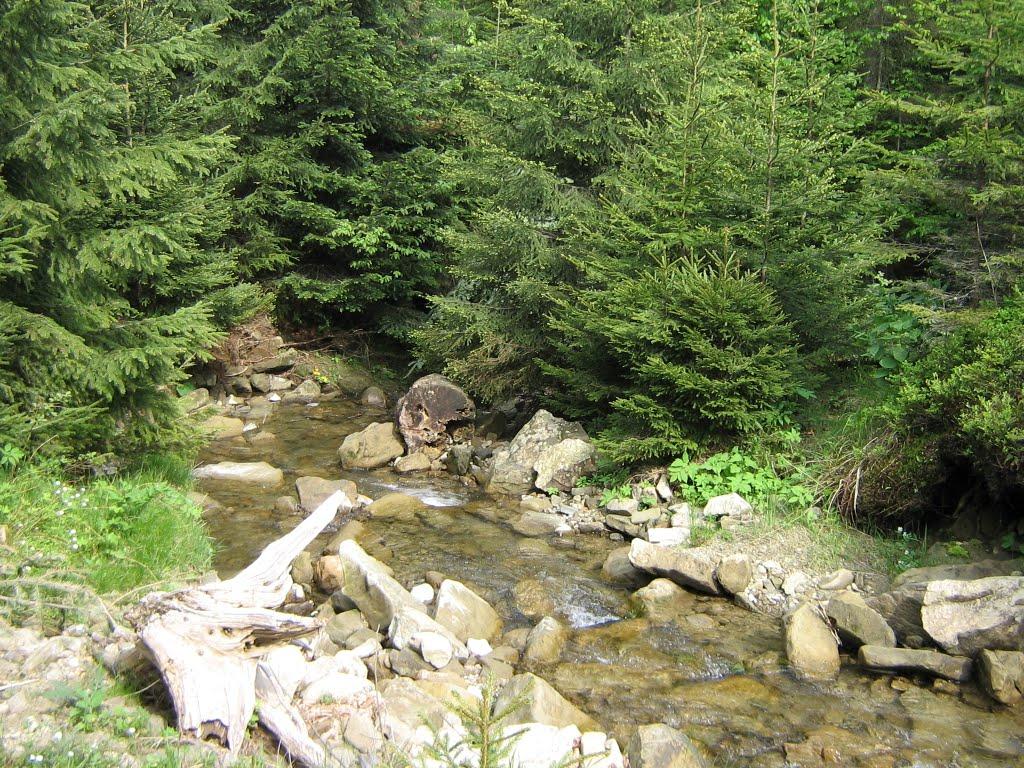
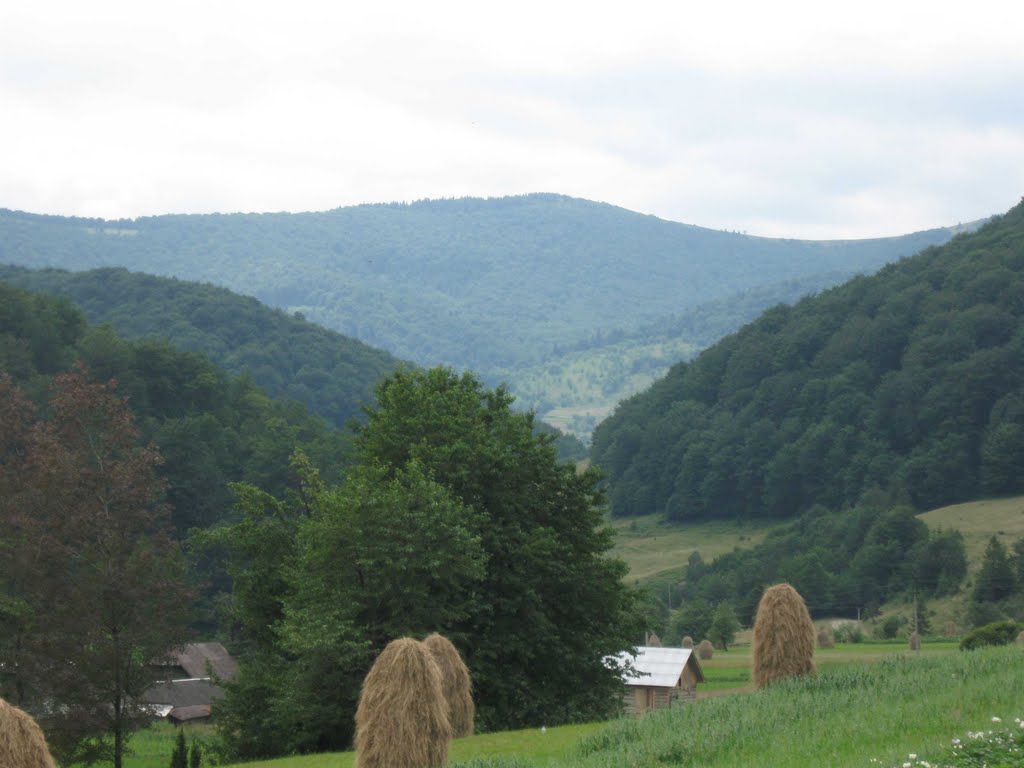
Sloboda-Bolekhivska is a village in the Dolyna district of Ivano-Frankivsk region. The village of Sloboda-Bolekhivska is the official name and the center of the village council; it is located 30 km from the district center of Dolyna and 23 km from the railway station of Bolekhiv. The village council is subordinated to the villages of Lypa and Luzhky. The village is located in the valley of the Luzhanka river. It is surrounded by mountains covered with beech forests on both sides.
The population works mainly at the Tserkva forestry, Bolekhiv forestry, Dolyna PI, and at seasonal jobs outside the district. The village has a nine-year school, a club, a library, a first-aid post, 4 shops, a post office, and a savings bank. Over 200 residential buildings have been built in recent years.
Now Sloboda Bolekhivska consists of 5 parts: Horishnyi Kintsi, Seredyna, Potik, Prykyrnyi. In the old days, there were also Pereniz and Vershok, but due to the decrease in the population (only one house remained in Vershok), these areas were no longer considered separate neighborhoods of the village. The village is not mentioned in the chronicles, but the names of the tracts Bolekhivskyi Plai, Tysiv Zvir, Tserkivnianskyi Bovt, and Tiapetskyi Zholob testify to the Tatar attacks. In archival documents, the first mention is recorded in 1667.
There are several versions of the village's foundation. A resident of the village, Yusyp Stepan Ivanovych, born in 1927, recalls hearing from old-timers that an old man lived in the village of Roztochky and allowed homeless serfs to settle in the area where the village is now located. Apparently, the reason for this kindness was that the oppressed peasants were fleeing from the lords' estates, and to prevent this, they were given pieces of land that became Slobodky.
According to another resident of the village, Ivan Danylyshyn, we learn that there was a forest on the site of modern Sloboda Bolekhivska. The first resident of the village was a fugitive who was hiding from Polish oppression. Later, the area was settled by people from the surrounding villages. Later, the Austrian state began to divide the land between families. There was no serfdom in the village. Ancient legends say that the village was inhabited by people fleeing from the Tatars. The first people settled in Potok, where Svirshchuk's house was located - Svirshchuk's Dolyna, then near the Palkunovs.
As the story goes, the fugitives wandered through the forests for a long time, got very tired, came out into the open and sat down to rest. It was a beautiful place, so much so that they didn't want to go any further. They could have settled there, but the only problem was that the water was far away. This place was called Tomnatyk from the word tomyty, tom (tired, fatigued) as they said back then. So they went down to the stream and settled there.
The inhabitants of Sloboda Bolekhivska were engaged in agriculture, worked in the forest, wove and embroidered. A narrow-gauge railroad was built through the village and into the mountains by entrepreneur Hryfel, who transported timber from Maryna to Bolekhiv. In 1939, the village was home to 1030 inhabitants (1020 Ukrainians and 10 Jews).
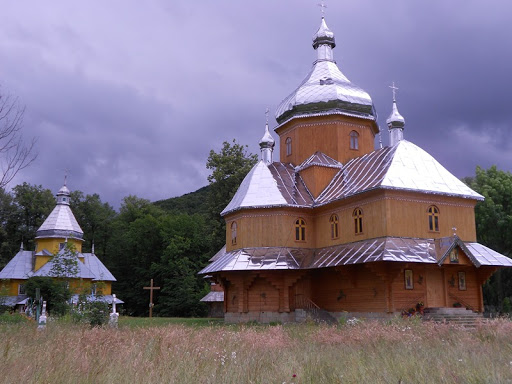
The Shematism of the Greek Catholic clergy of the Lviv diocese for 1931-1932 states that the Church of the Epiphany is wooden, five-domed, Boyko style, and cross-shaped. A gallery is attached to the northeastern side of the pews. It was built at the expense of the community with the assistance of the Austrian Emperor. The construction was supervised by the master Khariv (on Maishtruk street). The wood was cut down nearby on Mlaka. It was processed there and built without a single nail. At first the church was covered with shingles. During the repairs that were carried out in the church, its exterior and interior appearance partially changed. At present, the church is covered with galvanized tin. The three-tiered iconostasis with three-dimensional carvings is of great value. The iconostasis has an inscription: "Founders Vasyl Kvetsko, Ivan Vintoniv, Ivan Khomyn, carver Ihnatii Pokryshka."
Near the church on the north side is a bell tower built in 1897. It has 2 tiers. The village is also decorated with a newly built church, the construction of which began in September 2006. The church was built by local craftsmen, masons. The church was opened in 2011.
The first cemetery, according to legend, was near Malanchyn Eustachius, on the shore. The second one was in Prykirne (near Yatsiuhy). They finished burying him in 1945. The third one was on the meadow. The fourth is near the church. They started burying in 1945 and finished in 1991. The UPA soldiers from the Khorty Hundred under the leadership of the Hundred's commander, "Bey"(Kazimierz Jaworski), who were killed on December 11, 1945, are buried here.


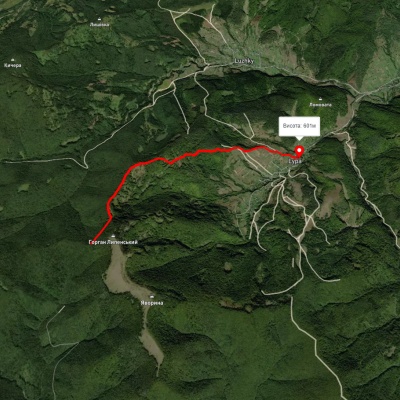
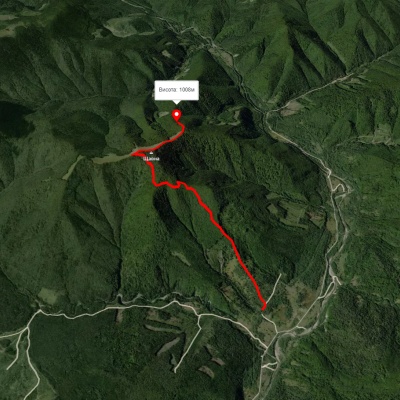
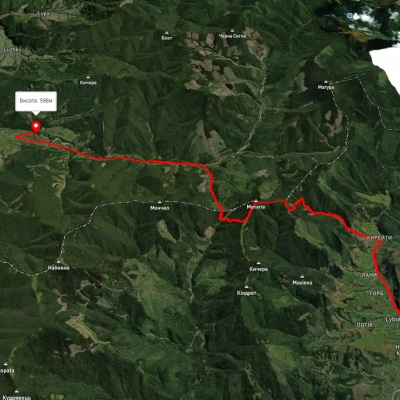
Which hiking trails pass through or near Sloboda-Bolekhivska?
We suggest these hiking trails through or near Sloboda-Bolekhivska: Lypa village – Yavoryna – Robert's Bunker, Route to Mount Shchavna, Lybokhora village, via Mount Matahiv to Kozakivka village, Trukhaniv village, via Mount Kliuch, Lake Zhuravlyne and Kamianka Waterfall to Skole, Skole, via Mount Lopata, Mount Khom, Kamianka village, Kamianka Waterfall and Dubyna village to Skole, Dubyna village, via Kamianka Waterfall, Mount Lopata and Mount Matahiv to Tukhlia village