"Khotyn Fortress Khotyn
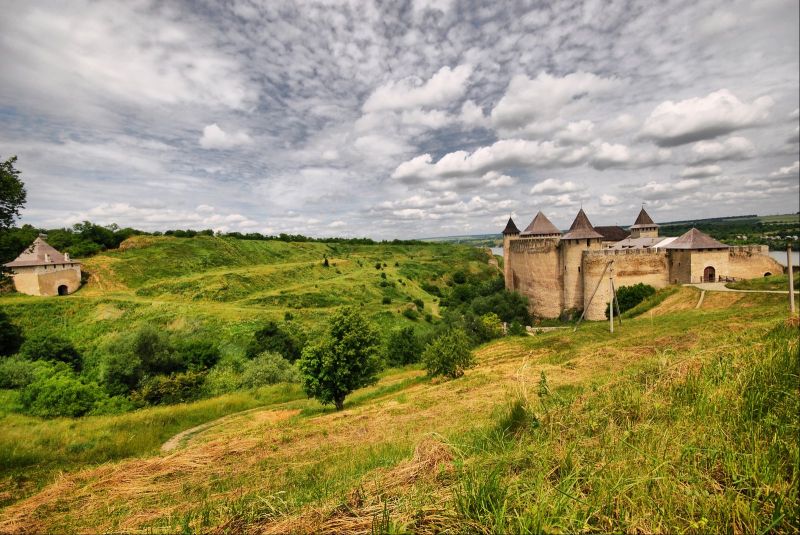
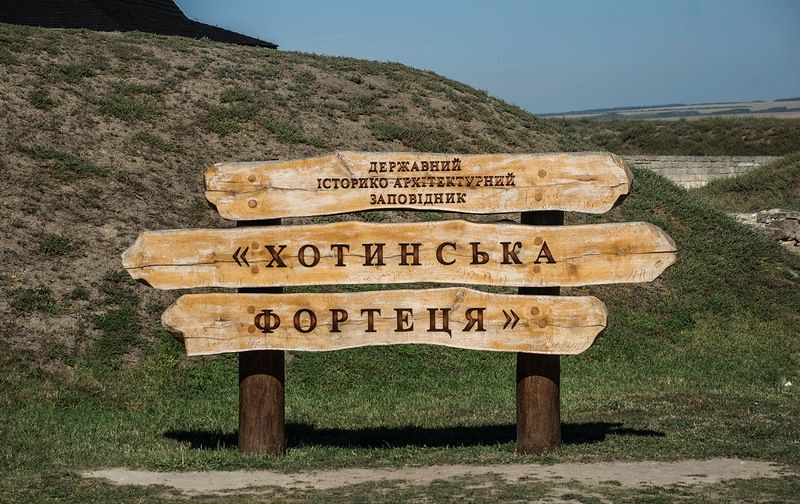
The history of the ancient Bukovinian city of Khotyn is a story of fierce wars, great uprisings, glorious victories and terrible defeats, a story of fierce battles for the possession of a powerful fortress. For centuries, Khotyn Fortress has been a witness to historical events, and it is one of the Seven Wonders of Ukraine.
Khotyn land was a tasty morsel for Polish kings, Moldovan princes, and Turkish sultans. By order of King Danylo Halytskyi, the stone Khotyn fortress was built on the site of a wooden fort built in the 10th century by Volodymyr the Great, which became one of the most powerful fortifications in Eastern Europe. Throughout its existence, Khotyn Fortress has repeatedly fallen into decay, like the mythical Phoenix, and then been restored.
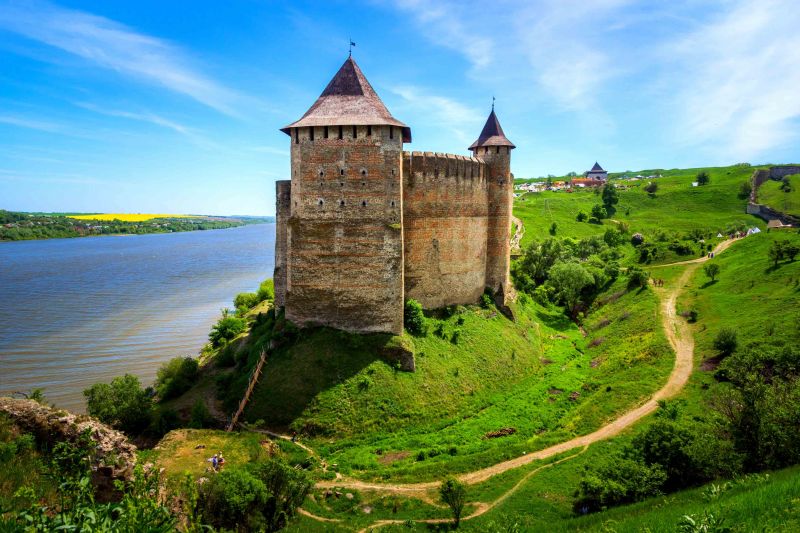
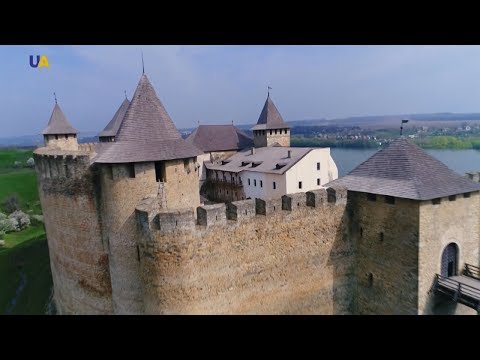
Khotyn Fortress rises above the Dniester River. The inner castle could be reached via a drawbridge spanning a 6-meter moat. The bridge served an important defensive function: if the enemy broke into one of the towers, arrows and spears flew at him from above, hot resin poured down, and stones fell. Surprised by such a "warm" welcome, the attackers, fleeing from death, ran as fast as they could to another bridge, where another trap awaited them: the bridge was smeared with grease and under the influence of a mechanical device it collapsed. The enemy flew into a ditch with metal spears sticking out of the bottom.
The Khotyn fortress is also famous for the fact that an important battle between the Turks and the united Cossack-Polish army took place under its walls in 1621. The Battle of Khotyn in 1621 stopped the Ottoman expansion to the west and saved Europe from Turkish rule. The battle was won! The Ukrainian Hetman Petro Sahaidachny showed lightning-fast skills. Ukrainians and Poles defeated the huge army (240-300 thousand soldiers) of Sultan Osman II.
In 1673, another battle took place near Khotyn, which was then Turkish, in which King Jan III Sobieski, together with a united Polish-Ukrainian-Moldovan army, defeated the Turkish army.
But the warlike history of Khotyn Castle did not end there, as many bloody battles took place under its walls. In 1739, the troops of the Russian Empire captured the Khotyn fortress. Inspired by this event, Mikhail Lomonosov wrote "Ode on the Capture of Khotyn".
A slightly different image, more romantic and even mystical, is given to this monumental structure by one of the most famous legends, which concerns a large wet spot on one of the fortress walls. It is believed that this spot was formed in the place where a person was buried during construction. According to another version, these are the tears of a dead girl. However, modern scholars argue that the stain was formed by drying oil.
Christian symbols have been preserved on one of the high walls. It was believed that these symbols protected the Khotyn fortress from numerous attackers.
Khotyn Fortress is popular among filmmakers. The castle can be seen in the following movies: "The Rising Hawk, D'Artagnan and the Three Musketeers, Taras Bulba, The Arrows of Robin Hood, Yassa, The Old Fortress, The Ballad of Ivanhoe, and others.
The international medieval festival Battle of Nations was held in Khotyn Fortress in 2010-2011. And since 2012, the organizers of the Battle of Nations have been holding the Medieval Khotyn Festival annually.
Khotyn is located on the border of Khmelnytskyi and Chernivtsi regions. The distance to the regional center is 65 kilometers. Another legendary city, Kamianets-Podilskyi, is located 20 kilometers away. The nearest railway station to Khotyn is located in the same place.
Opening hours: Everyone can visit Khotyn fortress every day from 9:00 to 18:00. The castle is located on the northern outskirts of Khotyn.