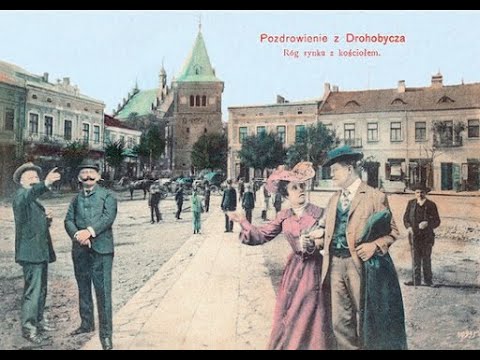
Church of St. Paraskeva, Drohobych
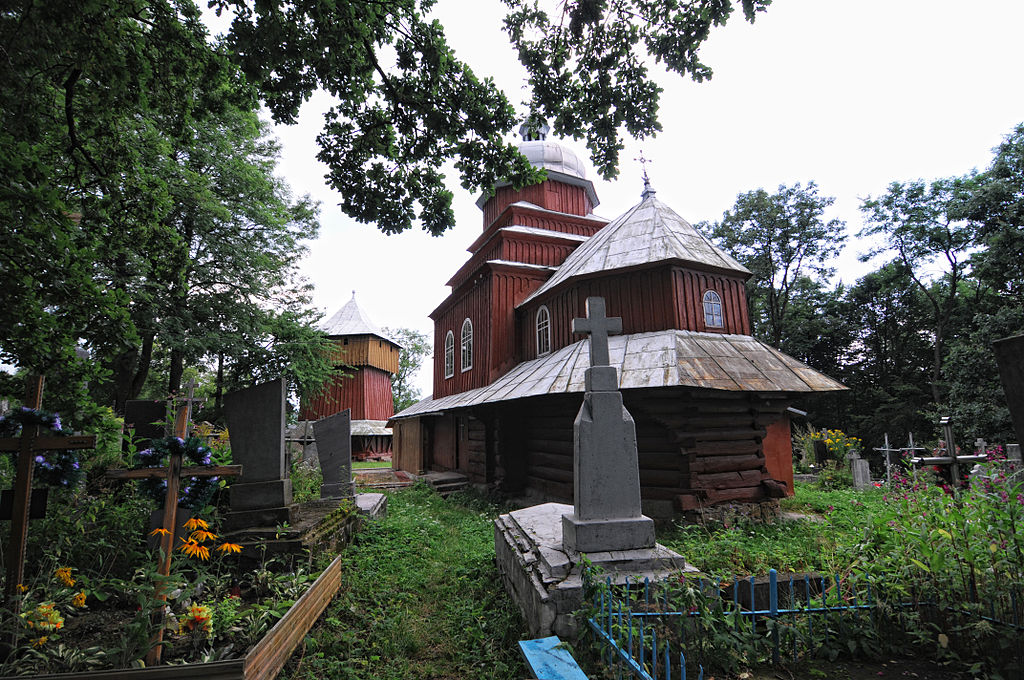
TheChurch of the Holy Great Martyr Paraskeva Py atnitsia is a parish Orthodox wooden church in honor of the Holy and Great Martyr Paraskeva Pyatnitsia in Drohobych. It is an architectural monument of local importance. The parish belongs to the Drohobych Deanery, Drohobych-Sambir Diocese of the OCU. The patronal feast is on November 10 (Paraskeviya Fridays). The church is located in the suburb of Zavizhne, in the western part of Drohobych, in the middle of the parish cemetery, at 24 Mykhailo Kotsiubynskoho Street. The church is located on the same line as two ancient masterpieces of the city - the Church of St. George and the Church of the Exaltation of the Holy Cross near the old cemetery (Zavizhne suburb).
At the beginning of the 18th century, most churches were built on the site of the once-destroyed ones. The Church of Paraskeva was no exception. From the 15th to the 18th centuries, the site of the modern church was an ordinary village chapel.
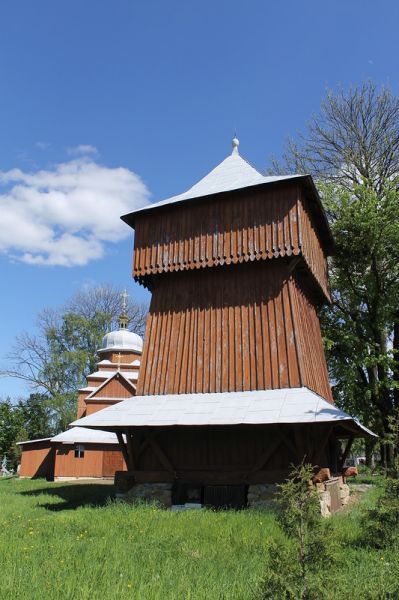
The first mention of the Church of the Holy Great Martyr Paraskeva Friday dates back to 1496. In 1683 it was rebuilt. In 1814, during the celebration of the Nativity of Christ, the church burned down due to careless handling of fire by the servants. In 1815, the modern wooden church of St. Paraskeva Pyatnitsa was built on the site of the old church without a single nail. The bell tower was built in a defensive style. There are three bells on the bell tower, which were made in 1804, 1835, and 1858.
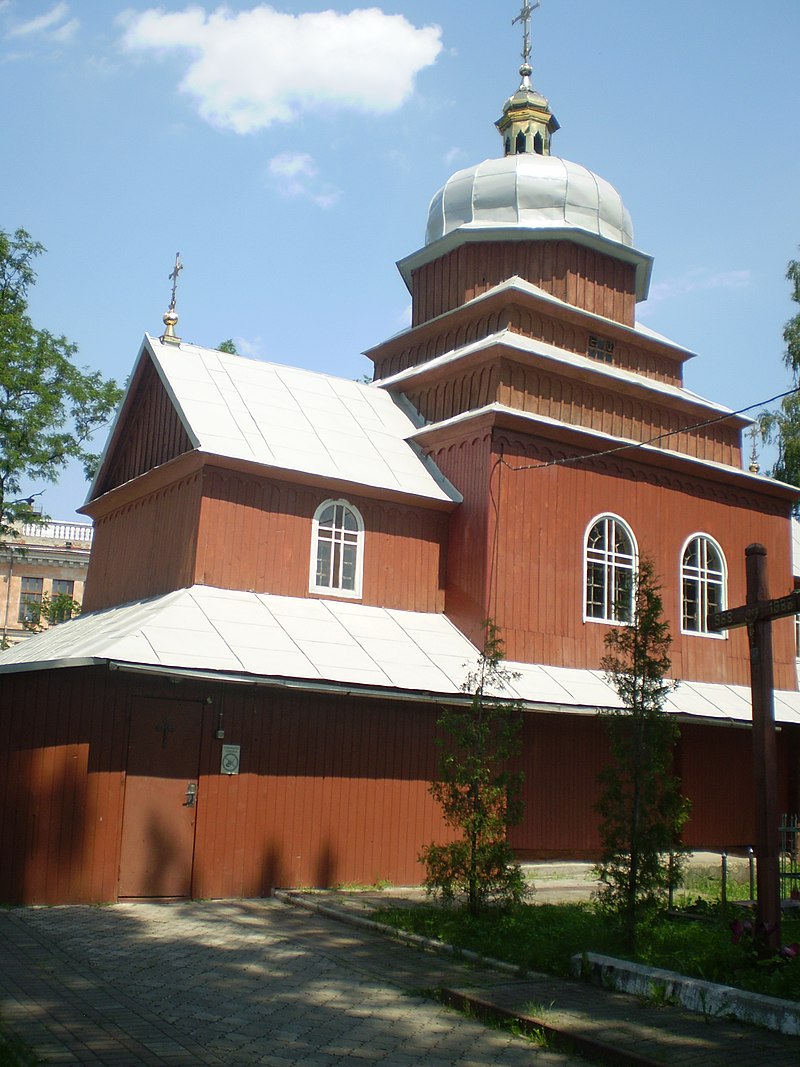
Although the church is one of the youngest wooden churches in the city, its architecture shows the influence of Ukrainian sacred art of more ancient times. At the same time, the architecture of the church shows the influence of local Boyko construction. The top with creases is convincing in this regard, though somewhat reduced, similar to the multi-stage high tops of Boyko churches that resemble slender fir trees. The existing wooden church was built of three logs, one-story, completed under the nave with an octagonal roof crowned with a helmet dome with a lantern and a cupola. The church interior is well equipped and decorated, and the iconostasis is painted.
To expand the area of the church, large additional rooms were added to the narthex and nave (which distorted the original appearance of the shrine). To the southwest of it is a defensive-looking bell tower.
The church kept: A service book printed in Supral in 1695, a handwritten Apostle, a service book from 1702, four Gospels, an old chandelier, phelons, a cross, altars, a kivot, icons made on wood and metal, and painted on canvas.
From 1960 to 1990 the church was closed. Important events of our time are also associated with the Church of Paraskeva-Pyatnitsa: On May 2, 1989, a Greek Catholic service was celebrated in the Ukrainian language in front of the locked entrance to the church in front of a huge crowd. This historic event was truly unforgettable.
In 1990, the church was transferred to the community of the Ukrainian Autocephalous Orthodox Church.
It is noteworthy that the newly built shrine became a true masterpiece of Ukrainian folk architecture. The one-story, three-nave structure, built using the "without a single nail" technology, is still considered one of the most beautiful churches in the country. In the past, the services of the church were used by the peasants of the surrounding villages of Rikhtych, Popeliv, Stebnyk and Derezhych, who did not have their own churches at that time.
It is surprising that over its 200-year history, the Church of St. Paraskeva has not undergone a large-scale reconstruction. This allowed us to preserve the authentic appearance and original decoration of the church.
For 30 years, from 1960 to 1990, the church did not fulfill its religious functions. Fortunately, the ancient building was closed and did not become a warehouse. This step by the Soviet authorities allowed the iconostasis and icons of the church, which adorn the building today, to be saved from destruction. Now the church is under the jurisdiction of the Kyiv Patriarchate.
Any visitor can see them. The church doors are open at any time of the day. The rector of the Church of the Holy Martyr Paraskeva-Friday is Father Mykhailo Bachynskyi.
Accommodation around Church of St. Paraskeva, Drohobych:


Nearby hiking trails near Church of St. Paraskeva, Drohobych:
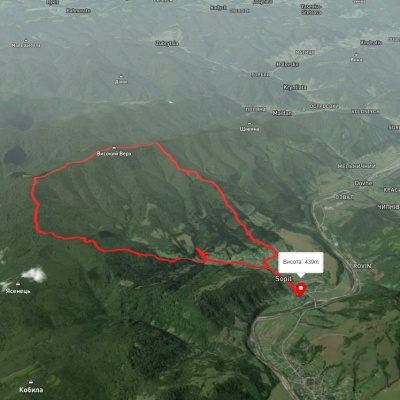
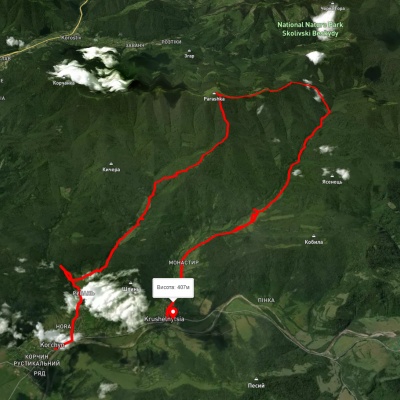
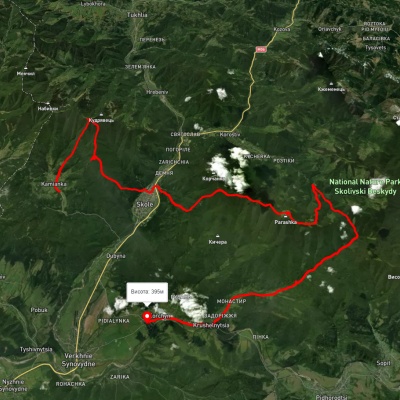
Which trails pass by Church of St. Paraskeva, Drohobych?
We suggest these hiking trails through or near Church of St. Paraskeva, Drohobych: Sopit village, via the Sopit polonynas to Sopit village, Korchyn village, via Hurkalo Waterfall and Mount Parashka to Krushelnytsia village, Kamianka village, via Mount Lopata, Skole and Mount Parashka to Krushelnytsia village, Korchyn village – Hurkalo Waterfall, Skole, via Mount Parashka, Hurkalo Waterfall and Korchyn village to Skole, Skole, via Mount Parashka, Hurkalo Waterfall and Korchyn village to Verkhnie Synovydne village