"Chernivtsi City Hall" Chernivtsi
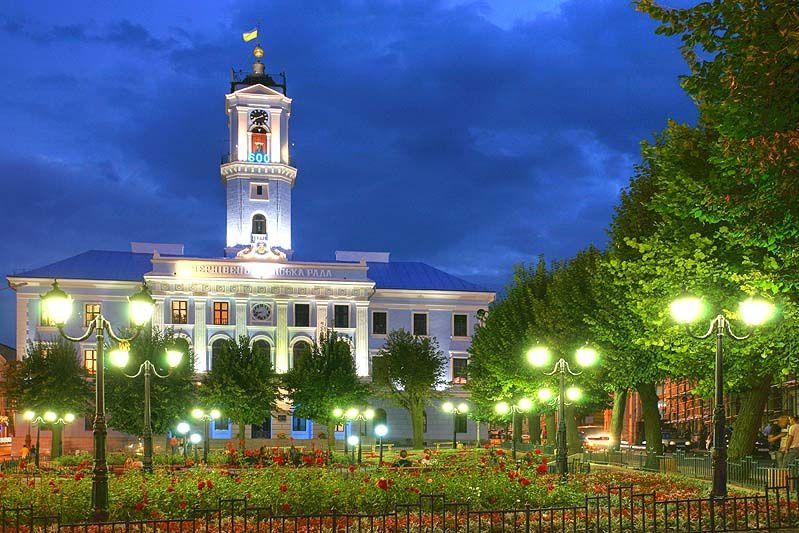
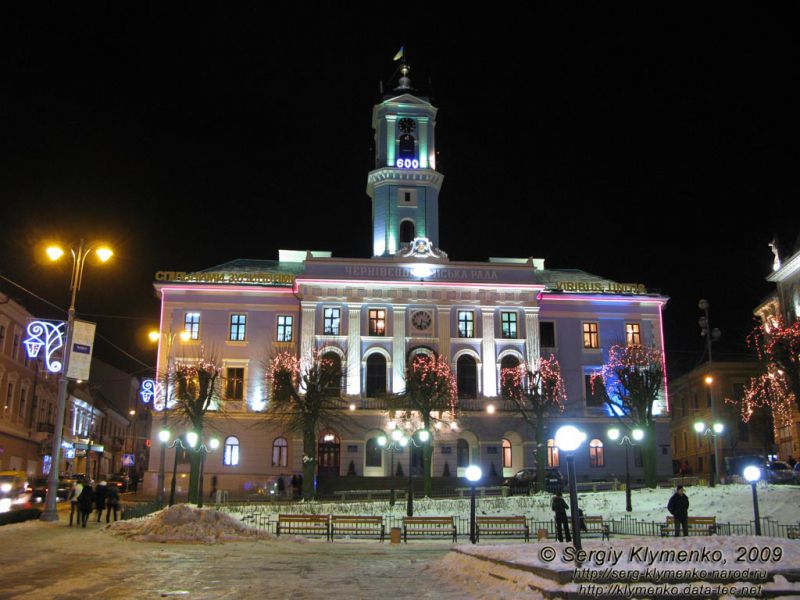
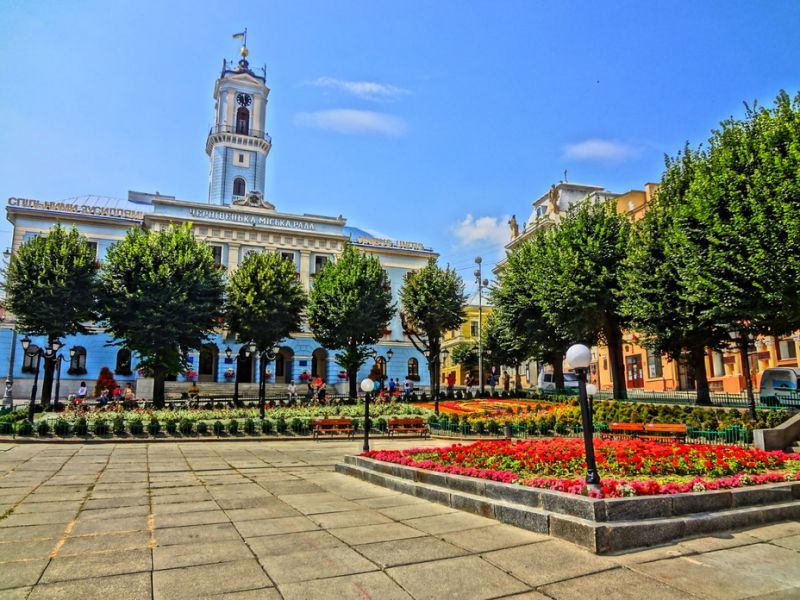
On the expansive banks of the Prut River lies the charming city of Chernivtsi, considered the cradle of Ukrainian culture. For over a century and a half, the ancient Chernivtsi City Hall has reached for the sky in the Central Square.
The idea of constructing a city hall in Chernivtsi emerged in the 1820s. It was built between 1843 and 1847 according to the design of German architect Adolf Martin, who convinced the city authorities of the necessity of erecting the city hall in the main square of Chernivtsi. The city hall was erected on a solid foundation, approximately six meters deep, and was initially used as a fire tower. Throughout its long existence, the city hall in Chernivtsi has witnessed Austrian rulers, Russian officials, and Romanian occupiers.
Today, the building continues to serve its purpose. It currently houses the residence of the mayor and the Chernivtsi City Council.
The architecture of the building reflects features associated with the departure from classicism and the transition to the Italian Renaissance: the facade is designed in a classical style, while the tower exhibits Renaissance motifs. The initial project planned for a two-story tower, but later a decision was made to add another floor.
A distinctive feature of the city hall is its two clocks.
- One of them is a tower clock, installed during the construction.
- The second, located above the main entrance, was later gifted by the mayor Anton Kohanovsky, who led Chernivtsi from 1866 to 1892. This clock with a luminous dial at night was ordered from Prague and presented to his beloved city.
Currently, a yellow-blue Ukrainian flag flutters on the tower's spire, and the facade is adorned with the city coat of arms. The imposing building harmoniously fits into the architectural ensemble, making the central part of the city the most beautiful place.
Interesting Facts
- For many decades, firefighters monitored order in the city from the high tower. Whenever a fire broke out somewhere, a red flag was raised, and at night, a light was lit on the side where the misfortune occurred. Seeing such a sign, local residents understood where their help was needed.
- Every day, a trumpeter in a Bukovinian folk costume climbs the 126 steps to the 50-meter clock tower and precisely at 12:00 performs a melody from the song "Marichka," which has unofficially become the anthem of the city. This tradition was initiated in 2004.
The Chernivtsi City Hall is located in the Central Square, from which the main streets of the city radiate. To get here, you can use public transport (for example, buses No. 7, 8, 10, 36, and others). From the railway station, you can take bus No. 1A or trolleybuses No. 3A and 5.
Chernivtsi - the capital of Bukovina. One of the most beautiful and pleasant Ukrainian cities. Here is one of the most beautiful in the country withthe railway station, St. Paraskeva Serbian Church, the Ascension Church, the ship-shaped house, the City Hall (every day at 12:00 a melody of "Marichka" is played from the tower by a trumpeter), the art museum, further along Kobilyanska Street, the German House, the Armenian and Assumption Church (the oldest stone Ukrainian Greek Catholic church in Chernivtsi), the theater square and the theater named after Kobilyanska, the Jewish House, Chernivtsi University (included in the UNESCO World Heritage list), Turkish Square (Chernivtsi was part of Turkey, Moldova, Romania, Austria-Hungary, the USSR, Rus, Ukraine), large bicycles, withcozy streets and cobblestones, the so-called Drunken Church, the house of Nazariy Yaremchuk, another ship-shaped house, two houses with the same number (where Olga Kobylianska lived), the house where Volodymyr Ivasyuk lived, the pink church - the Cathedral of the Holy Spirit.
Sights of Chernivtsi
- Mykolaiv Wooden Church (from 1607, restored in 1954);
- Stone Church of St. George on Hirkot (1767 in Baroque style);
- Wooden Trinity Church in Mahliv (1774), relocated in 1874 to Klokuchka;
- Wooden Assumption Church on Kalichanka (1783);
- City Hall with a two-story 45-meter tower in Empire style (1843-1847, architect A. Mykulych); now the City Council;
- Ukrainian Greek Catholic Church (1825-1830 in Baroque style);
- Cathedral in Byzantine style (1844-1864, architect Roll);
- St. Paraskeva Church in pseudo-Romanesque style, completed in 1862 (architect A. Pavlovsky);
- Residence of Bukovinian Metropolitans - since 1956 one of the buildings of Chernivtsi University);
- Armenian-Gregorian Church (1869-1875, architect Y. Glavka);
- Chernivtsi University building (1874-1875);
- Jesuit Church in Neo-Gothic style (1893-1894);
- Railway Station (1898-1903) in Art Nouveau style;
- City Theater (1904-1905, architects F. Fellner and H. Helmer) in Viennese Baroque style with elements of Art Nouveau (now the O. Kobylianska Musical Drama Theater) and more.
Location on the map
Comments
Places to stay nearby
All stays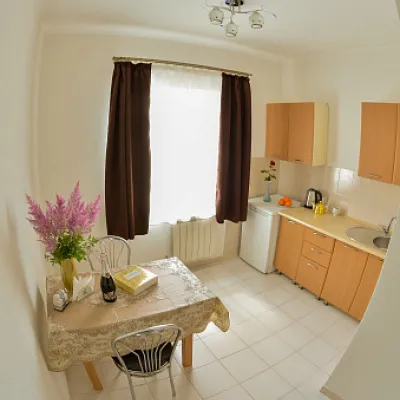 Hostel"Grand Hostel" Chernivtsi Prutska, 24Chernivtsi1.2 km from "Chernivtsi City Hall" ChernivtsiParkingWi‑FiTransferNearby: House-ship 900 mArmenian Church 1.5 km
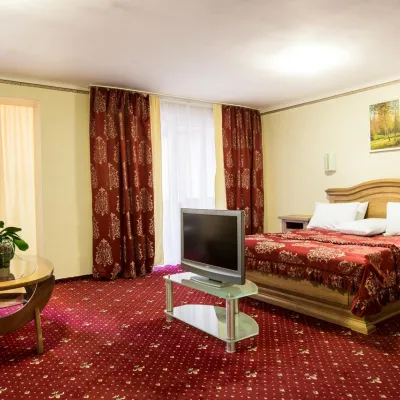 HotelHotel "Bukovyna" Chernivtsi ****Chernivtsi1.7 km from "Chernivtsi City Hall" ChernivtsiPoolSaunaSPANearby: Armenian Church 1.3 kmSoborna Square 1.4 km
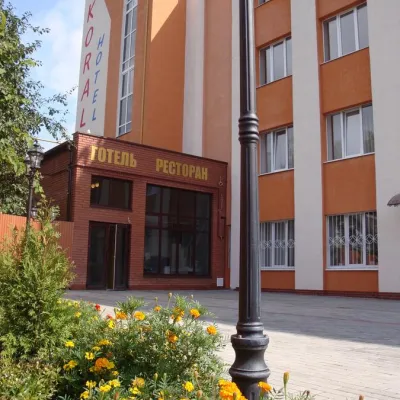 HotelHotel-Restaurant Complex "Koral" ChernivtsiChernivtsi3.2 km from "Chernivtsi City Hall" ChernivtsiSaunaBBQParkingNearby: Armenian Church 2.8 kmSoborna Square 3.2 km
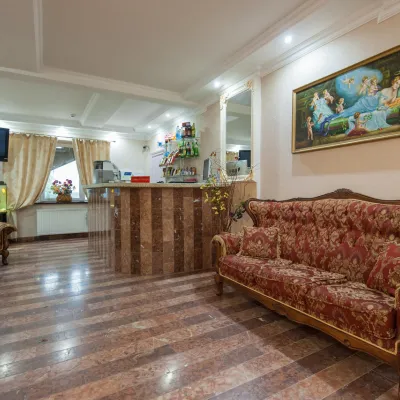 HotelHotel "LeoTon" ChernivtsiChernivtsi3.7 km from "Chernivtsi City Hall" ChernivtsiParkingWi‑FiTransferNearby: Armenian Church 3.2 kmSoborna Square 3.4 km
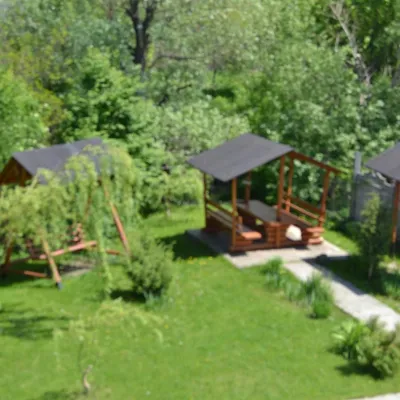 HotelHotel "Pride" MykulychynMamaivtsi9.2 km from "Chernivtsi City Hall" ChernivtsiHotel "Pride" is located in the village of Mykulychyn, 9 km from Chernivtsi and 41 km from the "Myhovo" resort.Nearby: St. John's Church 1000 mChurch of St. John of Dukla 5.4 km
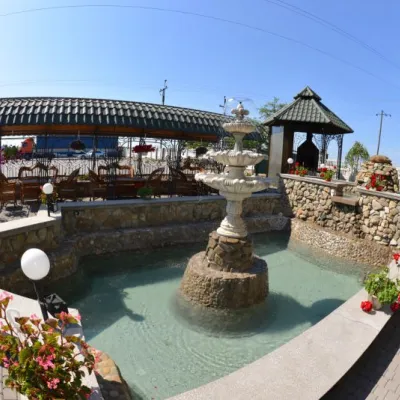 HotelHotel "Kolvik" MamaivtsiMamaivtsi12 km from "Chernivtsi City Hall" ChernivtsiBBQKidsNearby: Assumption Church 2.2 kmChurch of St. John of Dukla 2.2 km
Nearby attractions
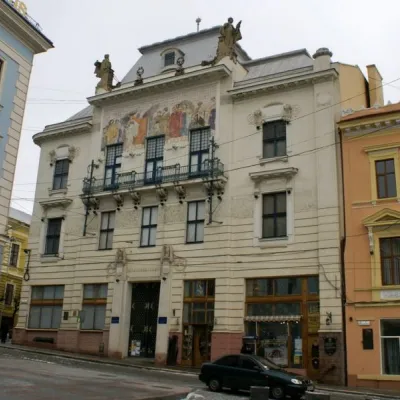 MuseumArt Museum, ChernivtsiChernivtsiunder 1 km from "Chernivtsi City Hall" ChernivtsiOne of the best museums in Bukovyna today is the Chernivtsi Art Museum. Visiting it, you will be able to get acquainted with the art and folk art of the region,...
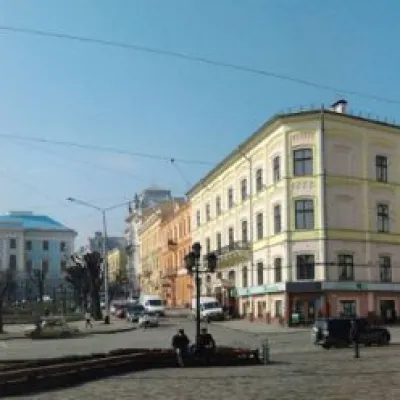 Historic siteCentral Square, ChernivtsiChernivtsiunder 1 km from "Chernivtsi City Hall" ChernivtsiCentral Square (Chernivtsi) is the main square of Chernivtsi, the center of the city. The present-day Central Square of Chernivtsi was officially called Ringplatz ...
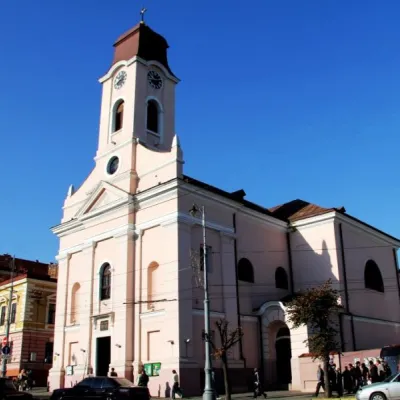 SightChurch of the Exaltation of the Holy Cross, ChernivtsiChernivtsiunder 1 km from "Chernivtsi City Hall" ChernivtsiIn 1778, the construction of the church was completed, which became the prototype of the Church of the Cross of Honor.