Verkhni Stanivtsi
Its geographical location is determined by the neighborhood with the village of Nyzhni Stanivtsi to the west and north on the right bank of the Brusnytsia River, the village of Stara Zhadova in Storozhynets district to the south, and the village of Kostyntsi in the same district to the east. The advantageous geographical location can be explained by the fact that the village is located on transit routes that connect it to Storozhynets district via the central road through the village of Kostyntsi to the main highway Kitsman - Storozhynets and to Vashkivtsi and Chernivtsi via the villages of Brusnytsia and Dubivtsi to the important highway connecting Chernivtsi to Vyzhnytsia via Vashkivtsi.
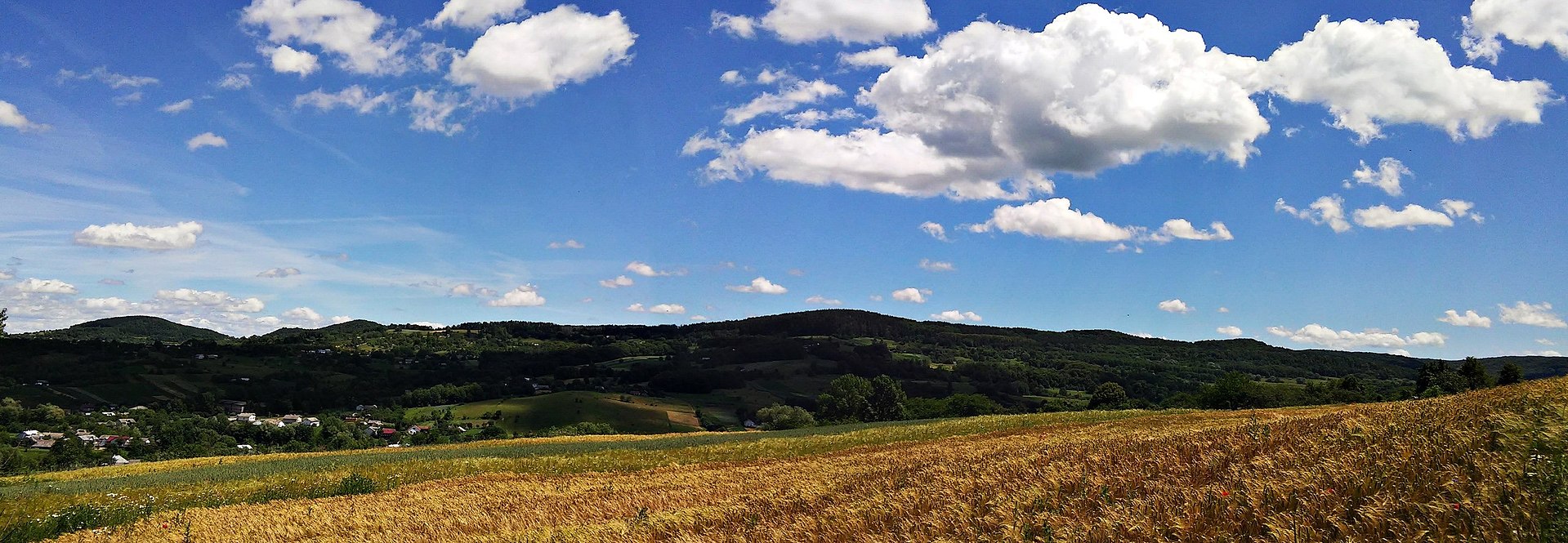
Its location and favorable natural conditions make it possible to create a base for recreational tourism in the village. The mild climate and the natural environment of pine and beech forests contribute to this. This type of tourism can contribute to the economic development of the village and become a significant contribution to the local budget, and will serve to develop local infrastructure.
The first mention of the village of Verkhni Stanivtsi is in the charter of the Molodavsky lord of 1596-1602, where the name Stanivtsi Horishni (Upper) is mentioned. The name probably derives from the words "camp" and "sheep" and "mountain", i.e. the area for sheep grazing on the mountains. Another interpretation is that the village is located higher than the lower camp (Nyzhni Stanivtsi).
As part of Bukovyna, the population of our region has its own historical development. The settlement of the present-day village area dates back to the ancient times of the so-called Carpathian Kurgan culture. The territory of Northern Bukovyna was penetrated by the North Thracian tribes as early as the 12th and 13th centuries BC, who mixed with local Slavic tribes and formed the Noah culture. From the third century B.C. onward, a mixed culture was formed in the region. To the west of the Prut River, the Carpathian Kurgan culture was formed, and to the east, the Cherniakhivska culture. The territory of the village belongs to the former, although it was not inhabited at that time, but was occupied by dense forests
On the territory of the Ploska, Isarivka tract, we found items from ancient primitive sites of the Paleolithic, Neolithic, and Mesolithic periods. These are flint scrapers, sickles, spears, and axes. The settlers were mainly engaged in hunting, as evidenced by stone axes with a hole for installing the handle, flint spears, and scrapers for leather processing. They hunted cave bears and mammoths. A giant mammoth tooth and numerous bones of various animals were found in the Brusenka Riverbed. According to archaeological data, on the southern outskirts of the village (Turetska Krynytsia or Horodyshche), the remains of a Slavic settlement of the 9th-10th centuries were discovered. The passes of the Early Iron Age have been preserved on the north side. Not far from the settlement, a Slavic settlement of the 9th-10th centuries was discovered in the Tsyntyna tract, and two mounds of the same period were found in the Vyshneva tract. This indicates that the village territory was most intensively settled during the period of Slavic culture. It is impossible to speak about the number of people in this period. However, archaeologists believe that it ranged from 300-800 people.
For a long time the name of the village was not mentioned in any documents. The first written mention of the village dates back to 1596 in Moldavian documents. It is mentioned in the charter of the Moldavian master for 1596-1602, where the name Stanovtsi Horishni (Upper) is mentioned. The name of the village probably derives from the words "camp and sheep" and "mountain", i.e. an area for grazing sheep on the mountains. Another interpretation is that the village is located higher than the lower mill (Nyzhni Stanivtsi).
For about 200 years, the village area was part of Kyivan Rus (885-1100), and later the Terebovlia land of the Galician principality. For about 150 years, the village area was part of the Galician-Volyn principality, and since the end of the fourteenth century it belonged to the land of Shipyn. At the end of the XV century this land was owned by Moldova, which at the beginning of the XVI century became dependent on Turkey. The fortifications built by the Turks in the tract called Turetska Krynytsia or Horodyshche (Turkish Well) are the evidence of their domination of the village. A number of ramparts 100-150 meters long were found here. They have a rounded shape, their width is 3-5 m, and they extend in a straight or arcuate shape.
The Turks built a church for the locals (Christians). The reason for this is that the cross has a crescent in its Christian lower part, which is a Turkish symbol. Such a cross is located on the Church of the Nativity of the Blessed Virgin Mary in the village of Hrastyi Kilok. Fragments of burnt red bricks were found on the ramparts. This suggests that the Turks built the fortifications from it. The first settlers appeared at the end of the 16th century. The reason for their appearance was that in Galicia they were oppressed by local feudal lords. People were looking for places where they could escape serfdom. Such places were the forests of Bukovyna, which attracted fugitives.
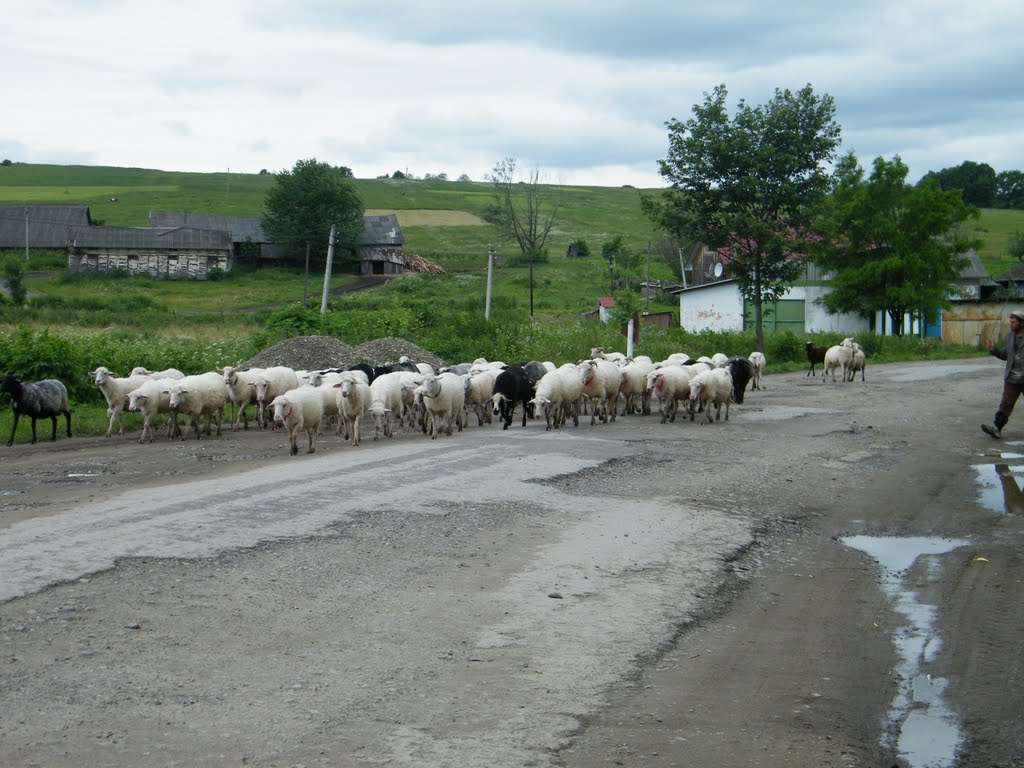
The first settlers appeared in the Brusenka river valley on the hillsides, singly or in groups. Therefore, the settlements were of a hamlet nature (e.g., Hutor Hrastyi Kilok), either monotheistic or camp (several yards). The farmsteads were built on the tops of hills and among dense forests. The first group settlements were located in the Zadnia and Pasyshche tracts. They settled in camps, which contributed to better protection of the inhabitants' farms. Therefore, they were called Taborky (from the word "camp"). The old-timers of this part of the village claim that their descendants are from Galicia. Even in their household customs, holidays, language, and farming, they have preserved the traditions of their ancestors. At that time, the villagers were engaged in farming on the land cleared of trees, leather processing, weaving carpets, tanning, blacksmithing, and shoemaking, which gave rise to a number of surnames of the villagers. Good pastures allowed for cattle breeding (breeding cows, sheep, and horses). Sheep farming was traditional, providing the main products: wool and leather for clothing and brynza, the national food. Beekeeping was widely developed and still produces valuable honey.
The territory of the village before its settlement and after the formation of the settlement was under the rule of Tatars (1241, 1259, 1538), Hungarians (1342), Turks (1476, 1485, 1621, 1676), Russians (1709, 1739, 1768), Romanians (1918-1940, 1941-1944). In 1899, during the Austrian period of rule in Bukovyna, the book Bukovyna. General Local History" by Eduard Fischer was published, and we learn that according to the 1890 census, 1524 people lived in the then settlement of Horishni Stanivtsi. By nationality, they were Rusyns (Ukrainians). According to the 1989 census, 1786 people lived in the village. The largest number of people lived in 1992 - 2122 people. The difficult economic situation and political instability during the years of independence had a great impact on the demographic situation. Natural growth decreased, and emigration abroad increased. Thus, as of January 1, 2000, 1782 people lived in the village, as of January 1, 2001. 1754 people, as of December 5, 2001. 1750 people, as of 10/15/2003 - 1733 people, and as of 1.01.2004 - 1724 people. The population amounted to 1911 people.
The cultural heritage of Verkhni Stanivtsi is part of the culture of the Ukrainian people. It has its own unique expressions in everyday life, rituals, holidays, and traditions. Wonderful weavers, seamstresses, bodnars, stelmachs, carpenters, blacksmiths, shoemakers, embroiderers, and wickerwork masters lived and still live here.
The village population was divided into gentry and men. The women of the gentry wore dresses, sundresses, and stockings; the men wore belts and shirts with a tie (on holidays, the men wore bumps and a long white shirt decorated with embroidered ornaments around the neck). They wore a cap with ornamented casing and a turpan (on holidays) or a headscarf. However, there was no difference between them; they were related to each other and attended the same church.
In the eighteenth and early twentieth centuries, people provided themselves with clothes and shoes, everything was made at home. Not everyone could wear factory shoes. They were expensive, and ordinary peasants had almost no money. So they had to make their own shoes. The most common footwear was bast shoes made of sheepskin, calfskin, or even rubber. They were light and comfortable in dry weather. More clumsy were shoes made of lyka (ligaky) and drevianka (shackles).
The village has long been famous for its churches. They were celebrated on the day of the consecration of the church on May 22 (in the center of the village) and on September 21 on the farm of Hrastyi Kilok. The owner invited his family, friends, acquaintances, and relatives. The celebration took place at a table richly decorated and filled with various dishes. The feast ended with songs and dances. Since Ukraine's independence, religious traditions have been revived, such as the celebration of Christmas, Easter, and other Orthodox holidays.
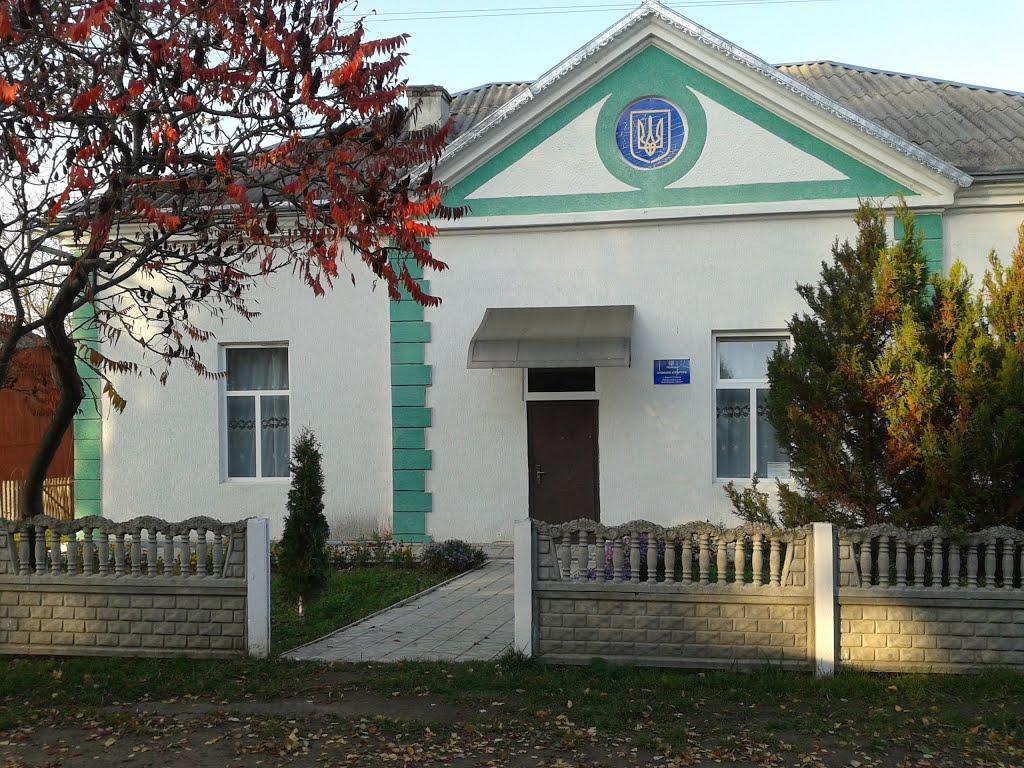
Local authorities Verkhni Stanivtsi village council at 59356, Chernivtsi region, Kitsman district, Verkhni Stanivtsi village, 9 B. Khmelnytsky str. tel. 0 3736 3-74-66.


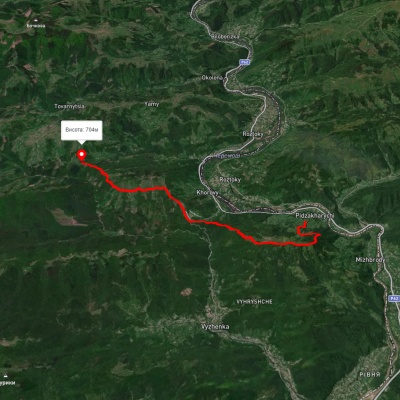
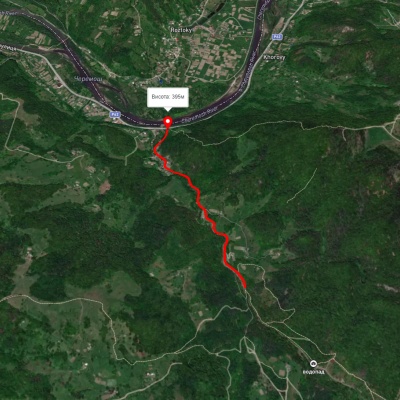
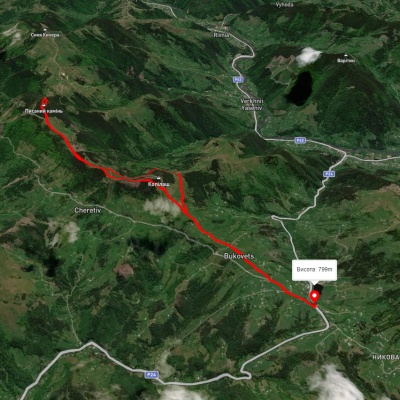
Which hiking trails pass through or near Verkhni Stanivtsi?
We suggest these hiking trails through or near Verkhni Stanivtsi: Nimchych Pass – Protiate Kaminnia, Smuharski Waterfalls, Bukovets village – Pysanyi Kamin – Bukovets village, Pysanyi Kamin – Bukovets village, Shepit village – Mount Yarovytsia, Shepit village, via Mount Yarovytsia, Mount Pnivie and Mount Masnyi Pryslip to Shybene village