Ust-Putyla
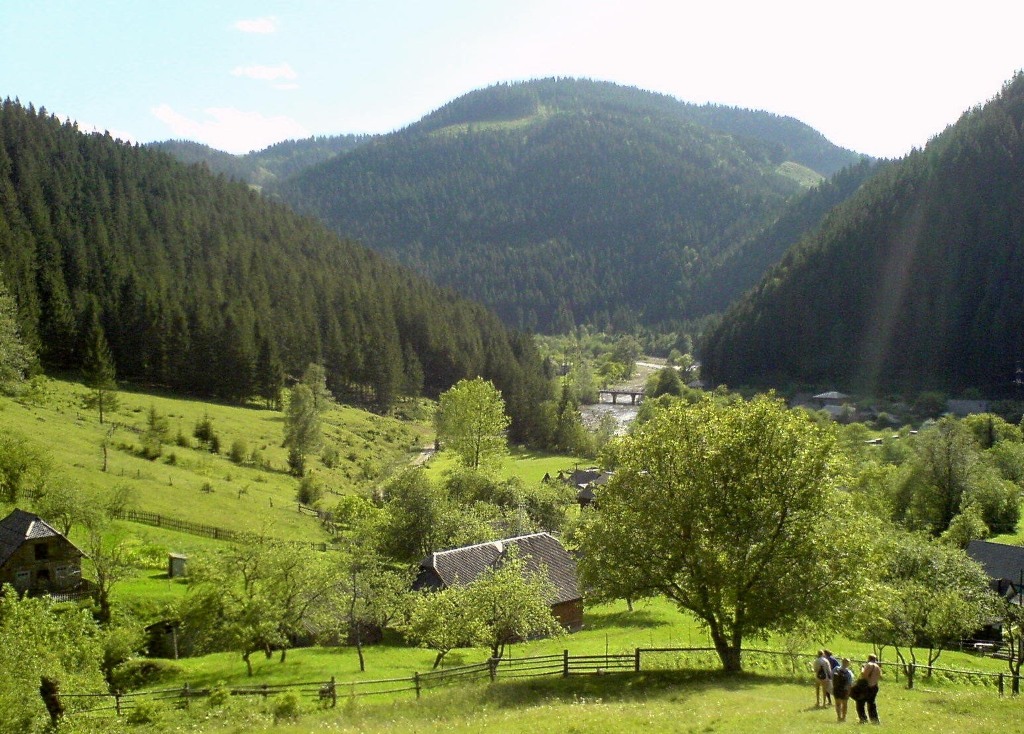
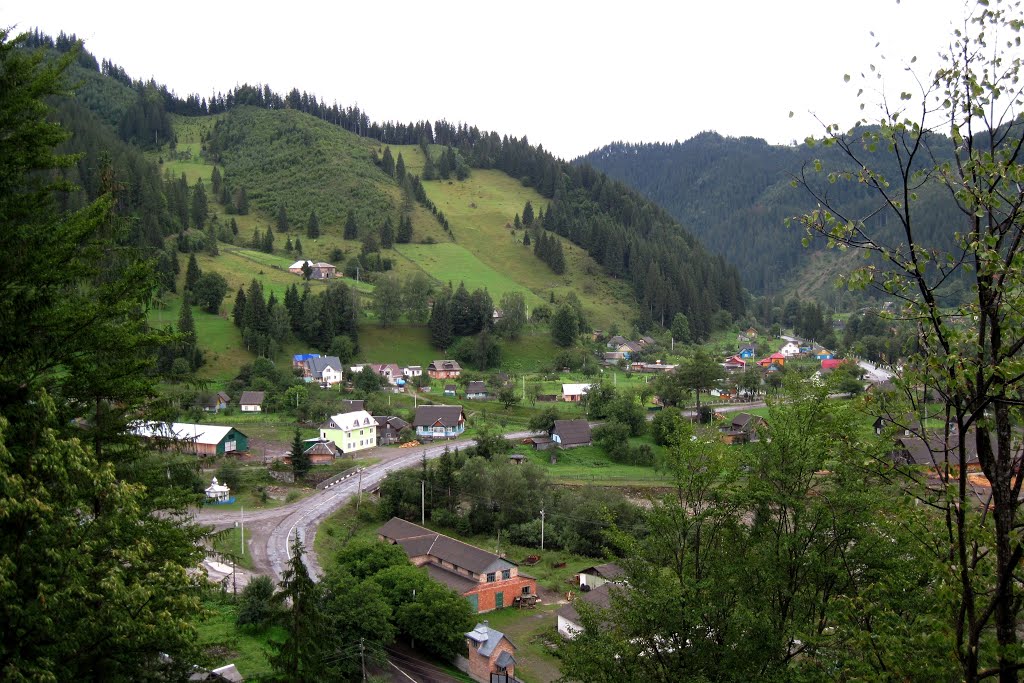
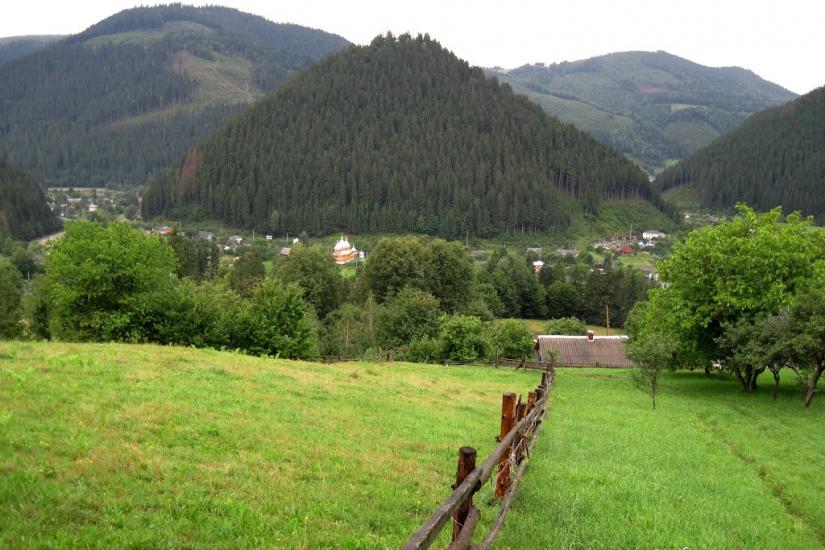
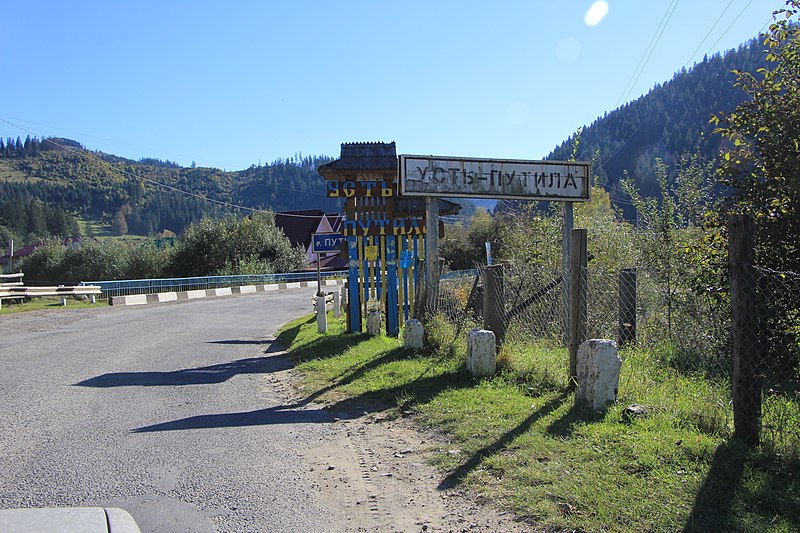
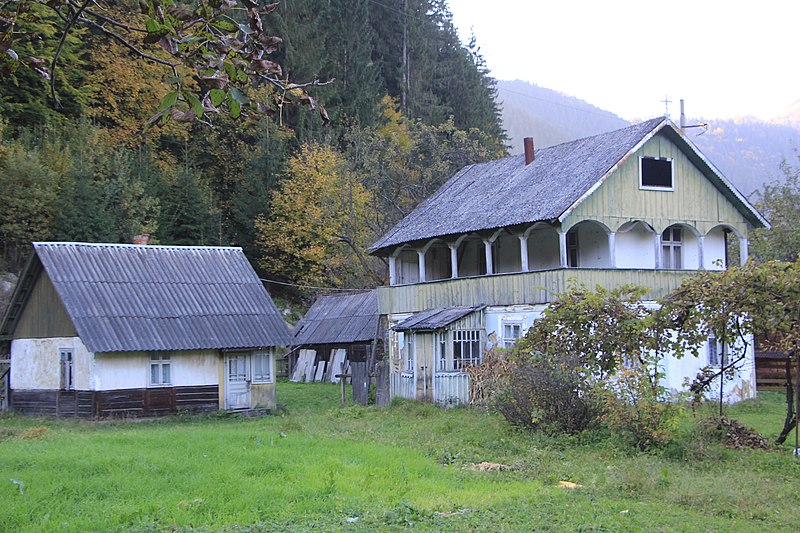
Ust-Putyla is a village in Ukraine, the center of the Ust-Putyla rural territorial community of the Putyla district of the Chernivtsi region. The village is located at the confluence of the Putylka River into the Cheremosh. It has been known since the eighteenth century as Mezhybridky, and later as Ust-Putyliv. 1183 meters above sea level, 623 inhabitants, a mountain around the village, 2 unusual wells, 1 wooden green church, and many, many sheep.
In the village there is an architectural monument of national importance - the Church of St. Paraskeva (1881). In the southern part of the village there is a well-known natural monument, the rock "Kamiana Bahachka", not far from the place where the small river Putylka flows into the famous Cheremosh. You don't need to look for the rock - it stands out to show off its stones right next to the Putyla trail. The height of this natural wonder is 30 meters. The area near the rock is well-maintained.
Turning from the T-2601 (Chernivtsi-Putyla) highway in the village of Ust-Putyla to a well-worn field road that goes up parallel to the river, you have to walk about a kilometer past the Ust-Putyla estate. And then, here and there, you can see some abandoned huts that already belong to the village of Biskiv. After leaving the T-2601 highway for almost 5 km, you will see a rather high (12 m) Kizia waterfall on a small stream of the same name, which is the right tributary of the Biskiv.
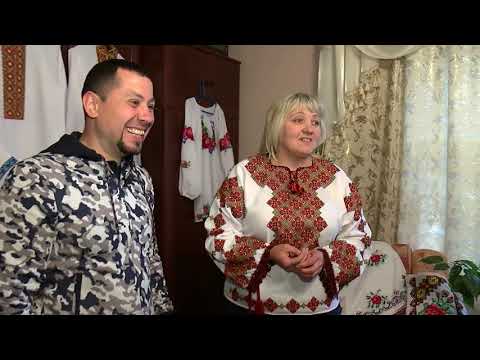
Traditional folk crafts: logging, timber processing, trade in construction timber, animal husbandry, Easter egg making, embroidery, weaving, carving.
In November 2008, the graves of UPA soldiers Vasyl Vakariuk and Oleksii Mometko from Borysenko's hundred were found in the village. The rebel scouts died after long torture at the hands of the NKVD in 1944. Their bodies bore more than 50 bayonet wounds. The graves were found by members of the Chernivtsi Society of Political Prisoners and Repressed.
XVIII-XIX centuries - the territory of the modern Putyla district is an integral part of the land of Bukovyna. Historians point out that in the eleventh and twelfth centuries the district was part of Kyivan Rus, and later - of the Galician and Galicia-Volyn principalities, then of Austria-Hungary, in 1919 - of the Ukrainian People's Republic, then of Romania until 1940. The oldest settlements, such as Putyla, Selyatyn, and Dovhopillia, are mentioned in documents dating back to the fourteenth and fifteenth centuries. One of the villages of the Dovhopillia district was the village of Ust-Putyla (Ust-Putyliv), which was formerly called Mezhybridky because it was located between the fords of rivers and streams. The first written mention of the village of Ust-Putyla dates back to the eighteenth century. According to I.M. Novosivskyi: "The village of Ust-Putyliv took an active part in the struggle against the enslavers under the leadership of L. Kobylitsa. The Ukrainian-conscious rise of the village came only after the appearance of the Hutsul poet Osyp Yurii Fedkovych on the literary and public field." At the end of the nineteenth century, there were 691 residents in the community and 82 people in the yard of the landowners Dzhurdzhuvan and Romashkan. At the end of the nineteenth century there was a district court and a post office in the village.
1991-1940 Putylshchyna was part of the Ukrainian People's Republic and then Romania. 1940 Putylshchyna became part of the Ukrainian SSR. 1941 In 1941, the Putylshchyna was occupied by German-Romanian troops. 1944 On September 15, 1944, the troops of the First Ukrainian Front liberated Putylshchyna from the Nazi invaders. 1991 A new page in the history of the Putyla district opened in 1991, when Ukraine became independent.
What to visit
Landmarks, museums and places of interest near Ust-Putyla.
 WaterfallWaterfall Kizya, Ust Putila1.3 km from the centreA cascade of waterfalls with a height difference of 16 m. Located on a stream - the right tributary of the Biskiv stream.
 ChurchChurch of the Nativity of the Blessed Virgin Mary, Petrashi4.3 km from the centreYou will definitely be attracted by the beautiful slopes of the Carpathian Mountains around you, and it will be interesting to visit the ancient wooden church of the...
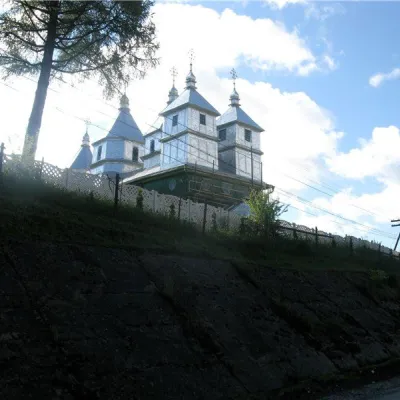 ChurchSt. Dmitry's Church, Dykhtynets5.7 km from the centreDemetrius Church, which was built in a completely unusual shape for Bukovyna and the Hutsul region in general.
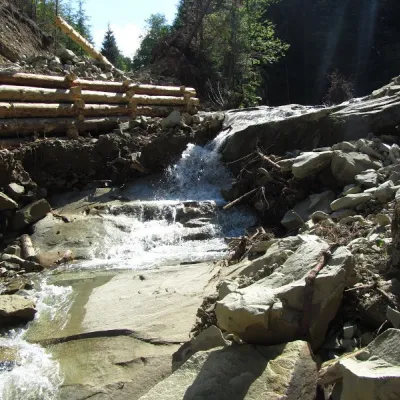 WaterfallSiruchok waterfall6.3 km from the centreSiruchok is a waterfall located in the Putyla district of the Chernivtsi region of Ukraine. its height reaches about 2.5 meters. in the vicinity of Siruchok you can...
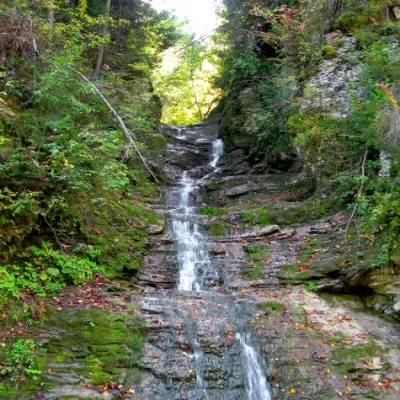 WaterfallBukovinian (Smugar) waterfalls8.4 km from the centreA picturesque chain of waterfalls, up to two kilometers long, stretches along the Smuhariv River in Bukovyna, in the Carpathian Mountains.
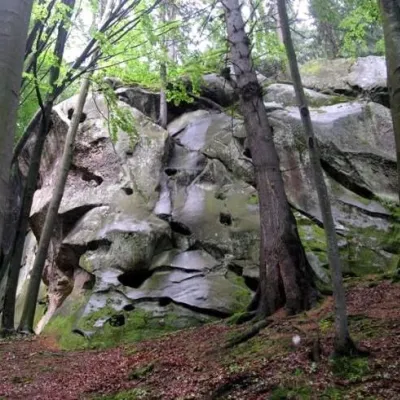 NatureProtyate Kaminnya (Sokolynye Oko)8.9 km from the centreProtyate Kaminni - a geological natural monument of local significance, a group of picturesque rocks. Located south of the Nimchych pass in the Pokutsko-Bukovynski...
Where to stay
Hotels, guesthouses and cottages in and around Ust-Putyla.
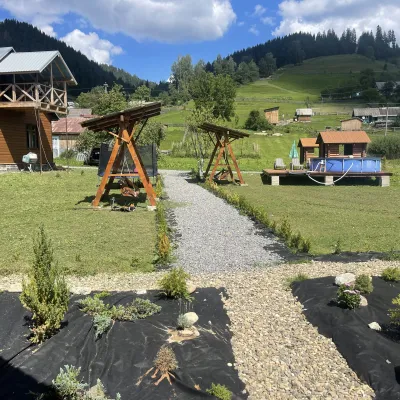 HotelVilla Karpatska Bulbona13 km from the centreVilla Karpatska Bulbona is located in the picturesque heart of the Carpathians in the village of Serhii, Vyzhnytsia district, Chernivtsi region.Nearby: St. Nicholas Church 3.9 km
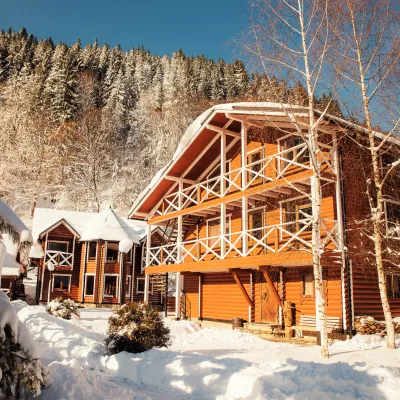 HomesteadHorytsvit14 km from the centreHot tubPoolSaunaNearby: Lake Bukovets 5.3 kmBukovelian pass 5.7 km2 trails
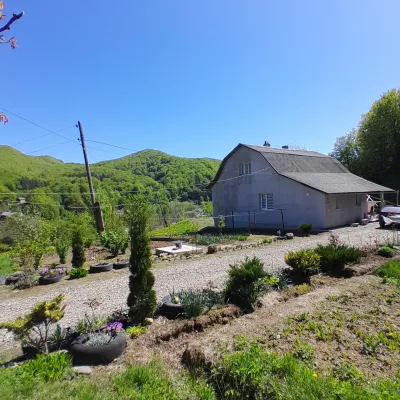 CottageFamily House Forest14 km from the centreWe offer a house for relaxation in the village of Vyzhenka. We invite family couples, where 6-8 people can rest.Nearby: Mikva waterfall 700 mUrochyshe Luzhky 100 m1 trail
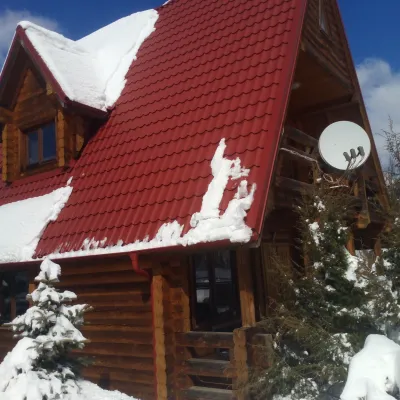 HomesteadChalet in the Carpathians "Lostun"17 km from the centreBreakfastFireplaceKitchenNearby: Chemernarsky Hook waterfall 2.1 km
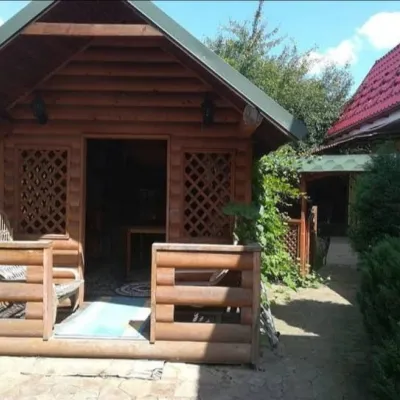 HomesteadHomestead "4 SEZONY"21 km from the centrePoolSaunaFireplaceNearby: Museum of Applied Arts 2.2 kmTown Hall 2.0 km
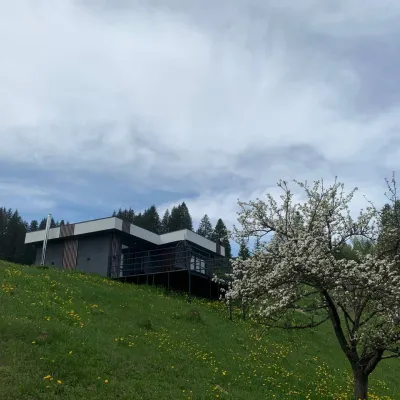 CottageRest in the Carpathians21 km from the centreNew modern cottage for a good rest and positive emotions.Nearby: Assumption Church 1.3 kmPolonyna Krinta 6.2 km12 trails
Trails nearby
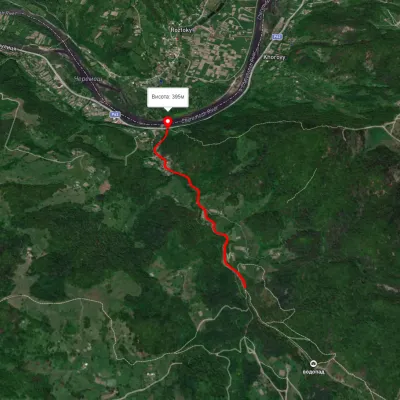 EasyOne-dayMarkedSmuharski WaterfallsElevation profile395–483 m4 kmascent 106 m≈ 1 h walking8.4 km from the centre
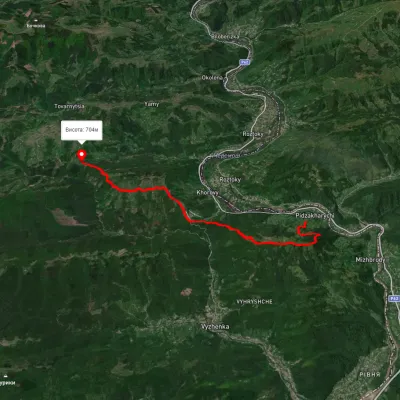 HardTwo-dayMarkedNimchych Pass Protiate KaminniaElevation profile473–820 m20.9 kmascent 1 063 m≈ 7.5 h walking9.3 km from the centre
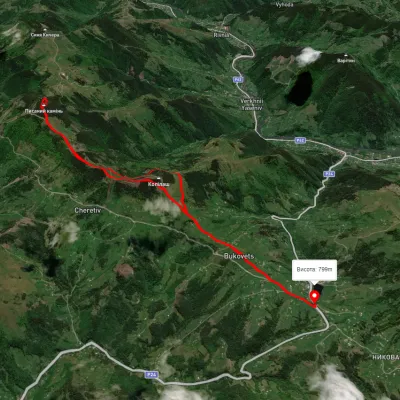 ModerateTwo-dayUnmarkedBukovets village loopvia Pysanyi KaminElevation profile845–1 261 m12.4 kmascent 823 m≈ 4.5 h walking16 km from the centre
Peaks nearby
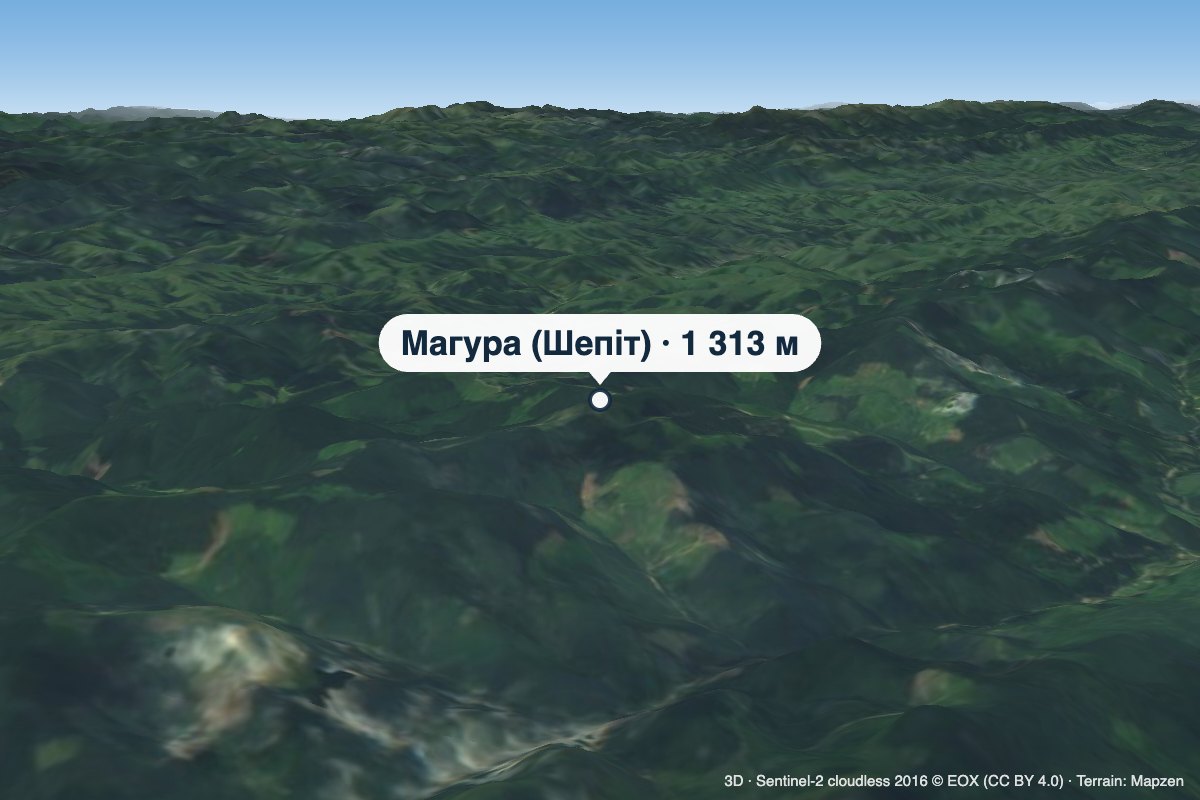 PeakMount Mahura (Shepit)altitude 1 313 m · Pokuttia-Bukovyna Carpathians range19 km from the centreMahura is a 1,313 m mountain in the Pokuttia-Bukovyna Carpathians, on the Dovhyi Hrun ridge. It lies in the Vyzhnytsia district of Chernivtsi Oblast, south of the...
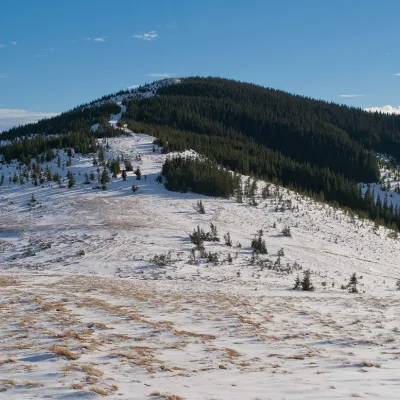 PeakMount Skupovaaltitude 1 579 m · Hryniava Mountains range22 km from the centre3 trails to the topMount Skupova is the peak of the Ukrainian Carpathians, which is located in the Hryniava mountain range.
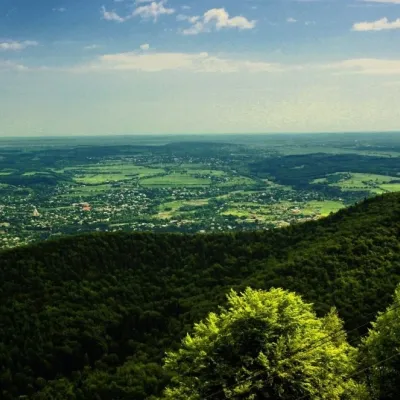 PeakMount Mykhalkova (Kosiv)altitude 812 m22 km from the centreMount Mykhalkova (Mykhalkiv), with a height of 812 meters, is part of the Pokuttya Carpathians. The highest point of the city of Kosiv and the village of Horod.
What's nearby
Video