St. Nicholas Church, Vyzhnytsia
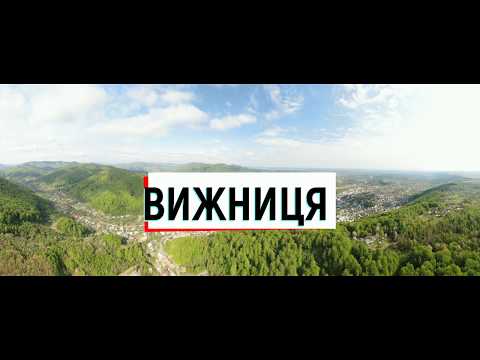
For tourists, Vyzhnytsia is primarily about the Carpathian nature of the Vyzhnytsia National Park surrounding the city. However, the small town has a lot to offer for sightseeing. The town has preserved its historic buildings, many townhouses, mansions of wealthy residents, and churches. One of these monuments is St . Nicholas Church, which is completely different in its shape from other churches in Bukovyna.
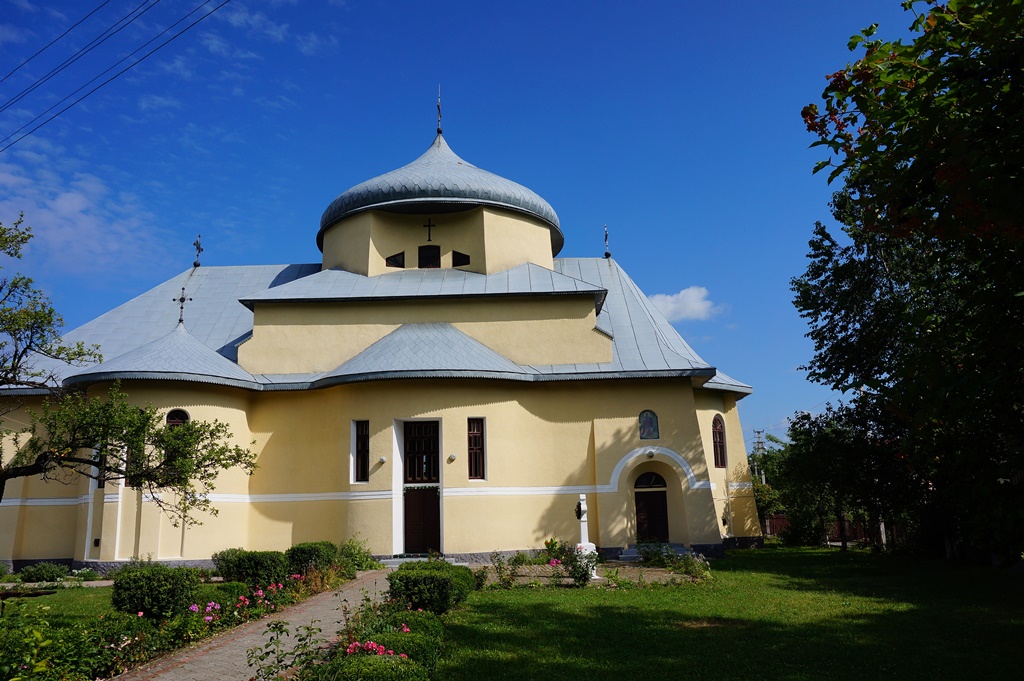
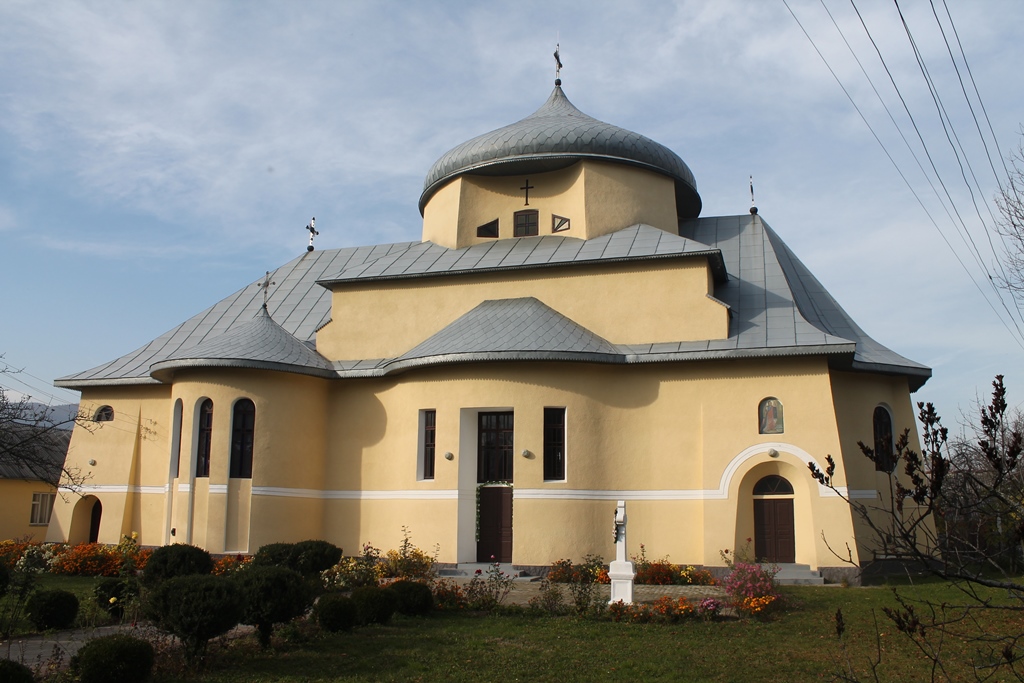
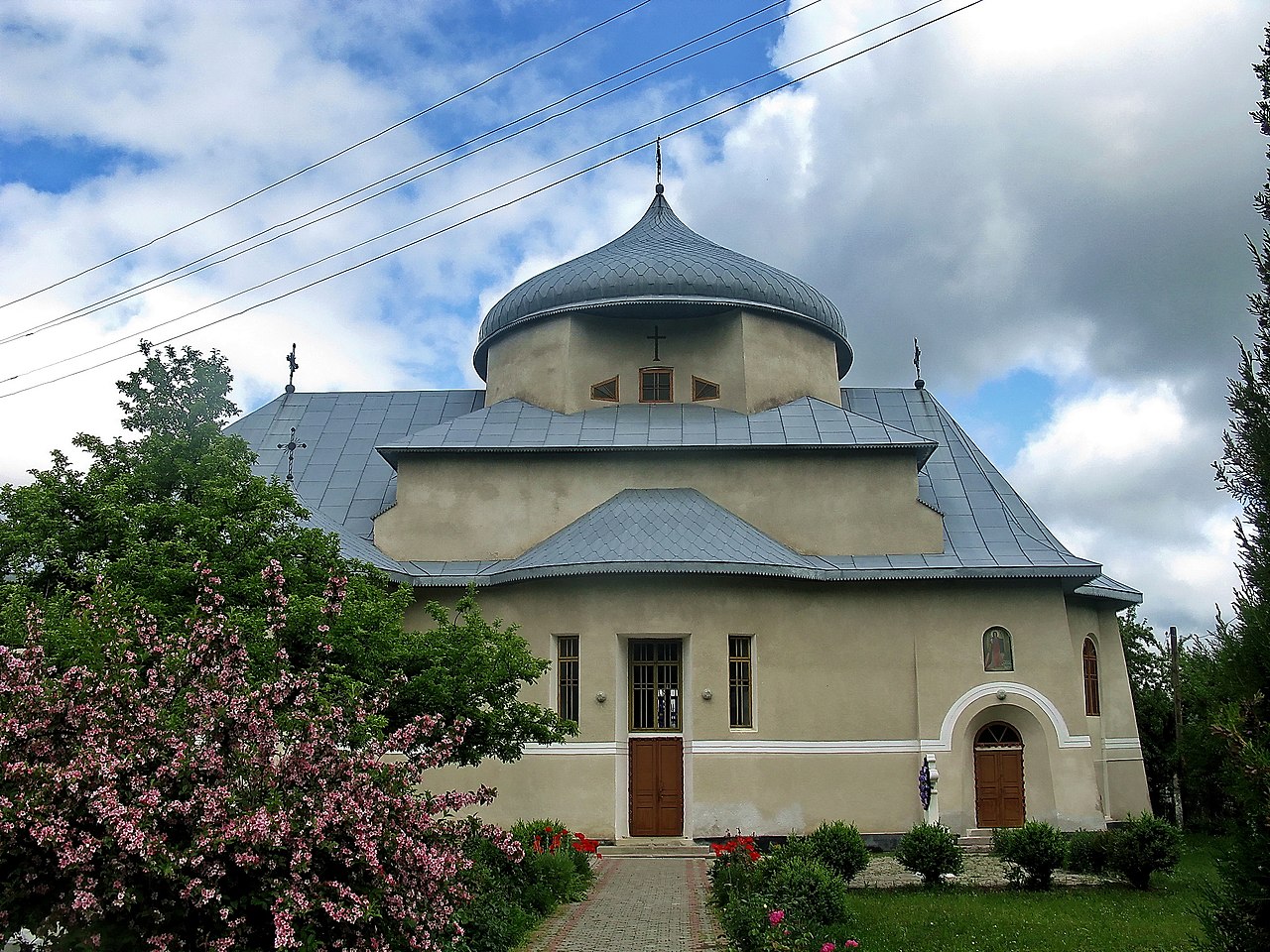
St. Nicholas Church in the town of Vyzhnytsia, Chernivtsi region, was built in 1924 in an atypical neo-Baroque style for Bukovyna churches and is located in the center of the town. It is known that in 1924 it was consecrated. This church was built near the old wooden church of St. Paraskeva, which was later moved to the neighboring village of Bahna in 1930, where it still exists today.
The brick church of St. Nicholas is cruciform in plan and is characterized by the originality of its architectural design, as it was the only church in Bukovyna built in the Baroque style. However, the church has not survived in its original form to this day. In 1961, lightning struck the roof of the church, causing a fire that burned the church's domes. Later, in the 90s of the XX century, reconstruction work was carried out here. Before the fire, the church had a completely different appearance and different domes. As a result of the repair work, the tops of the church became low, somewhat flattened, with domes in the style of the Old Believers.
Despite the loss of its authentic appearance, this church was included in the list of thirteen most beautiful churches in Bukovyna. Indeed, the church is worth seeing - it is not easy to find a similar shrine in Ukraine. The church is surrounded by a low stone wall, which is probably older than the church itself. There is a five-columned wall bell tower on the grounds, similar to the bell towers of the churches of St. John of Suceava and St. Nicholas in nearby Vyzhenka. The church grounds are quite large and well maintained.
The Church of St. Nicholas in Vyzhnytsia is a functioning church, distinguished by the originality of its forms, belongs to the diocese of the UOC-MP and is an architectural monument of local importance. The church is located on a hill, among private buildings, halfway between the church and the historical monument, the house of Anna Moskva.
The church is located at 5 Lukiana Kobylytsia Street, in the very center of the town. Vyzhnytsia is conveniently reached by buses that regularly depart from Chernivtsi, Kolomyia, and Ivano-Frankivsk.
Openinghours: The church is active, but it is open only for worship.
Vyzhnytsia is a small Carpathian town with a population of only about 5,000. However, the amazing beauty of the surrounding mountains and forests, the steep Cheremosh, combined with the original architecture of Austrian times, makes it a real gem of the Carpathian part of Bukovyna. Vyzhnytsia is located at the foot of the Carpathians, on the right bank of the stormy Cheremosh, 70 km from the regional center of Chernivtsi.
The first mention of the town is found in the Moldovan chronicle of 1501. In 1514-1574 the town was under the rule of the Turks. Until 1774, Vyzhnytsia was subordinated to the Principality of Moldova, and later to Austria-Hungary. At the end of the eighteenth century, with the beginning of the development of the timber industry, Vyzhnytsia became an important point of trade in wood. After the Cheremosh riverbed was regulated (1790-1812), construction timber and firewood were floated to Chernivtsi, and from there, along a dirt road through the Boyany, to Bessarabia and Podillia.
Vyzhnytsia suffered terrible devastation during the First World War. The town changed hands several times, leaving most of the buildings in ruins and the number of inhabitants down to 500.
In 905, a regional school of carving, turning, and metal ornamentation was organized in Vyzhnytsia. It was attended by 20 children. Its founders and teachers were the famous Hutsul carvers Vasyl Shkribliak, Vasyl Devdiuk, Marko Megedeniuk, and Fedir Hnatiuk. The school's products soon became known far beyond the region.
During 1869-1872, the writer Yurii Fedkovych worked as an inspector of schools in the Vyzhnytsia district. Ukrainian artist, writer, and public figure Kornylo Ustianovych (1839-1903) lived and died in Vyzhnytsia for some time. The famous Polish artist Juliusz Kosak (1824-1899) was born here; the Polish artist Anna Czartoryska spent her childhood and adolescence here.
Ukrainian writers have visited the city: Ivan Franko, Lesya Ukrainka, Vasyl Stefanyk, artist Ivan Trush, and other cultural figures. The city's community always welcomed their favorite artists with hospitality and joy. On 23 July 1901, in honor of Lesia Ukrainka's arrival, a large concert was organized in the largest venue of the time.
Vyzhnytsia is the birthplace of the People's Artist of Ukraine Nazar Yaremchuk, the vocal and instrumental ensemble Smerichka and the folk dance ensemble Smerechyna were born here, and Vasyl Zinkevych and many other famous artists began their careers here.
Tourist attractions of Vyzhnytsia include the wooden St. Dmitry's Church (nineteenth century); St . Nicholas Church (late nineteenth - early twentieth century); St . Peter and Paul Church (nineteenth century); synagogue (eighteenth century, now the Palace of Culture); old railway station (Austrian times), Vyzhnytsia Town Hall (early twentieth century); Anna Moskva-Golota's house-hotel (Lesya Ukrainka, Ivan Franko, Mykhailo Kotsiubynskyi, Olha Kobylianska visited it in their time), Nazariy Yaremchuk's museum-estate, M. Marfiyovych's museum. Marfiyevych, the museum of the V. Shkriblyak College of Applied Arts (its collections contain more than 600 exhibits of diploma and best semester works: women's blouses, men's shirts, napkins, towels, carpets, tablecloths). You can learn about the history of the city and the region by visiting the Vyzhnytsia Folk Museum. Vyzhnytsia is rightfully considered a center of folk crafts (embroidery, carpet making, woodworking, Easter eggs, inlaid products).
Accommodation around St. Nicholas Church, Vyzhnytsia:


Which trails pass by St. Nicholas Church, Vyzhnytsia?
We suggest these hiking trails through or near St. Nicholas Church, Vyzhnytsia: Nimchych Pass – Protiate Kaminnia, Smuharski Waterfalls, Bukovets village – Pysanyi Kamin – Bukovets village, Pysanyi Kamin – Bukovets village, Sheshory – Rosokhata, Kosmach village, via Mount Rotylo, Mount Hrehit and Mount Bila Kobyla to Bukovets village



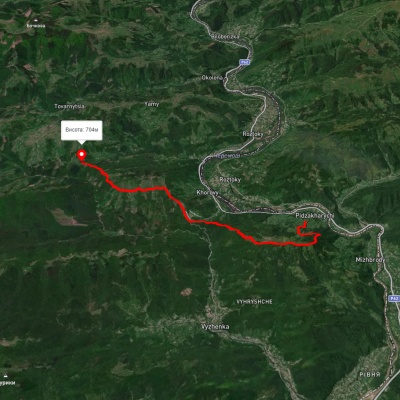
Nimchych Pass – Protiate Kaminnia
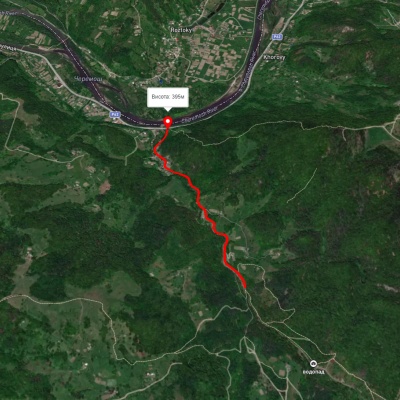
Smuharski Waterfalls
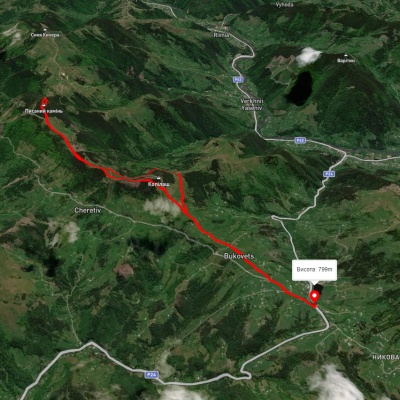
Bukovets village – Pysanyi Kamin – Bukovets village
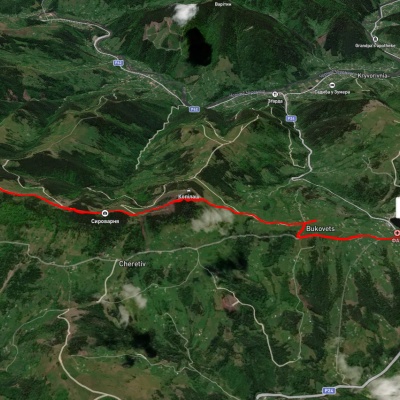
Pysanyi Kamin – Bukovets village