St. Nicholas Church, Sokyrnytsia
TheChurch of St. Nicholas the Wonderworker isa wooden church located in the village of Sokyrnytsia, Khust district,Zakarpattia region, , an architectural monument of national importance ( #227 ) . The building is one of the oldest churches in Transcarpathia.
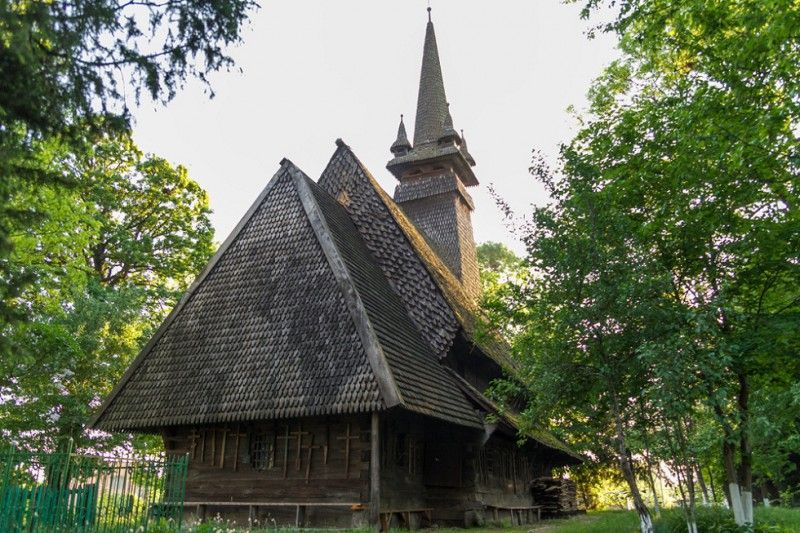
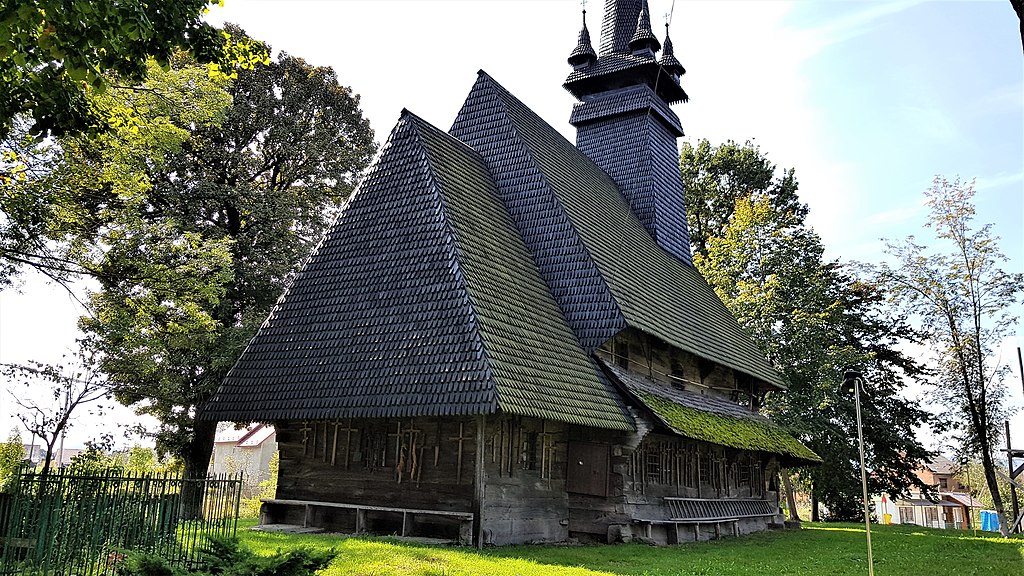
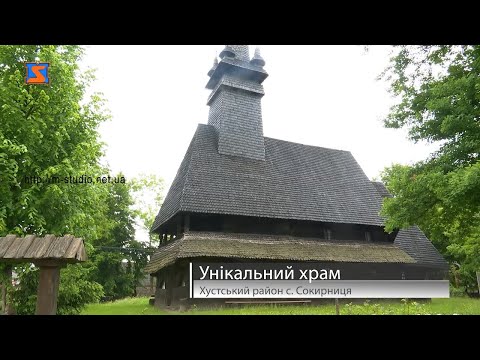
The Church of St. Nicholas the Wonderworker is a true masterpiece of wooden sacred architecture, which is called Marmarosh Gothic or Potyssia Gothic. Sources indicate that this church was originally built in the village of Sharvar (today the village of Trosnyk in Vynohradiv district) in the early seventeenth century. At the same time, the church was rebuilt, a new high tower rose above the Babynets, topped by a high spire with four violets in the corners, and a bell tower was built next to the church, which is located separately and whose forms are reminiscent of Boyko architecture. The tall tower tapers slightly upward and ends with the arches of the gospel choir. Four small towers and a tall spire grow out of the four-pitched tent. The main façade has a closed porch with openings of triangular windows and an entrance portal. The doorpost of the Babinets is framed by strips of "rope" ornamentation, circles filled with carvings, and rosettes with six-leafed trees. The mighty walls of the log cabins, made of huge hewn logs, make a unique impression. Near the corner locks, holes with a diameter of 3 cm are drilled in almost every log, and stakes are driven into the holes. Perhaps this is a way to prevent deformation of the log cabins.
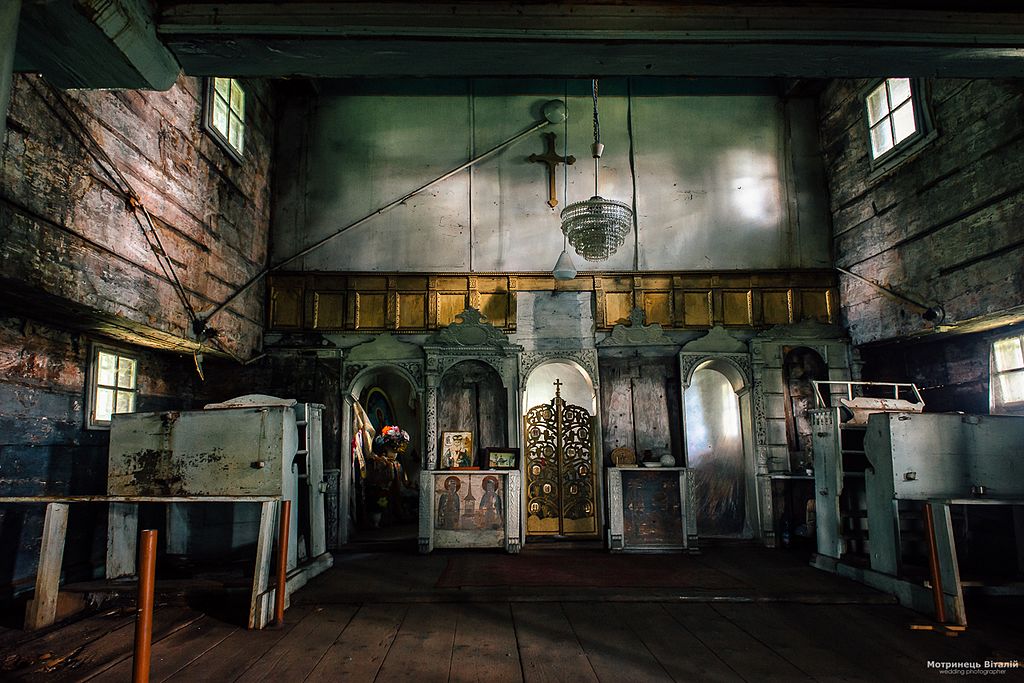
St. Nicholas Church dates back to 1704. The historical value of the church is evidenced by an inscription on the outside of the church: "Here in 1707 Mother Mary presented herself...". At the end of World War II, the church was closed, and most of the icons were lost. Only two images of the Virgin Mary and an icon of St. Nicholas survived. The framing of the vicarage icons of the eighteenth century, the royal gate, candlesticks, and kivot were also preserved.
According to some sources, the church was originally built in the village of Shashvar. In 1770, it was moved to Sokyrnytsi and completely reconstructed. A rather high pyramid-shaped tower was added, and a bell tower was built next to it. The walls of the church are decorated with a collection of crosses made of natural wood. The iconostasis, which was created back in 1748, has also survived to this day.
The Church of St. Nicholas the Wonderworker belongs to the masterpieces of pseudo-Gothic architecture - the Maramorosh Gothic style. It still pleases the locals and attracts numerous tourists not only from Ukraine but also from other countries.
Services in the church resumed only in 1990, when local residents began to improve it somewhat. And they stopped in 1997, when a new Greek Catholic church was built next to the monument.
Mykhailo Syrokhman writes about this church: "At a distance of 10 kilometers from Khust, on the main road in the village of Sokyrnytsia, one first encounters a Gothic masterpiece-majestic and sternly silent, marked by the spirit of antiquity and the unique color of the ages. The oak log cabins of the church are covered with high roofs. Only the larger log house, which is divided into a nave and a chancel, is open. The tall tower tapers slightly upward and ends with the arches of the golosnits. Four small towers and a tall spire grow out of the four-pitched tent. The main façade has a closed porch with openings of triangular windows and an entrance portal. The doorpost of the Babinets is framed by strips of "rope" ornamentation, circles filled with carvings, and rosettes with six-leafed trees. The mighty walls of the log cabins, made of huge hewn logs, make a unique impression. Near the corner locks, holes with a diameter of 3 cm are drilled in almost every log, and stakes are driven into the holes. Perhaps this is a way to prevent deformation of the log cabins. According to the inscription on the icon of St. Onufriy, the iconostasis was installed in 1748. During the Soviet period, the church was closed, and most of the icons were lost. Two images of the Virgin Mary and an icon of St. Nicholas survived. The old painting was preserved on the plinths under the vicarage icons. The composition "Saints Anthony and Theodosius of the Caves" depicts a church with a spire in the middle, between the figures of the saints. The framing of the eighteenth-century vicarage icons, the royal gate, candlesticks, and a kivot have been preserved.
According to legends and research, the Sokyrnytsia church was built in the village of Shashvar (now Trosnyk, Vynohradiv district) in the early seventeenth century in the form of a church-hut without a tower, with high roofs covered with straw. Since then, all the log cabins of the church have been preserved. In 1770, after being moved to Sokyrnytsia, the church was rebuilt, with arched vaults over all parts and a tower over the narthex. In the bishop's visitation of 1801, it is recorded that "the church is wooden, built of strong oak logs, old but still good, but small and cannot accommodate the faithful." Near the church stands a tall frame bell tower built in 1770. The mighty frame is mounted on a strapping of oak beams with a cross section of 24-28 cm. All the surfaces are covered with a plowman. Until recently, a small elevation with a church and a bell tower was surrounded by an ancient wooden fence. The ensemble looked great in the center of the village until a new village council building was built in front of it. Across the street from the church is a wooden chapel with a Crucifix, a wonderful addition to the village's religious ensemble. There used to be more such chapels, but almost all of them have been destroyed. Only three have survived - in Kamianske, Serednie Vodyane, and Sokyrnytsia. Back in the early 1990s, the chapel was covered with shingles and had a wooden fence adjacent to it."
Accommodation around St. Nicholas Church, Sokyrnytsia:


Which trails pass by St. Nicholas Church, Sokyrnytsia?
We suggest these hiking trails through or near St. Nicholas Church, Sokyrnytsia: Pyntia's Path, Bushtyno, via Zanivka tract to Mount Manchul, Vovchyi village, via Mount Stiy, Mount Zhyd-Mahura, Pryslip Pass, Kuk polonyna, Mount Korytyshche and Shyroke village to Nyzhnii Bystryi village, Skotarske village, via Borzhava polonyna and Palenyi Hrun polonyna to Nyzhnii Bystryi village, Lukovo village, via Mount Buzhora to Svaliava, Skotarske village, via Borzhava polonyna and Palenyi Hrun polonyna to Vilshanske reservoir


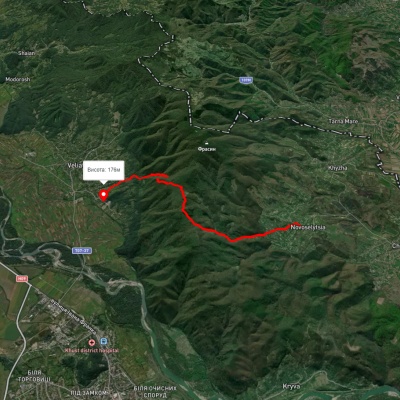
Pyntia's Path
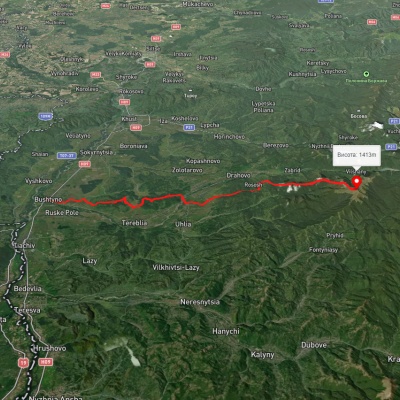
Bushtyno, via Zanivka tract to Mount Manchul
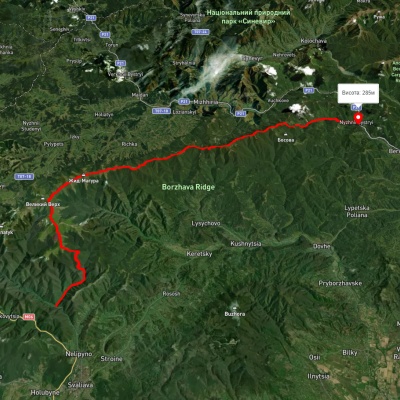
Vovchyi village, via Mount Stiy, Mount Zhyd-Mahura, Pryslip Pass, Kuk polonyna, Mount Korytyshche and Shyroke village to Nyzhnii Bystryi village
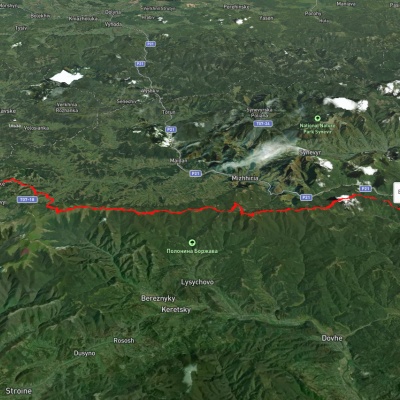
Skotarske village, via Borzhava polonyna and Palenyi Hrun polonyna to Nyzhnii Bystryi village

