Only God is higher: Only one man lives in the highest settlement of the Carpathians today

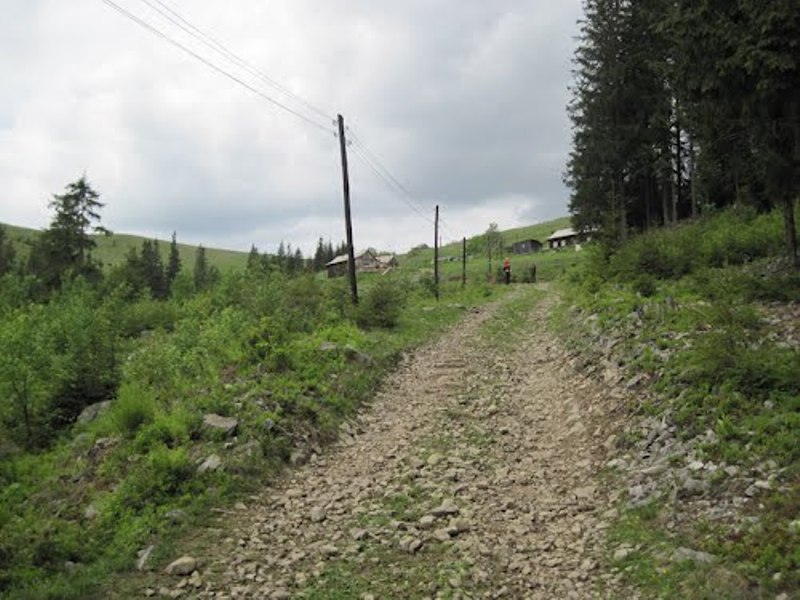
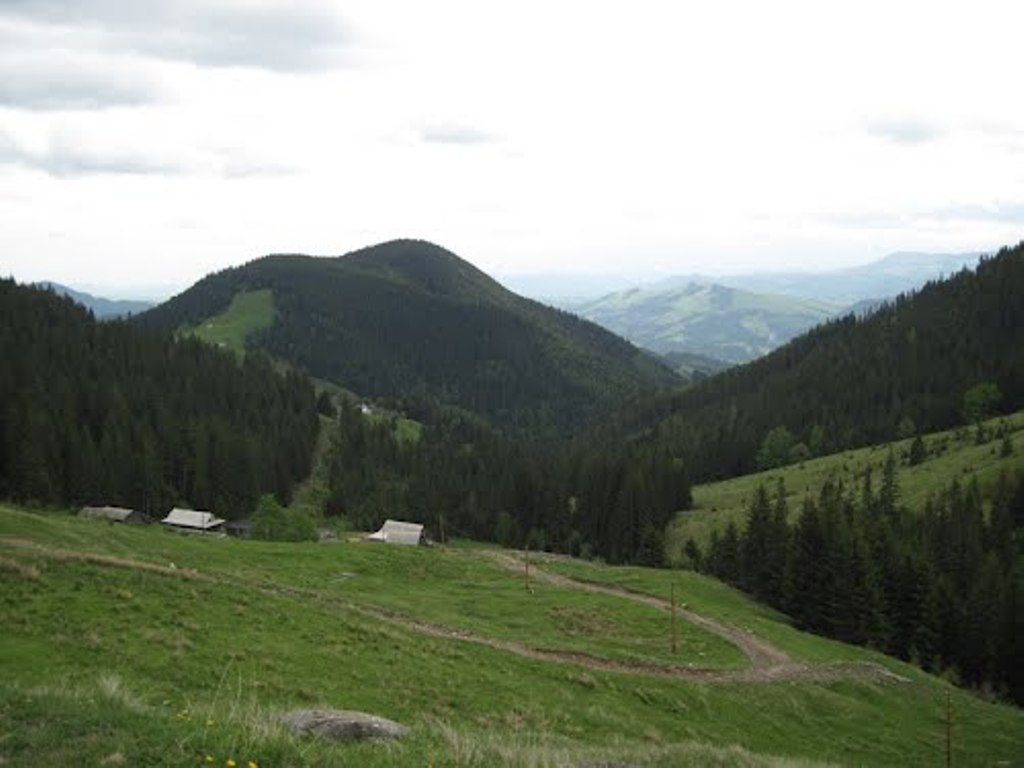
Velykyi Pryslip, in the Verkhovyna region, cannot be found on a map. It is the smallest and highest settlement in Ukraine. The first house here is at 1,250 meters above sea level. Only one person lives there permanently, although there are four houses in total.
The name of the settlement most likely comes from the word "prislop," which is a large bear trap. However, according to the only host in the settlement, bears have not been seen here for a long time.
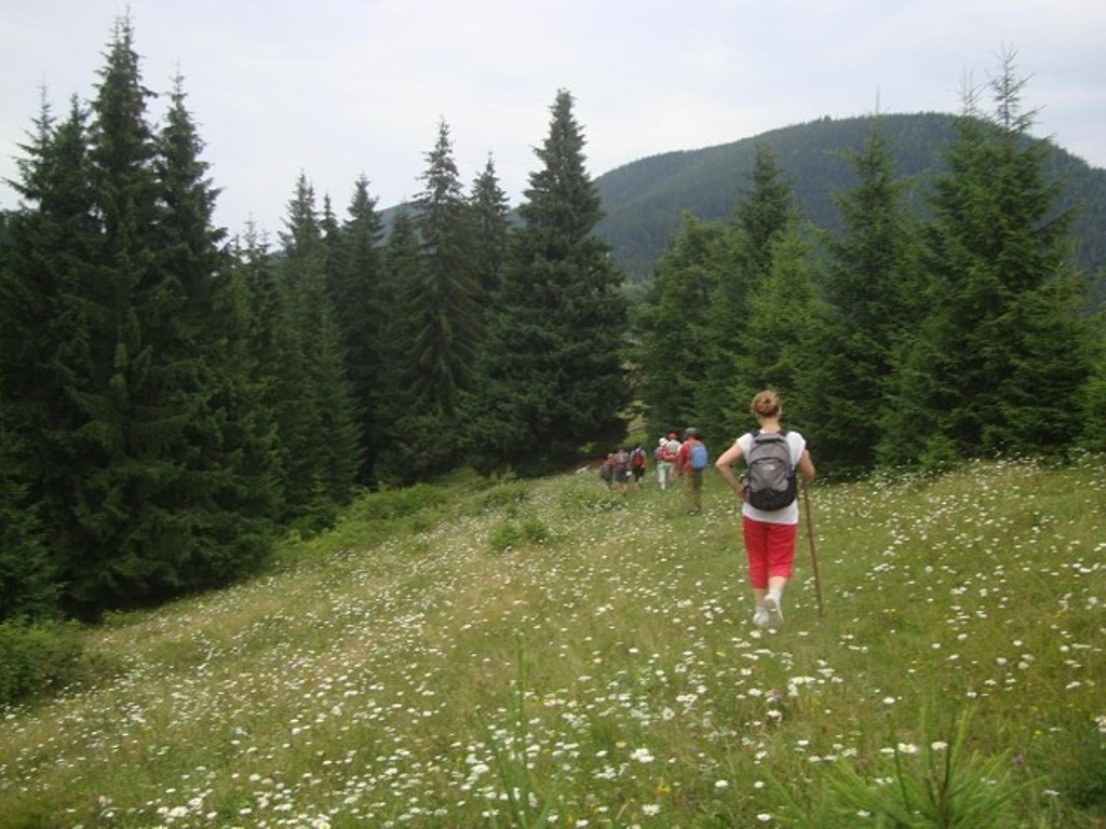
There is a tourist road leading to the village, which was built from Verkhovyna to the top of the White Mare Mountain (1477 meters). It is about eight kilometers uphill. Locals say that it is an easy walk for them. The forest road leads to the meadow where 55-year-old Mykola Diachuk, a logger, lives.
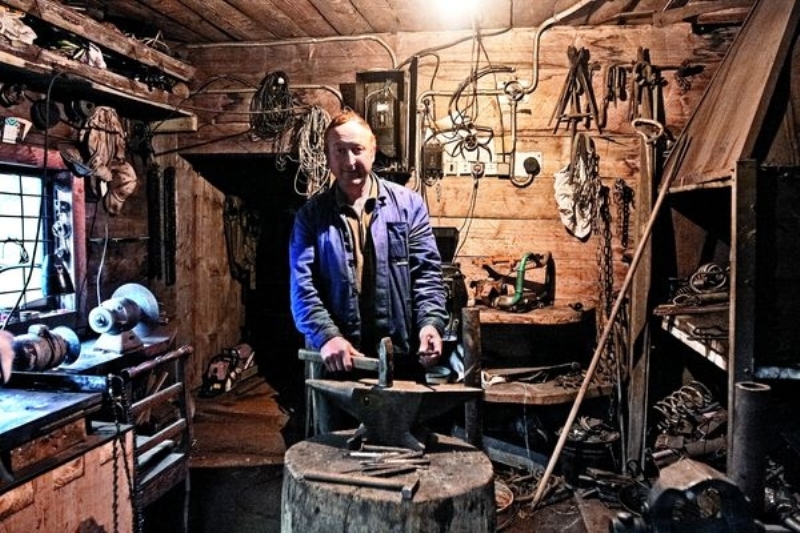
Blacksmith Mykola Dyachuk is at the forge: "I am a blacksmith. "I am self-taught. Whatever I do, I do it perfectly. I am a carpenter and a builder." (Photo: Olha Kameneva)
"Why do I still live here? Because there is no work for me in the city. And here I am a boss. I picked berries and earned money, I fed a horse and earned money. In the city, I would be unemployed," the man says.
The man cuts trees on request and only with the permission of the forestry. The minimum permit is for cutting ten cubic meters of wood, which is about three or four spruce trees. So Mr. Mykola receives a thousand hryvnias for cutting and trimming four fir trees. He also has a horse, which helps him earn another 1,500 hryvnias for transporting the wood to the truck. Mr. Mykola also has a truck, which he uses to transport wood to villages and towns.
"I can earn from 3500 hryvnias for one order," he summarizes, "though it happens once or twice a quarter.
The man also earns money by picking berries and mushrooms and fishing. He has a blacksmith shop on his property. It costs 200 hryvnias to shoe a horse, and 250 for an ax or scythe. Mr. Mykola is known in the neighboring villages as a good craftsman and is often asked to do work for them. Therefore, the money he earns through his own labor is enough for a normal life. He lives in a house that was built in 1906. It has old Hutsul carpets, wooden walls, a clay stove, and the benefits of the modern world - a gas stove, an electric kettle, a TV with a satellite dish, a music center and a dozen audio CDs. Mykola owns a horse and a big boar named Ivan Petrovych.
"I never get bored. Tourists often come here. Especially in summer, when it's still warm. Sometimes I come out of the house and there are a lot of tents on the lawn. I invite my guests to come in and have some tea or our kvass. And not only our people come, but also Moldovans, Poles, and Germans. Everyone goes to the White Mare, because it's only a short climb from here to its top."
The "kvassok" that Mr. Mykola treats us to is a compote made from wild berries, with blueberries as its main ingredient. "I don't have a garden," the man says. "The land here is such that nothing grows. We have to buy potatoes, cabbage, cereals - everything. But, thank God, I have enough money for that. I have bacon and stew - I killed a pig."
Mr. Mykola is married and has a son. But they don't want to live in the valley. The man visits his family often. They celebrate all holidays together.
There are four houses in the settlement, far from each other. They are wooden, with padlocks. Some of the houses are already blackened by old age. There is also a cemetery with a dozen burials. One of them is fresh. A local resident was recently buried. There is no church, only a small chapel. Mr. Mykola goes to Verkhovyna, which is eight kilometers away, to attend services. The nearest shop, hospital, and post office are there. From time to time, Mr. Mykola's friend Vasyl visits the village. He used to live here, but decided to move to Verkhovyna. His large family also moved here.
"They had seven children," says Mr. Mykola. "It seems like they sold the house, but to whom - who knows? People run away from the mountains, they say it's not easy here. But I stay because it's easy for me. And the main thing is that I have a job that feeds me."
Just five years ago, three families lived here and a lonely old man, Yurochko, who had already settled in the village cemetery.
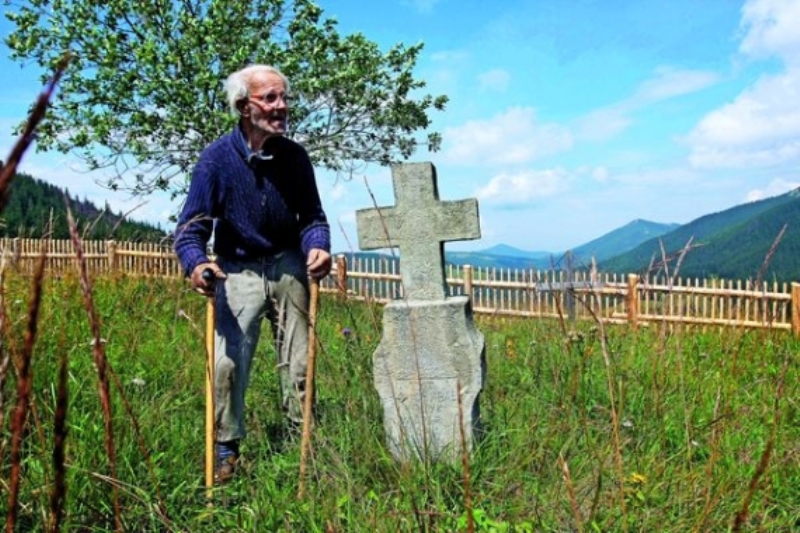
Yurii Pavliuk, nicknamed Yurochko, at the cemetery. His wife Anna is buried here. For more than 40 years, the man lived alone (Photo: Olha Kameneva)
The house of the Kishchuks is at least 200 years old. Blackened by time and weather, the building, which has never been touched by paint, resembles a barn. Pots, bowls, and bags are scattered along the walls outside. On the crooked porch, skinny children jump around. When they see strangers, they hide in the dark recesses of the barn. A minute later they peek out. 6-year-old Ivan is shy, and they force him out of the house.
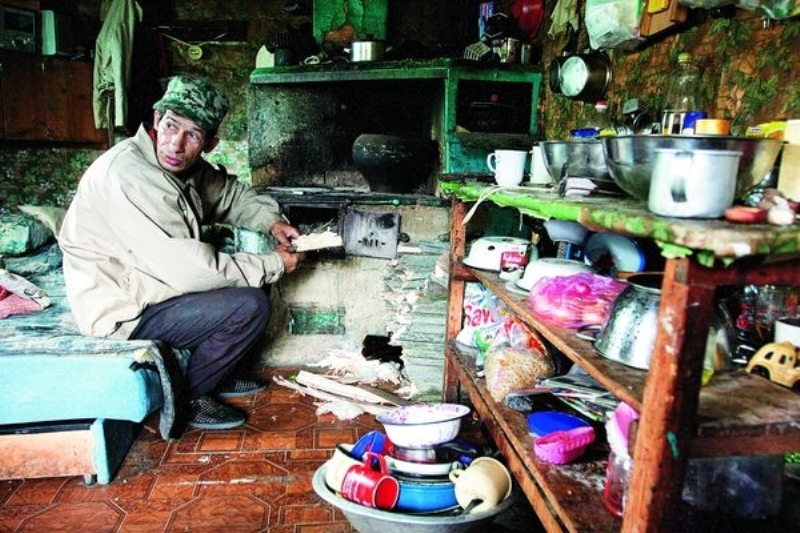
Natalia, Mykhailo, and Yarynka Kishchuk play with kittens in their house Vasyl Kishchuk lights the stove (Photo: Olha Kameneva)
- I can see and hear them all the time," says Vasyl Kishchuk, 42, as he emerges from the back of the house. The shadow from the visor of his camouflage cap covers his long face, leaving his lips dark with berry juice in the sun. In summer and fall, most mountain people earn money from mushrooms and berries. "I earned a thousand hryvnias myself on Sunday. Actually, I work with wood, but now there is no work.
Of the two rooms in the house, only one was inhabited. A brick stove in the corner, shelves with household utensils: bowls, packets of laundry detergent and coffee, soap dishes, bags of noodles, mugs - everything is mixed up. The walls are full of pictures, photographs, calendars, icons, cups, graters, pans, and New Year's garlands. A small TV adorns one of the corners. It has five channels, two of which are Romanian. Three sofas have unmade beds, and the children are playing with striped kittens. They kiss them, spread their paws apart like dolls.
The man puts firewood in the stove and says that all the school-age children live and study in the orphanage in Verkhovyna for 10 months of the year.
"We bake homemade bread, sausage, and rarely buy meat from the store. We have our own lard - we keep a pig behind the wall. We cannot buy everything for our children, but there are poorer people. Thank God, we don't go hungry.
A few dozen meters away from the old house, a new one has been under construction for three years.
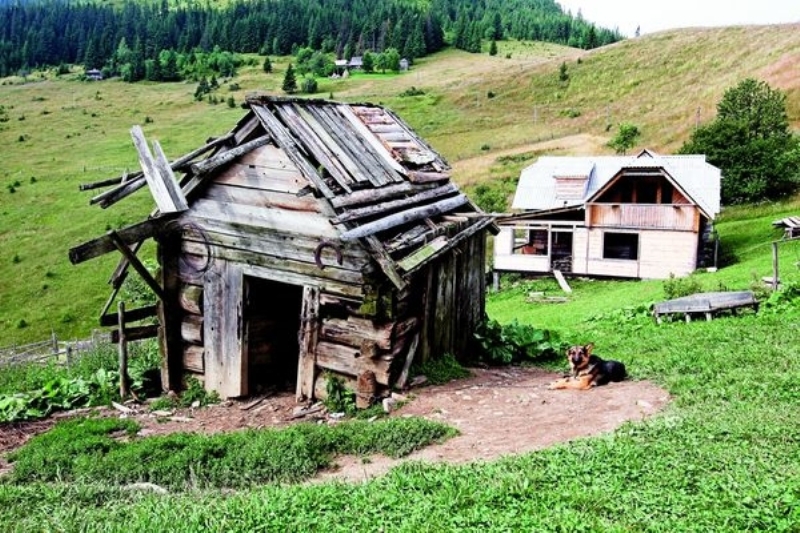
The dog Palma lived in the dilapidated barn of the large Kishchuk family in Velykyi Pryslip, and the new house is behind it.
We ask if they communicate with their neighbors.
We talk to grandpa Yurochko, who is old and lives alone. That year, he asked me to help him shovel hay. I go to the neighbor's blacksmith, and Hanna went to the market with him, he has a car. I have a lot of buildings, so when I need to cook something, I go to him. There is also a large family over the hill, but they don't come here, even though it's a half-hour walk. They still have small children.
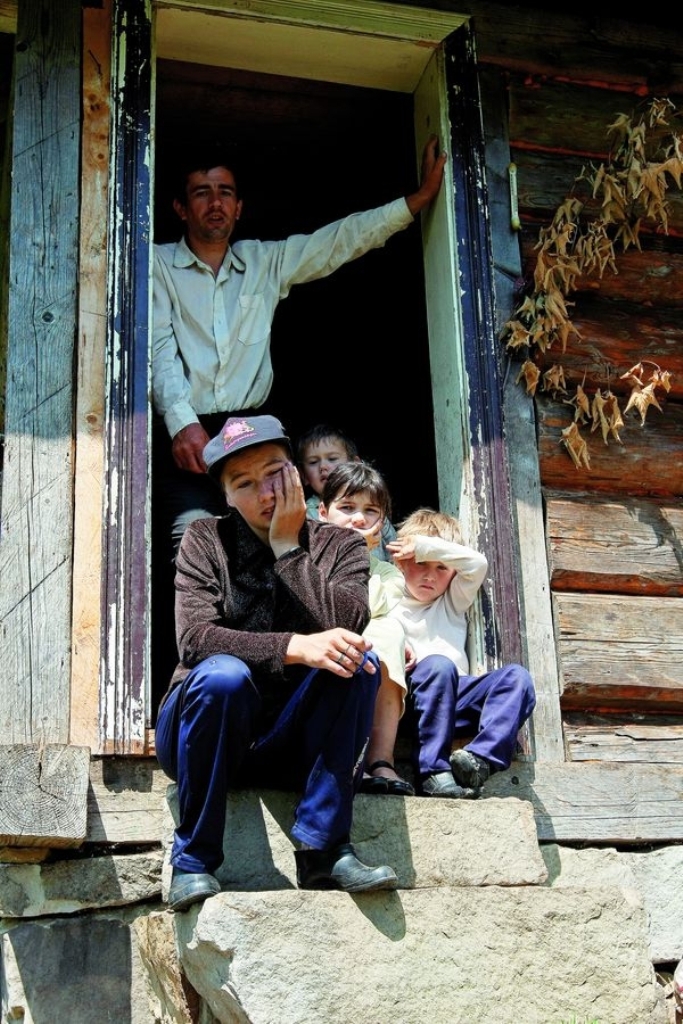
Ivan and Hanna Rynzakh with their children Hanna, Ivan, and Mariia on the threshold of their new home. The family lives without electricity (Photo: Olha Kameneva)
From a distance, we can see the owners, warned by the phone, hurriedly washing some of the children in the night. They sit down on the threshold of the new wooden house.
It is noticeable that everyone has changed their clothes for the meeting. The father, 34-year-old Ivan Rynzakh, is wearing a white shirt and rubber boots, the mother, 24-year-old Hanna, is wearing a shiny button-down blouse over her sweatpants, and 8-year-old Hanna is wearing black patent leather shoes and a dress with a huge stain.
They do not want to move closer to their neighbors or down to Verkhovyna Rynzakhy. The couple has a horse, a cow, a heifer, a pig, and chickens.
In the house, behind the veranda, there is a large room with the ceiling and walls half covered with colorful oilcloth. Half of the room is occupied by a cot made of planks. There are a few sheets on it, and a soft toy - a bull - lying around. The only other furniture is a factory bed where a baby sleeps. There are no wardrobes or shelves - the walls are bare. A stove takes up the entire corner.
On our way back, we visit the blacksmith Mykola Dyachuk. We take turns knocking on the low door jambs of the Hutsul house.
Thunder rumbles. Hail, the size of a good bean, knocks on the window. The hosts ask us to turn off our cell phones. They say that lightning recently killed eight teenagers on Mount Pip Ivan. They were playing with their cell phones.
In addition to Dyachuk, his wife, and his elderly mother, guests gathered in the house - a man and two women. The air in the room is heavy with cobwebs, and there is a bottle of moonshine on the table. The meal takes place in complete darkness. We go out to the hayloft to talk to the hostess.
Through the door, we can see how the yard, covered with ice floes, continues to rain. There is a ZIL in the yard, a pile of freshly hewn logs. All of the Dyachuks' outbuildings are new. Only the house has a sign on it that says in Polish that it was built in 1937.
- "I live with a woman whose house is better," says Mykola. "There is a smithy, a lathe, and I want to build a sawmill. My father was a blacksmith. I also make braids for people and anything else that is needed in forestry. I am self-taught, I learned from old blacksmiths. Whatever I do, I do it perfectly. I am a carpenter and a builder. God gave me this ability.
Mykola Dyachuk has three children.
"My neighbors are the kind of people who like to be helped, but they don't. But I don't ask them to, because what can you get out of these large families? I'll mow my lonely grandfather's lawn and bring him some firewood. He is a distant uncle to my wife. I stayed in his house. The conditions were terrible. I said: "Buy a sofa, a pillow, a piece of cloth to cover it." "There's no money for that," he replied. He is a rare person, an enemy to himself, but otherwise a good man. After his wife died, he had nothing to do with women," he laughs.
The bad weather does not subside. The hosts offer to stay the night. We refuse, because tomorrow we have a train to Kyiv. The road down is blocked by mountain streams, which in the morning were still narrow rivulets. Sometimes we have to wade up to our ankles or even knees in water. Lightning cuts the sky over and over again.
In 2 hours we enter Verkhovyna soaking wet.
Authors:text: Natalia PAVLENKO, Ivan STOLYARCHUK, photo: Olga Kameneva
Comments
You may also be interested in
All articles Parashka – one of the highest mountains in Lviv regionЗ Парашкою у багатьох із нас особливі спогади. Будучи найближчою до Львова горою, вона не для одного майбутнього туриста стала однією з...
 How to Prepare and Safely Go Hiking in the CarpathiansУ цій статті ми інформуємо про найголовніші і незаперечні заходи безпеки, яких необхідно дотримуватися для того, щоб ваш туристичний...
 Solo Hiking in the Carpathians. What You Need to KnowЯкщо ви остаточно утвердилися в своєму бажанні сходити в самостійний похід в гори, то непогано б знати, які знання і навички для цього...