One of the 100 Ukrainian artists in the world from the Carpathian region...

The year 1991 goes down in the history of the Ukrainian people as the 100th anniversary of the exodus of some Ukrainians from their homeland in search of a better life. But even in the new lands, growing roots in foreign soil, Ukrainians have always felt like children of their land.
The historical catastrophes of the twentieth century caused large-scale forced movements of Ukrainians outside their native land, and this became a tragedy for our people. The Motherland had to renounce its own children and become their stepmother.
...In the periods of history when empires collapsed, peoples who experienced national oppression necessarily sought their own self-determination and self-comprehension. This period has finally come to Ukraine. The explosion of national consciousness led to a desire to comprehend one's own history, and to take off the ideological veil from one's eyes and look at it with a clear, unbiased view.
And it turned out that those who were forced to leave Ukraine were its children, just like all those who had lived through all the historical cataclysms with it. The centripetal force has changed to centripetal. And now we have the opportunity to get to know each other better, to find a way to understanding, because we share the same pain and pride - Ukraine.
The creative association of Kyiv monumental artists "Pohlyad" also sought to contribute a small part to the spiritual unification of Ukrainians in Ukraine and abroad. On its initiative, an exhibition "Unity" was organized to mark the 100th anniversary of Ukrainian emigration to Canada. Artists of Ukrainian descent from various countries of the former empire and many countries of the world were invited to participate. The exhibition featured works by artists from the Kuban and St. Petersburg, Moscow and Tallinn, the United States and Canada, Australia and Germany, France and Italy. The exhibition was based on the works of artists from different regions of Ukraine, including members of the Pohlyad creative association. Over 100 artists participated in the exhibition.
The organizers of the exhibition aimed to unite Ukrainian artists, scattered around the world by fate, in their native land, Ukraine. This event was not only artistic but also spiritual.
"Ukrainians all over the world, unite!" - this is the motto of the Unity exhibition, in which Bohdan Brynskyi, a native of Dolyna village, Tlumach district, an artist, member of the National Union of Artists of Ukraine, participant of regional, national and international exhibitions, took part with his work "Hope".
And now the game "Deodato vibrini, Painter!" by Yuriy Andrukhovych
If I were like Bohdan,
And Bohdan was like me,
Then we would love this Halya -
A little bit of Bohdan, a little bit of me...
From a folk song
"What he does with paints on canvas can be called visionism. If we lived at the beginning of the last century, this is probably what we would have called it. But at the end of the last century, when we actually lived, everyone was mostly tired of naming things. That's why what he does with the colors on the canvas has no name. That is, it has no single big name. But it has many small individual titles, such as "View of Mount Petros. Polianytsia" or "Autumn in the Valley. Tlumachyna", which can be purchased in our online store.
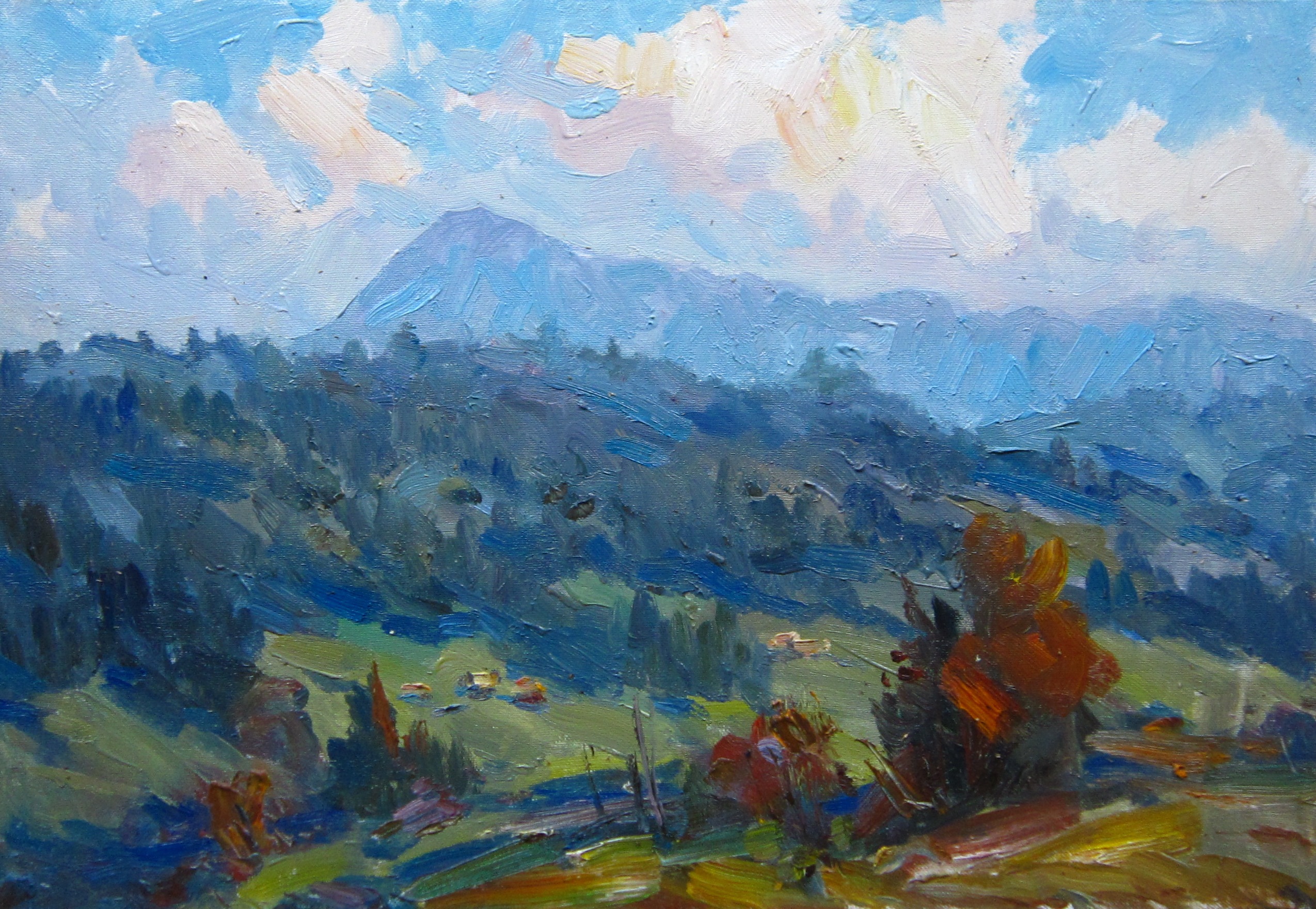
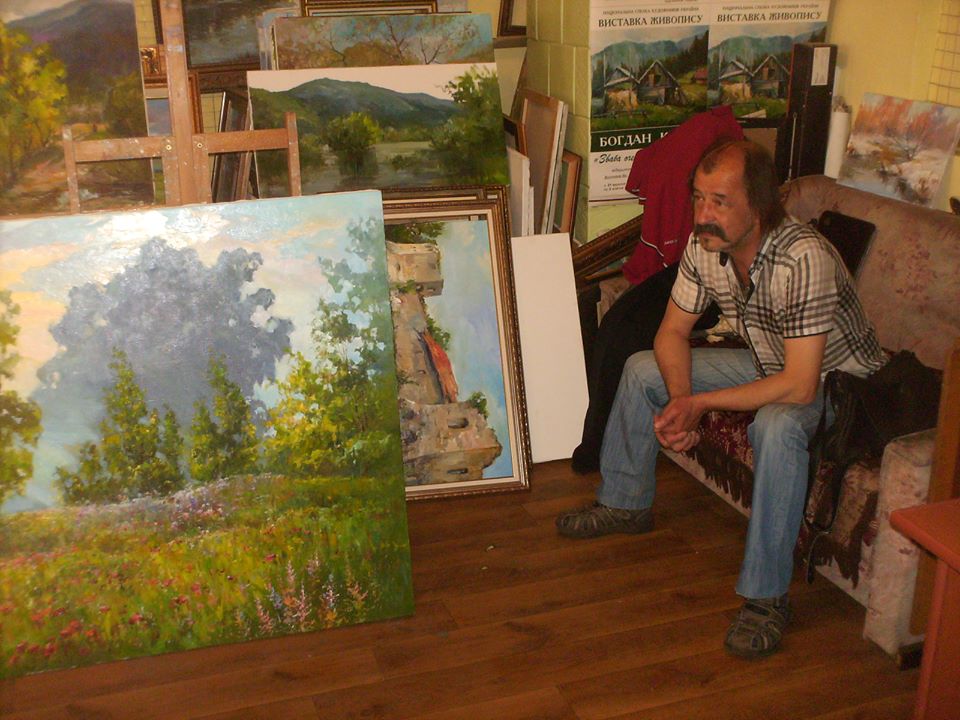
The titles were chosen because we visited Brynskyi, me and Dovgan. Other people also visited him and still do, but it is unlikely that those other people gave names to his paintings, only Dovhan and I did. Because we were the only ones who came to him not to take, but to give. This happened not without the influence of all kinds of drink and in clouds of tobacco smoke. So we were sitting in these clouds like celestials, and although we could no longer see what was happening on the canvases very clearly (because of the same clouds), we still strained the possibilities of the subconscious and still gave names to them.
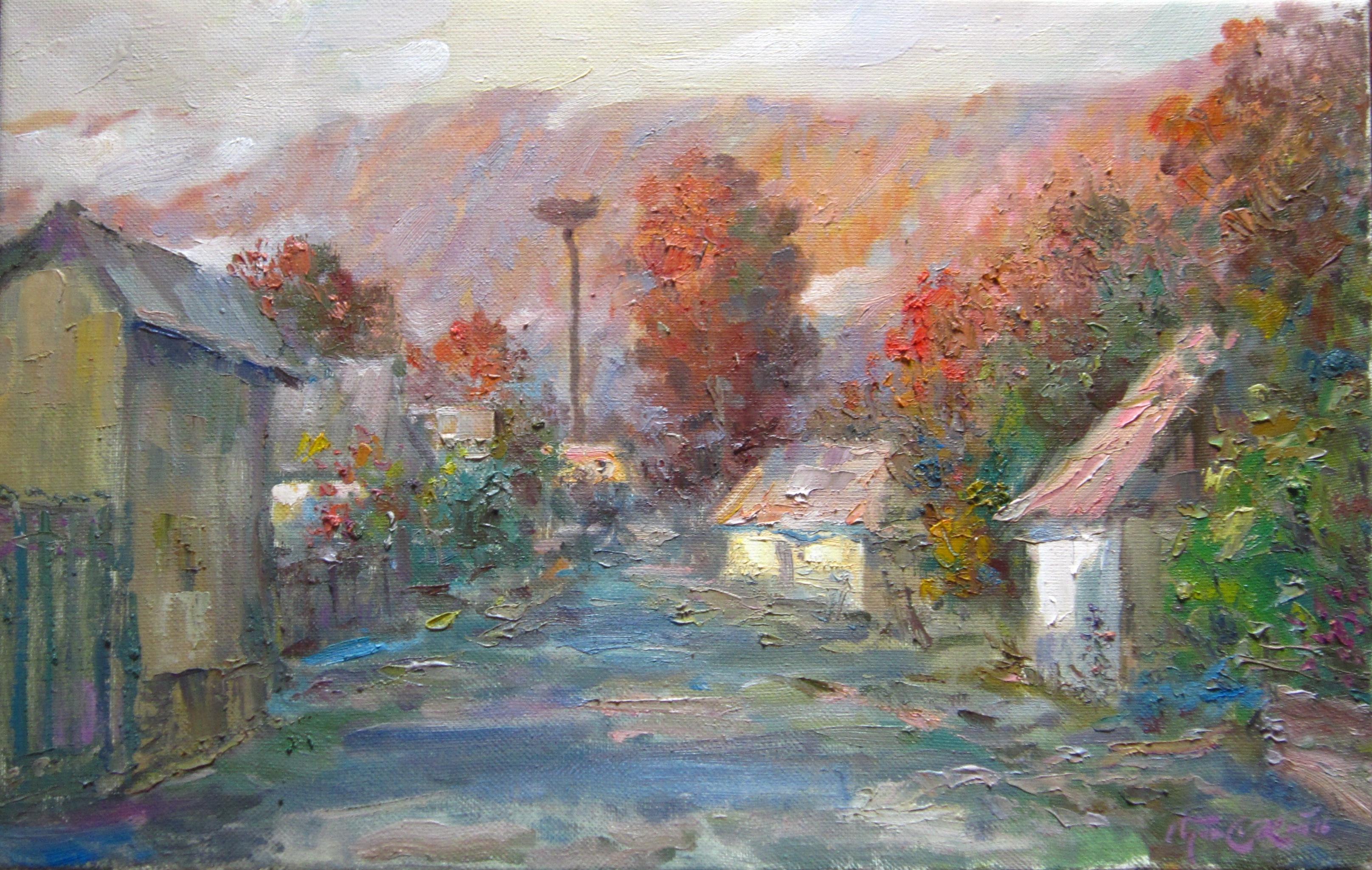
Painting "Morning Fog"
However, I didn't describe it too precisely - it was not so much about the subconscious as about the unconscious historical. Because what we were able to see in Bohdan's paintings was primarily history. Historical painting has several common manifestations: it can look like a school textbook, a newspaper article (editorial), a costume movie, a national blockbuster. In Bohdan's case, it looks like a holy scripture.
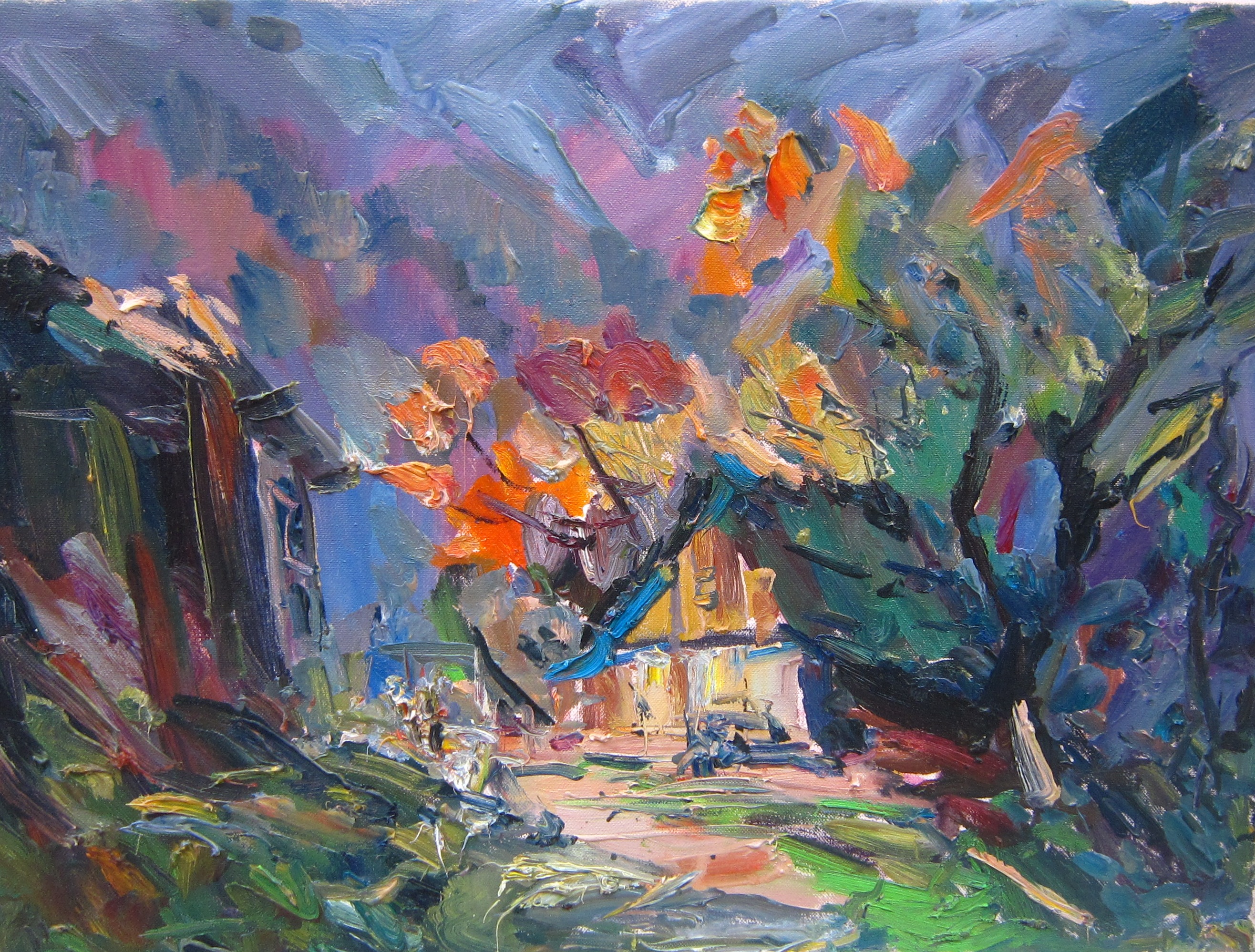
Painting "Autumn in the Rakhiv Region"
"I deliberately do not capitalize these two words, contrary to the principles of spelling, so as not to unwittingly diminish what he does. Because what he is doing is not exactly holy writing. It is his own Brynska bible.
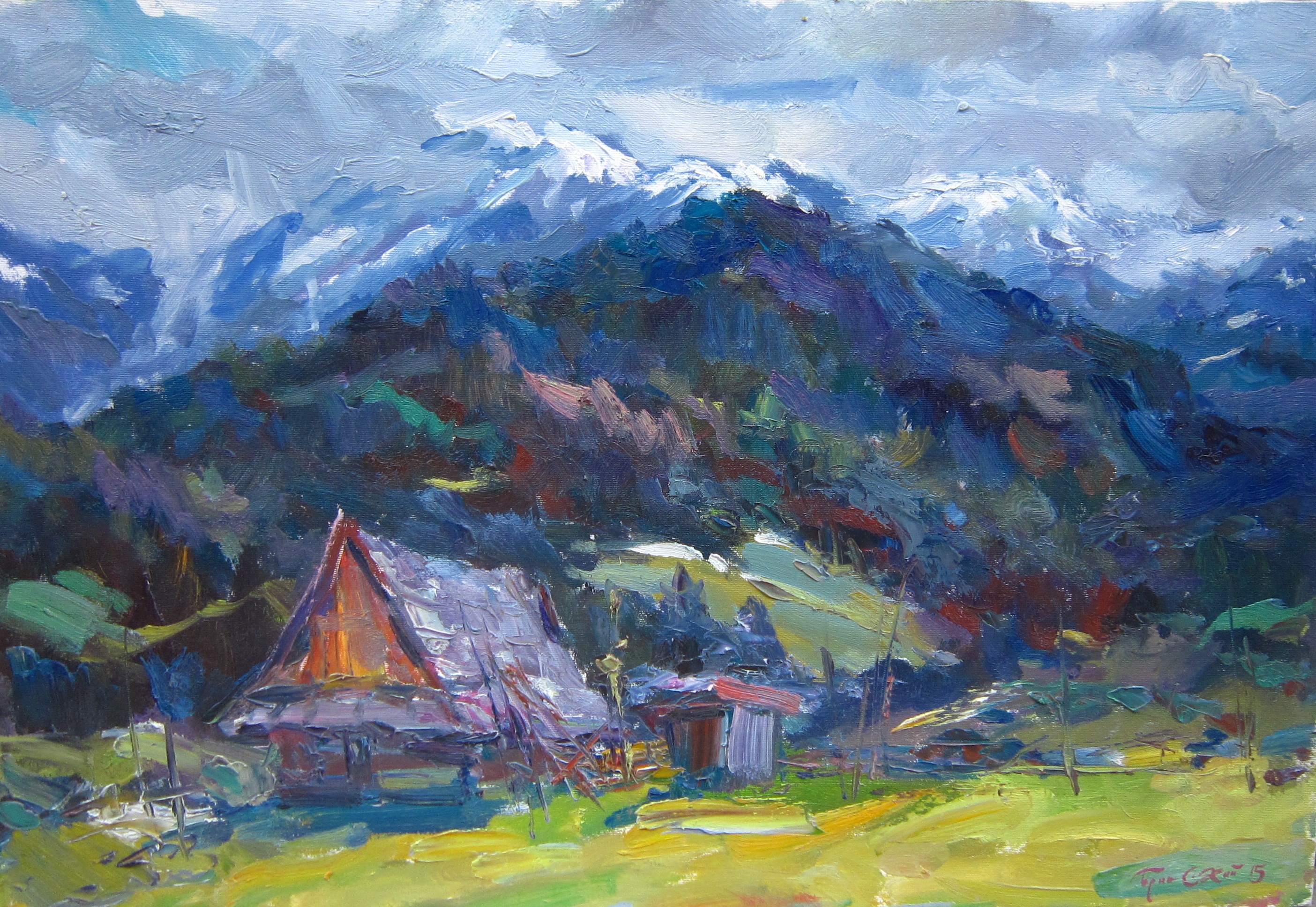
The painting "Spring in Dzembronia"
It contains all the components of a great sacred text: cosmogony, theology, eschatology, and martyrology. The last one is the most important, because Deodato Vibrini (as he was called in medieval Italy, where he restored icons from the East) still paints Ukrainian history. His visionism is conditioned to the core by the historical karma that has not been fully lived out. It's scary to think how much more black and red is in front of us.
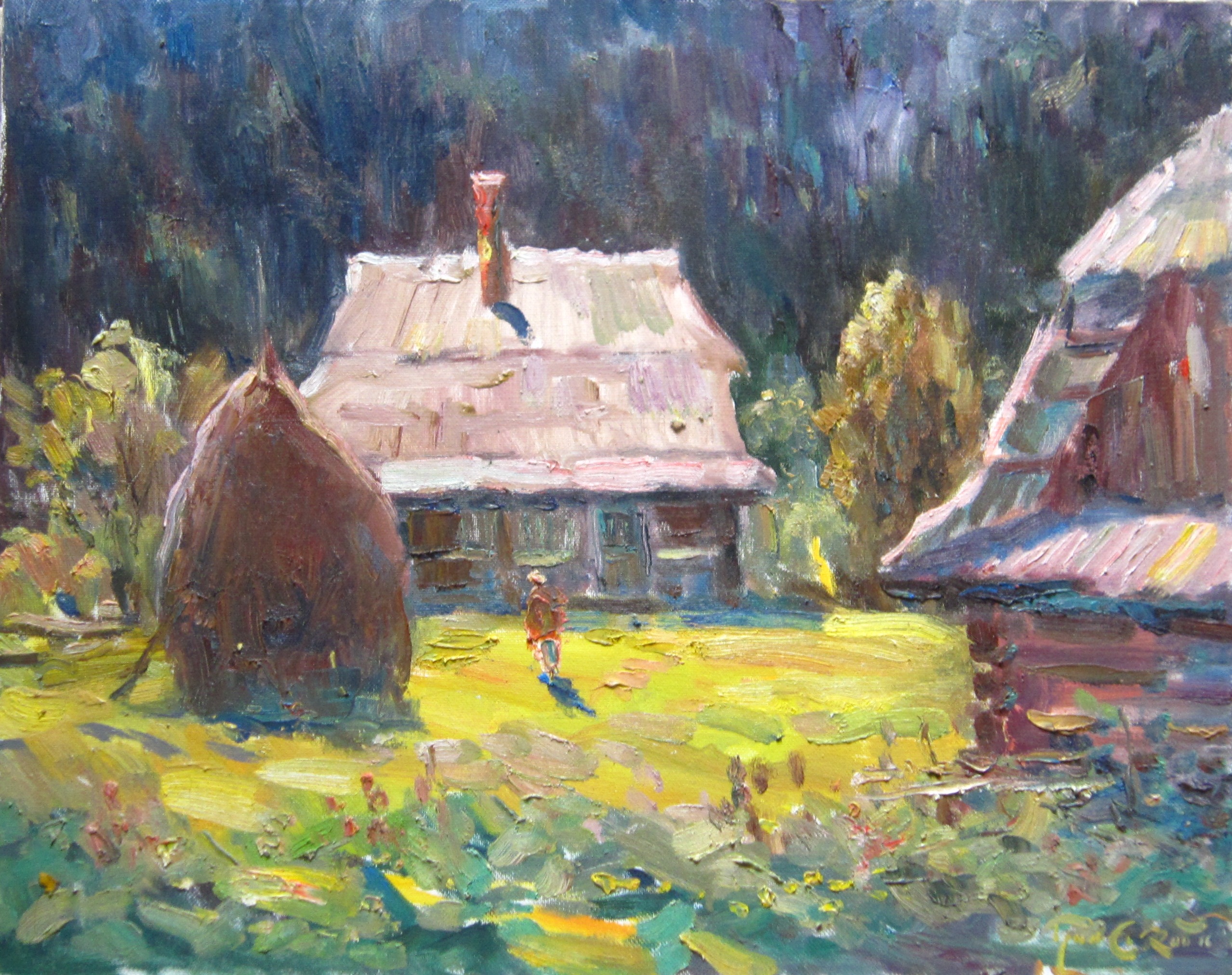
Painting "Afternoon in Vyshkiv"
This is how he sees it, and this is how it manifests itself on his canvas - as a terrible and endless process, a hike, a train, and a draft. Especially the draft, because of all the four elements, he prefers fire and wind - the one that rattles and vibrates the most. Fire draught - firefighters don't let you lie - cannot be extinguished.
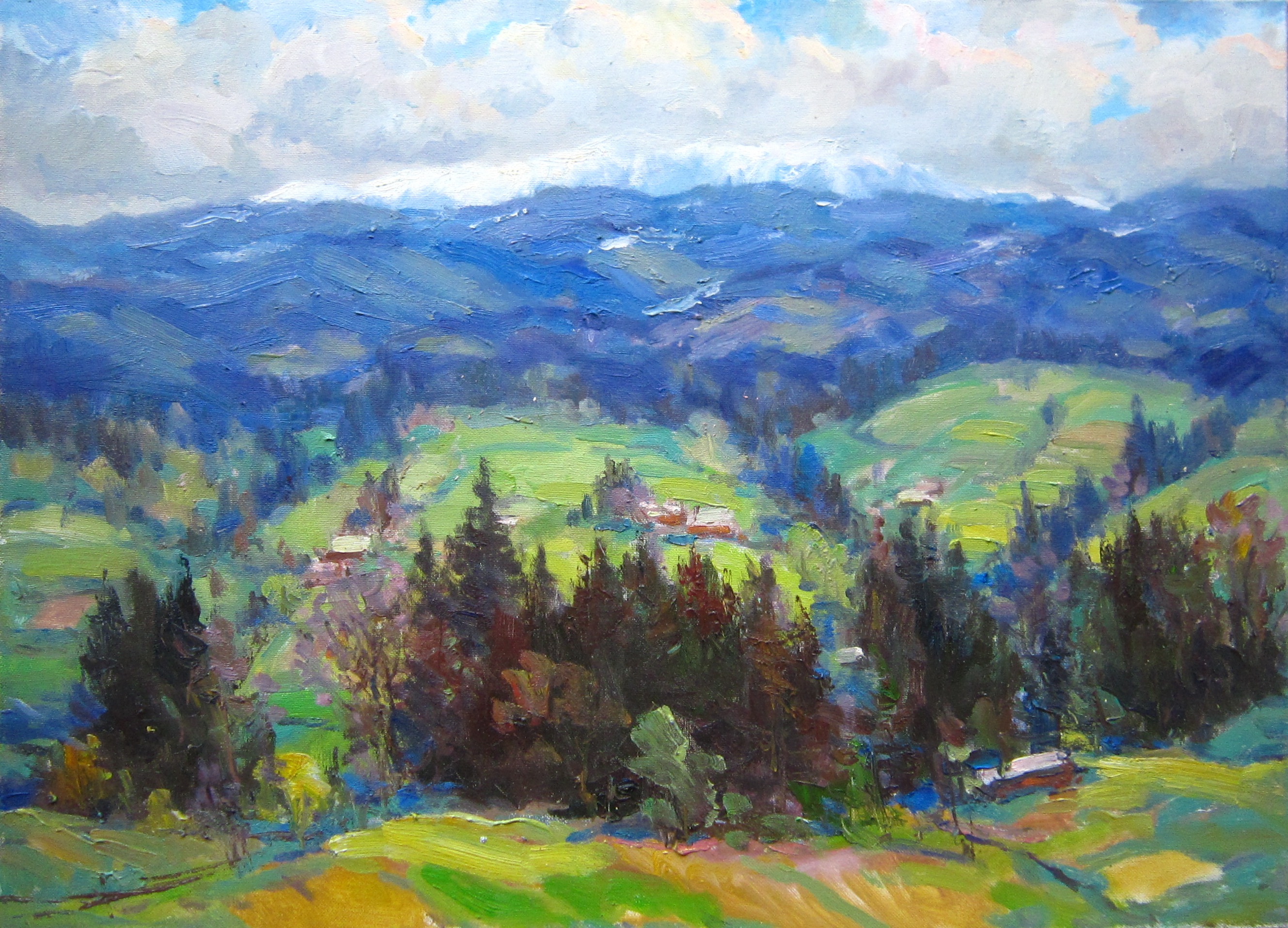
Painting "Snowy Gorgany"
Brynsky's vibration is a syndrome of a special reaction of a human person to an unfinished historical wrong. It is about the history that will never cease to be the present. In this regard, Brynsky's painting is a very modern painting. It is the end of the past and the beginning of the new millennium, a time when everyone is tired of inventing names.