Church of the Presentation of the Blessed Virgin Mary, Torun
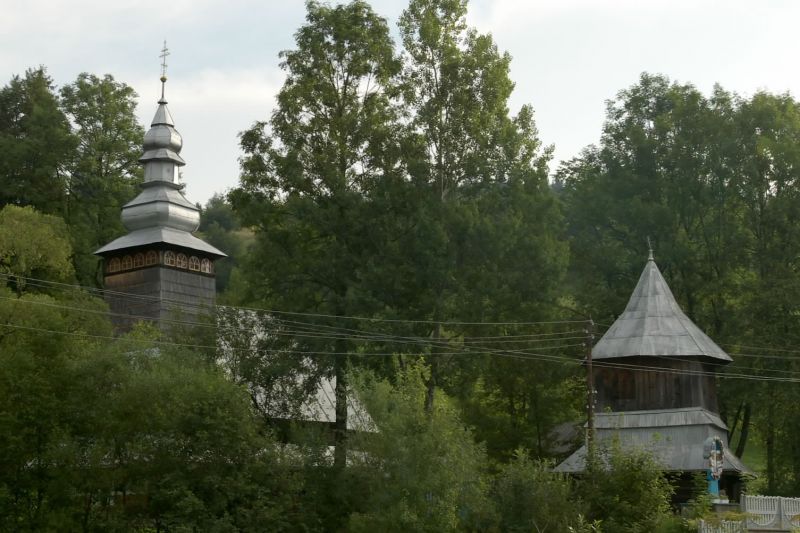
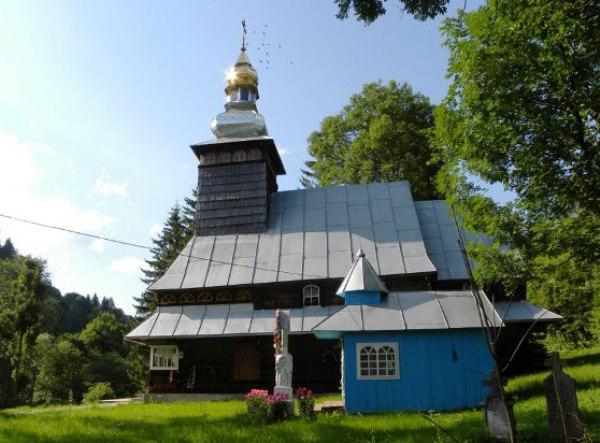
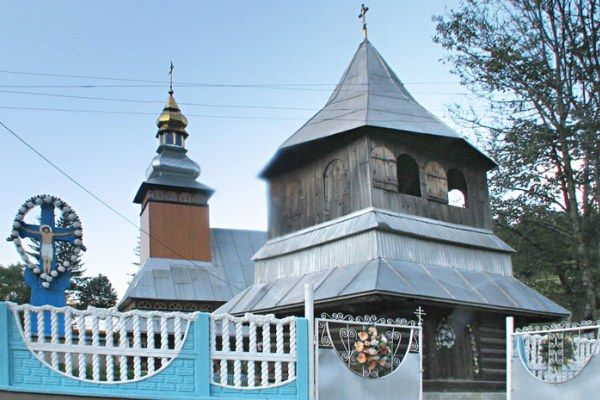
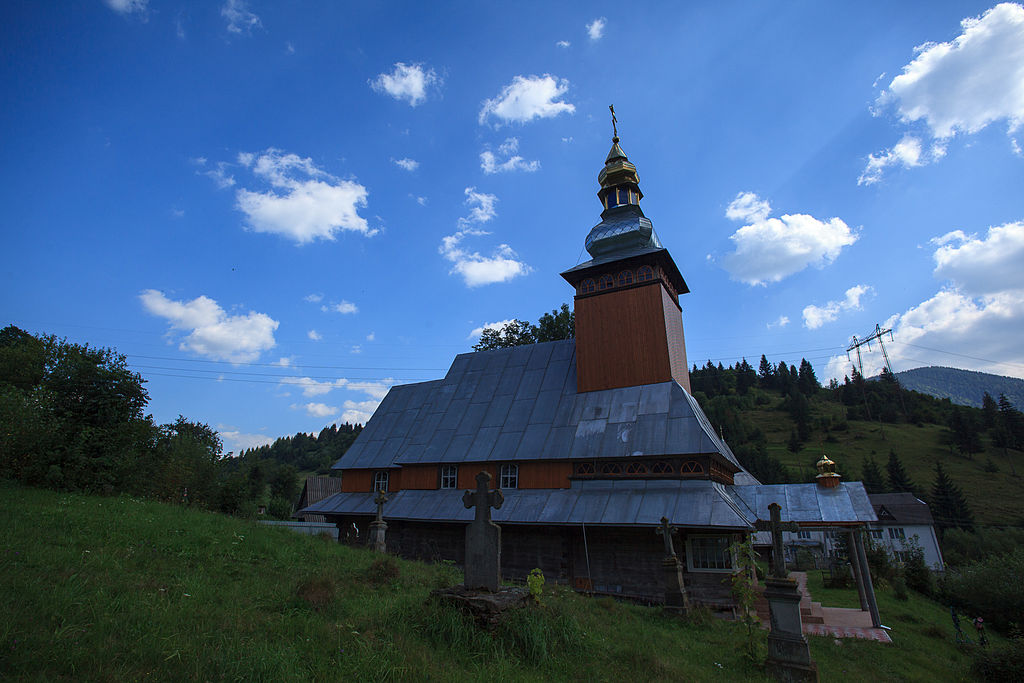
TheChurch of the Presentation in the village of Torun in the Zakarpattia region was built back in 1809 and is an architectural monument of national importance (No. 1127). The church has three log cabins and the highest tower. Its location is the central part of the village, a beautiful and cozy coast of the local river. The official name of the church is the Church of the Presentation of the Blessed Virgin Mary.
The church of spruce beams was built in 1809 in the center of the village near the turn to the village of Pryslip. The church was built by craftsmen who built St. Nicholas Church in the village of Pryslip. According to local legends, the church was built on the spot where the wind blew part of the roof of the church that was built there down from the mountain. The church is built of local trees from the forest that grew on the site where the village school, kindergarten, and teacher's house are located.
The church is built of natural spruce beams. The roof of the church has two slopes and a reliable flat floor. The log house on the east side is distinguished by a slightly lowered roof, which has an independent, autonomous appearance. Initially, a plowshare and shingles were used to cover the roof of the church, and the top was painted red. Poddash around the entire circumference of the church on the western facade passes into a beautiful two-tiered porch. The interior of the church is decorated with a unique decor of handmade carvings.
The church is three-storeyed with a high tower with a baroque finish above the Babinets. The corner joints of the log cabins are made in the form of a "simple castle" below the dormer (the crowns of the log cabins are profiled in the form of "kachuras") and in the form of a "dovetail" above the dormer. The nave log is wider than the altar and chancel logs, which are equally wide.
The gable roof of the church, consisting of a higher part above the nave and a lower part above the altar, was covered with shingles, but in 1994 it was covered with tin. The vaults of the nave and chancel are box-shaped, while those of the altar are flat. The walls above the chancel are covered with shingles and below with boards. The front part of the church has a porch with carved arcade-shaped columns and a carved cornice. The porch is currently glazed. The interior of the church is also decorated with a profiled passage between the narthex and the nave and carvings. The log walls in the middle of the church are not upholstered with other materials. The church was painted after the proclamation of Ukraine's independence by a local painter F.P. Foros.
The bell tower next to the church is also wooden, two-tiered, rectangular with a tent roof in the shape of an octagon covered with a roof. The bell tower's log house is made of pine circles, connected at the corners in a simple lock with a two-sided cutout. The crowns of the log house are profiled in the form of "kachuras". Arches are formed on the second tier.
The site for the church was not chosen by chance. There is a legend that the church used to be located on Mount Prychil. During a strong wind, the tourna (the topmost part of the roof) was thrown to the place where the Holy Vvedensky Church is now located. That is why it is in the center of the village that it pleases the eyes of guests, tourists, visitors, and villagers.
There were whole families of church building masters among the Torun residents. The technical knowledge of construction was passed down from father to son. Thanks to this, the tradition of building from wood is still alive today. The forest for the construction of the temple was cut down in the place where there is now a school, a kindergarten, and a teacher's house. 300 years ago there was a dense forest there.
The construction of the wooden church took place under foreign Austro-Hungarian oppression. But the ancient church in the village is a monument of unique folk architecture. The craftsmen who built this masterpiece preserved their way of life and culture, as well as their identity. The Holy Vvedensky Church was built in the Baroque style. However, foreign techniques creatively reworked by the craftsmen gave rise to new, distinctive features of national architecture. This is the uniqueness of the monument. The simplicity of the compositions and the absence of external decorations give the church austerity. The silhouette of the church is especially beautiful against the sky, surrounding mountains, and greenery.
The architectural monument is also unique in that it is imbued with the spirit of the nation, a commonality with the culture of all of Ukraine. In general, there are 13 churches in Mizhhiria district that are under state protection. It is the sacred duty of the current generation to preserve them and extend their life for posterity. This requires financial support from the state and improvement of the legal framework for the protection of historical and cultural heritage.
The plan for the church in Torun village was as follows. It is a combination of three log cabins - the main one, the central quadrangle for worshipers, the altar side and a small rectangular side for the narthex. The building consists of logs stacked on top of each other, forming so-called crowns. It was built by craftsmen without a single nail. In the middle, the log house was not covered by anything, and the ceiling was curved like a box vault. The fact that the church was built by the Orthodox community is evidenced by the icons of those times that have survived to this day. But under the influence of foreign oppression, the church was converted into a Greek Catholic church. We learn about this from old church books. The bell tower is separate from the church. During the period of independent Ukraine, a chapel was built near the church.
The roof of the church is not just a tetrahedral tent with a dome. In fact, the church's tent is a five-tiered one, where three tiers are tetrahedral and the other two are octagonal. And the covering ends with an octagonal dome.
The inside of the church was painted by painters. The church's paintings followed a well-established pattern of canonical subjects. They occupied the central, northern, and southern walls and were also placed in the altar. The most famous icons are the Passion of Christ and the Last Judgment. The central wall depicting the Passion of Christ is called the iconostasis.
Icons of the Mother of God are especially revered. They radiate charm, warmth, and earthly maternal tenderness. The church also has icons of St. Nicholas, the Archangel Michael, and others.
Folk craftsmen used carvings to add to the splendor of the church: the beautifully decorated entrance door, the rounded top, the carved Tsar's Gate to the altar, and two small columns that separate the central part of the church from the narthex.
During the Soviet period, the church was closed and preserved as an architectural monument. Prayer services were held here only on Easter. But the church twenty kept the church in good condition. When Ukraine became independent, church life resumed here. A local painter, Foros F.P., painted its southern and northern walls and ceiling.
Location on the map
Comments
Places to stay nearby
All stays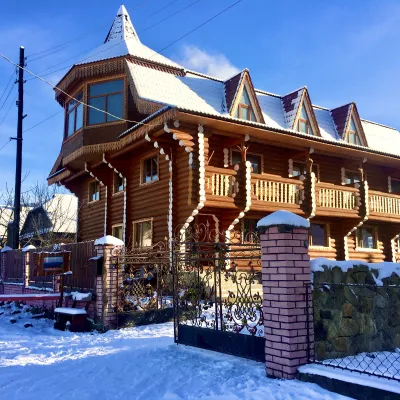 HotelChayna KhataIvano-Frankivsk9.2 km from Church of the Presentation of the Blessed Virgin Mary, TorunHot tubBBQKitchen
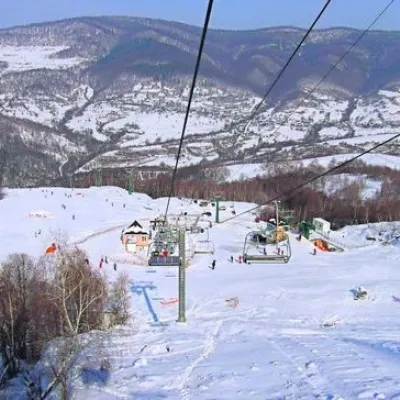 Ski resortSki Resort "Vyshkiv"Vyshkiv9.2 km from Church of the Presentation of the Blessed Virgin Mary, TorunSauna
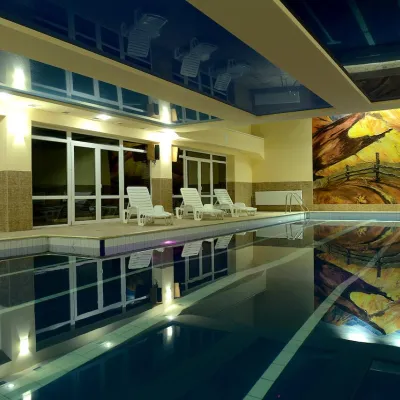 HotelHotel "Yalynka" VyshkivVyshkiv9.4 km from Church of the Presentation of the Blessed Virgin Mary, TorunPoolSaunaSPANearby: Big Megla 9.9 km
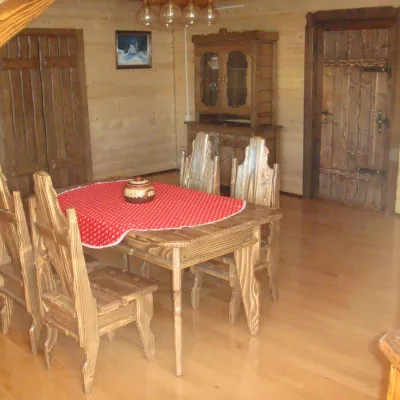 HomesteadGuest House "Zator" VyshkivVyshkiv9.4 km from Church of the Presentation of the Blessed Virgin Mary, TorunPoolSaunaKitchenNearby: Big Megla 9.8 km
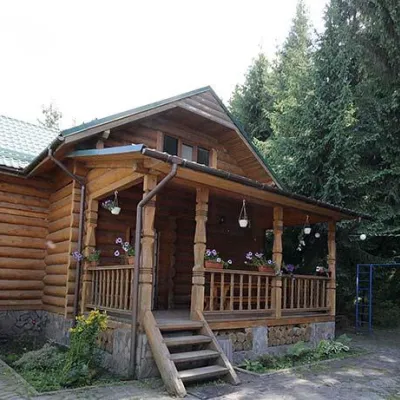 CottageCottages "Pid Lisom" VyshkivVyshkiv9.7 km from Church of the Presentation of the Blessed Virgin Mary, TorunHot tubPoolSaunaNearby: Big Megla 9.3 km
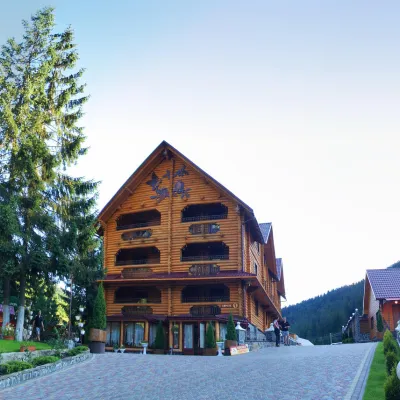 HotelHotel and Restaurant Complex "Arnika" Synevyrska PolyanaSynevyrska Polyana11 km from Church of the Presentation of the Blessed Virgin Mary, TorunHot tubPoolSaunaNearby: Ozerna Mountain 2.9 kmPolonyna Hycha 8.5 km6 trails
Trails nearby
All trails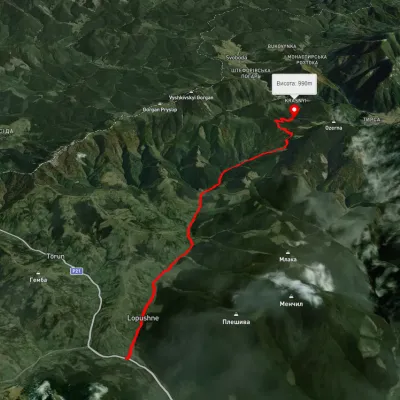 ModerateOne-dayUnmarkedLopushne village Lake SynevyrElevation profile587–1 118 m12 kmascent 652 m≈ 4.5 h walkingunder 1 km from Church of the Presentation of the Blessed Virgin Mary, Torun
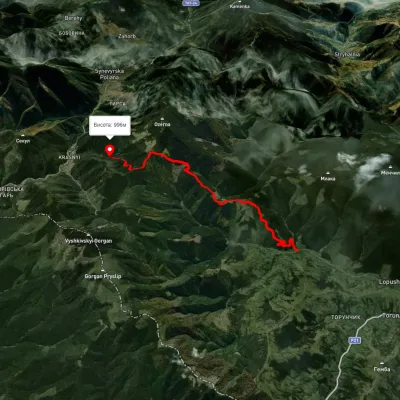 ModerateOne-dayMarkedLopushne SynevyrElevation profile656–1 170 m9.5 kmascent 1 011 m≈ 4.5 h walking3.8 km from Church of the Presentation of the Blessed Virgin Mary, Torun
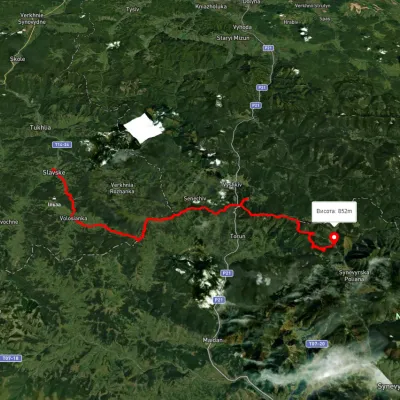 HardMulti-dayUnmarkedSlavske village to Lake Synevyrvia the Bukovets PassElevation profile583–1 328 m53.8 kmascent 2 170 m5.1 km from Church of the Presentation of the Blessed Virgin Mary, Torun
Nearby attractions
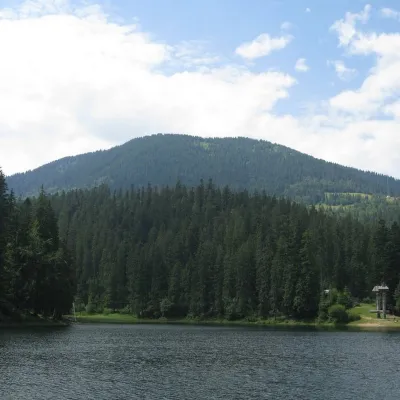 PeakOzerna MountainSynevyraltitude 1 496 m9.2 km from Church of the Presentation of the Blessed Virgin Mary, Torun6 trails to the topMount Ozerna (+1496 meters) rises above Lake Synevyr. The ascent begins in the village of Torun.
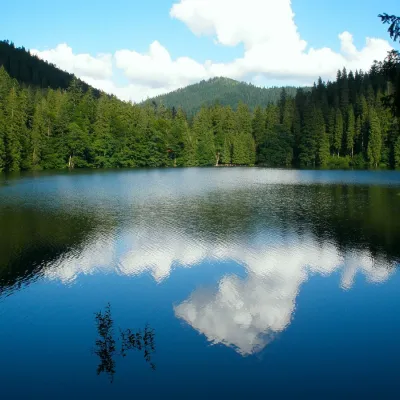 LakeSynevyr Lake Synevyrska PolyanaSynevyrska Polyana10 km from Church of the Presentation of the Blessed Virgin Mary, TorunLake Synevyr, located on the territory of the National Nature Park of the same name in Mizhhirya district of Zakarpattia region, is the largest and one of the most...
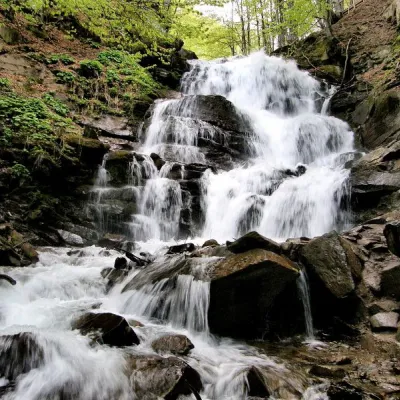 Waterfall"Shypit Waterfall" PylypetsPylypets22 km from Church of the Presentation of the Blessed Virgin Mary, TorunIn a cozy corner of the Carpathian Mountains, among the evergreen mountain forests and steep, sharp cliffs, lies the most full-flowing and beautiful waterfall in...