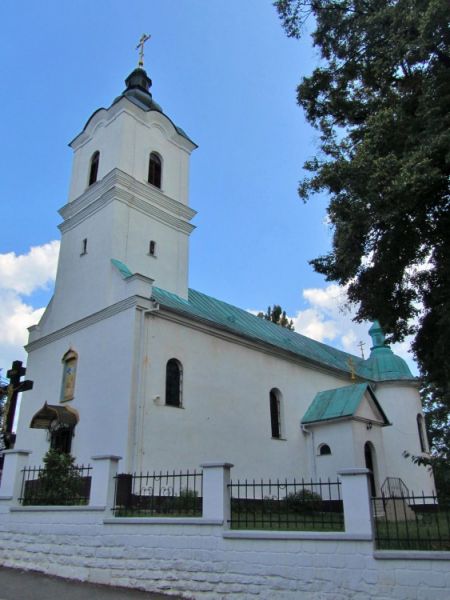
Church of the Transfiguration, Uzhhorod
The TransfigurationChurch is a cultural heritage site in Uzhhorod, one of the oldest church buildings in the region. Most sources date the construction of the building to the 18th century, although there are earlier references to the church building. The Greek Catholic Church on Tseholnia Street is associated with the lives of many Uzhhorod figures. The address of the monument is 2 Tseholnyanska Street. Other names for the building are also common: Tseholnyansky Church, Church on Tseholnya, Holy Transfiguration Church. It is a monument of local significance according to the order issued by the Department of Culture of the Transcarpathian Regional State Administration. Currently, the rector is Archpriest John Molanych.
In the 18th century, the idea of building a new church in Uzhhorod arose. According to the decision of the city treasury, a convenient location for the church was to be found and the construction process was to begin. The choice fell on a plot of land that was owned by the Dolynai family at the time and was located on Tseholnia Street. This event dates back to 1787. When the land was purchased, construction began, which was supported by the city treasury. Father Ivan Shastai of Uzhok participated in and contributed to the construction of the new church.
There is an assumption that Bishop Andrii Bachynskyi consecrated the church in honor of the Transfiguration of the Lord. According to historical sources, construction of the church began in 1787 and was completed in 1802. However, it is difficult to determine the exact date of the church's foundation due to discrepancies in documents and historical sources. The first mention of the church, which was similar in description and characteristics, dates back to the mid-18th century, when Bishop Mykhailo Olshavsky visited Uzhhorod. It is noted that the building was constructed of stone and had three towers.
Chronicles mention that it was a Greek Catholic church. A map dated 1763 confirms this information and shows the location of the church building. The data found in these historical documents coincide with the location and layout of the Transfiguration Church. Employees of Ukrzakhidproektrestavratsii conducted a study of the construction of the church facility and developed a project for restoration measures. During the research, facts were discovered that testify to the similarity of the existing object and the one mentioned by the bishop in historical chronicles.
The building was designed according to a plan drawn up by architect Joseph Friedman. Some historical sources indicate that the building was designed by J. Friedhoffer. The Church of the Transfiguration of Jesus Christ was built, among other things, thanks to the proceeds from the treasury. The documents mention the participation of the Lyakhovych, Chersky, and Ivan Ratz families in the construction of the church. In 1805, the number of believers in the Holy Transfiguration parish exceeded 2,370. In 1837, according to a decree of the Pope, the church was granted a full holiday for the Feast of the Transfiguration.
The middle of the 19th century was marked in the historical life of the church by the construction of a parish school, where children of the parishioners could study. The teacher of this institution was Andrii Repai, who acted as the editor of the Uchytel newspaper and was the head of the Uzhanska Teachers' Union. Andrii Pentek, who was the regent of the choir, also taught there. The number of students at the school varied, with 60 to 150 children of the parishioners attending at different times. In the first half of the 19th century, the rector of the Tseholnia church was the educator Mykhailo Luchkai.
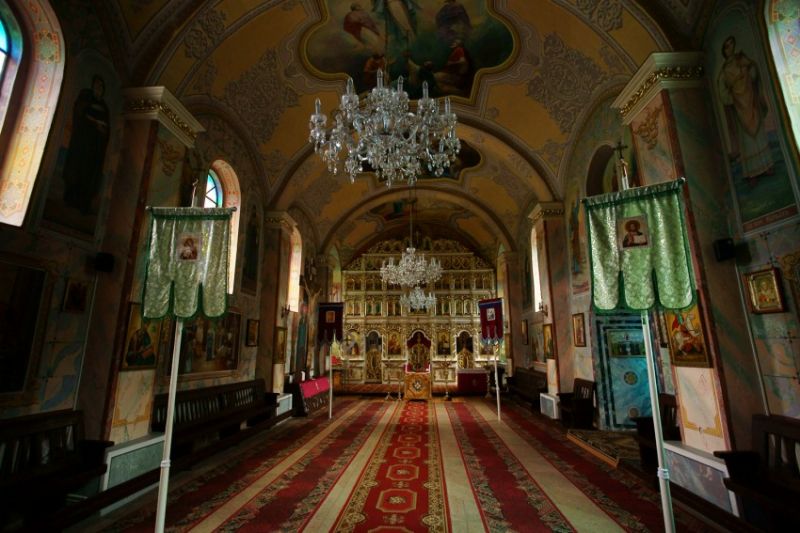
From 1802 to 1949 the church was a Greek Catholic church. In 1945, the school, which functioned at the Transfiguration Church, ceased its activities. In 1949 the church was transferred to the Orthodox community, and in 1951 the Transfiguration Church was closed. Its property was transferred to the Cathedral, and part of it remains there today. The iconostasis of the church ended up in the Storozhnytsia Church of Saints Cyril and Methodius. The church bells were destroyed.
In 1953, the church building was transferred to Uzhhorod State University, and in the 1960s, when it was rebuilt, the premises began to be used as a computer center of the University of Uzhhorod. In 1989, the church was transferred to the UGCC, the university was moved out of the church building, and the church building on Tseholnia Street began to return to normal life. Restoration efforts were carried out by the Mukachevo Greek Catholic Diocese together with the city authorities.
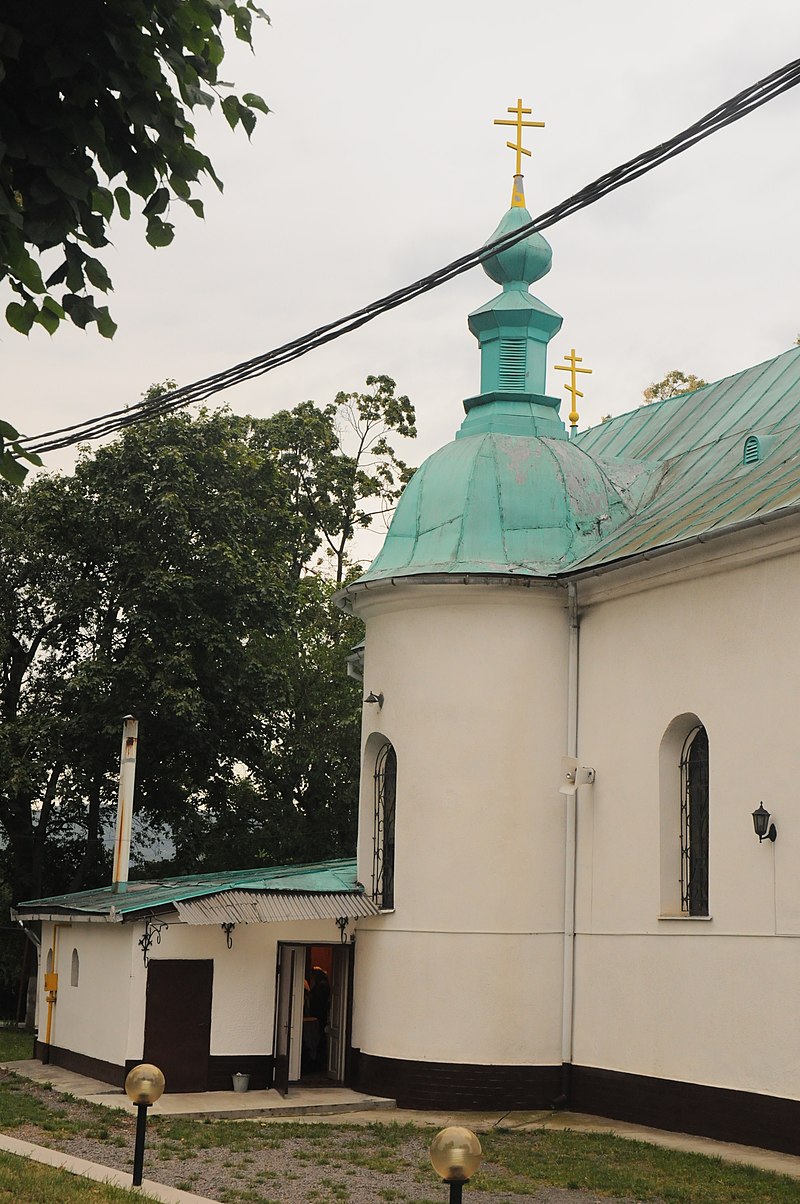
In the early 1990s, the church was transferred to the Orthodox community. In Uzhhorod, the celebrations of the Transfiguration of the Lord traditionally begin at the Transfiguration Church on Tseholnyi Square. In 2012, restoration work was carried out on the church domes due to their poor condition.
Vineyards were located near the church. A stone wall separated them from the church building. A rose garden and an orchard were located near the church. In 1897 the church was renovated. The external and internal changes were reflected in the following: the walls were whitewashed, the chancel was covered with tin. The choirs were painted. At the end of the 19th century, the chancel was completed. There is an assumption that at that time Ihnatii Roshkovych painted the altar icon. There is information about repairs carried out in 1906. The church retained its original appearance until the second half of the 20th century.
In the 1960s, the structure of the window openings was changed, the vaults were destroyed and replaced with flat reinforced concrete floors. The bell tower, which was located on the western façade, was dismantled to the level of the cornice surrounding the walls of the church. The walls of the church once contained paintings created by Hungarian artist Ignatius Roszkowicz. However, they disappeared in the 20th century.
Accommodation around Church of the Transfiguration, Uzhhorod:


Boutique Hotel "Villa P" Uzhhorod
Vulytsia Kapitulna, 22, Uzhhorod, Zakarpatska Oblast, Ukraina


Which trails pass by Church of the Transfiguration, Uzhhorod?
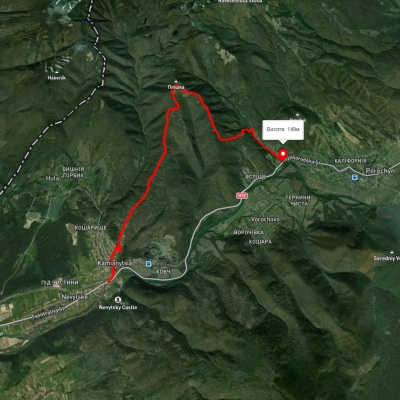
We suggest these hiking trails through or near Church of the Transfiguration, Uzhhorod: Kamianytsia village, via Antalovetska Poliana and Yarok village to Uzhhorod, Carpathian Metro hiking route, Yarok village, via Antalovetska Poliana to Nevytske village, Kamianytsia village – Mount Plishka, Kamianytsia village, via Mount Plishka to Perechyn village, Kamianytsia village – Mount Plishka – Kamianytsia village

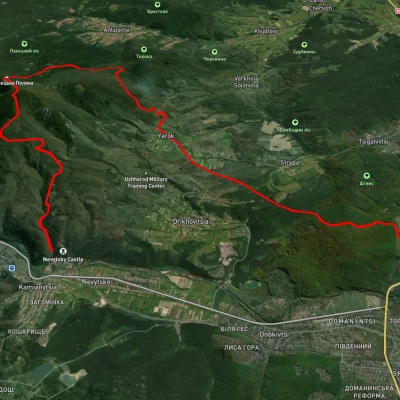
Kamianytsia village, via Antalovetska Poliana and Yarok village to Uzhhorod
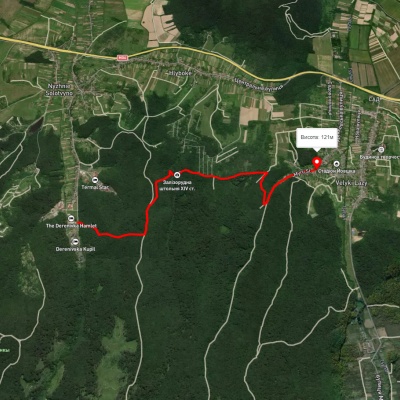
Carpathian Metro hiking route
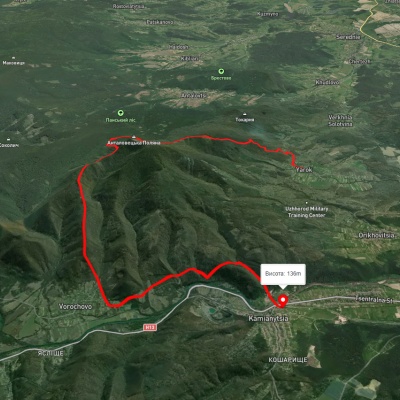
Yarok village, via Antalovetska Poliana to Nevytske village
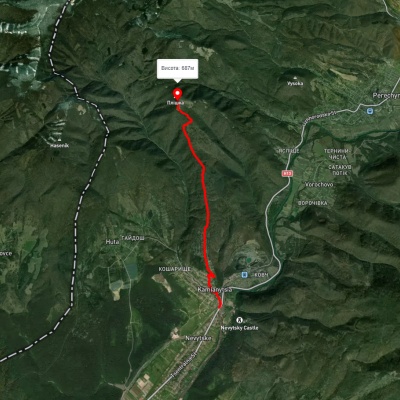
Kamianytsia village – Mount Plishka