The White Elephant Observatory on Mount Pip Ivan Chornohirsky
The construction of the White Elephant Observatory on Mount Pip-Ivan Chornohirsky(the route along the Chornohirsky ridge starts from this two-thousand meter high peak) began in the summer of 1936, designed by architects K. Marczewski and J. Pogoski (who were recognized as the best in a closed competition), and was completed by the Polish Ministry of Air Defense in July 1938.
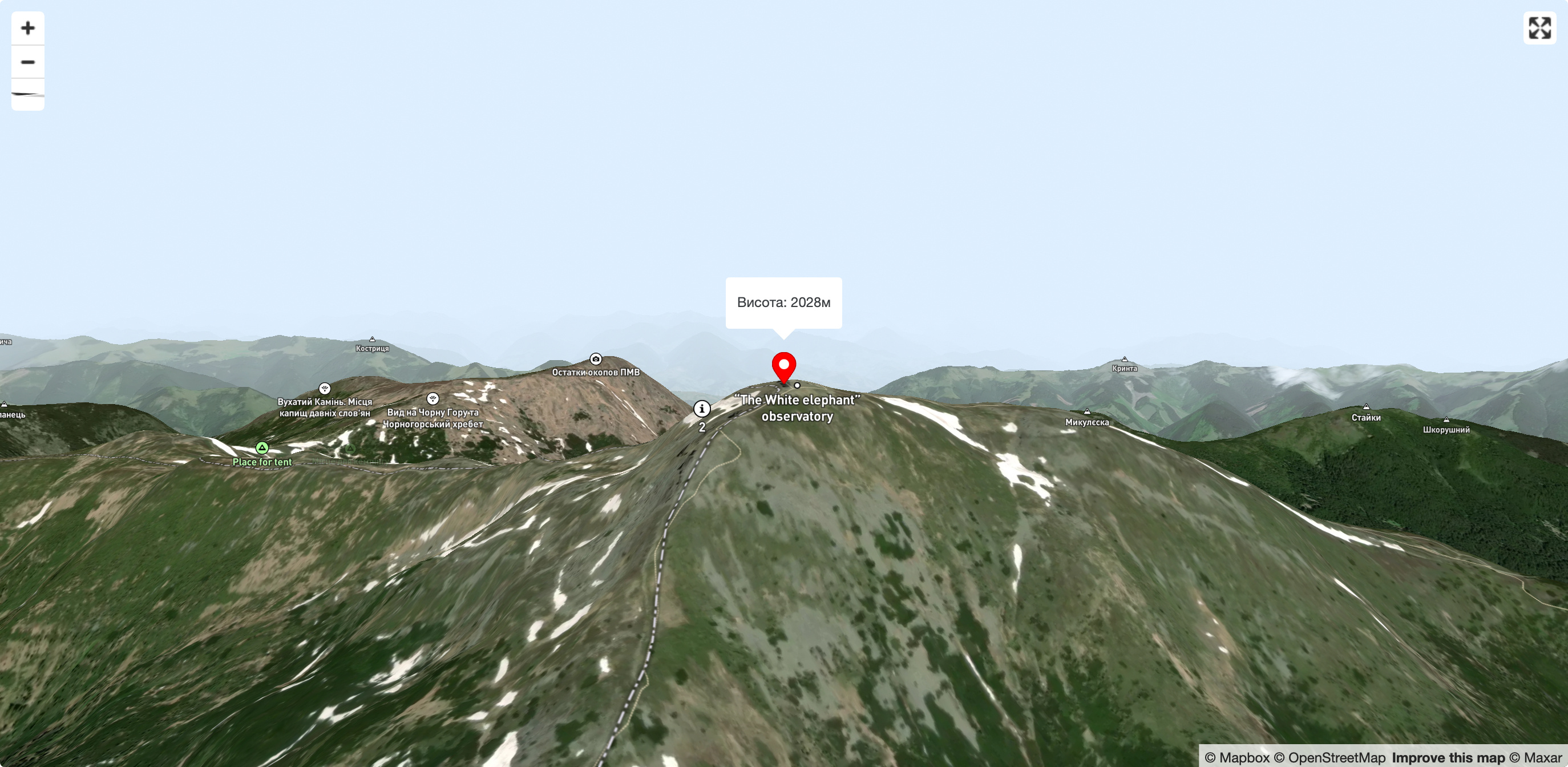
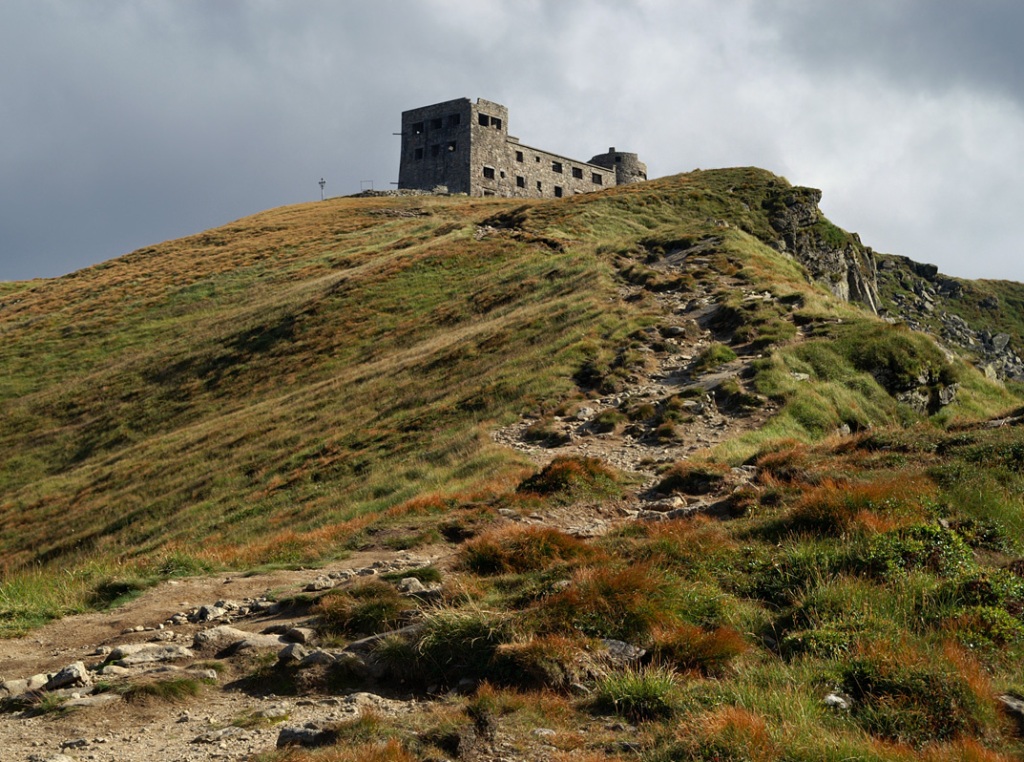
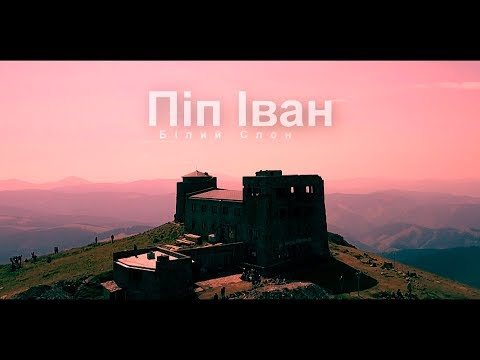
The station was built at an altitude of 2028 meters above sea level. Thanks to it, Mount Pip-Ivan Chornohirsky is visible from the neighboring Carpathian peaks. The building has the shape of a mirror image of the Latin letter "L", and at the top there is an astronomical tower with a copper dome with a diameter of 10 meters and a modern, expensive telescope (the dome disappeared after World War II and it is said that it is still used to make cheese somewhere deep in the Carpathians). The walls of this building are 1.5 meters thick, with 43 rooms and 57 windows. The gable roof was covered with copper tin. The two floors on the east side and five levels on the west side make the building majestic and inaccessible. Although there are rumors that the observatory itself is located deep in the bowels of the mountain, and the building at the top is only for beauty.
The observatory was used not only for scientific research but also as a military facility. Despite the fact that research was conducted at the observatory for less than 14 months, this period went down in Ukrainian and Polish history. During its existence, the observatory changed hands several times, but none of them stayed here for long. First, there were Poles who evacuated deep into the Carpathians on the eve of World War II, then there were Hungarian troops and the Soviet government.
Maciej Bielicki made the first observational photography with the new device in 1937. He managed to get four photos of the planetoid Interamnia. A few months later, two photographs were taken of the comet Yuroff-Akhmarov-Hassel. These works are known from journal publications. The data obtained in this way were published in the Warsaw Observatory Journal on January 19 and 31, 1938. Later, from April 19 to May 4, 1939, two photographs of Comet Jouff-Akhmarov-Gassel were published. The heritage of this period is a large amount of photographic material. However, the lack of knowledge did not allow us to properly assess the importance of the work. In the spring of 1939, Volodymyr Zon, a doctor of science, started working at the observatory. He photographed stars in two colors, which differed in the intensity of their luminescence in black-and-white photographs. It was impossible to capture the red color of stars on such film, so it was impossible to compare the intensity of the glow of white and yellow stars. The work concerned the Milky Way constellation. Dr. Zohn's unfinished material, which was stored in Warsaw, was completely destroyed during the Warsaw Uprising of 1944.
In April 1939, Master Stefan Szczyrbak arrived at the observatory to conduct astronomical work (on behalf of Professor Kaminski). He made about 70 visual estimates of the brightness of the blinking stars, made a series of drawings of the rotation of Mars, and determined six positions of Comet Brooks. He spent about twenty hours searching for new comets using an 80-millimeter telescope. Stefan Szczyrbak made observations at the observatory, where he died during the war.
The entire archive of the observatory was destroyed, and the locals stole everything that could be useful in the household, leaving only the mount from the astrograph, which they could not move.
By the way, the top of Chornohora is the highest place where there is a man-made structure ("White Elephant"), where people used to live and work and where there is a cultivated plot of land where even citrus crops were grown. The building got its name because in winter the observatory is so covered with snow that it really looks like a large white animal.
Today, the authorities intend to restore the observatory, as despite more than 60 years of destruction, the walls and foundation are in satisfactory condition. On the way to restoring the building, the first step is to alienate the territory from the Ukrainian National Park and restore the building's condition. Some claim that it would be beneficial to establish an institute of natural sciences here; Lviv University proposes to restore a high-mountain multidisciplinary station, and Professor Adamenko wants to establish a tourist center. Some think this way, others think differently, but it is unknown which of them will take the first step. The most difficult thing will be to find funding for the restoration and maintenance of the facility, for which the State Meteorological Institute once provided approximately 50 thousand zlotys per month. Now the building is empty and crumbling.
In summer, you can meet a tourist hiding from the weather or a shepherd. The observatory's glorious past is known only to old-timers... Now this famous hewn stone building has turned gray, the copper coating has been stripped off, the windows have been torn out, and the floor has rotted away, but there is hope that human hands will restore its former beauty. We want to believe that we will witness the second birth of the amazing building on Chorna Hora.
Historical information
After the First World War, the question of building a new observatory arose in Poland, as the existing one in Warsaw was becoming less and less suitable for astronomical observations due to the rapid growth of the city. However, the funds of the University of Warsaw and the Ministry of Religions and Public Education were not enough to realize this project.
In 1935, General and Engineer Leon Wierbetski, on behalf of the State Defense League, proposed to Professor Mykhailo Kamianski, director of the Astronomical Observatory of the University of Warsaw, to organize an astronomical department in the meteorological observatory that was to be built in the Carpathians, on the top of Mount Pip Ivan.
The construction of the observatory began in the summer of 1936, based on a project designed by architects K. Marczewski and J. Pogoski, which was recognized as the best in a closed competition.
The walls of the observatory, which was built in the constructivist style, are made of limestone blocks and are 1.5 m thick at the ground floor level and 1 m thick at the first and second floors. To insulate the interior, a layer of tarred cork is placed between the dry plaster and the masonry. The building has two floors on the east side and as many as five on the west side due to its location on a slope. Its gable roof was covered with copper sheets. On the south side there is a rotunda where the telescope was located. Materials for the construction were delivered from the Vorokhta railway station along forest trails by Hutsul horses or by hand. A lot of effort was spent on carrying thirty-three chests with dome elements and other details to the top of Mount Pip Ivan. The largest of them weighed 950 kg.
The grand opening of the observatory took place on July 29, 1938. After the outbreak of World War II, the observatory staff evacuated the most valuable equipment: five large-diameter lenses, two smaller lenses, two micrometers, and two chronometers. In November 1939, these items were delivered to the Budapest Astronomical Observatory, and at the end of the war they were sent to Vienna, from where they returned to Poland in the first postwar years. The mounted three-lens lens is now housed in the Śląsk Planetarium. The refractor lens served for several years in Ostrowik for visual observation of faint variable stars.
The White Elephant Observatory had its own water supply, boiler room, and accommodation for its employees. In winter, it was not always possible to get to work because it was very cold at the top, there could be several meters of snow and there was a danger of avalanches.
The building of the observatory on Pip Ivan and the remains of the equipment became the property of the Soviet authorities at the end of 1939. Until the last days of June 1941, meteorological observations were conducted here, and radiosondes and pilot balloons were launched. The director of the observatory at that time was M. Korostenko. After the German attack on the USSR, a Hungarian troop unit was stationed in the observatory building until the late fall of 1941. In May 1942, the Observatory was visited for inspection purposes by the Commissioner of Astronomical Observatories of the General Government, a member of the NSDAP, K. Walter. By his order, the metal parts of the astrograph were transported to Lviv, where they were stored until recently in the physical building of Lviv State University on Cyril and Methodius Street.
Later, the building was abandoned and local residents stole everything of any value, including copper sheets from the observatory's dome and roof. After that, the observatory's activities were never resumed.
The main astronomical instrument of the observatory was a 33-centimeter astrograph manufactured by the Sir Howard Hrabb Parson Co. of Newcastle, Great Britain.
It was mounted on two pillars according to the English system, which guaranteed great stability. The movement was provided by precision electric motors, automatically regulated by a special chronometer with second contacts. The astrograph was housed in a dome (also made in England) with a diameter of 6 meters, covered with copper tin. The dome was rotated by electric motors. The astrograph was assembled by Master Maciej Bielicki, who also made the first observations to verify it in November 1937.
Bielicki managed to obtain 4 photographs of the planetoid (704) Interamnia. A few months later, he took two pictures of the comet Yurlov-Akhmarov Hassel. These works are known from journal publications. All other materials were lost during the Warsaw Uprising in 1944.
The head of the observatory was a meteorologist, Master Vladyslav Midovych. Meteorological observations were also carried out by Franciszek Wiatr, Bernard Liberra, and Stefan Szczyrbak. The latter also conducted astronomical observations and was at the same time the deputy director of the observatory.
During its existence, the White Elephant Observatory was considered the second most important in Europe and the sixth in the world. It was equipped with state-of-the-art technology, but its main attraction was an astrograph with a 33-centimeter lens. It allowed the observatory's scientists to study planets and comets.
The White Elephant Observatory has been repeatedly mentioned by Ukrainian writers in their works. Yuriy Andrukhovych writes about it in his novel 12 Hoops and in his essay Carpathologia Cosmophilica; the heroine of Tania Maliarchuk's novel From the Top Down. The Book of Fears", and the events at the observatory are woven into the plot of Maria Rymar's novel The White Elephant.
Restoration
When the Chornohora Ridge became part of the USSR in 1939, they tried to continue the work at the observatory. However, two years later, the walls of the White Elephant were used as an observation post for Hungarian troops, and since 1944 the building has been empty, with valuable equipment taken abroad. The walls of the observatory are about 1.25 meters thick. It is thanks to this that the White Elephant has stood for 70 years without any repairs on the top of the mountain.
The Ivano-Frankivsk branch of the Ukrzakhidproektrestavratsiya institute carried out architectural and archaeological measurements and engineering surveys. The technological laboratory carried out work to examine the composition of building materials and mortars used in the construction of the building. At the request of GUAM, working drawings for the repair and restoration of the observatory were made. Unfortunately, the Main Department of Construction and Architecture of the Oblast State Administration (the observatory is on the balance sheet of GUAM) has not yet determined the functional use of the observatory.
The creation of a tourist center here is impossible (as the "customer" emphasizes), because the building is located on the territory of the Carpathian State Natural National Park. It should be emphasized that the park features unique subalpine and alpine forests and natural complexes in Central Europe. In total, the local flora includes more than 1,000 species of plants, most of which have excellent medicinal properties.
There are dozens of plants that are listed in the Red Book. Most of these species are found only in the Carpathians and need to be preserved for posterity. That is why it would be advisable to place an institute of medicinal plants in the restored building of the former observatory. If a part of the research center were located directly in the Carpathians, it would make it possible not only to study a particular plant throughout the year exactly where it grows, but also to predict methods of spreading them to lowland areas. This is one side of the story.
Given the current realities of independent Ukraine, the Astronomical Observatory of Lviv University considers it necessary to restore a high-altitude multidisciplinary station in Chornohora to conduct the following studies: meteorological, astronomical, environmental, biological, seismic, and cosmic ray. This station should also be of interest to the Ministry of Defense of Ukraine as an important border facility.
The restoration of the observatory began recently. In 2012, the Polish Ministry of Culture allocated 70 thousand dollars for the restoration of the White Elephant Observatory building. This money was provided as part of a grant program in which Vasyl Stefanyk Precarpathian National University is a partner. The university is also contributing its own money to the restoration of the observatory - 25% of the total amount.
In the future, it is planned that the observatory will house a meteorological station and other research centers. There may also be special rooms where tired tourists can spend the night.
Getting there.
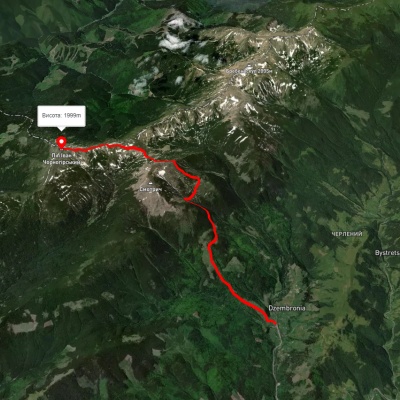
The White Elephant Observatory is located on the top of Mount Pip-Ivan Chornohirskyi, on the border of Ivano-Frankivsk and Zakarpattia regions. The most convenient way to get here is from the village of Dzembronia via Mount Vuhaty Kamen or Smotrych. First you need to get to Verkhovyna. From there, you can get to Dzembronia by bus, which runs several times a day.
You can also get to Mount Pip-Ivan Chornohirsky from the Shybene checkpoint via the mystical Lake Maricheika (if you choose this route, do not forget your identity documents at home, because you will have to show them at the checkpoint). You can also try to get to the "White Elephant" through the Gropa meadow.
Accommodation around The White Elephant Observatory on Mount Pip Ivan Chornohirsky:


Which trails pass by The White Elephant Observatory on Mount Pip Ivan Chornohirsky?
We suggest these hiking trails through or near The White Elephant Observatory on Mount Pip Ivan Chornohirsky: Dzembronia village, via Mount Pip Ivan Chornohirskyi to Vesnarka polonyna, Transcarpathian Tourist Trail, Dzembronia village, via Mount Pip Ivan Chornohirskyi and Mount Smotrych to Dzembronia village, Vesnarka polonyna, via Mount Pip Ivan Chornohirskyi and Mount Dzembronia to Lake Brebeneskul, Dzembronia village – Mount Pip Ivan Chornohirskyi, Dzembronia village – Mount Pip Ivan Chornohirskyi




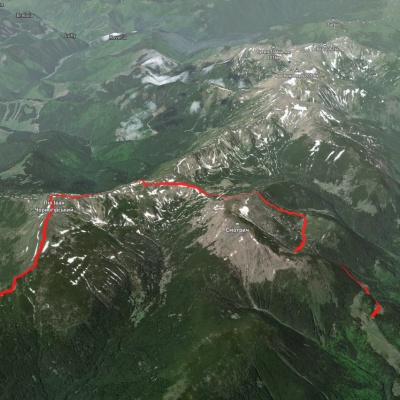
Dzembronia village, via Mount Pip Ivan Chornohirskyi to Vesnarka polonyna
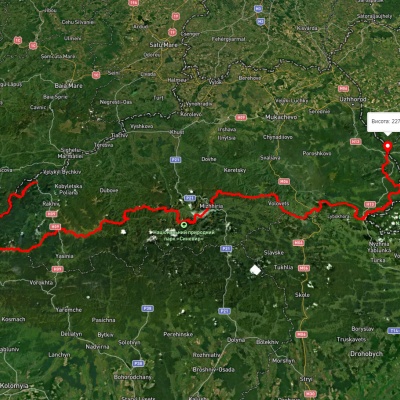
Transcarpathian Tourist Trail
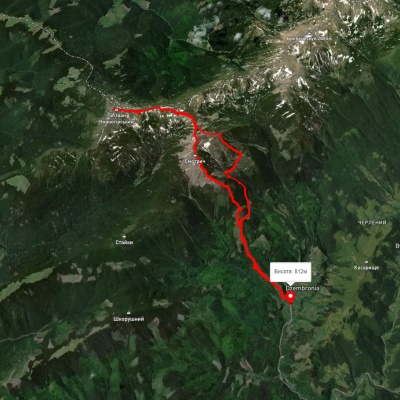
Dzembronia village, via Mount Pip Ivan Chornohirskyi and Mount Smotrych to Dzembronia village
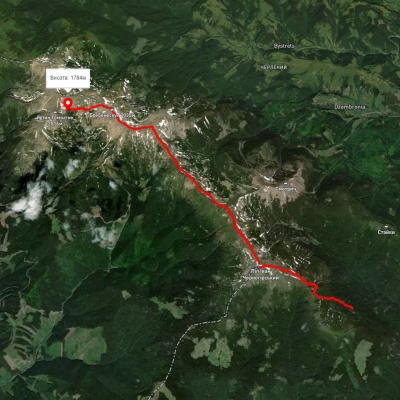
Vesnarka polonyna, via Mount Pip Ivan Chornohirskyi and Mount Dzembronia to Lake Brebeneskul