Angel's House
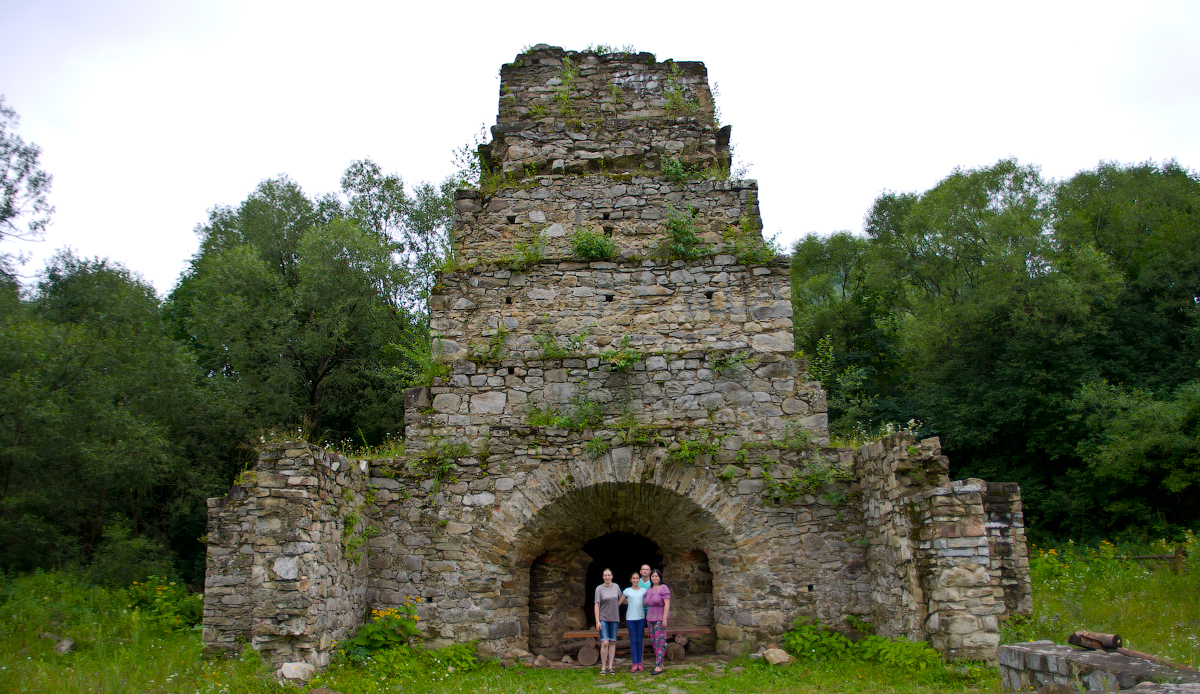
The blast furnace in the "Angeliv" tract in the Rozhniativ district of Ivano-Frankivsk region, between the villages of Lazy and Hrynkiv, is the only monument of ancient culture in Ukraine made in the nineteenth century that has been preserved in a state suitable for restoration.
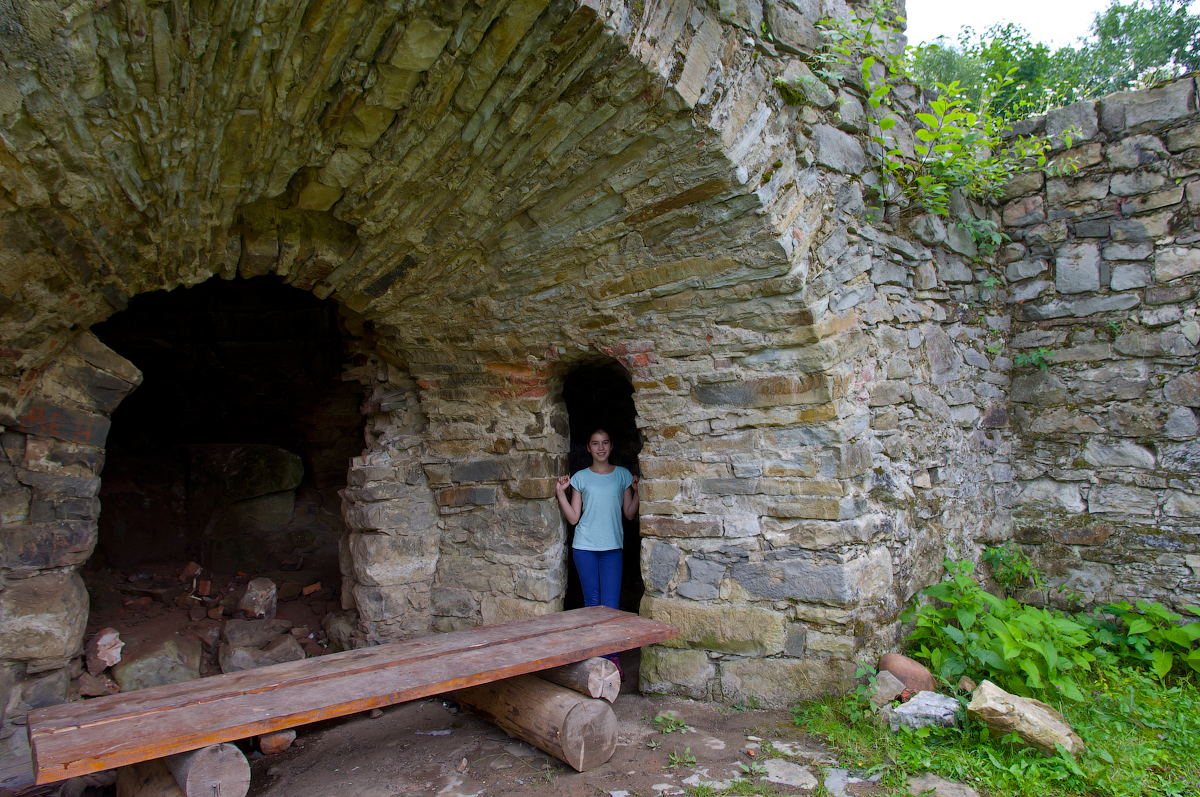
It was built in 1810 with the assistance of the Greek Catholic Metropolitan A. Angelovych, hence the name of the settlement "Angels". The stone walls of the furnace in some places reach more than 3 meters. The opening through which the cast iron was poured is as tall as a man. On the inner walls, the fire welded slag to the stones forever. Small shutters - holes in the upper part of the blast furnace and passages in the lower part - served to inject air with the help of a water wheel driven by a blower. A channel for water, which was supplied from the Limnytsia River, has also been preserved. The ore was fed into the furnace, which was sixteen meters high, along a specially constructed walkway on scaffolding and poured through the upper opening.
A site on the left bank of the cleanest river in Europe, the Limnytsia River, between the villages of Yasen and Hrynkiv, was chosen for the furnace, factory buildings, and the settlement of miners. Until 1812, the area was being settled, and a blast furnace and other industrial buildings were being constructed.
The blast furnace was initially operated by a team of German metallurgists. The construction of the facilities was carried out by local master carpenters using traditional folk construction techniques. The complex, in addition to the blast furnace, smithy, and forge, included the houses of the plant manager and supervisor, twenty two-apartment worker's houses, warehouses, stables, ox stables, and other outbuildings.
At that time, the guta had 12 mines, one high furnace, two hamarni (factories where iron was processed, refined, and frizzed with fire and hammer), and a forge for the production of nails. In 1813, 81 people worked at the hut: some at the mines, others with horses and oxen, and in auxiliary work.
At that time there were 15 similar blast furnaces in the Galician lands. Some historians of the time claimed that at that time Galicia produced more iron than a country like Portugal.
However, the Angelivka guta operated for only six years. Already in 1818 it was closed. Researchers cite various reasons: the poor quality of local iron ore, a lawsuit between Metropolitan Angelovych and the guta manager Hecker, and others.
The blast furnace in the Angels' hut was included in the State Register of Architectural Monuments of National Significance by the Resolution of the Council of Ministers of the Ukrainian SSR of 06.09.1979, No. 442, registration number 1196. Taking into account the uniqueness and historical value of the building, by the decision of the Rozhniativ District Council of 08.02.2007, No. 142-6/2007, the image of the domna was placed on the district's coat of arms.
Accommodation around Angel's House:


Nearby hiking trails near Angel's House:
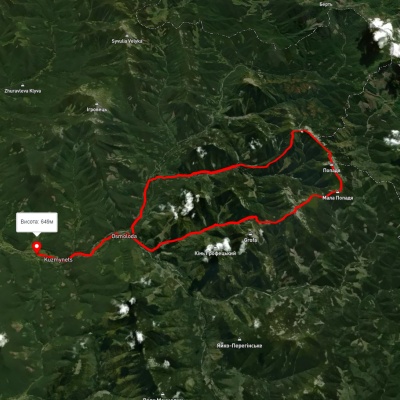
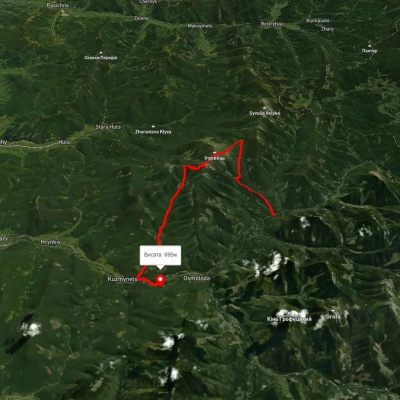
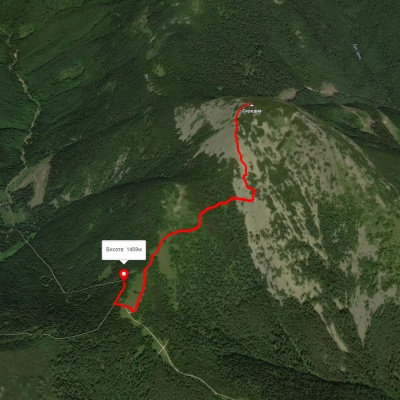
Which trails pass by Angel's House?
We suggest these hiking trails through or near Angel's House: Osmoloda village, via Plistse polonyna, Mount Koretvyna, Mount Mala Popadia and Mount Velyka Popadia to Osmoloda village, Osmoloda village, via Mount Ihrovets and Mount Vysoka to Osmoloda village, Hrynkiv village – Mount Serednia, Kuzmynets village – Mount Vysoka, Mount Velyka Syvulia, via Mount Borevka, Mount Ihrovets, Mount Vysoka and Mount Serednia to Osmoloda village, Stara Huta village, via Mount Vysoka, Mount Ihrovets and Mount Syvulia to Bystrytsia village