Church of the Nativity of the Blessed Virgin Mary, Pylypets
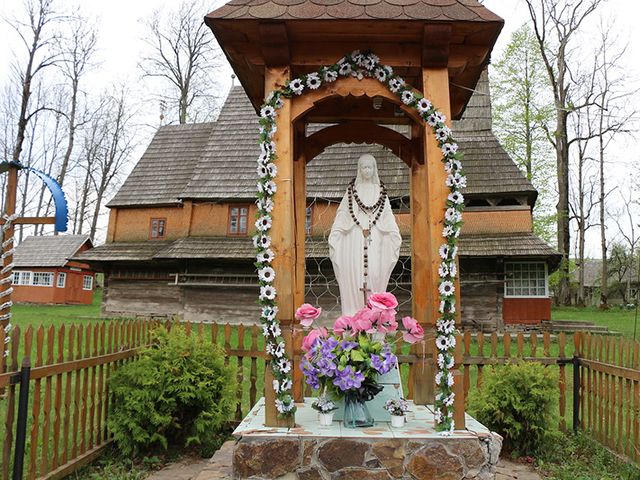
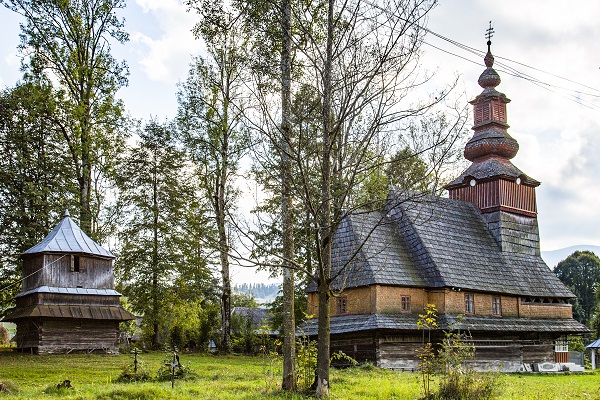
Connoisseurs of ancient architecture and travelers should definitely visit Transcarpathia, where almost every village has buildings that are local landmarks. One of them is the wooden Church of the Nativity of the Blessed Virgin Mary, which is located in the village of Pylypets, Mizhhirya district , Transcarpathian region. It is one of the best examples of the Baroque style of wooden church architecture, an architectural monument of national importance (No. 221 ) . The church building, built of spruce logs, darkened over time. This gave it a very mysterious and even mystical appearance, which further attracts and fascinates tourists.
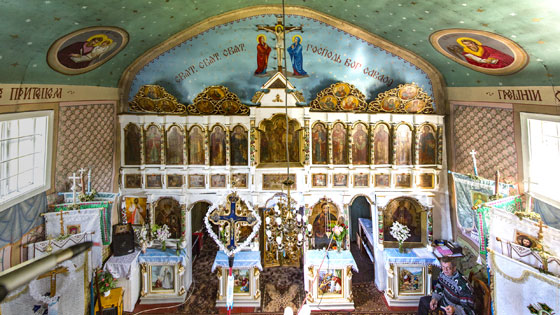
The Church of the Nativity of the Blessed Virgin Mary is a real monument to the Transcarpathian Middle Ages. The church is built of fir trees. However, the prevailing version is that the magnificent Baroque Church of the Nativity of the Blessed Virgin Mary was built of spruce beams from 1759 to 1762. In 1841, the church was restored, as evidenced by a plaque on the south wall of the church. You can get inside through the open porch on the west side (only during services or on holidays). There is a decorative dial on the church tower. The interior of the church and the iconostasis (eighteenth century) are compact. To the southeast of the church is a wooden two-tiered, square bell tower covered with an octagonal hipped top.
In 1979, the church was covered with new gutters. The forms of the building are strict and majestic. Equal-width babynets and nave form a larger log house, and the altar part is smaller. Both log cabins are covered with steep gable roofs. The main decorative load is borne by the western façade and the tower, crowned with Baroque forms. It is said that in 1939, the Hungarian district authorities offered the community to build a stone church in exchange for the wood of linden, ash, and poplar trees that grew around the church, but the people refused.
The church is also unique because the original 18th-century iconostasis has been preserved. The wooden two-tiered bell tower is even a little older than the main building, it was built in 1758.
The church was also repaired in the twentieth century, so it has been preserved in an almost authentic form to this day. It is dressed with shingles and a shingle. Only the lower pillared gallery has disappeared, turned into a kind of "cottage veranda." The Hungarian government offered the villagers to build a new church for them in exchange for the old church linden, ash, and sycamore trees. The villagers refused.
The forms of the building are strict and majestic. The narthex and the nave, which are the same width, form a large log house, and the altar part is smaller. Both log cabins are covered with steep gable roofs. The main decorative load is borne by the western façade and the tower, crowned with Baroque forms. We also find here a new phenomenon in comparison with the Baroque churches of the neighboring Volovets region: an exquisite arcade of lower vowels and a wonderful architectural element - a porch with profiled columns, now, unfortunately, covered with a new cladding of boards and glass.
The iconostasis, which is also an architectural monument, looks like it was made by contemporary Transcarpathian craftsmen, but the carvings indicate the work of ancient masters. The work was probably done by craftsmen from Galicia. On the top of the Babynets there is an image of a clock; the time on the clock shows the time of the beginning of the liturgy in the church. The crosses on the church deserve special attention. They are of an unusual shape, preserved from ancient times. There is a peculiarity in Verkhovyna: churches have a double dedication; the second feast of this church, in addition to the Nativity of the Blessed Virgin Mary, is the Holy Annunciation.
Until 1947, the church belonged to a Greek Catholic parish, and then, after the liquidation of the Greek Catholic Church, it was attached to the Russian Orthodox Church. In the early 90s, this church became the object of conflicts between villagers, when Orthodox Christians prayed in the church one Sunday and Greek Catholics prayed on the other. Then the Orthodox community decided to build their own church. Since then, the two parts of the village - Greek Catholic and Orthodox - have lived peacefully.
On the southeastern side of the church there is a two-tiered bell tower covered with an octagonal hipped roof, built simultaneously with the church. It is built in the Verkhovyna style, has massive walls, and despite its size, is two-tiered. The old bells were taken away in the First World War, and three new ones were cast in the foundry of Ferenc Egri in 1924.
Accommodation around Church of the Nativity of the Blessed Virgin Mary, Pylypets:


Nearby hiking trails near Church of the Nativity of the Blessed Virgin Mary, Pylypets:
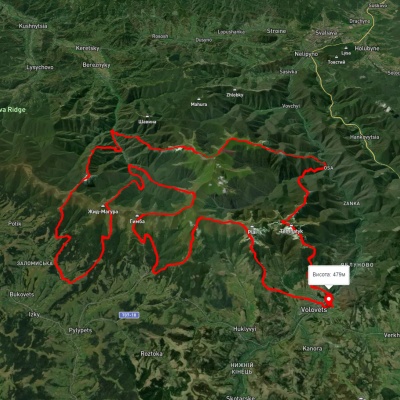
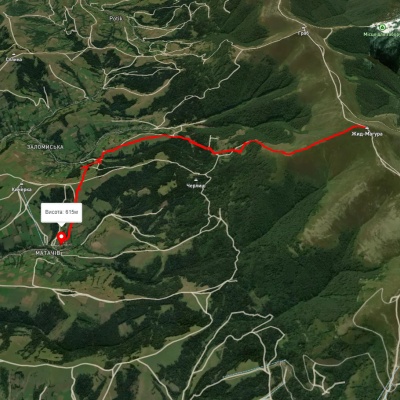

Which trails pass by Church of the Nativity of the Blessed Virgin Mary, Pylypets?
We suggest these hiking trails through or near Church of the Nativity of the Blessed Virgin Mary, Pylypets: Volovets village, via Mount Stiy, Mount Zhyd-Mahura, Mount Hemba and Mount Velykyi Verkh to Volovets village, Mount Zhyd-Mahura – Izky village, Pylypets village, via Shypit Waterfall, Mount Hemba and Mount Velykyi Verkh to Volovets, Pylypets village, via Shypit Waterfall and Mount Hemba to Pylypets village, Volovets, via Mount Plai, Mount Velykyi Verkh and Mount Hemba to Podobovets village, Skotarske village, via Borzhava polonyna and Palenyi Hrun polonyna to Vilshanske reservoir