Cathedral of the Holy Spirit, Chernivtsi
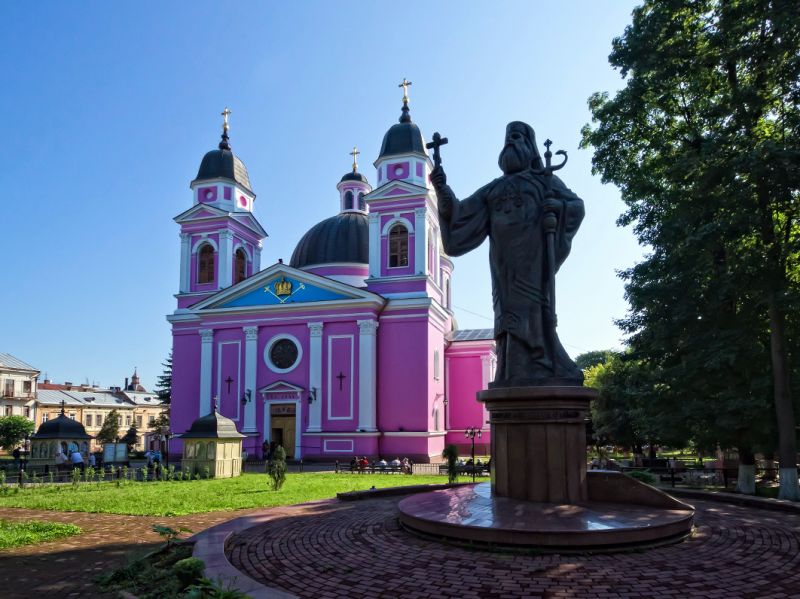
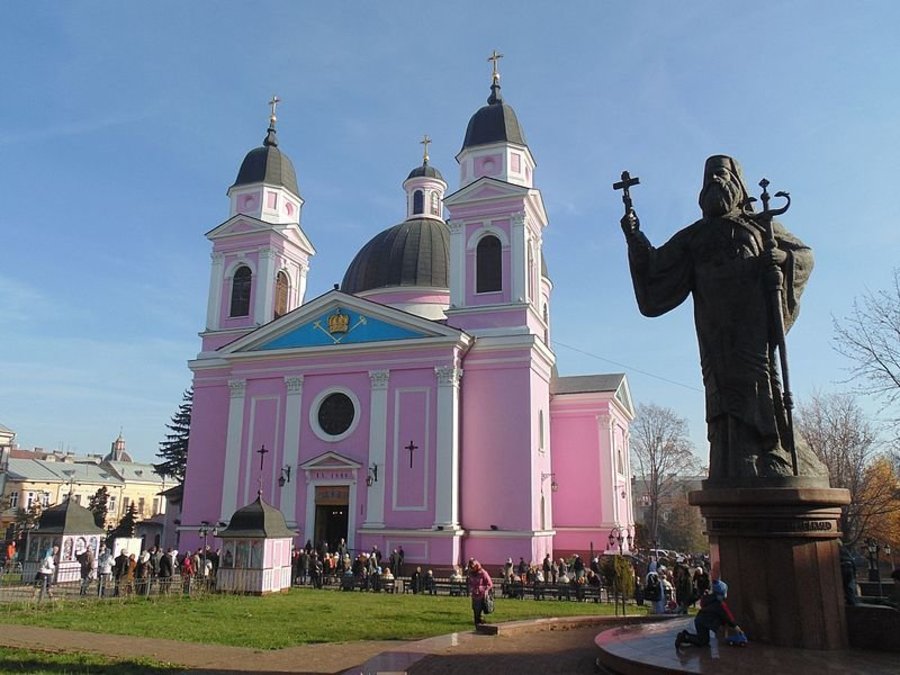
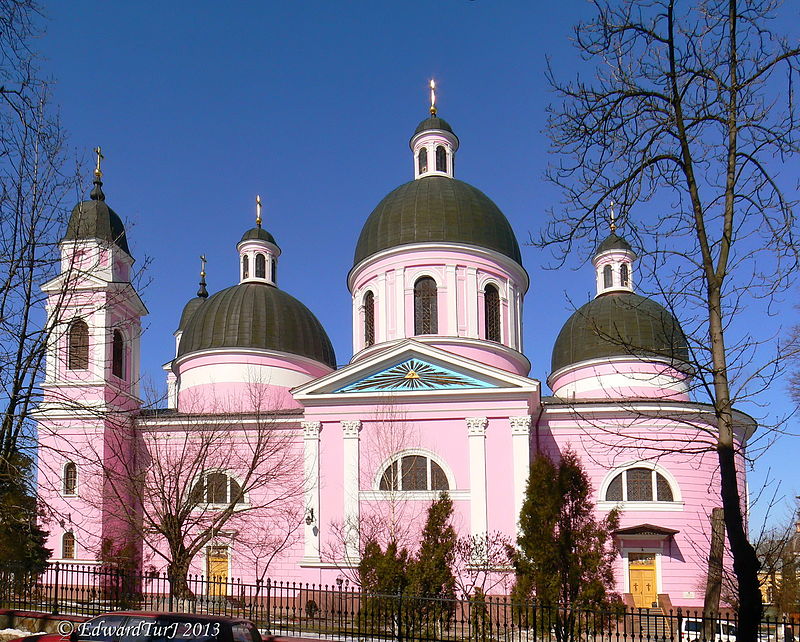
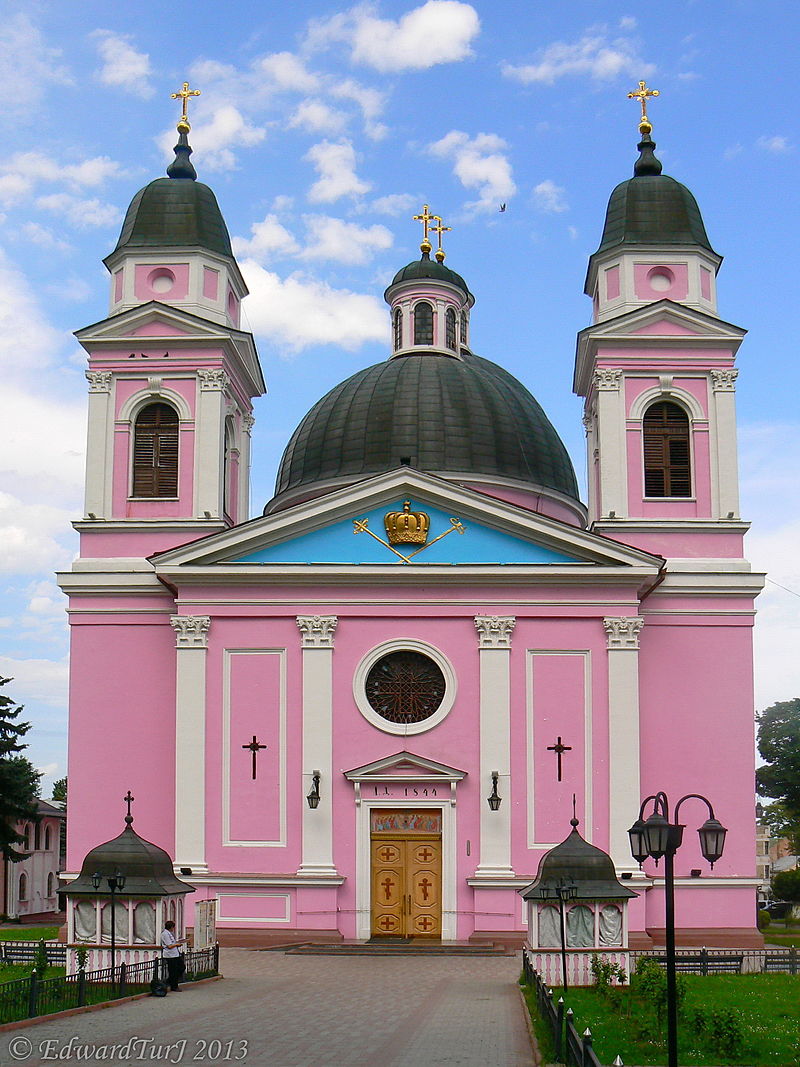
The pride of Chernivtsi is rightly considered the Cathedral of the Holy Spirit, designed in the classical style by the prominent Austrian architect A. Röll. The cathedral impresses with its forms and grandeur despite its relatively young age of about 150 years.
Cathedral of the Holy Spirit in the city of Chernivtsi was built by order of the Orthodox religious fund of Bukovina between 1844 and 1864 in the style of Italian Renaissance. This temple was constructed based on the model of St. Isaac's Cathedral in St. Petersburg. The cathedral is located south of the city center, halfway from the Regional Government Building to the Armenian Church and the Ukrainian House.
The cathedral is a brick, three-domed, cross-shaped structure with two bell towers, impressing visitors with its grandeur and beauty. Its architectural solution features a monumental dome rising 46 meters high. The walls are plastered and brick, while the roof is covered with copper sheets. Above its central entrance is a relief depicting the symbols of Archiepiscopal authority – the Cross, the Staff, and the Mitre.
In July 1844, the first stone of its foundation was laid, with construction supervised by Vienna architect A. Röll and regional engineer A. Marin. Later, in 1860, under the project of the famous architect Joseph Glavka (author of the residence of the metropolitans), the temple underwent reconstruction, resulting in the remodeling of its facade and side bell towers. In 1861, bells were installed in the bell towers, cast in the city of Kalush. In 1864, the temple was consecrated by the first Bukovinian metropolitan, Bishop Yevhen Hakman. In connection with this, in 1872, a street nearby the cathedral built with his assistance was named in his honor. A year later, after the sudden death of Metropolitan Yevhen Hakman, he was buried in the cathedral.
The interior decoration of the temple was carried out over 30 years after its construction. It is known that the wall paintings were executed by Viennese artists between 1892 and 1896. The wall paintings were done in oil paints on plaster, in the spirit of academicism. The interior of the building combines the principles of vertical opening of the internal and deep space, and the interior decoration of the temple impresses with its lush gilding. According to popular legends, the then-rector of the theological seminary M. Komoroshany created a special poem dedicated to the opening of the cathedral.
In the 1960s, the temple was closed, church relics were handed over to museums, and the wall paintings were destroyed. Later, the premises were used as paper storage, and from the 1970s, an exhibition of industrial goods was placed here. Only at the end of the 1970s was the building adapted for the exhibition hall of the artistic department of the Chernivtsi Regional Museum. In 1989, large-scale restoration work was carried out in the church, during which, thanks to the efforts of the wife of the last president of the USSR – Raisa Gorbacheva, worship services were restored here. Only the upper wall paintings, executed by the Austrian artist Karl Joebst, remained intact, as well as the original upper tier of the iconostasis. In 1997, the restoration of the wall paintings was completed, and at that time, the iconostasis was also fully restored. A few years later, in 2000, new bells were installed here.
In 2006, a monument was erected near the cathedral to the first Orthodox metropolitan of Bukovina – Yevhen Hakman, who consecrated it in the 1860s. This monument was designed by architect V. Kilchytsky in collaboration with I. Sandulyak, and sculptor M. Miroshnychenko executed it.
The temple houses the relics of St. Barbara, who is considered the patroness of Ukraine, the miraculous icon of the Mother of God "Trooditissa", brought from Cyprus, the relics of St. Panteleimon the Great Martyr and the blessed Job, abbot of Pochaiv, as well as an oak cross with parts of the Life-Giving Tree.
The Holy Spirit Cathedral in Chernivtsi is active, considered the main Orthodox church of Chernivtsi, belongs to the UOC MP diocese, and is a local architectural monument. Nearby are the museums of Yuriy Fedkovych, Olha Kobylianska, and the pharmacy-museum. And if you go a little further south, you will reach the Jesuit monastery complex with the Church of the Sacred Heart of Jesus.
The cathedral is located at the intersection of the central streets O. Kobylianska and Hoholia, right in the city center. Chernivtsi is conveniently accessible by train from Kyiv, Lviv, Odesa, or by private transport.
Working hours: the Cathedral of the Holy Spirit is open daily from 7:00 to 19:00.
Chernivtsi - the capital of Bukovina. One of the most beautiful and pleasant Ukrainian cities. Here is one of the most beautiful in the country withthe railway station, the Church of St. Paraskeva of Serbia, the Exaltation Church, the ship-shaped house, the City Hall (every day at 12:00 a melody "Marichka" is played from the tower by a trumpeter), the art museum, further down Kobylianska Street, the German People's House, the Armenian and Assumption churches (the oldest stone Ukrainian Greek Catholic church in Chernivtsi), the theater square and the theater named after Kobylianska, the Jewish People's House, Chernivtsi University (included in the UNESCO World Heritage List), Turkish Square (Chernivtsi was part of Turkey, Moldavia, Romania, Austria-Hungary, the USSR, Rus, Ukraine), large bicycles, cozy streets and cobblestones, the so-called Drunken Church, the house of Nazariy Yaremchuk, then another ship-shaped house, two houses with the same number (where Olha Kobylianska lived), the house where Volodymyr Ivasyuk lived, the pink church - the Cathedral of the Holy Spirit.
Sights of Chernivtsi
- Mykolaiv Wooden Church (from 1607, restored in 1954);
- Stone Church of St. George on Hirkot (1767 in Baroque style);
- Wooden Trinity Church in Mahliv (1774), moved in 1874 to Klokuchka;
- Wooden Assumption Church on Kalechanka (1783);
- City Hall with a two-story 45-meter tower in Empire style (1843-1847, architect A. Mykulych), now the city council;
- Ukrainian Greek Catholic Church (1825-1830 in Baroque style);
- Cathedral in Byzantine style (1844-1864, architect Röll);
- Church of St. Paraskeva in pseudo-Romanesque style, completed in 1862 (architect A. Pavlovsky);
- Residence of Bukovinian Metropolitans - since 1956 one of the buildings of Chernivtsi University);
- Armenian-Gregorian Church (1869-1875, architect J. Glavka);
- Chernivtsi University building (1874-1875);
- Jesuit Church in Neo-Gothic style (1893-1894);
- Railway station (1898-1903) in Art Nouveau style;
- City Theater (1904-1905, architects F. Felner and H. Helmer) in the style of Viennese Baroque with elements of Art Nouveau (now the Musical and Dramatic Theater named after O. Kobylianska) and more.
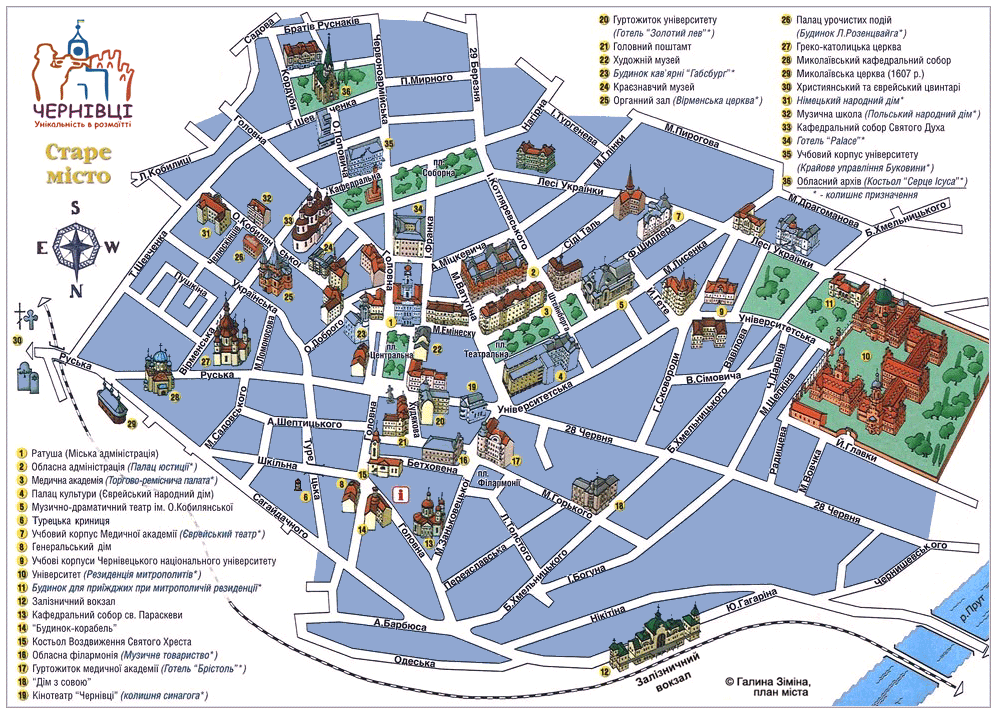
Location on the map
Comments
Places to stay nearby
All stays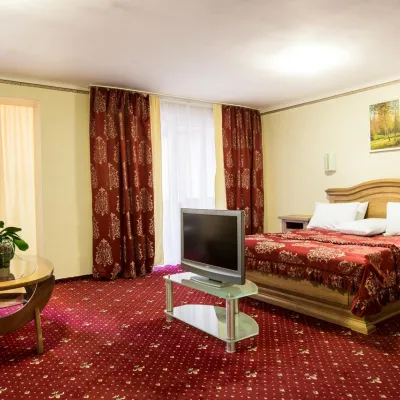 HotelHotel "Bukovyna" Chernivtsi ****Chernivtsi1.3 km from Cathedral of the Holy Spirit, ChernivtsiPoolSaunaSPANearby: Armenian Church 1.3 kmSoborna Square 1.4 km
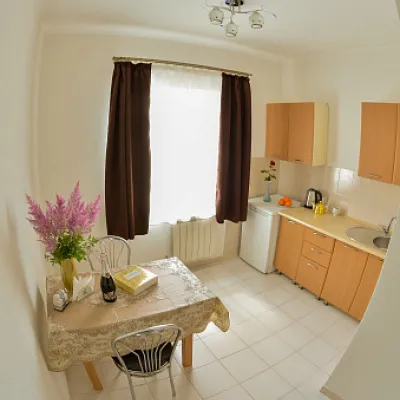 Hostel"Grand Hostel" Chernivtsi Prutska, 24Chernivtsi1.6 km from Cathedral of the Holy Spirit, ChernivtsiParkingWi‑FiTransferNearby: House-ship 900 mArmenian Church 1.5 km
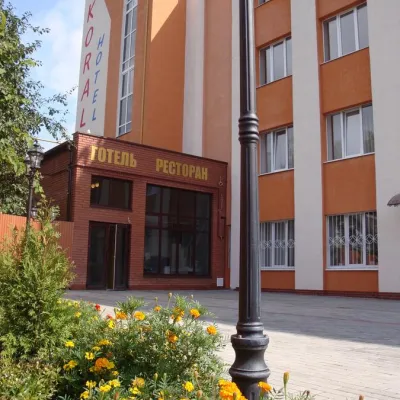 HotelHotel-Restaurant Complex "Koral" ChernivtsiChernivtsi3 km from Cathedral of the Holy Spirit, ChernivtsiSaunaBBQParkingNearby: Armenian Church 2.8 kmSoborna Square 3.2 km
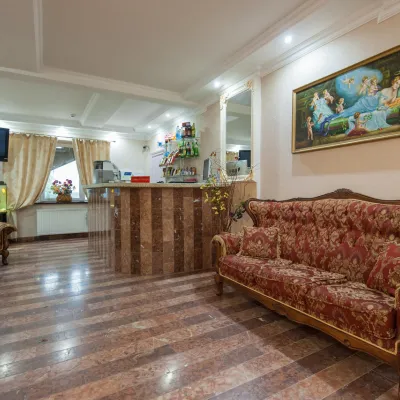 HotelHotel "LeoTon" ChernivtsiChernivtsi3.3 km from Cathedral of the Holy Spirit, ChernivtsiParkingWi‑FiTransferNearby: Armenian Church 3.2 kmSoborna Square 3.4 km
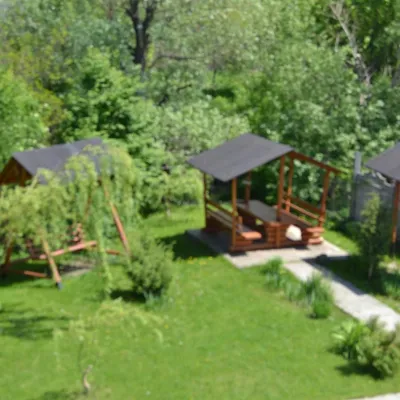 HotelHotel "Pride" MykulychynMamaivtsi9.6 km from Cathedral of the Holy Spirit, ChernivtsiHotel "Pride" is located in the village of Mykulychyn, 9 km from Chernivtsi and 41 km from the "Myhovo" resort.Nearby: St. John's Church 1000 mChurch of St. John of Dukla 5.4 km
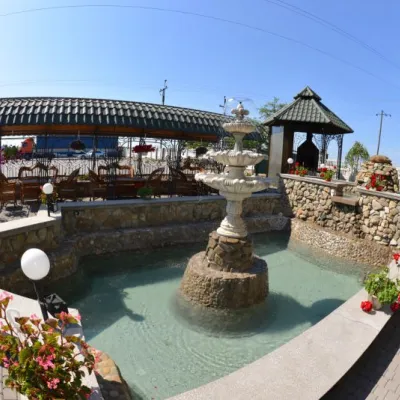 HotelHotel "Kolvik" MamaivtsiMamaivtsi12 km from Cathedral of the Holy Spirit, ChernivtsiBBQKidsNearby: Assumption Church 2.2 kmChurch of St. John of Dukla 2.2 km
Nearby attractions
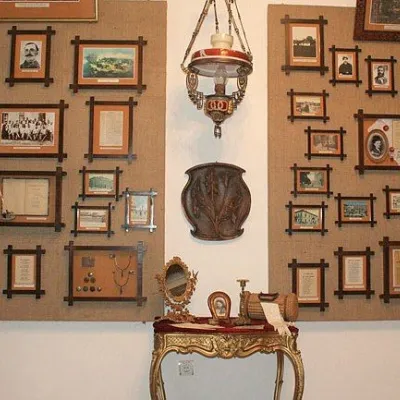 MuseumLiterary and Memorial Museum of Yuriy Fedkovych, ChernivtsiChernivtsiunder 1 km from Cathedral of the Holy Spirit, ChernivtsiYuriy Fedkovych – the most prominent writer of Bukovina, an educator of the region and an active public figure, whose name is borne by the famous Chernivtsi University.
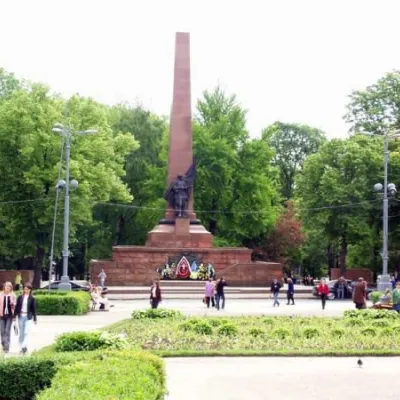 Historic siteSoborna Square, ChernivtsiChernivtsiunder 1 km from Cathedral of the Holy Spirit, ChernivtsiSoborna (formerly Austrian) Square is the largest square in the city. Once upon a time, it was a vacant lot where fairs were organized, accompanied by music, jostling...
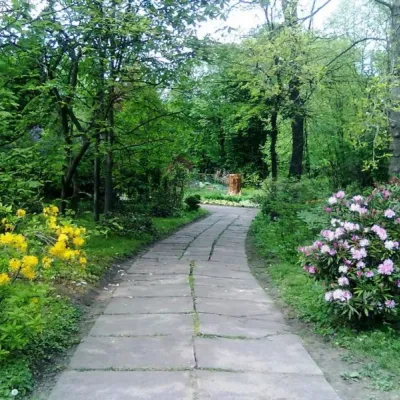 Nature"Arboretum and Botanical Garden of Chernivtsi National University" ChernivtsiChernivtsiunder 1 km from Cathedral of the Holy Spirit, ChernivtsiThe Botanical Garden of Chernivtsi National University is a protected area of national importance in Ukraine.