"Zolochiv Castle Zolochiv
Zolochiv Castle, located in the Lviv region, is a former royal residence and a magnificent example of Renaissance architecture. It is part of the famous Golden Horseshoe of Lviv region tourist route, which also includes Pidhirtsi and Oleski castles.
The construction of Zolochiv Castle was completed in 1634 at the expense of Jacob Sobieski, the father of King Jan III Sobieski of the Polish-Lithuanian Commonwealth. It was built as a defensive fortress by an Italian architect, whose name has not been preserved by history, on the site of an old wooden castle surrounded by moats with water. The Sobieski Palace was the first building on our lands to be equipped with a sewerage system and fireplace heating. Later, another palace appeared nearby, called the Chinese Palace. King Jan Kazimierz, who inherited the castle, built it for his wife Maria Casimir de Lagrange and planted a magnificent oriental garden around it.
During its long existence, the Zolochiv castle performed various functions. It was a defensive fortress, the residence of the king, and even a prison and educational institution during the Soviet period.
Today, Zolochiv Castle is a museum-reserve that is part of the Lviv Art Gallery complex. The Chinese Palace houses the Museum of Oriental Cultures, where you can see unique exhibits - objects of art, many of which were gifts from oriental ambassadors to the royal court. A cafe and a souvenir shop have been opened in the reconstructed raveline, a defense structure.
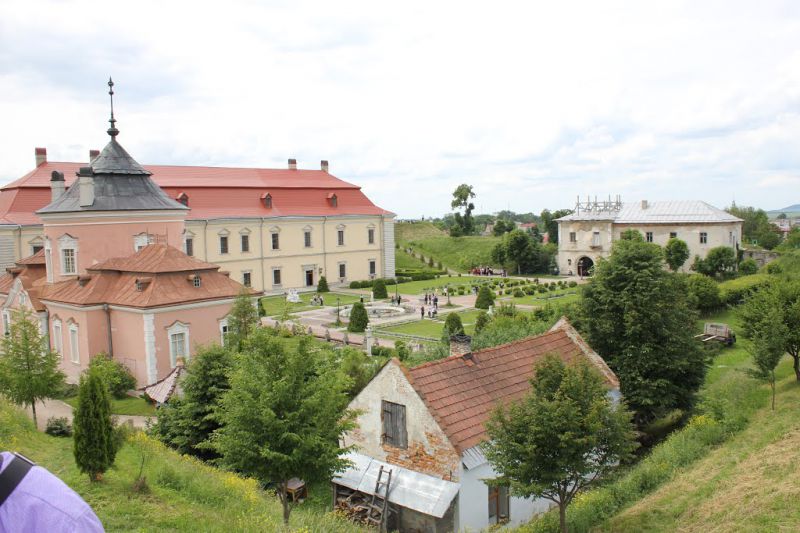
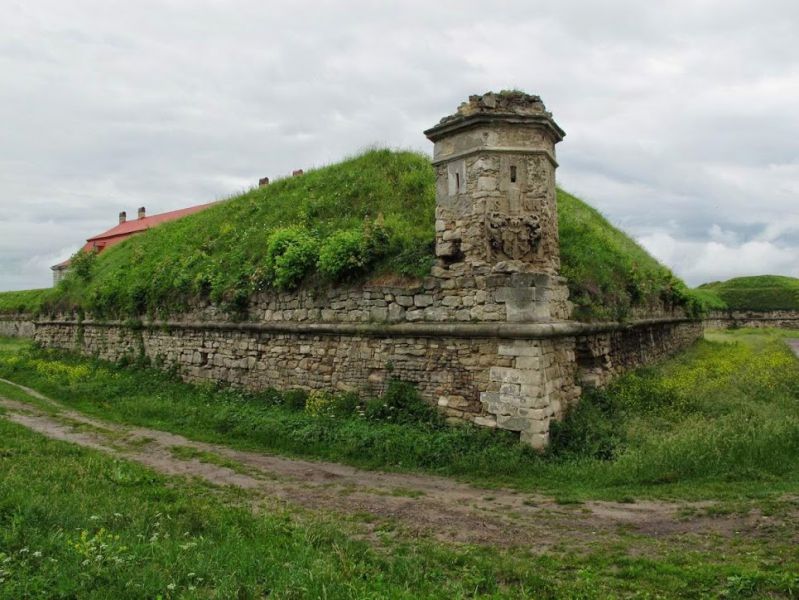
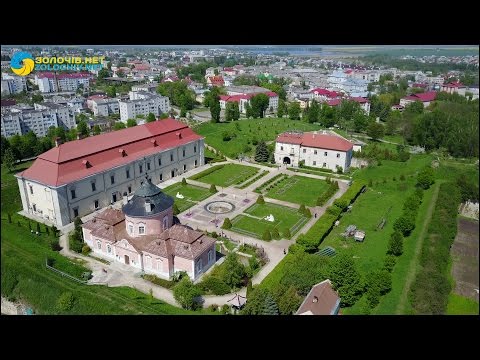
The castle in Zolochiv was built as a rectangular bastion-type citadel. At the time of its construction, it was surrounded by a deep moat, and at the entrance there was a large gate with a drawbridge. The architectural solution has features of the neo-Dutch type of defensive structures, the so-called "palazzo in fortezzo", which combines the functions of defense and housing.
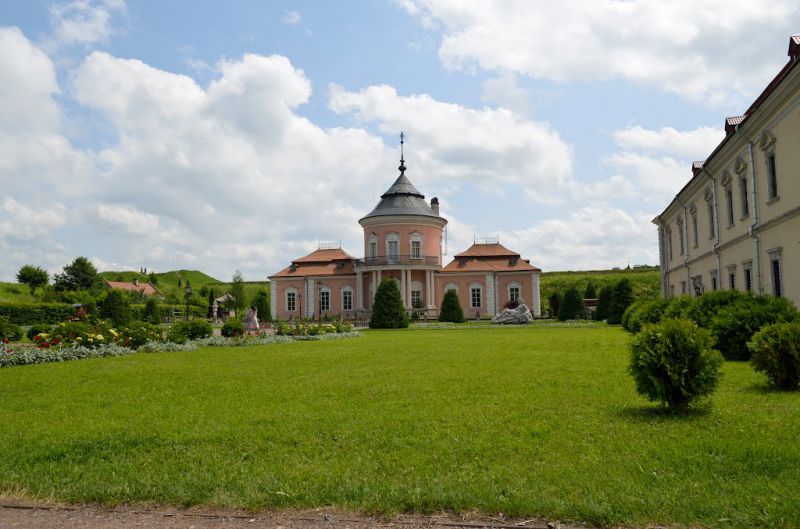
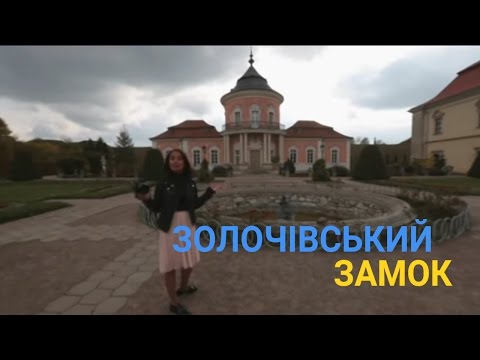
The Chinese Palace has the shape of a rotunda with an eight-column portico, culminating in a balcony on the second floor. The roof of the building is crowned by a peaked dome with a high spire.
The Zolochiv Castle Museum is located inside the Grand Palace. Its expositions are presented in the restored rooms of the first and second floors and in the dungeon. The old lord's chambers house the exhibition "Interiors of Historicism (pseudo-styles of the 19th century)", where you can see furniture and paintings of the 17th and 18th centuries. In the corridors there is a collection of hunting trophies, including parts of fossils - ichthyosaur cartilage and mammoth tusk. The exposition of the throne room contains portraits of famous European monarchs and coats of arms of European states of the 17th and 18th centuries, and, of course, the throne. The hall is also decorated with a copy of an 18th-century French fireplace and a 19th-century Lviv stove.
A separate exposition is the treasury, which contains a private collection of royal attributes of various orders, as well as a possible version of Danylo Halytskyi's crown. In 2016, the Zolochiv Castle Museum opened another exhibition, Architectural Fragments and Light of Old Lviv. It contains architectural details of Lviv townhouses from the 15th and 16th centuries, various types of lanterns-hand, carriage, railroad, and kerosene lamps-as well as parts of ancient sculpture.
In the dungeons of Zolochiv Castle, one often sees the mysterious White Lady, a ghost who, according to legend, is the soul of King Jan Sobieski's wife, Marysienka, as he affectionately called her. After her husband's death, the queen, who was French by birth, returned to her homeland because the local nobility did not like her. So now, according to legend, her ghost returns to the castle to visit her abandoned home.
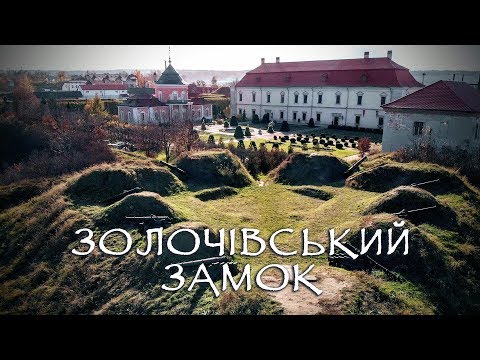
The castle stands like a stone giant on the green hills of Zolochiv, harmoniously blending into the city's panorama. And what's more, it creates with its cold beauty and medieval tranquility, giving it an original charm. The heart of this stone giant, the unique Chinese Palace, beats more and more confidently and rhythmically every year. New ornaments, restored halls, and exotic appearance make it an object that will grab your attention for a long time. Against the martial background of the castle, its heart looks fragile, charming and authentic. In combination with the overall view, the Chinese Palace creates a highlight of the castle that attracts you like a magnet.
Four watchtowers stretching like giant's arms of stone in all directions: west and east, north and south, allow you to see everyone and everything. If you visit one of the towers, you will have a unique view of the city in the palm of your hand. Each tower has a different view, just like the sides of the horizon. Standing on the top of the wall, you are mentally transported to a time when everything around you was different... Having gained impressions, you go out through the main gate on the bridge, heading towards the city. Step by step, you move away from the giant of stone, which, as before your arrival, stands motionless on the hill. Sometimes you look back, but the picture does not change Behind you, in a thicket of green trees, the Stone Giant stands, just like hundreds of years ago, showing confidence and pride in the fact that He has conquered time.
On January 21, 2007, the opening of the ancient defensive fortification of the main gate of Zolochiv Castle, the raveline, which was completely destroyed in the eighteenth century, took place. Nothing remains of the castle's pre-gate fortifications - the raveline and the drawbridge - except for the bridge foundations excavated during the restoration. For a long time, this entrance to the castle simply scared away tourists and guests. The restoration of the ravelline began in the early 90s of the last century in accordance with the Zolochiv frame restoration project. Almost no funds were allocated for the restoration, and it was only thanks to the restoration experience of the hero of Ukraine, the head of the Lviv Art Gallery, Borys Voznytskyi, that restoration work began. The diaspora from Canada and America, as well as local supporters of the castle, provided some assistance. It was only in 2003 that major work on the restoration of the raveline began, thanks to the People's Deputy of Ukraine P. Pysarchuk. In general, his contribution to sponsorship projects in Zolochiv Castle exceeded all expectations: ceramic tiles for the floors of the Chinese Palace, an additional entrance tunnel to the castle, a water supply system for the castle, and a heating system for the Grand Palace. And now the bridge and the raveline. During the reconstruction, we took into account, first of all, the amenities for tourists. The service for spectators has become much better. The dining room and souvenir shop have been tastefully arranged. From the observation deck, you can also see the panorama of the city.
Zolochiv Castle is especially proud of its toilets. At the time of the construction of the fortress, this was extremely rare. In addition, these toilets are so skillfully made that modern experts are still researching the technology of their manufacture.
There are several ways to get to Zolochiv. The most convenient and fastest is by bus from Lviv or Ternopil. The distance from both cities is about the same. From Lviv, buses to Zolochiv depart from the AS-6 bus stop on Lychakivska Street. From Ternopil - from the main bus station. You can also take the Ternopil-Lviv electric train, but you will have to get off in the neighboring village of Yasenivtsi and then take a taxi or a minibus.
By car, take the E50 (M12) Lviv-Ternopil-Khmelnytskyi-Vinnytsia-Kropyvnytskyi highway south of Zolochiv to the turnoff between Zolochiv and the village of Pidhirne.
Opening hours: the museum is open every day except Monday, from 11:00 to 18:00, on Tuesday - from 12:00 to 17:00.