St. Valentine's Church, Kalush
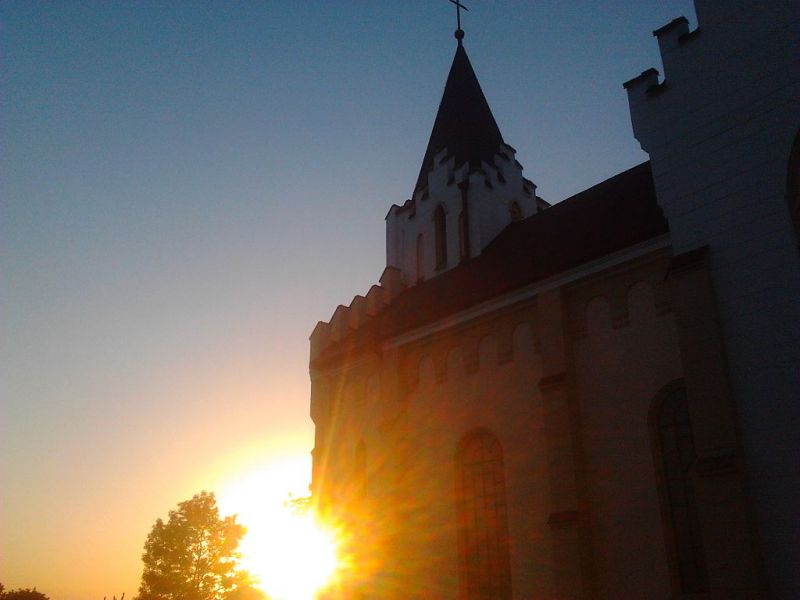
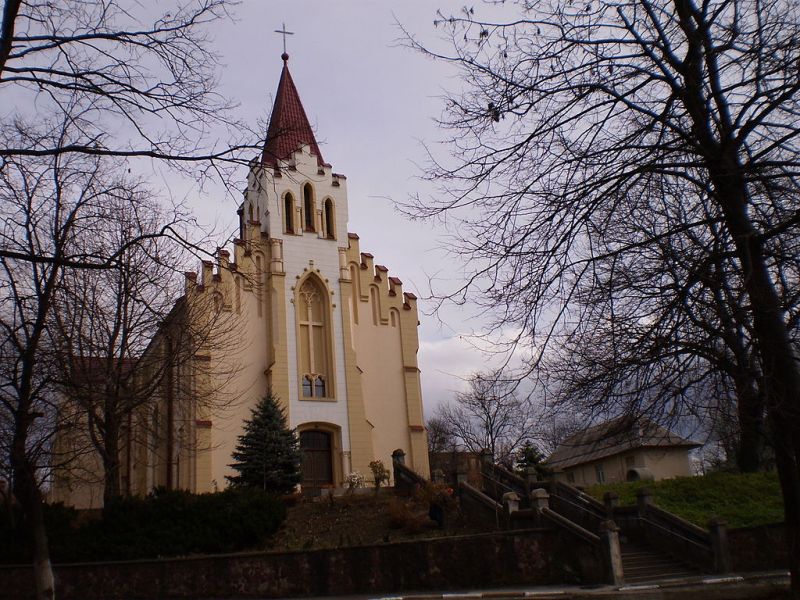
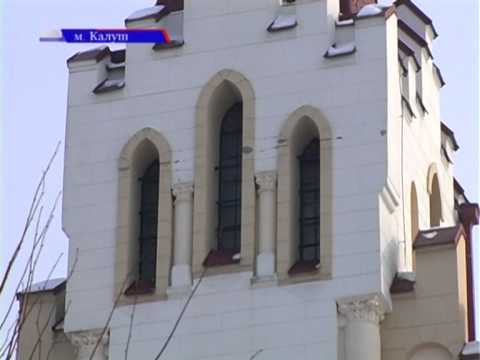
The Parish Church of St. Valentine is a Roman Catholic church located in the central part of the city and is a visiting card of Kalush. This church is the first brick building in the city that has survived to this day. The church is located at an altitude of 315 meters above sea level. The Kalush church has only one analog in Ukraine, in the town of Hlynna Navariya, Lviv region.
The first Roman Catholic church in Kalush was built in the fifteenth century. On April 5, 1464, King Casimir Jagiellonianchyk granted local Catholics a foundation for the construction of the Latin parish Catholic Church of St. Valentine, despite the fact that in 1450 there was already a Roman Catholic church in Kalush. And even earlier, in 1464, the same King Kazimierz Jagiellonianczyk granted the church in Kalush the right to use the salt of one panva. This salt right was retained by the church until 1680, when the local Catholic parish priest took over the saltworks and sold it for 1000 zlotys. St. Valentine's Church was originally built of wood, with wooden sculptures of the holy apostles and prophets. The priest was brought from Lviv, and he served services every Sunday. The organ that accompanied the church services was brought to Kalush from Krakow in 1475. Not only local Catholics, but also Catholics from neighboring villages attended the church. This parish was large, and was led by a sexton and 8 priests, who were then called "altarists" (from the word "altar"). The church had a school and a hospital in the 16th and 18th centuries. It is not known who taught and how many students studied at this Catholic school, or who were the doctors here. The money for the expenses of the church, hospital, and school came from the "church fund," which was composed for this purpose of income from land plots and donations for worship. Unfortunately, there is no evidence of the original church's location. Perhaps it was located where a new church was built in 1842, which has survived to this day.
During the Tatar attacks, the church burned several times, and was particularly damaged in 1565. This became known to King Stefan Batory, and through his efforts, St. Valentine's Church was restored in 1578. In 1770, this Farnian church was rebuilt from spruce wood. The lustration of 1771 states: "The Farnian church at the castle in the city is newly built of spruce wood and covered with shingles." The church housed unique Catholic old prints, magnificent silver candlesticks, golden goblets, and gilded priests' vestments.
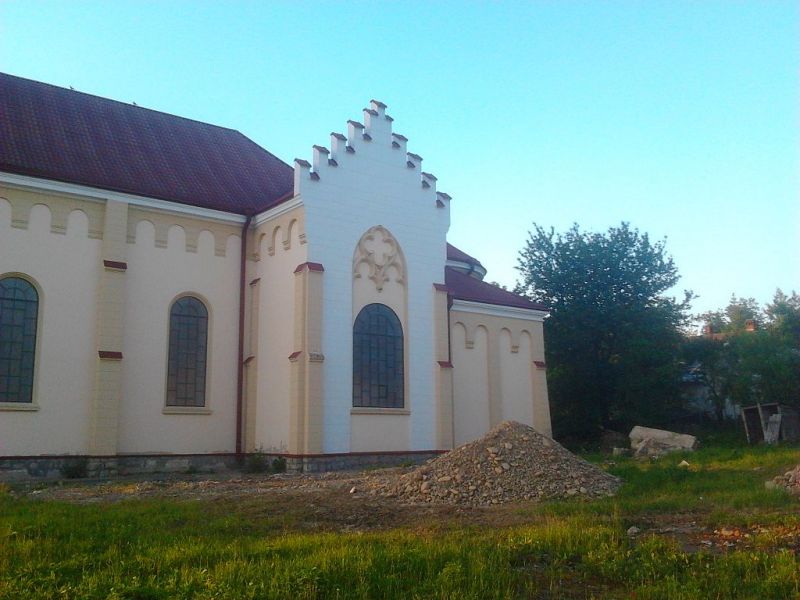
In the 40s of the XIX century, the Catholic shrine was built and dedicated in 1842 by the Bishop of Lviv. The construction of the church began in 1841 and was finally completed in 1845. In 1874-1875, the church was renovated, and in 1876 a new tower was built. In 1886, new altars were built. In 1903, 1910-1912, the church underwent major repairs, according to a project by Tadeusz Obminski. Two side chapels were added, the windows were significantly enlarged, and the roof was covered with a black tile. The tower and other elements that have taken on their current appearance were also built then. The equipment of the time was poor and insufficient and was replaced and supplemented in the following years. During the hostilities in 1917, the church was somewhat damaged - one of the chapels was damaged, and window panes were smashed. The Austrian army confiscated the bells and organ squeakers. The church was restored by the Felczynski brothers in 1921, and in 1926 a new staircase was built in front of the facade. In 1928, a new high altar was built by Jan Wojtowicz from Przemyślany, and electric lights were installed. In 1930, a new floor was laid. New images of St. Valentine and Our Lady Queen of the Crown of Poland "Honoring the Estates" ("Honoring the Blessed Virgin Mary by the Social Estates") by Lviv artist Stanisław Batowski were placed in the main altar in 1931 and 1932 (during the consecration of the altar). In 1936, the side altars were restored and decorated with carvings. Due to constant persecution by the new Soviet authorities, in 1944 Father Kazimierz Tomkiewicz moved some of the items from the church in Kalush to the area of Lonczki Jagiellonianski, Krosno County, and in August 1945 the last parish priest of Kalush, Jan Palica, with a significant part of the faithful left for Grifino, taking with them the image from the main altar, images of the stations of the Way of the Cross, chalices, ornaments, and banners. After World War II, the church was used as a gymnasium for a local school, and later the church was transferred to the Ukrainian Orthodox Church. In 1999, the church was returned to the Roman Catholic parish and repairs began soon after, which were completed in 2001. The church was painted and the roof was replaced. The church was reconsecrated (re-consecrated) on August 30, 2008.
In 1884 a contemporary wrote about the Kalush church: "To the north of the Russian (Ukrainian) church there is a Latin church built in 1830 on a slightly elevated hill by Russian people in the Gothic style with bricks. During its construction, evil foundations were laid, and two walls of the church nave were also chipped away, creating a wide gap in which you can fit your hand. The two front stone towers, which contained the bell tower, had to be demolished before two summers for the daily threatening presentation, and in their place were installed two spiraled, nsphoremic tin-covered wooden towers, which give the church a strangely funny look. The church is adjacent to a Latin "probość" (a community), to which several hundred Latin-Rusyns belong. In addition, there are two Latin chapels on the territory of the city: One smaller one on the street leading to the Kalush "rural zhupas, over the river Sivka, of St. John Nepomuk and St. Anthony Podevsky to the crossroads beyond Kalush, the second one was rebuilt in recent times by the zeal of the vicar."
The church was built in the Neo-Gothic style. The church is an architectural monument of local importance.
Which trails pass by St. Valentine's Church, Kalush?
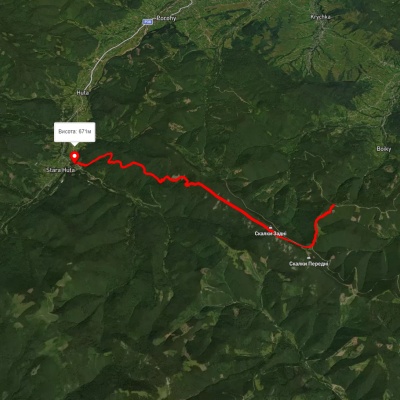
We suggest these hiking trails through or near St. Valentine's Church, Kalush: Pasichna village, via Maniava village, Maniava Waterfall and Mount Velyka Syvulia to Bystrytsia village, Maniava village - Monastyretska polonyna, Maniava village – Maniava Waterfall, Huta village – Pasichna village, Huta – Poharchyna, Osmoloda, via Mount Vysoka, Mount Ihrovets and Mount Syvulia to Stara Huta village



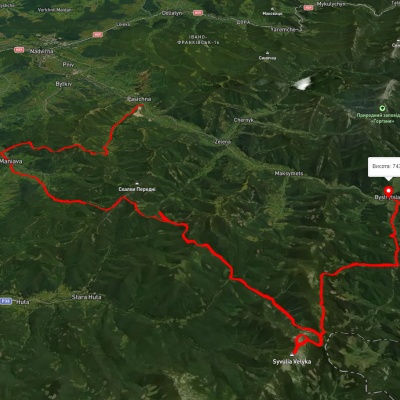
Pasichna village, via Maniava village, Maniava Waterfall and Mount Velyka Syvulia to Bystrytsia village
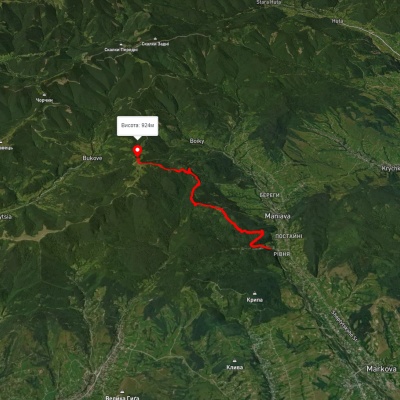
Maniava village - Monastyretska polonyna
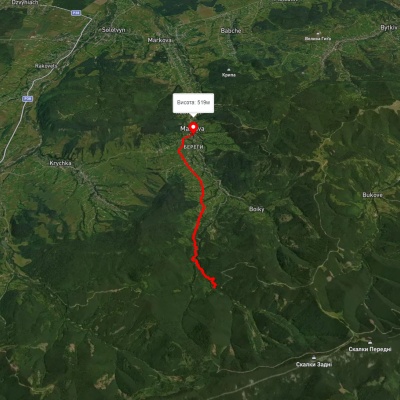
Maniava village – Maniava Waterfall
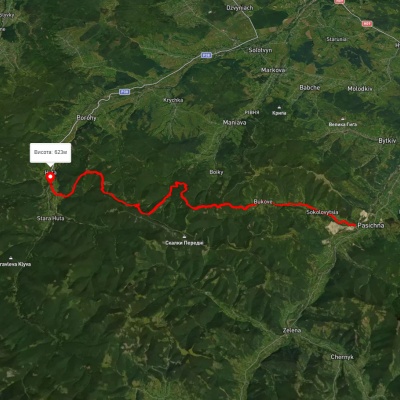
Huta village – Pasichna village