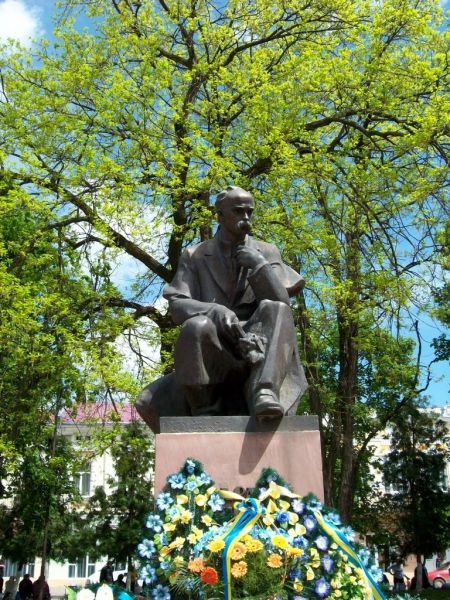
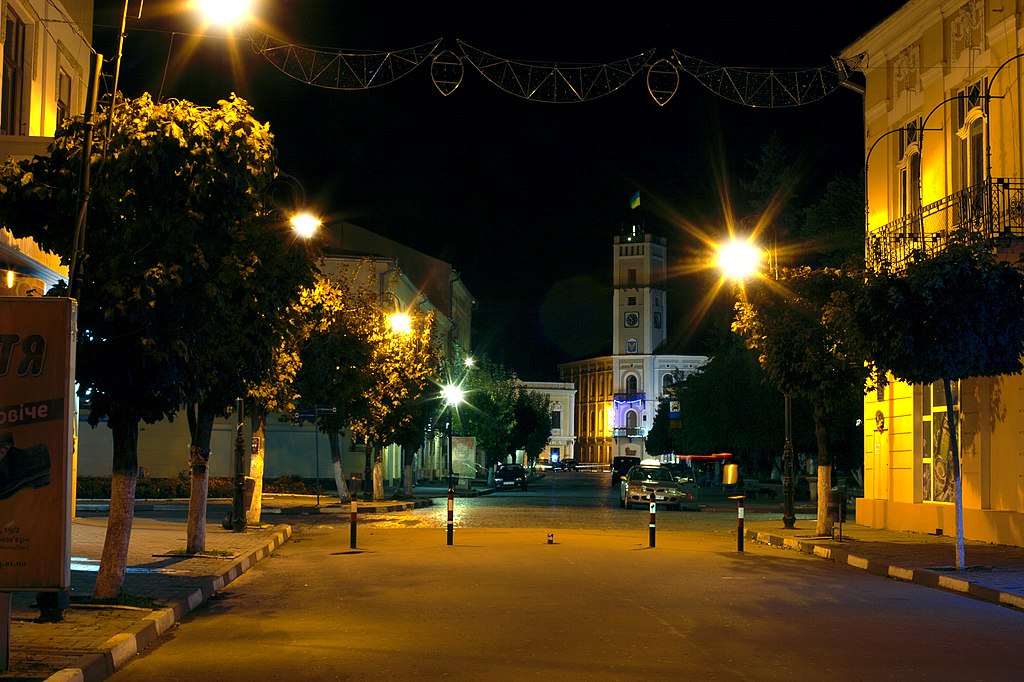
Renaissance Square and the monument to Kobzar, Kolomyia
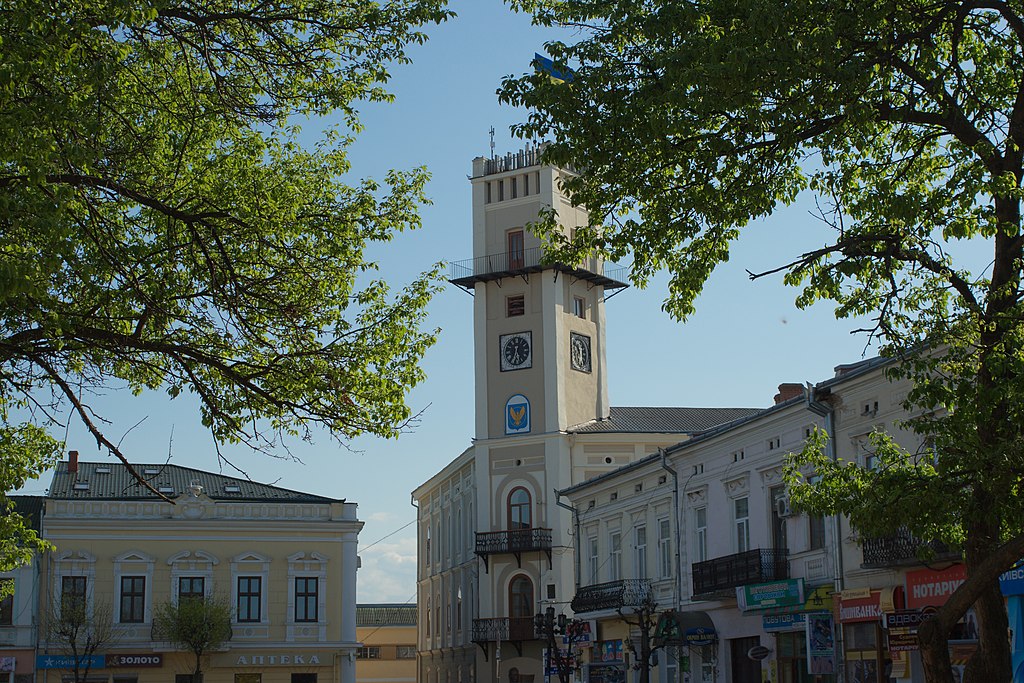
Renaissance Square is the main square of Kolomyia. It is located in front of the town hall; it borders Taras Shevchenko Square and Hrushevskoho Avenue; I. Mukha, Teatralna, and Chornovil streets originate from it. Former names - Karpinskoho Square (1880-1927), Pilsudskoho Square (1927-39); Lenin Square (1939-41, 1944-90), E. Konovaltsia Square (1941). The original name was Rynok Square. In 1990, the square was renamed Renaissance Square by the decision of the city executive committee.
The city has been destroyed and burned many times in its history, which later became the main reason for the displacement of its central part to the north, within the present city center. According to the surviving reports, we can assume that the main city square appeared in the mid-17th century. Following traditional European models, the square formed a large rectangle with its contours.
Starting from Teatralna street, where a bookstore had long been located, its northern edge ran east along the Kolomyianka shopping complex, crossing Vidrodzhennia avenue (now Chornovola street - DM), and went through the premises of the so-called city galleys to Rynok Street (near the building of the former household goods factory) and, turning south on Rynok Street, where today the main entrance to the central grocery market is located, reached the intersection on Hetmana Mazepa Street (near the children's church of St. Josaphat). Then its boundaries stretched along Shevchenka Square westward to the town hall and then turned to Teatralna Street to close the square's rectangle.
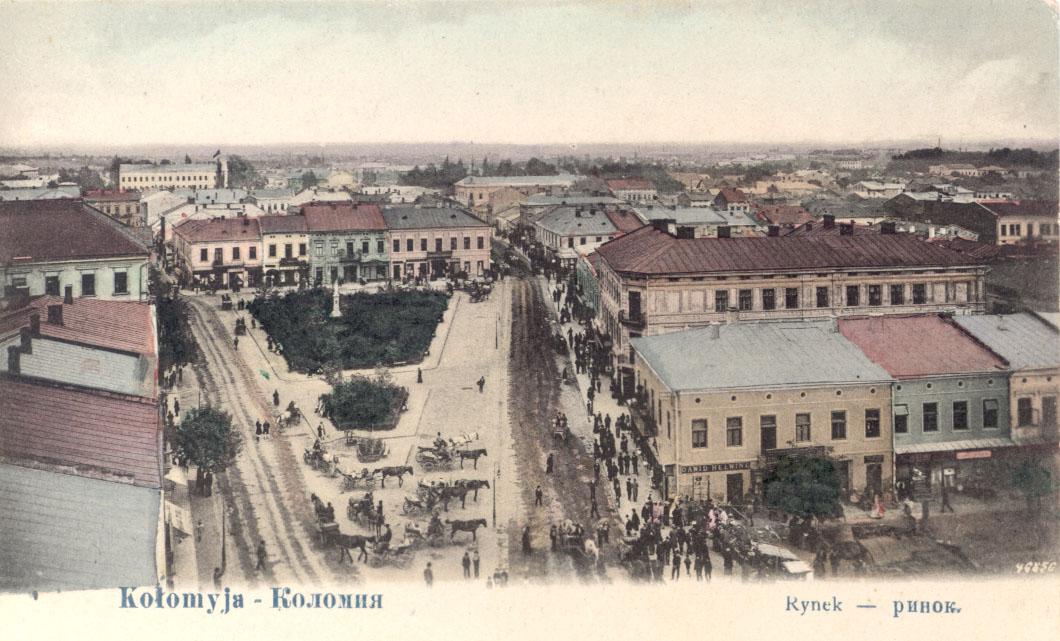
This entire area was for a long time Kolomyia's main Rynok (market) square, and in the middle of it, according to the custom of the Middle Ages, in the first half of the 17th century a wooden town hall with a tower and a number of offices for the needs of the then magistrate was built, and traditional fairs were held on the rest of the territory.
Most of the two-story buildings that make up the modern-day Renaissance and Shevchenko squares were probably built in the 1870s. In his "Sketch of the City of Kolomyia" (1877), Kolomyia scholar Leopold Weigel noted that "nowadays, around the extensive marketplace, as well as inside it, there are two-story stone houses."
Of course, the houses of Kolomyia's downtown did not retain their original appearance, as they were repeatedly destroyed during wars and fires, repaired and rebuilt with some changes. The first floors underwent particular changes in the Soviet period, where large state-owned shops were located in place of small private ones. The best preserved buildings are those on the western side (Nos. 1-11).
- Since the late nineteenth century, houses 1-2 (second floor) have housed the Grand Hotel, owned in different years by Rifka Bagr (1913), Blitz Sender (1925), and I. Vitenko from the village of Zhukotyn, now in Kolomyia district (1941-1944). For decades, the hotel has hosted guests of our city, including prominent figures: Mykola Lysenko (16-17.12.1903), who visited Kolomyia on the occasion of the 35th anniversary of his creative activity; Marshal of the Red Army of the USSR Heorhii Zhukov and his staff (early April 1944), but he did not stay long because of the bombing of the city by Hungarian artillery. During the Soviet era, the building was first occupied by the district service of NKVD operatives, and since 1952 by the city prosecutor's office. The first floor was rented to entrepreneurs: in the early twentieth century, Isidor Horn located his largest warehouse and shop of clothes, fabrics, "and everything needed for marriage ceremonies" in house number 1. After the end of World War II, the city's hairdressing salon was located here, which still operates today. In the early twentieth century, the first floor of building No. 2 was occupied by a "fashion and haberdashery" shop run by Jacob Nadler and K. Ramler, and in the 1920s by a fur warehouse and a furrier's workshop run by G. Kesten and J. Eisner. In 1925, it housed a warehouse of optical goods and jewelry. In the 1990s, it was a vodka shop of the Ivano-Frankivskspirt plant.
- House number 4. In the first decades of the twentieth century, it housed a branch of Yevstakhii Turianskyi's pharmacy "Providence of God". In 1913 it also housed Simon Chayz's fabric warehouse, in the 1920s it was Leopold Baran's shop, the law office of Dr. Joachim Ashkenazi, and a large warehouse of confectionery. Since the 1990s, the building has housed the Claudia store (ground floor). On the second floor there are residential premises.
- House no. 5. From the beginning of the twentieth century until 1939, the fabric and cloth shop of Yevhen Zelenetskyi operated here. At the same time, in the 1930s, it housed Petro Kwasniuk's Unionka restaurant and the Avner Brothers' vodka shop. In the 1970s and 1990s it was a photography studio.
- House number 6. In the 1910s it was a shop of Gewürz and Gottlieb's tailoring supplies, in the 1920s it was a locksmith shop of Ignatius Vuitsik and Efroim Kornblit, a pharmacy warehouse of A. Hirnly, and the office of the owner of the Brettler brewery. In the 1930s it was a butcher's shop run by Franciszek Zaremba. In the 70s and 90s, it housed the Snowflake Cafe (now Barvinok). On the second floor there are residential premises.
- House number 8. Built in 1910. In the 10s of the XX century there was a musical instrument shop and a pharmacy run by Antonii Sydorowicz. In the 1920s, the Wilhelm Naider pharmacy and the Wiesiekaniuk sausage shop. In the 1970s, the shop "Notes and Subscription Editions", since the 90s - the branded mini-bar "Galka", and the "Book" enterprise.
- House number 9. In the first half of the 20th century, the second floor was occupied by a credit and escrow bank. At the same time in the 1910s, there was a spice shop run by Henryk Ilnytskyi, a haberdashery shop, and a men's clothing store run by Leon Rozengek. In the 20s and 30s, there were offices of the merchant Judah Firstein and mill owner Jakob Baidaf, and a jewelry store by J. Firestein. In the 1970s and 1990s, the largest bookstores in Kolomyia, now the "Kniga" enterprise, were located there.
- House number 10. Until 1939, it housed a "breakfast room" and a pharmacy run by Jan Chornyi; in the 1940s it was a watchmaking workshop, a cafeteria, and a bookstore. In the 1970s and 1990s, it was a bookstore, now the Knyga Publishing House.
- House number 11. In 1900-1939, it housed a restaurant and a winery, a fabric shop run by Rein Hersh, a shoe and haberdashery warehouse run by Solomon Harlig, a haberdashery shop run by Samson Bank, and a large shoe store run by the German company Del-Ca. In the 1970s and 1990s, it was a bookstore, now the Knyga Publishing House.
- House number 12. In the early twentieth century, there was an optical and engraving shop of vodka products, a shop of the Pokutskyi Hospodar (Pokutsky Host) trade union that sold ironware, seeds, and grain; later the shop was renamed Tsentrosoyuz.
- House number 13. The owner of the house in the early twentieth century was Hayes, who leased the ground floor premises for shops to Czechs Batov and J. Shuster.
- House number 14. In the 1910s and 20s it housed the foreign exchange office of Moises Hammer and a furniture warehouse; in the 1920s, a "breakfast room" was opened by Gitia Teitler, and patients were treated by dentist A. Neubauer.
- House No. 15. At the beginning of the XX century it housed the spice shop of A. and M. Schmerz. In the 1920s, Shimon Zukerman's shop offered gold, silver, and watches; there was also a hairdresser's shop "Regina", a watchmaker's workshop by Kerker Haskel, a shop by Lazar Lehner, and a shoe store.
- House number 17. In the 1910s, it housed Samuel Stolsberg's confectionery company, the Palermo vegetable store, and Abraham Sojczek's shop, which organized exhibitions of Ukrainian embroidery. In the 1970s, the building housed the Bulionna café (now the Voloshka café and the Yurix pharmacy).
- House number 18. In the Soviet period, it housed the "Technical Book" store, and later the "Gifts" store. Now it is a financial company and the Yurix shopping and commercial center.
- House number 19. In the 1920s it was a vodka shop run by Lika Ungar, and in the 1930s it was a butcher shop run by Stanisław Pikor. In 1942-1944, the building housed classrooms of the Kolomyia Gymnasium. During the Soviet era, there were Jewelry, Bread, and Fabric stores here. Now it is home to jewelry stores and the Prosvita city and district trade union.
The Renaissance Square was repeatedly used as a place of execution: In 1878, the last opryshok, M. Dragiryuk, was executed there; in 1945, on the territory opposite the Yablunka and Chervona Kalyna shops (now the entrance to the dairy pavilion - "DM"), the NKVD publicly hanged several citizens, including Ivan Maidansky from the village of Pechenizhyn, an insurgent from the UPA "Spartan" unit, after whom one of Kolomyia's streets is now named and a memorial plaque was unveiled.
The Renaissance Square has witnessed many historical events: On September 15, 1880, Kolomyia solemnly welcomed Emperor Franz Joseph of the Austro-Hungarian Empire with his son, Archduke Rudolf, and Tsarina Elizabeth, who came to the opening of the Ethnographic Exhibition; on September 16, 1880 celebrations on the occasion of the opening of the monument to F. Karpinskyi took place here; on November 15, 1886, the first train of the famous Kolomyia "lokalka", which connected Kolomyia processing plants with oil fields in the village of Sloboda Rungurska, met near the town hall. Sloboda Rungurska; in April 1894, on the occasion of the 100th anniversary of the victory of Polish insurgents Kostiushko over Russian troops in the battle of Ratsklavytsi, a memorial plaque was unveiled on the town hall; on June 5, 1898, a solemn march of Kolomyia Poles, Ukrainians, and Jews took place in the city center on the occasion of the 100th anniversary of A. Mickiewicz's birth and the unveiling of his monument in the city park. On three occasions: June 6, 1902, June 28, 1903, and July 12, 1906, K. Tryliowski officially held grandiose Sich festivities in Kolomyia, during which several thousand columns of music, colorful Ukrainian costumes, emblems and flags, and Sich songs marched through the city park through the city center toward the ravine above the Prut to hold their main competitions.
Accommodation around Renaissance Square and the monument to Kobzar, Kolomyia:


Які маршрути проходять повз Renaissance Square and the monument to Kobzar, Kolomyia?
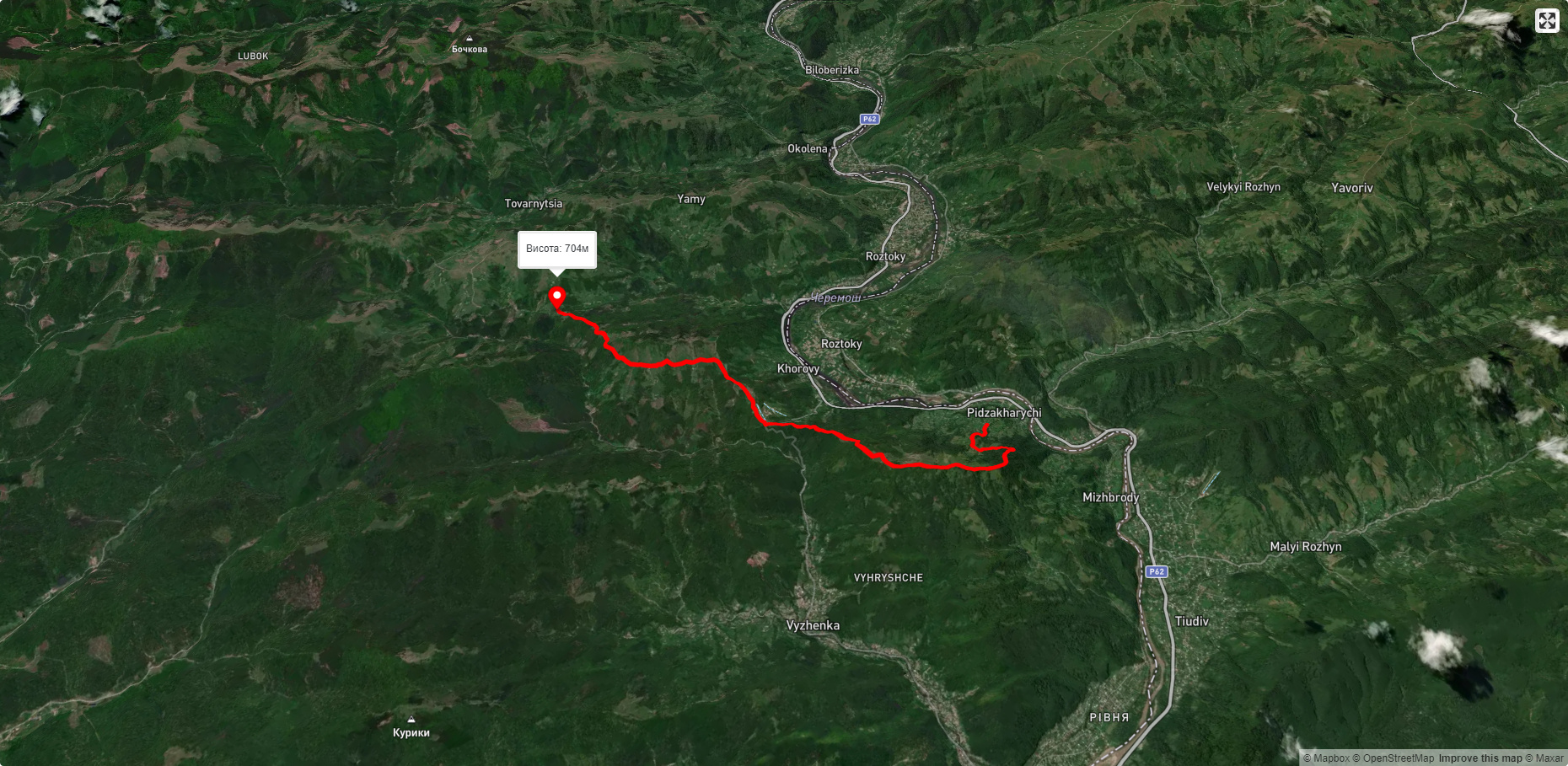
Пропонуємо пройти такі туристичні (пішохідні) маршрути через/біля Renaissance Square and the monument to Kobzar, Kolomyia: Шешори - Росохата, Дорога опришків, с. Космач, через г. Ротило, г. Грегіт, г. Біла Кобила до с.Буковець, с. Микуличин, через г. Хорде, г. Ротило до с. Космач, пер. Німчич - Протяте Каміння, ур. Медвежий - г. Куратул


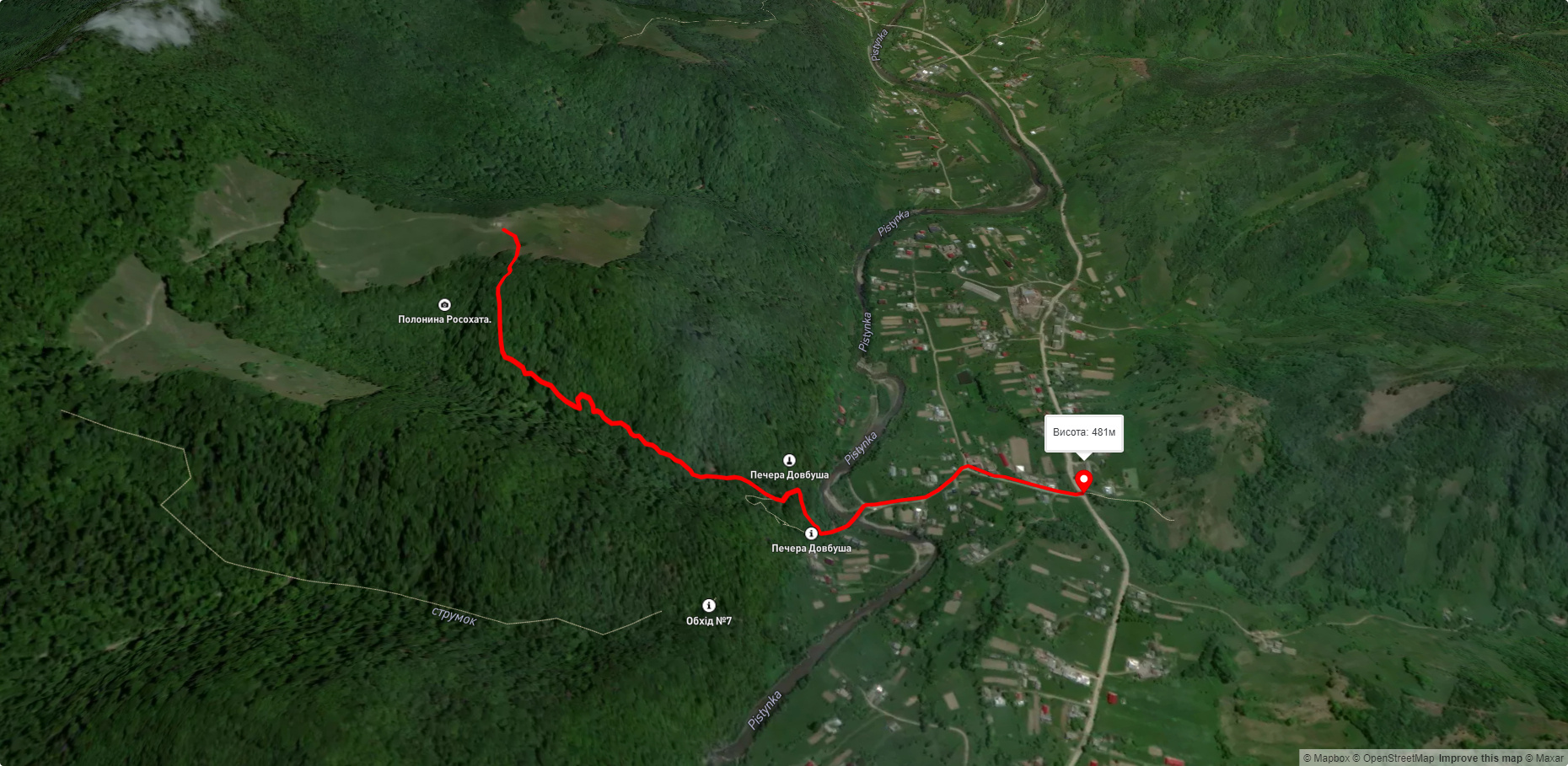
Шешори - Росохата
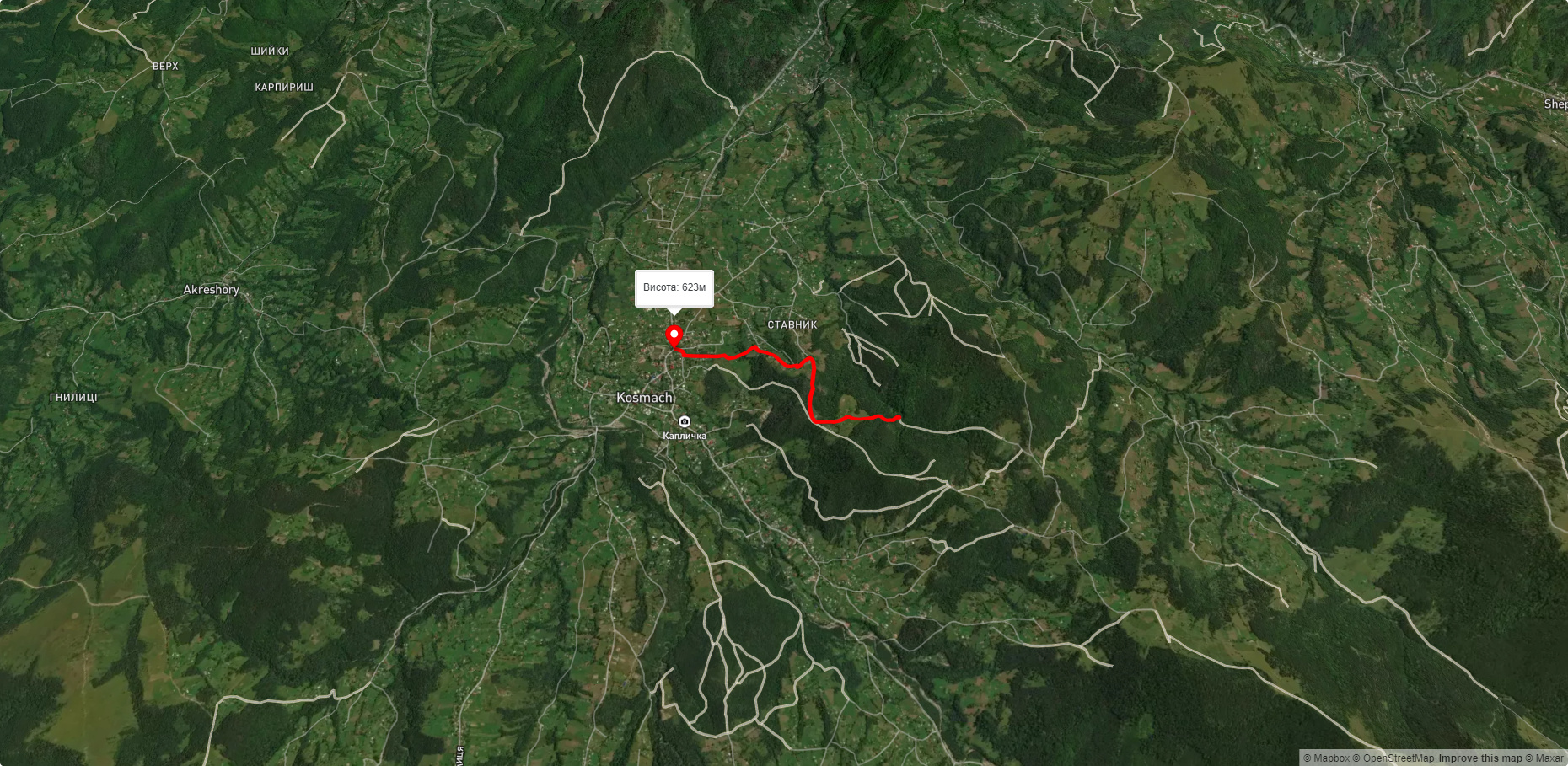
Дорога опришків
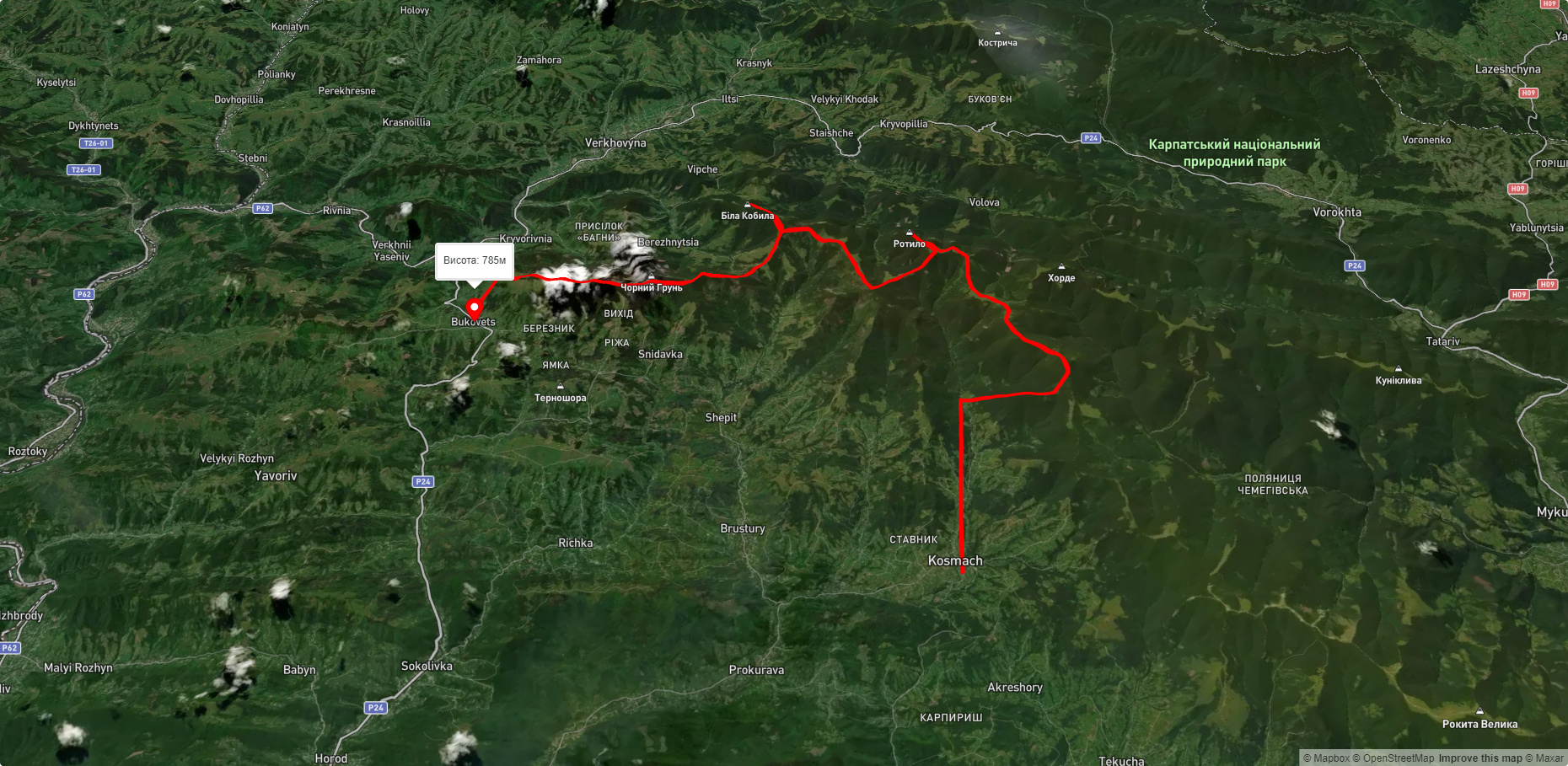
с. Космач, через г. Ротило, г. Грегіт, г. Біла Кобила до с.Буковець
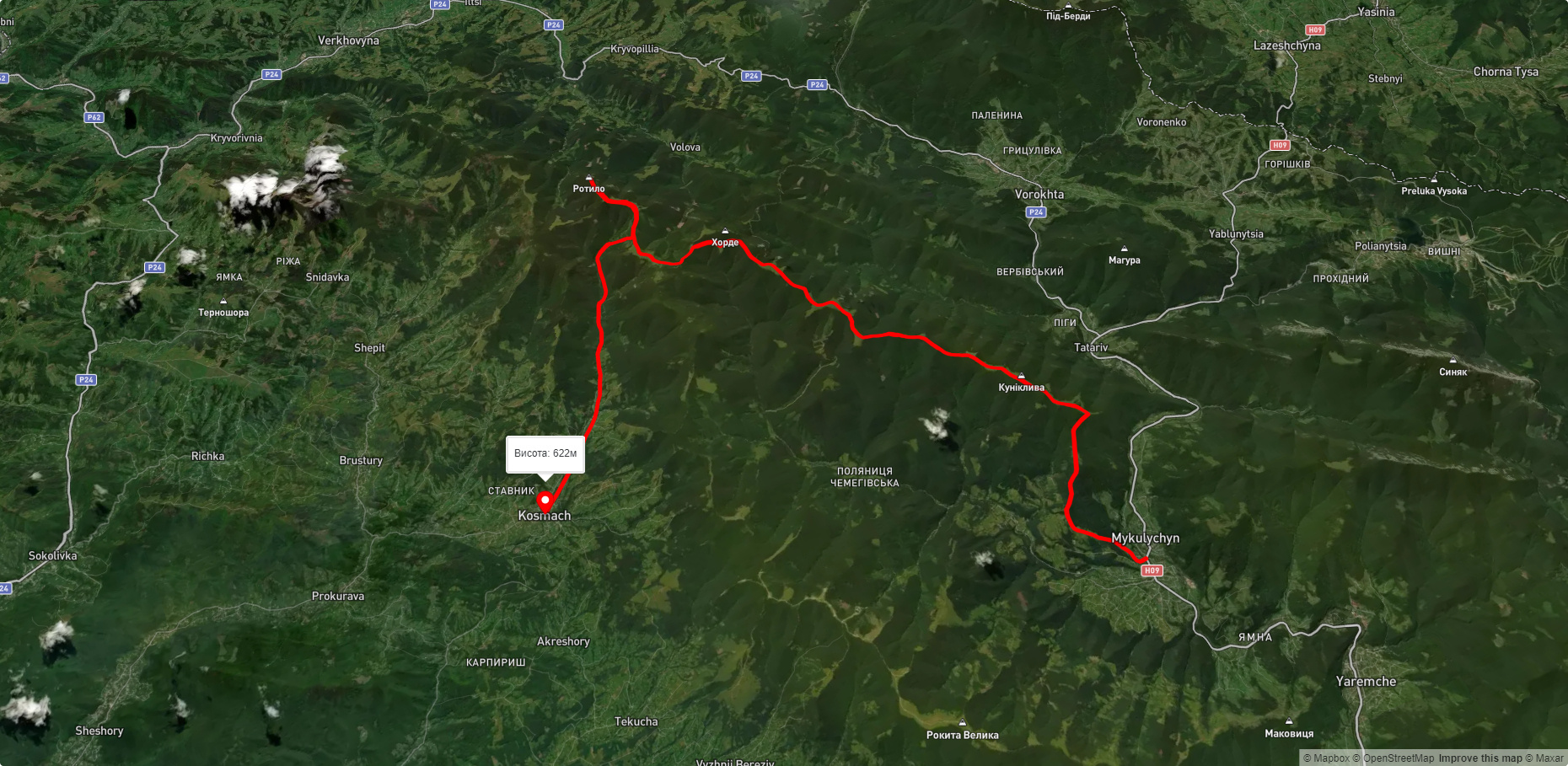
с. Микуличин, через г. Хорде, г. Ротило до с. Космач