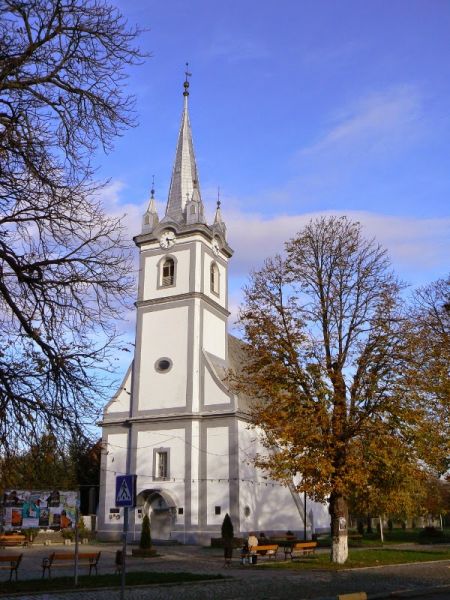
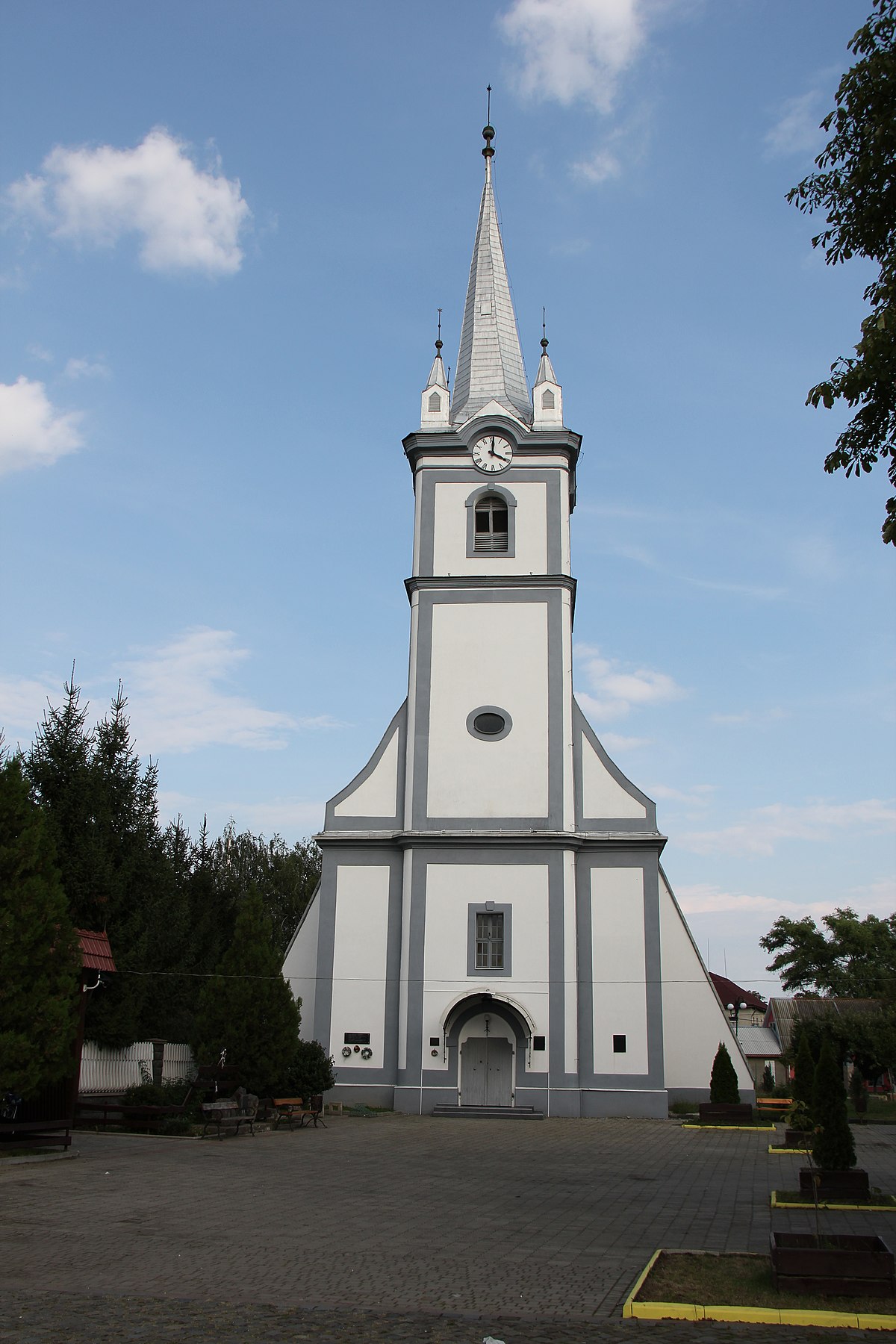
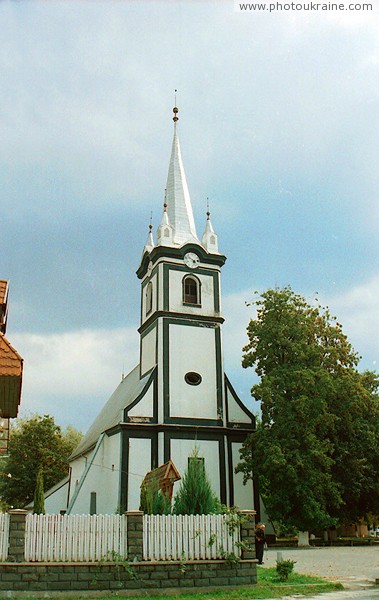
Reformed Church, Tyachiv
The Reformed Church is an architectural monument of national importance in the city of Tyachiv, Zakarpattia region. The religious building is located on 29 Nezalezhnosti Street. The architectural monument of national importance has a funeral number of 200. This is a unique historical building founded during the reign of King Laszlo the Great of Hungary.
The exact date of construction of the original building is not known. Elements found in the church's architecture suggest that the church was founded in the 13th or 14th century, as this style of architecture was common in the area at that time. There are statements about the foundation of the church in the 15th century. Historical chronicles contain evidence of the founding of a Greek Catholic church in Tyachiv in the 13th century by Hungarian King Laszlo the Great. However, it was destroyed, as the walls of the church founded by the king were used to build a modern church. In 1326, the Maramor churches received privileges issued by the Archbishop of Esztergom. Their approval for the Reformed church in the city of Tiachiv was requested by a priest named Benedek, who was in charge of the church building at the time. In 1334 he paid 60 grosz, in 1335 - 48 grosz of the papal tithe. In 1336, historical documents list Pavlo as the priest of the city of Tyachiv.
In the 16th century, the church became a reformed church, but the chronicles differ in the year when this happened. Some books indicate that the church and most of the population of Tyachiv converted to the Reformed faith in 1539, while others say it happened in 1546 or 1556. During the restoration of the church in 1748, its premises were expanded to accommodate 600 people. In 1810, a three-tiered bell tower with a tent top was added. The upper tier of the bell tower was the place where the ancient clock was installed, which has survived to this day. The clock tower was connected to the bell tower.
Tyachiv did not become a wealthy royal city. This fact contributed to the preservation of some of the original architectural elements of the church to this day. In 1864, such architectural experts as Imre Genslmann, Floris Romer, and Ferenc Schultz visited the Reformed church in the city of Tyachiv. Afterward, information about the building was included in a catalog of church buildings that included descriptions of 48 churches. The publication noted that the architectural style of the church dates back to the 15th century. The assessment was reiterated in 1887. In the 1890s, the Reformed community of Tiachiv owned many arable lands and forests.
After 1939, the church was included in the list of Reformed churches in Hungary. Until 1944, the premises of the Reformed Church housed the Maramorshchyna Library and the Tyachiv City Archives. A partial study of the church's architecture was carried out after the 1990s by specialist Jozsef Langi. In November 2001, he examined the southeastern console and then the northern consoles. On the consoles of the room, plates made of vines, acorns, and oak leaves are visible. Since 1992, the Reformed Church in Tyachiv has been led by priest Laszlo Carlo. The Reformed Church is included in the list of places where the Day of the City of Tyachiv is celebrated. On May 1, 1992, a bronze bust of the artist Shimon Holosi was unveiled next to the church building. The Lutheran parish house is located next to the church. An old organ has been preserved in the church. The number of parishioners in 2010 amounted to 1500 people.
The church was built in the Gothic style. It is divided into four units. Above the western façade of the building is a bell tower that has three levels due to the presence of cornices. The nave has a rectangular shape. The western part of the building and the nave are separated by two undivided vertical structures. The apse is square in shape. The sacristy is similar in length to the apse, and is separated by existing openings. There is no cornice on the low wall of the nave. The nave and apse are surrounded by a plinth. One window of the difference with a brace has small parameters. There are semicircular windows on the southern sides of the apse. The nave windows on the north side have a similar design. The western section of the interior is separated from the main part. The nave and the apse are connected by a triumphal arch, which has a semicircular character. The same type of opening serves as a connecting element between the apse and the nave. The choirs are located in the western part of the nave. There is an organ there that dates back to 1853.
In 1748, a coffered ceiling was added to the church, which is currently in need of restoration work. It features a 200-part mural, including images of a lion, a pelican, a mermaid, and a dragon. The side walls of the temple are reinforced by buttresses. The full-height walls of the temple have been preserved almost in their original form and date back to the 13th century. The windows in the form of slits in niches have also been preserved. The apse is covered with a cross vault with cylindrical ribs. The beginning of the ribs leads to the consoles, which still need to be investigated. One of the consoles lies under a lime layer. The appearance of some walls has been altered. At the end of the 19th century, they contained theatrical paintings. Now they are covered with whitewash. According to local belief, there are hidden frescoes in the interior of the church.
The architectural features of the church indicate several stages of construction. The western bell tower was built later than the rest, dating back to 1810. There is an assumption that during this period the windows of the apse and nave were built, which are larger in size, because they are stylistically similar to the windows of the bell tower. The church has one nave. The eastern wall of the apse contains windows made in the Romanesque style. The opening of the difference was changed. The framing of the south portal may date from the 13th century. Similar architectural elements and style were found in the church located in the village of Palad-Komarivtsi. Some elements of decoration in the church in Tyachiv resemble the classical Gothic style.
Accommodation around Reformed Church, Tyachiv:


Which trails pass by Reformed Church, Tyachiv?
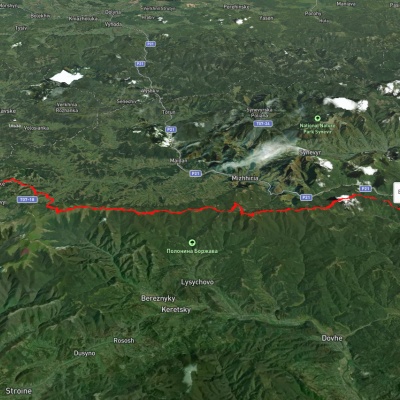
We suggest these hiking trails through or near Reformed Church, Tyachiv: Bushtyno, via Zanivka tract to Mount Manchul, Pyntia's Path, Skotarske village, via Borzhava polonyna and Palenyi Hrun polonyna to Vilshanske reservoir, Vovchyi village, via Mount Stiy, Mount Zhyd-Mahura, Pryslip Pass, Kuk polonyna, Mount Korytyshche and Shyroke village to Nyzhnii Bystryi village, Skotarske village, via Borzhava polonyna and Palenyi Hrun polonyna to Nyzhnii Bystryi village, Mount Topas, via Mereshor village to Kolochava village


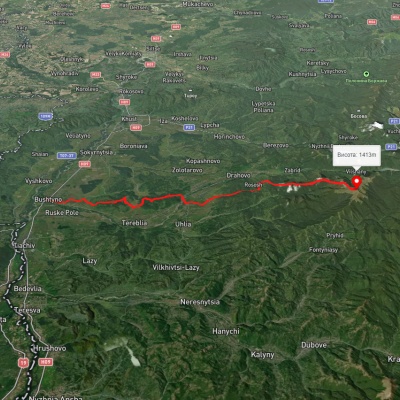
Bushtyno, via Zanivka tract to Mount Manchul
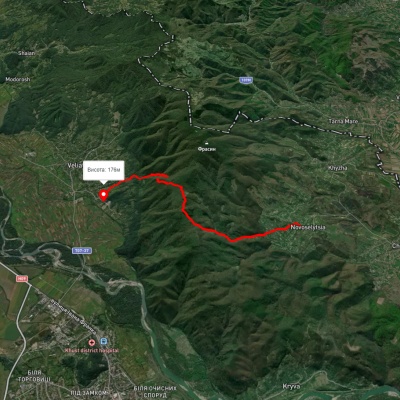
Pyntia's Path
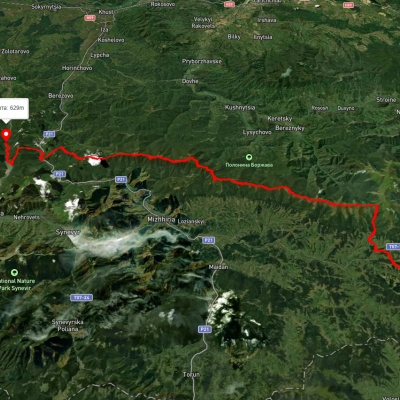
Skotarske village, via Borzhava polonyna and Palenyi Hrun polonyna to Vilshanske reservoir
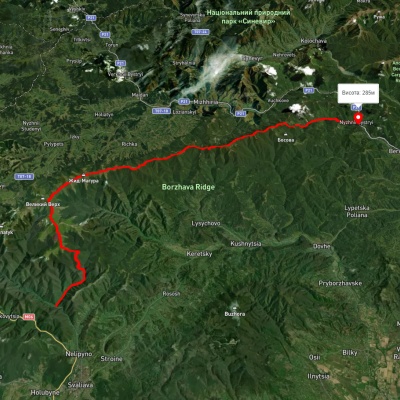
Vovchyi village, via Mount Stiy, Mount Zhyd-Mahura, Pryslip Pass, Kuk polonyna, Mount Korytyshche and Shyroke village to Nyzhnii Bystryi village