Reformed Church, Chetfalva
In addition to the Catholic Church of the Holy Spirit, there is another church in the Transcarpathian village of Chetfalva, which is located in close proximity to the aforementioned building and is significantly older. This is the Reformed Church, built in the 15th century of stone.
The Gothic Reformed Church is a wooden church located in the village of Chetfalva, Berehove district, Transcarpathian region, an architectural monument of national importance (#182).
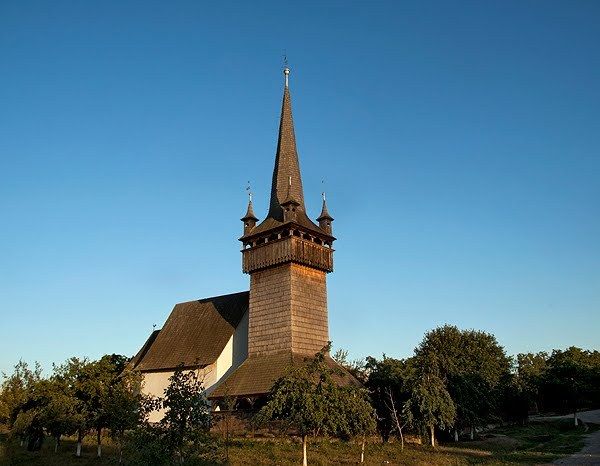
The fifteenth-century stone Gothic church, consisting of an absida and a nave, is crowned with a high triangular pediment. The temple is built of stone with lime mortar, plastered and whitewashed inside and out. In plan, the monument is a single-nave basilica with a pentagonal choir separated from the nave by an arched arch. The southwestern corner is fortified with a stone buttress, covered with a gable roof of a steep slope. The choirs are located at the western and northern walls on oak carved pillars. The wooden ceiling is divided into caissons.
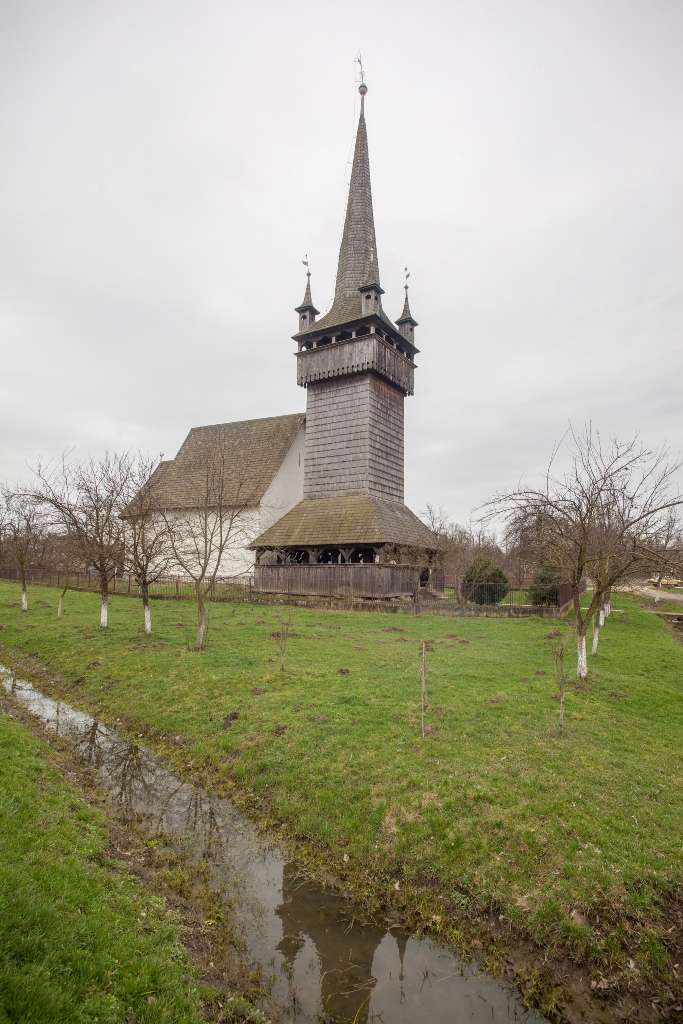
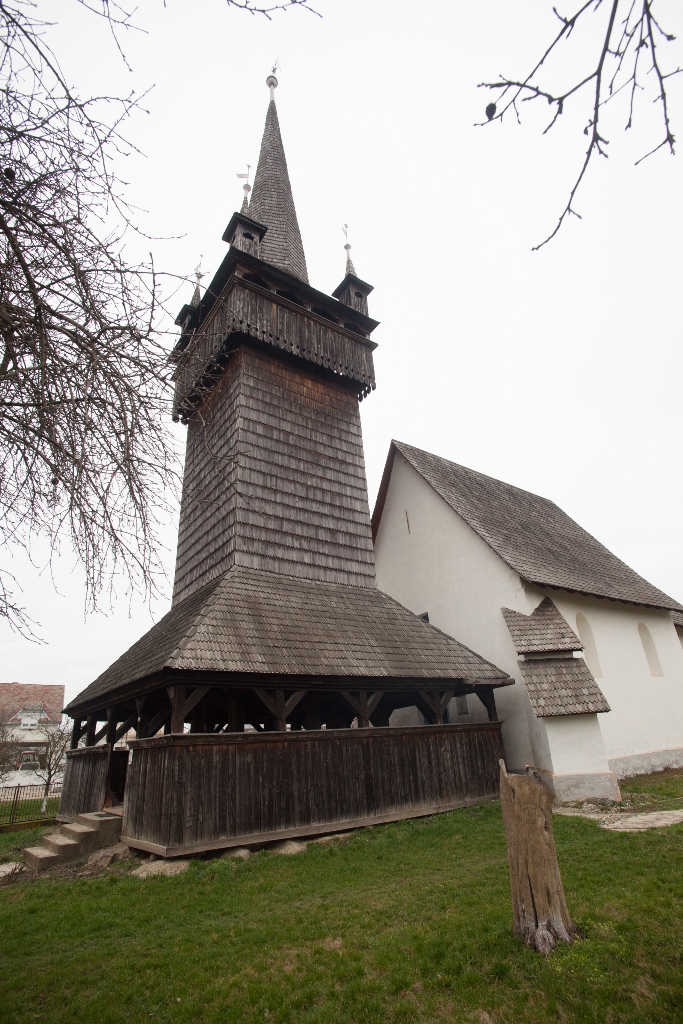
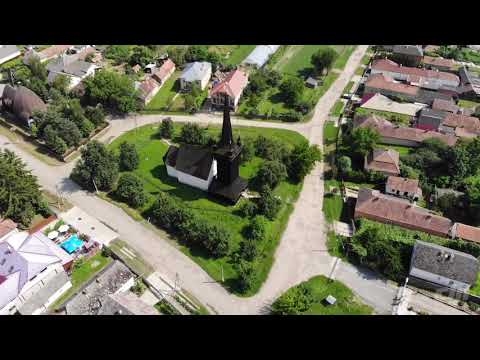
The bell tower, built in the eighteenth century, is adjacent to the western wall of the church. The bell tower resembles the defensive towers of the Czech Republic and Germany of the past centuries in its architectural forms. It is wooden, square in plan, of frame construction, and has two tiers. The first tier is surrounded by a railing on posts with braces, sheathed with boards. The first tier serves as the entrance gate. The second tier is made in the form of a tall tower with a battlement decorated with carvings on the bottom and an arcade of bellhops on the top. The lower tier of the tower is wider than the upper one and is separated from it by a sloping roof. In defensive towers, such a roof had a functional purpose; various objects thrown at the besiegers through openings in the gallery floor bounced off it. In the bell tower, the gallery and sloping roof are purely decorative. The bell tower is covered by a four-pitched roof that grows into a high faceted spire covered with a ploughshare. The height of the spire is almost equal to the height of the tower.
The bell tower in Csethfalva is a masterpiece of carpentry. The almost 30-meter-high bell tower is considered to be one of the tallest among its counterparts in Transcarpathia. Its frame construction is unparalleled among wooden structures of this kind in Ukraine. To see this, one has only to enter its canopy and look at its "skeleton" consisting of sixteen load-bearing pillars and countless braces and connections. To erect such a building, it was necessary to have not only extensive experience but also a great artistic imagination. Modern mathematical calculations have proved that the engineering solution of this bell tower, which ensured its stability, is flawless. The tower stands directly on the ground; it has neither dug-in foundation piles nor foundations. Instead, there is a row of stones around the perimeter of the building, and on them is a strapping of logs, on which the supporting pillars are placed. The height of the bell tower does not exceed 30 meters. It has simple, short proportions (its crown and the bell tower itself have a 1:1 ratio), but in spatial perception it seems as if the end is lower. The bottom of this structure is an open frame, protected from rain by a wide overhang. Above it rises a slender tower with a decorative undercroft, the ends of the cladding boards of which have curly cutouts, creating a patterned pattern. Above the pier is an arcature of three-bladed arches, the hipped roof of which passes into a tall spire with a sharp pattern in an elastic curve. At the base of the bell tower there are four miniature turrets with small spires. These turrets create a contrast, visually increase the scale of the central spire and give the crown an extraordinary elegance.
In 1645, the local chronicle mentions a strong Reformed community that owned a simple 15th-century church that had previously been Catholic. The church is built of stone, with plastered and whitewashed walls inside and outside. The nave is covered with a high gable roof; the pentagonal altar room is much smaller and narrower, separated from the nave by a lancet arch. The southwestern corner is fortified with a buttress.
According to the latest data, the stone church dates back to the 15th century, and the bell tower was placed near its facade in the 18th century. The bell tower could have been built in 1753, when the church was significantly rebuilt. The entrance to the church leads through the lower tier of the bell tower, through a closed gallery connected to the entrance on the western façade.
The church and the bell tower were perfectly restored in the late 1990s: the bell tower was upholstered with new shingles, the church walls were whitewashed, and the metal roofing was replaced with shingles.
The stone church is located in the middle of a large village with dense housing. A wooden bell tower in the form of a defense tower stands next to it. The one-nave stone church of the eighteenth century has a faceted abscissa. Its interior is of the greatest interest, or rather the decorative paintings on its ceiling. The interior is modest: white walls, benches in the nave, and an ordinary table instead of a throne in the altar. The northern walls of the nave and sanctuary have no windows, while the southern walls are pierced by narrow Gothic windows. The paintings on the ceiling of the church are one of the most remarkable works of folk art. The ceilings are wooden. Master Sandor Ferenc did the carpentry, and an unnamed master did the painting. These murals are of great interest not only as a unique monument of monumental decorative painting, but also as evidence of the creative ties between Ukrainian and Hungarian art.
The stone Gothic church hides a real miracle within its walls, which, again, has no analogues in Ukraine. The wooden ceiling of the nave is divided into somewhat unequal in size and shape squares, 10 in length and 6 in width. All these 60 caissons are filled with bright ornamental compositions, of which only two are repeated.
According to the date in one of the caissons, the ceiling was decorated in 1753. The carpentry work was done by the master Sandor Ferenc, and the ceiling was painted either by him or by another unknown master. Square boards of boards decorated with paintings were mounted on the ceiling in a ready-made form in no particular order. Probably, the work was carried out in the following way: first, the entire field of the shield was painted with white or ocher-brown or black paint. Then, depending on the color of the background, the artist would paint the ornament in a certain range: light colors on a dark background, and bright and intense colors on a light background. The ceiling in the abyss was painted 20 years later and differs in ornamentation and color. This painted ceiling is a unique work of folk decorative art.
The caissons are slightly different in size from each other, so there is no dryness or pattern in the breakdown. All sixty caissons are filled with decorative ornamental compositions. One of them bears the date 1753, and the other has an inscription that tells the name of the donor and the artist, Sandor Ferenc, and depicts a carpenter's tool, a plane.
The floral ornamentation in each caisson is a completely independent composition. Some of them - there are eight of them - are built along two axes of symmetry, others - there are nineteen of them - along one, and finally, one composition has absolutely no axes of symmetry. The ceiling painting as a whole gives the impression of a huge Ukrainian plakhta, in which individual squares are arranged in a checkerboard pattern. The original ceiling of the nave is perceived as a colorful carpet woven by the hands of folk craftsmen.
The matte surface of the painting, as well as the backgrounds of the squares: white, deep velvet, black, and ocher brown, add to the special beauty of the painting. The red, white, yellow, green, ocher-pink, gray-blue, and pale yellow ornaments are striking in their variety and uniqueness. Their designs have analogies not only with the motifs of the decorations of the seventeenth-century Gospel from Negrovets, but also with the paintings of Ukrainian houses, as well as bowls, chests, dishes, and other household items. This indicates the sources used and inspired by the fine artist-decorator who decorated the ceiling of the church in Cefalva.
The ceiling paintings in the altar are executed on a light background and do not have the same monumental character as the nave paintings, they are drier and indicate that decorative art in the eighteenth century was beginning to decline.
The village of Chetfalva is located on the right bank of the Tisza River, where the border between Ukraine and Hungary lies, 15 km from Berehove. The first mention of this small village (the current population of which is about 750 people) dates back to 1341 under the name Villa Chet. According to historians, the name comes from the surname of the village's founder, Chet. At least since 1408, the name Cetfalva has been derived from the same name. At the end of the XV century, a customs office operated in the village, and a Catholic church was built. In 1566, Chetovfalva was devastated during a Tatar raid. In the fall of 1998 and especially in the spring of 2001, the village of Chetovfalva suffered from floods, after the second one almost the entire village was destroyed and soon rebuilt again. Today the village is protected from the elements by a high dam.Nowadays, Cetfalva is known primarily for its annual stuffed cabbage festival, which takes place in the middle of summer. Participants compete in various nominations - for the originality of the filling, as well as for the smallest cabbage roll - the record was once set by a gastronomic product of 2.8 centimeters, but at the same time full of filling and cabbage wrapper. The village is quite popular among tourists (primarily Hungarian), and many private estates are ready to receive them.
Accommodation around Reformed Church, Chetfalva:


Which trails pass by Reformed Church, Chetfalva?
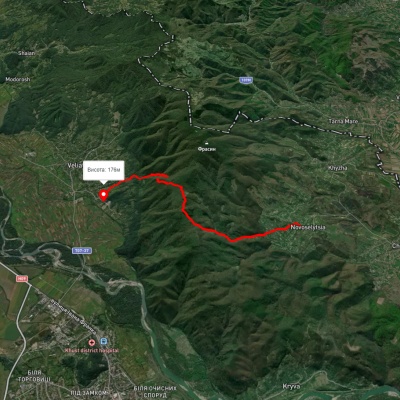
We suggest these hiking trails through or near Reformed Church, Chetfalva: Pidhirne – Chorne Bahno – Kupinkuvate, Novoselytsia – Smerekovyi Stone, Lukovo village, via Mount Buzhora to Svaliava, Pylypets village, via Mount Hemba, Mount Stiy and Vovchyi village to Svaliava, Pyntia's Path, Sasivka village, via Mount Ivolove, Mount Stiy, Mount Velykyi Verkh, Shypit Waterfall and Mount Plai to Volovets

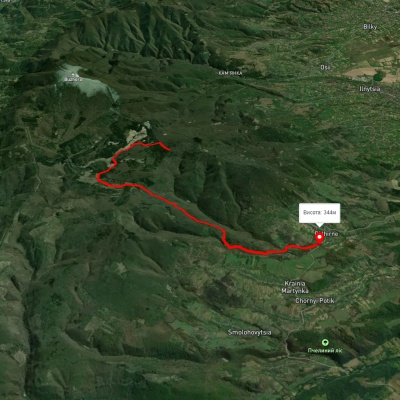
Pidhirne – Chorne Bahno – Kupinkuvate
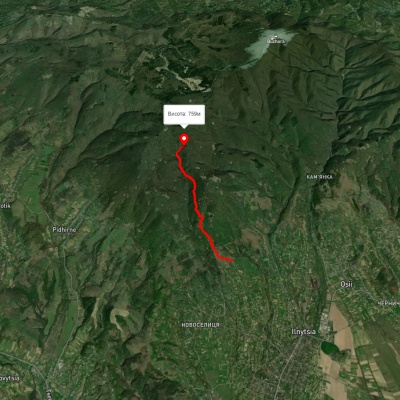
Novoselytsia – Smerekovyi Stone

Lukovo village, via Mount Buzhora to Svaliava

Pylypets village, via Mount Hemba, Mount Stiy and Vovchyi village to Svaliava