Rakovets Castle, Rakovets
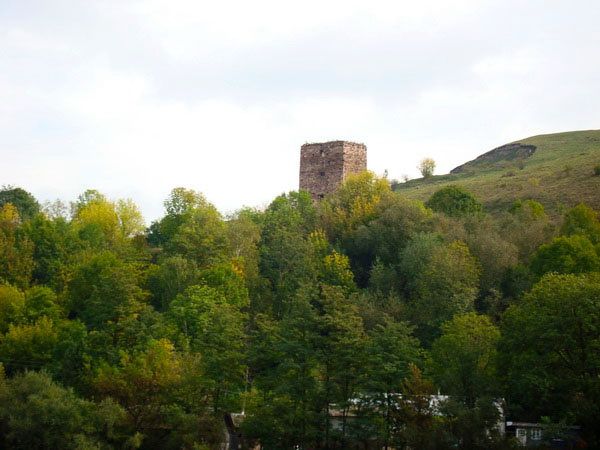
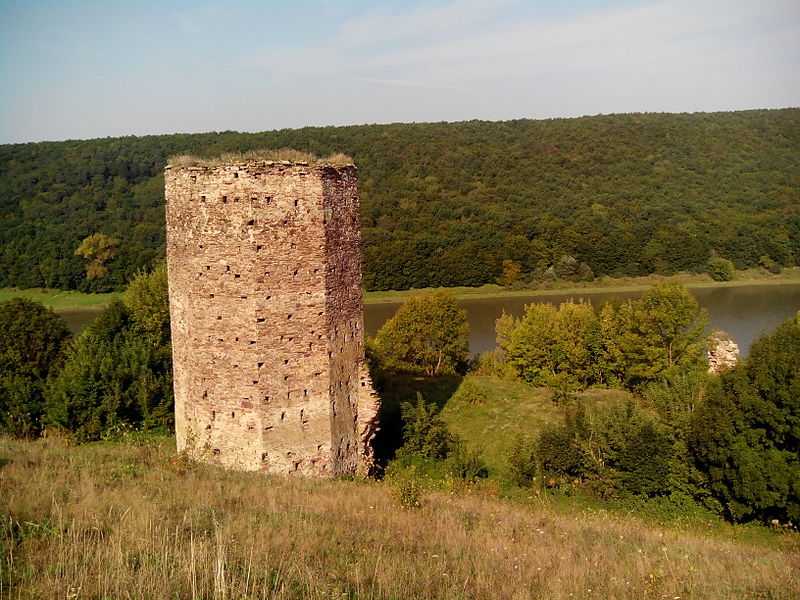
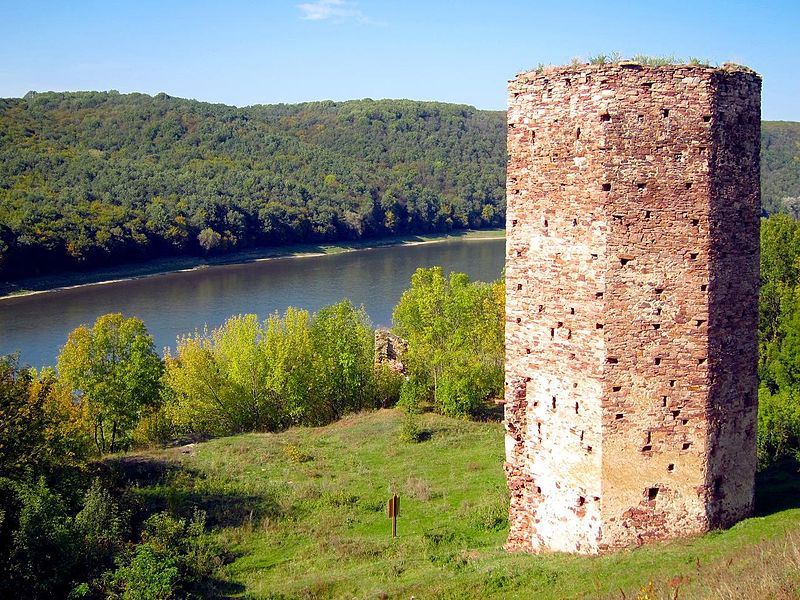
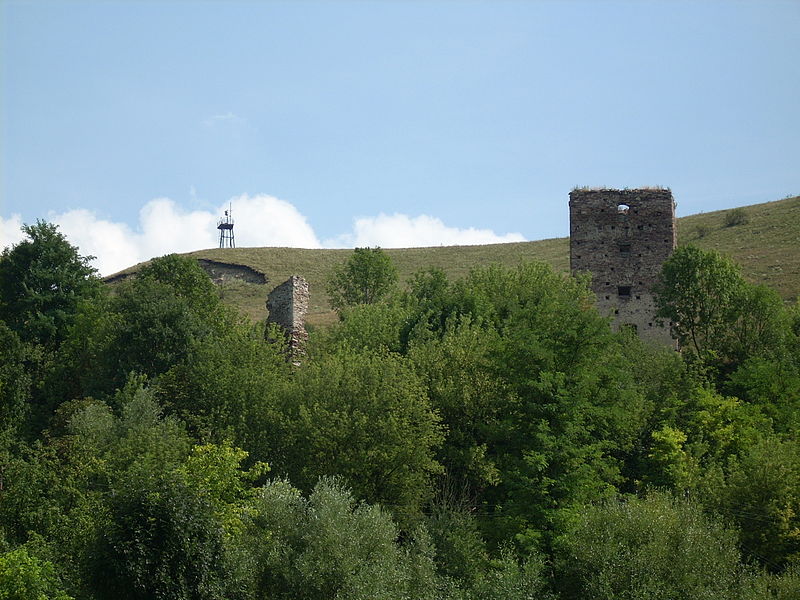
Every year there are more and more people traveling around Ukraine in search of unique castles. There are many "promoted" castles, such as Mukachevo Castle, St. Miklos Castle, Oleska Castle, and Nevytska Fortress. However, there are many castles about which little is known. A striking example is Rakivtsi Castle, which is located in the Dniester canyon.
Rakivets Castle is an architectural monument of national importance, a fortification built in the 17th century. It is located in the village of Rakovets, Horodenkivskyi district, Ivano-Frankivsk region.
Many castles have a tragic history. The castle in the village of Rakovets is one of them. The construction of the castle began in the middle of the 17th century. Rakivets Castle belonged to Dominik Wojciech Bieniawski. The construction was completed in 1660, but the unfinished castle withstood the siege of Cossack troops.
Rakivtsi Castle was built as a defensive fortress with three towers: on the north side there was a square gate tower with a drawbridge, on the west side there was a triangular tower over a cliff, and on the east side there was a hexagonal tower. From the side of the Dniester River, the fortress was fortified by a high rock. In the castle yard there was a well, outbuildings, and a house with living quarters adjacent to the western wall. The unique layout of the castle has no analogues in Ukraine. The entrance to the fortress was arranged through a two-story gate, and a bridge was thrown over a deep ditch to the gate. There were living quarters in the western part of the fortress, and a chapel in the northeast.
In 1657, the unfinished fortress withstood a siege by Cossack colonel A. Zhdanovych, who was sent by Ukrainian hetman Bohdan Khmelnytsky to help the Transylvanian prince Yuri II Rakoczy. During the seventeenth century. Rakivtsi Castle performed its defensive functions, stocks of provisions and ammunition were stored here, and a crossing of the Dniester River was located nearby. In 1667, the fortress survived the Tatar siege, but in 1676 it was captured by the Turks and significantly damaged. The castle was subsequently rebuilt and for another century played an important role in the struggle against the Turkish invasion as an outpost of the Polish-Lithuanian Commonwealth in the wars of King Jan III Sobieski.
In the 17th century, the site where Rakivtsi Castle stood was used as a crossing point for the Dniester, and the fortress itself was used to store ammunition and provisions. That is why this important military and strategic object became a place of military clashes. In 1768, the fortress burned down and was never rebuilt.
In the eighteenth century, the castle lost its defensive significance and served as a dwelling. During the struggle of the Bar confederates in 1769, the fortress was burned by Russian troops. The castle was never restored. In 1840, the owner of Rakovets, Dvernytskyi, organized a potash factory on the territory of the castle, but it soon burned down. At the end of the same century, Shmul Baran became the owner of the ruins. According to some evidence, as early as the 1960s there were large fragments of the defensive walls around the preserved eastern tower. The image from the castle chapel was kept in the village church until the First World War.
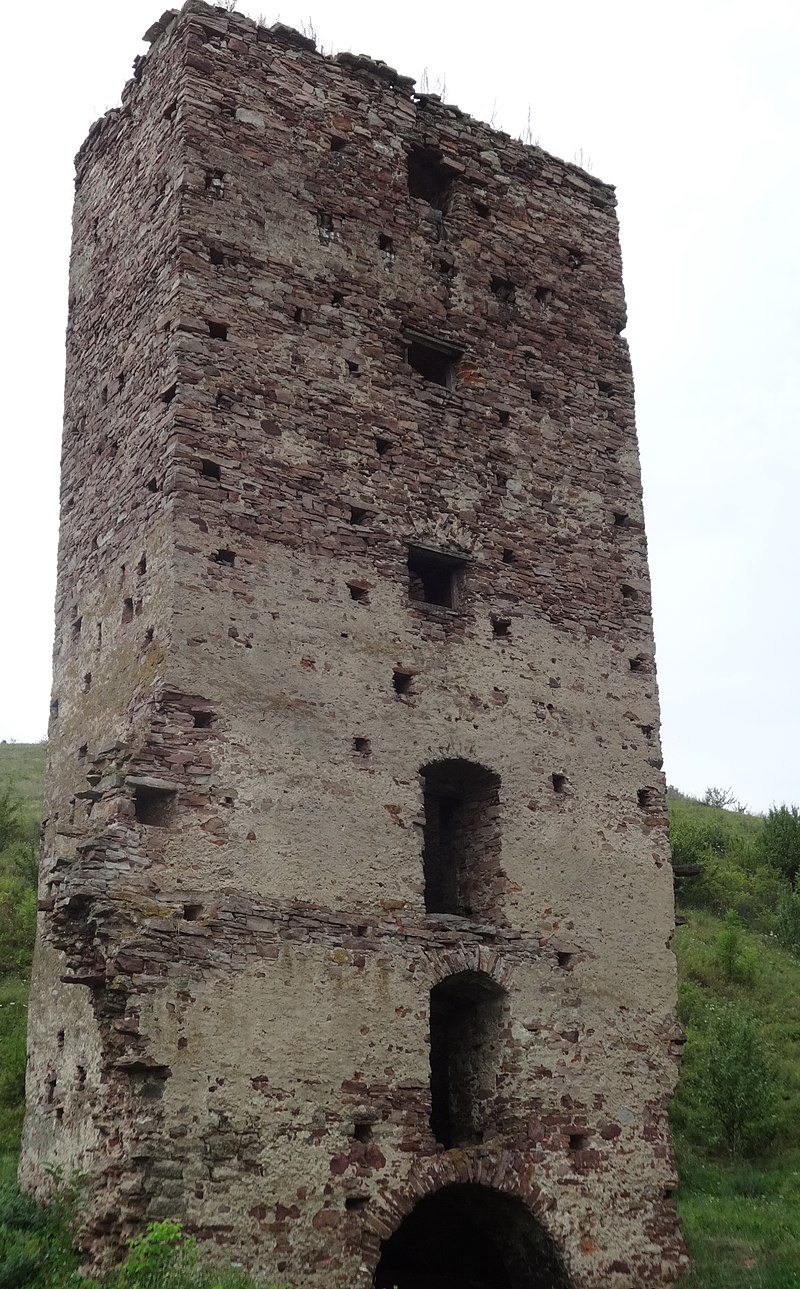
Only modest fragments of the past have survived to this day. Part of the western wall and the tower have been preserved. Near the latter, you can still see the entrances to the basement.
The castle had the shape of an irregular quadrangle with towers at the corners. The entrance gate was in the northern tower, which had two floors. In the center of the eastern wall was a tall (five-story) tower with loopholes. The entrance to the cellars was on its side. The living quarters were adjacent to the western tower. There were windows on the second floor. As of 2017, only a small fragment of the northwestern wall and the tower in the eastern corner have survived.
Over the past century, local residents have dismantled the remains of the defense structure for their own construction needs - as materials for fences, basements, etc. Only the donjon, a tower in the middle of the castle that served as the last bastion, remained intact. And it was preserved most likely only because it was too difficult and dangerous to dismantle. So, today there is a hexagonal tower, a seven-tiered tower with an entrance in the form of an arch from the side of the crib, which was similar to the pillar towers, as well as the aforementioned remains of the northwestern wall of the fortress above the cliff.
The surviving tower of Rakivtsi Castle is one of the few castle fortifications in Ivano-Frankivsk Oblast, belongs to the architectural monuments of national importance, and is a popular stopover point during rafting on the Dniester. An information stand with a brief historical background is installed next to the tower.
Rakovets Castle was built far from the noisy roads. The best and most comfortable way to get here is by car on the Sniatyn-Tiaziv road. If you are traveling from Ivano-Frankivsk, after the village of Voroniv, you need to turn right and drive through Semenivka to Rakivets Castle.
The village of Rakovets is located on the right bank of the Dniester River, 25 km from the district center of Horodenka and 3 km downstream from the villages of Nezvyssko and Luka. The village was mentioned in written sources in 1440. Today, more than 800 people live here.
Location on the map
Comments
Nearby attractions
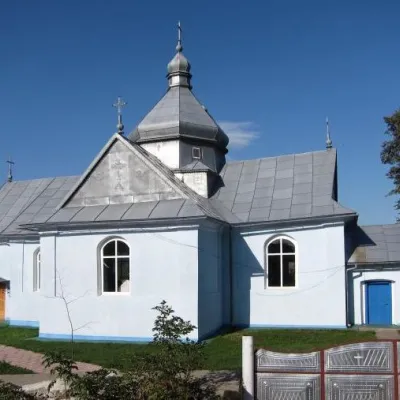 ChurchChurch of St. Dmitry, RakovetsHorodenkaunder 1 km from Rakovets Castle, RakovetsDemetrius of Thessalonica in the village of Rakovets is an Orthodox church of the OCU and an architectural monument built in 1857 in the village of Rakovets, Horodenka...
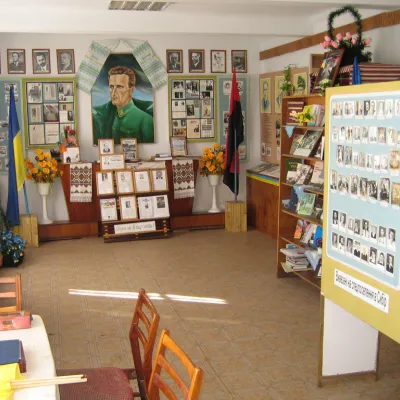 MuseumRoman Shukhevych Museum of Village History and Liberation StruggleHorodenka12 km from Rakovets Castle, RakovetsA small exposition in the People's House tells about the history of the village, the Shukhevych family, the activities of the Prosvita, and the hard times of...
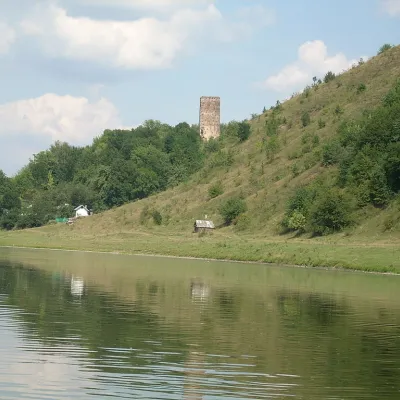 NatureDniester Regional Landscape ParkTlumach district23 km from Rakovets Castle, RakovetsThe park is located on the territory of Horodenka and Tlumach districts and covers 19.6 thousand hectares.