Palace of the Rakoczy Princes (Mukachevo)


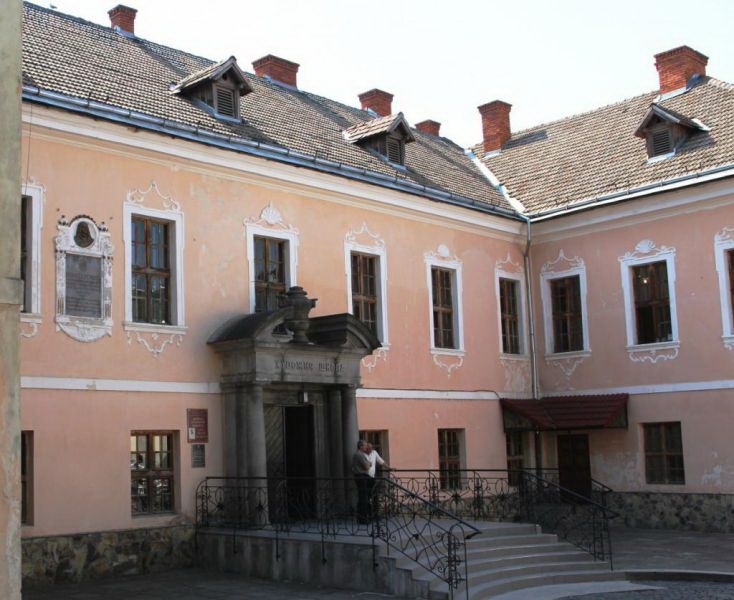
The Palace of the Rakoczy Princes (also known as the White Palace) is a former palace of the Rakoczy princes of the Transylvanian dynasty, located in the city of Mukachevo (Zakarpattia region).
Construction of the one-story Baroque palace began in 1667. The White Palace (or House) got its name because of the white color of the facade. Tyvodar Lehotskyi in his work "Monograph of the Bereznyi Komitat" (1881) gives a detailed description of the building: "The original Rakoczy Palace was a one-story building, 26x19 meters in size, with an open corridor over 3 meters long. The exterior walls were whitewashed and the edges were painted with wide red squares a foot in size. The windows were decorated with stone frames. The building with a cross-shaped vault was accessible through the hayloft. Cellars, kitchens, and servants' rooms were located in the lower part of the building with a strong vault. The quadrangular building was covered with a double roof. The palace was spacious and stood in the middle of the courtyard, surrounded by outbuildings that were surrounded by a large sprawling garden. The palace was the middle part of today's building."
In 1746-1747, the one-story building was rebuilt and significantly expanded according to the project of the famous German architect Johann-Balthasar Neumann. It was a rather complicated reconstruction. It was necessary to use the old elements of the buildings, add another floor and a new building in compliance with architectural proportions and symmetry. This is how the palace got its U-shape. The façade has two original windows and 5 reconstructed windows in the Renaissance style. An open staircase leads to the main entrance.
In the nineteenth century, a columned portal of the main entrance carved from Timpanogos stone was built. In the middle of the entrance there is a vase-decoration. The windows of the main façade and the vaults of the palace premises are decorated with shuk (stucco). The interior spaces of the middle wing of the building have a domed vault. Now there are 21 rooms, 98 windows, 91 doors, and 10 ancient stoves.
To the left of the main entrance, between two windows, there is a lavishly framed plaque in honor of Ferenc II Rákóczi, installed in 1911, which remained intact during the Soviet era.
The palace was built by the Rakoczy princes of the Transylvanian dynasty as a city residence. They lived there until 1711. After the suppression of the national liberation war of 1703-1711, which was led by Ferenc Rákóczi II, the palace first became the property of the Austrian emperor, and then, in 1728, was transferred along with vast land as a gift to the German Count Schönborn-Buchheim. "The White Palace was used for ceremonial receptions of the nobility and foreign ambassadors.
In the nineteenth century, the palace housed the exposition of the Mukachevo Museum of Local Lore, founded by the famous Transcarpathian archaeologist Tyvodar Lehotskyi. There was also the office of Count Schönborn, where T. Lehotsky worked as a lawyer.
In 1945, when Transcarpathia became part of Soviet Ukraine, the palace housed the headquarters of a military unit of the Soviet Army. Later, one of the city's secondary schools was located here.
In 1979, the first children's art school in Transcarpathia named after Mihai Munkachi was opened in the palace. In 1969, a memorial plaque was erected in his honor.
In June 1703, Ferenc II Rákóczi stayed in the palace. It is believed that it was in this house that he wrote an appeal to the Hungarian people, calling on the masses to fight against the Habsburgs. On June 28, a battle between the Kurucs and the army of Austrian General Montecucci took place near the palace. The untrained and poorly armed rebels were unable to resist the Labanese and retreated. Ferenc II Rákóczi also left the city, retreating again to the Veretsky Pass to regroup his forces.
In 1770 - Emperor Joseph II, and in 1852 - Joseph Ferenc I, in 1882 - the outstanding artist Mihaly Munkácsy, an honorary citizen of the city, a native of Mukachevo.
Location on the map
Comments
Places to stay nearby
All stays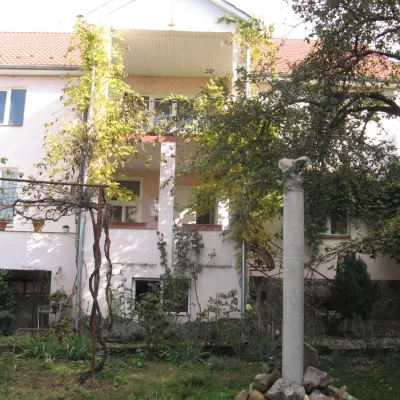 HotelMini-Hotel "Vilni Kimnaty" MukachevoMukachevounder 1 km from Palace of the Rakoczy Princes (Mukachevo)FireplaceKitchenWi‑FiNearby: Assumption Cathedral 700 mPalanok Castle Mukachevo 2.5 km
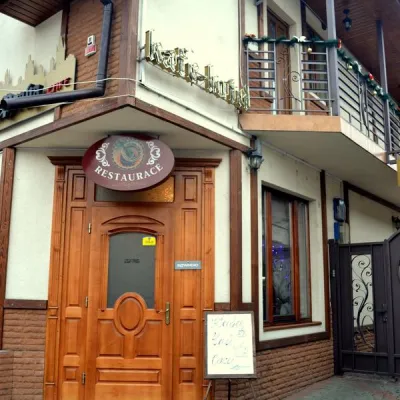 HotelHotel "Zlata Praha" MukachevoMukachevounder 1 km from Palace of the Rakoczy Princes (Mukachevo)KitchenParkingWi‑FiNearby: Assumption Cathedral 800 mPalanok Castle Mukachevo 3.2 km
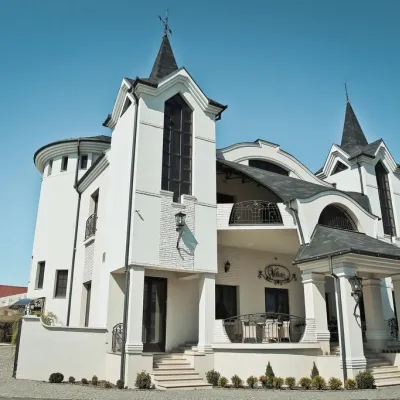 HotelHotel-Restaurant "Velyur" MukachevoMukachevounder 1 km from Palace of the Rakoczy Princes (Mukachevo)BreakfastParkingWi‑FiNearby: Assumption Cathedral 1.1 kmPalanok Castle Mukachevo 3.0 km
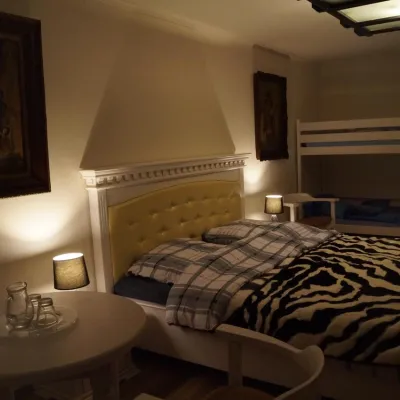 HotelMini-Hotel "Leonard" MukachevoShayan1.8 km from Palace of the Rakoczy Princes (Mukachevo)KitchenParkingWi‑FiNearby: Palanok Castle Mukachevo 900 mAssumption Cathedral 1.7 km
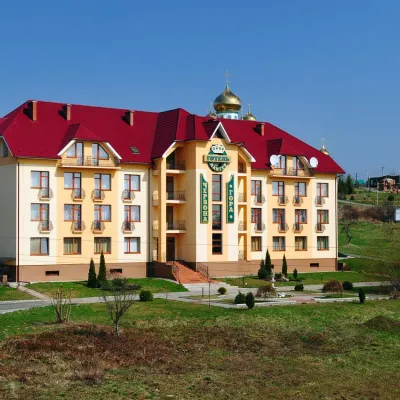 HotelHotel Complex "Chervona Hora" ShayanShayan2.4 km from Palace of the Rakoczy Princes (Mukachevo)Wi‑FiKidsTransferNearby: Assumption Cathedral 2.5 kmPalanok Castle Mukachevo 4.0 km
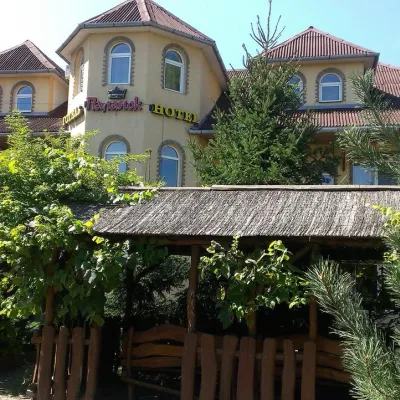 HotelHotel "Palanoch"Mukachevo2.5 km from Palace of the Rakoczy Princes (Mukachevo)KidsTransferNearby: Palanok Castle Mukachevo 200 mAssumption Cathedral 2.3 km
Trails nearby
All trails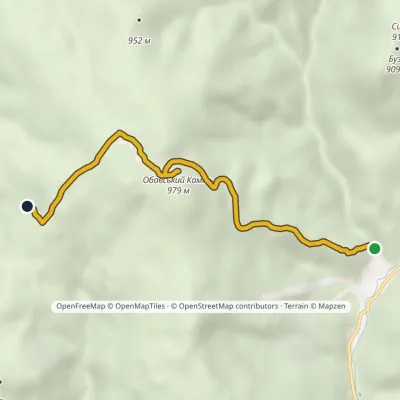 EasyOne-dayMarkedSyniak village Obava RockElevation profile436–992 m5.4 kmascent 556 m≈ 2.5 h walking16 km from Palace of the Rakoczy Princes (Mukachevo)
 HardMulti-dayLukovo village to Svaliavavia Mount BuzhoraElevation profile162–1 085 m46.8 kmascent 1 894 m17 km from Palace of the Rakoczy Princes (Mukachevo)
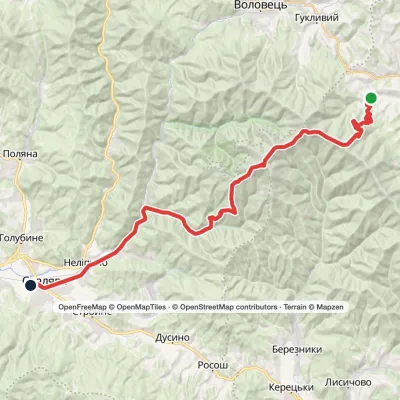 HardMulti-dayPylypets village to Svaliavavia Mount Hemba, Mount Stiy +1Elevation profile198–1 681 m40.2 kmascent 1 224 m≈ 12.5 h walking22 km from Palace of the Rakoczy Princes (Mukachevo)
Nearby attractions
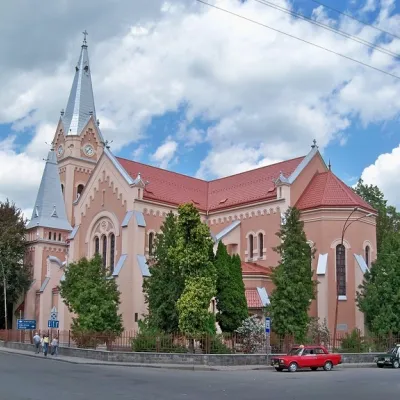 SightSt. Martin's Church, MukachevoMukachevounder 1 km from Palace of the Rakoczy Princes (Mukachevo)Martin's Cathedral in Mukachevo is one of the city's landmarks. Today the cathedral belongs to the Roman Catholic Church.
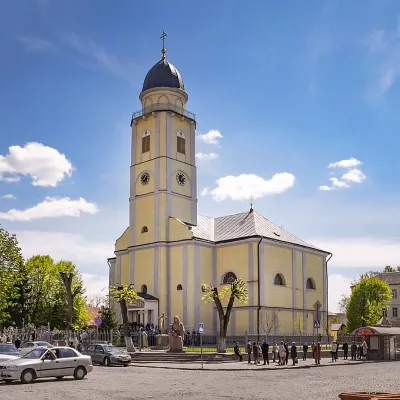 ArchitectureAssumption Cathedral, MukachevoMukachevounder 1 km from Palace of the Rakoczy Princes (Mukachevo)TheCathedral of the Assumption of the Blessed Virgin Mary is a functioning Greek Catholic church in Mukachevo, the conciliar cathedral of the Mukachevo Greek Catholic...
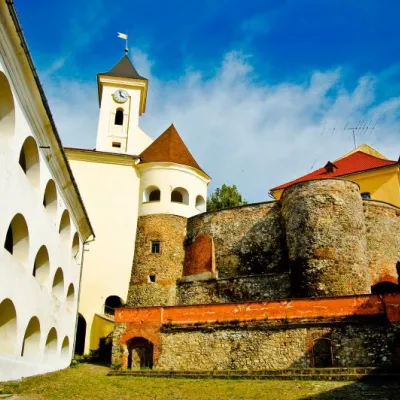 CastlePalanok Castle MukachevoMukachevo2.6 km from Palace of the Rakoczy Princes (Mukachevo)One of the oldest Ukrainian fortresses in Ukraine is the famous Palanok Castle in Mukachevo. Its medieval walls still hold many secrets and legends.
Craft nearby
All craft places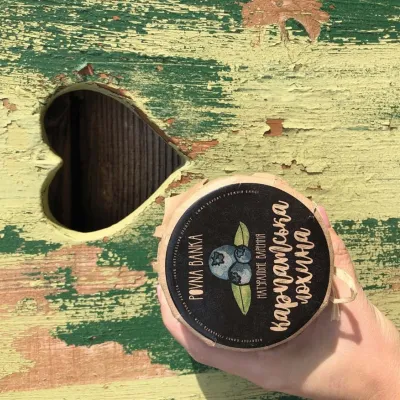 Craft producersPovna Banka jam workshop, MukachevoMukachevounder 1 km from Palace of the Rakoczy Princes (Mukachevo)Povna Banka (“Full Jar”) is a small family workshop in Mukachevo that cooks jam from wild Carpathian berries.
 Cheese dairies & pasturesMilki Way cheese shop & café, MukachevoMukachevounder 1 km from Palace of the Rakoczy Princes (Mukachevo)Milki Way is a cheese shop with a small café in Mukachevo, at 15 Uzhhorodska Street. People drop in to put together a cheese board for dinner, pick up a tasty souvenir...
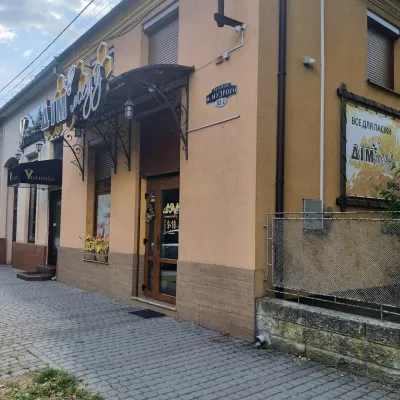 Craft shopsDim Medu honey shop, MukachevoMukachevounder 1 km from Palace of the Rakoczy Princes (Mukachevo)Dim Medu (“House of Honey”) is a honey shop in Mukachevo at 52/2 Yaroslava Mudroho Street, known for many years to locals and visitors alike.
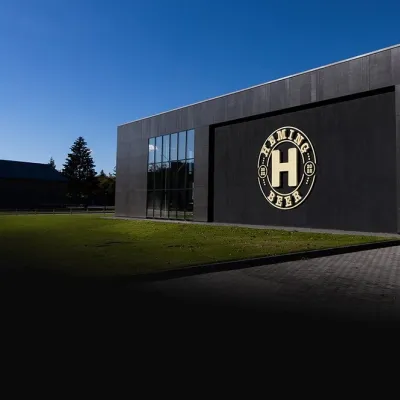 Craft beer & breweriesHeming Brewery, MukachevoMukachevo1.2 km from Palace of the Rakoczy Princes (Mukachevo)Heming is a young craft brewery from Mukachevo that has become a noticeable name on Zakarpattia's beer map in just a few years.
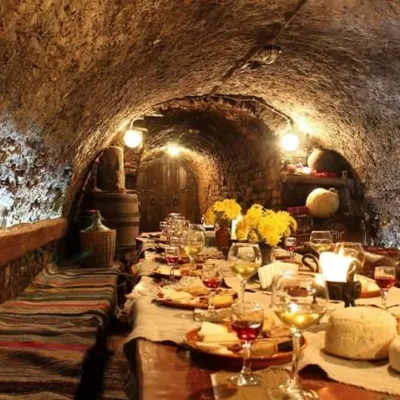 Wine & tastingsCeltic Yard Tasting Cellar, MukachevoMukachevo2.2 km from Palace of the Rakoczy Princes (Mukachevo)Celtic Yard (Keltskyi Dvir) is an unusual farmstead on the slope of Lovachka hill in Mukachevo, where the hosts devote themselves to what they call the historical...
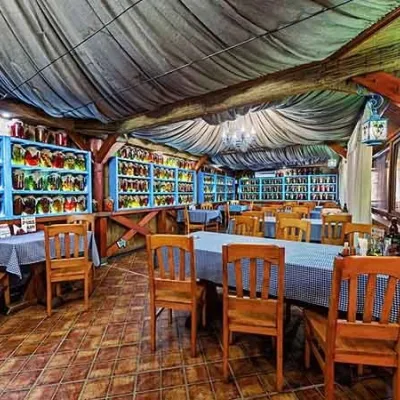 Koliby & Hutsul cuisinePoriadnyi Gazda Restaurant, MukachevoMukachevo2.5 km from Palace of the Rakoczy Princes (Mukachevo)Poriadnyi Gazda (“The Proper Host”) is a Zakarpattia-cuisine restaurant in Mukachevo, at 36A Erdeli Street, right below Palanok Castle.
