St. Michael's Church, Stara Sil
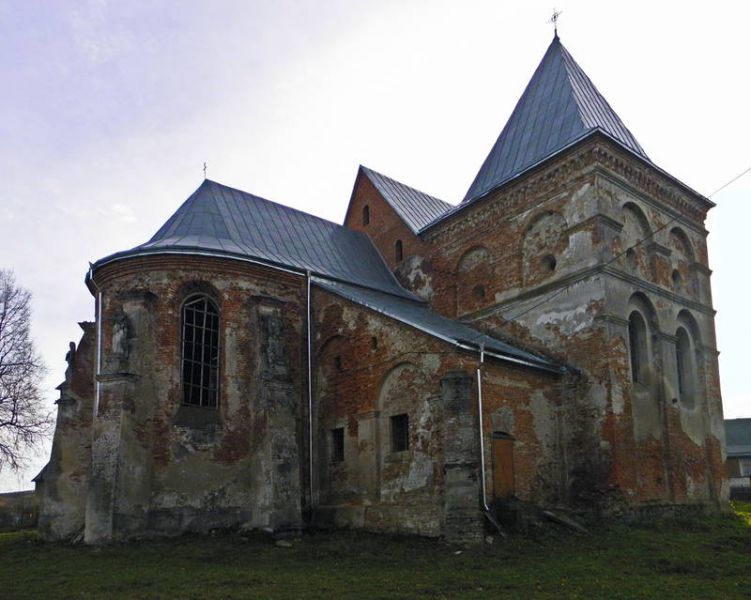
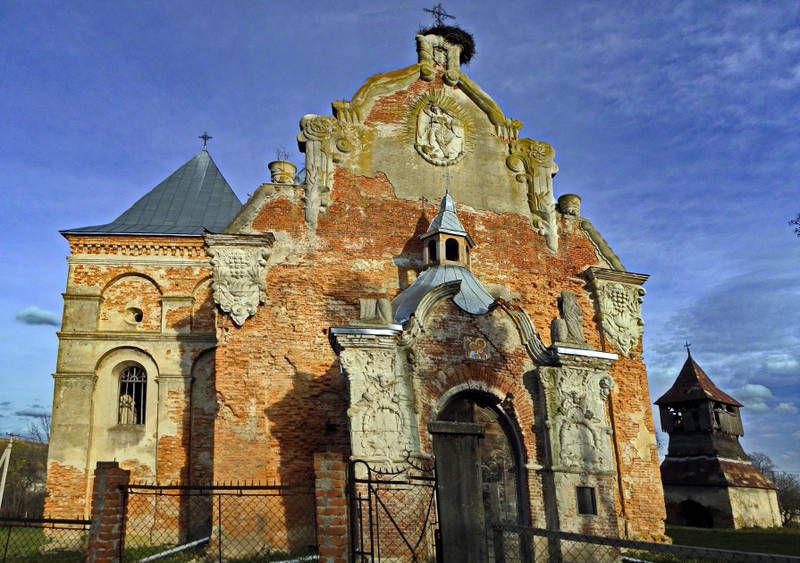
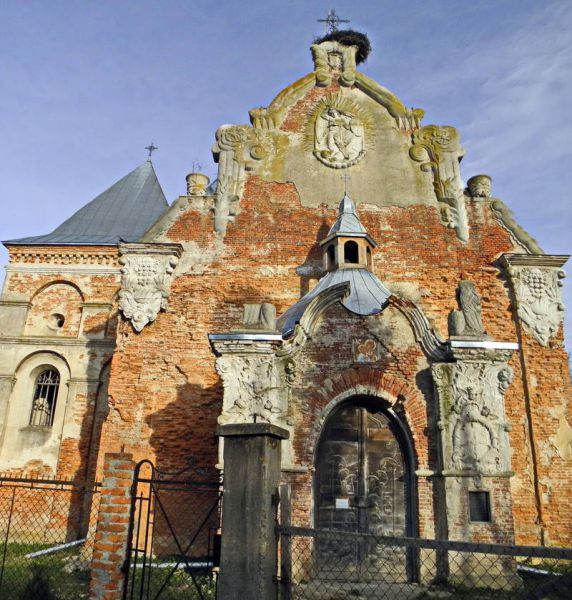
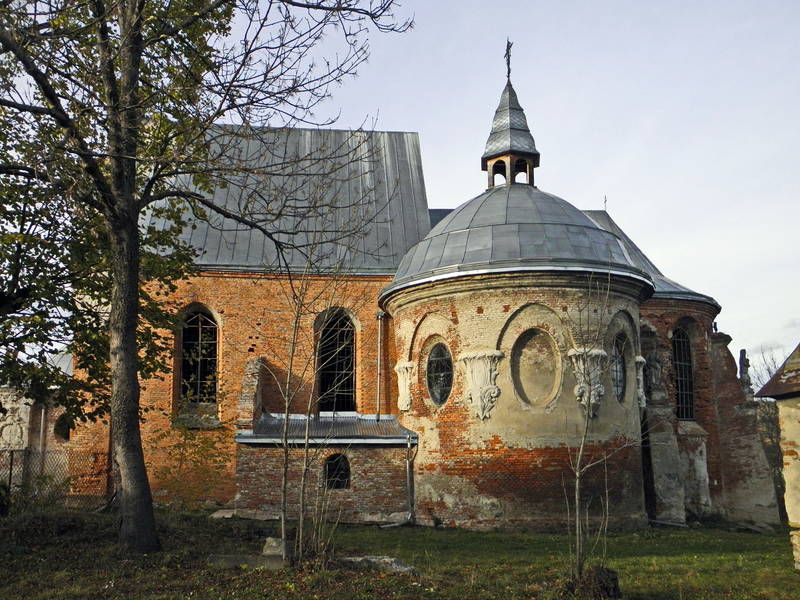
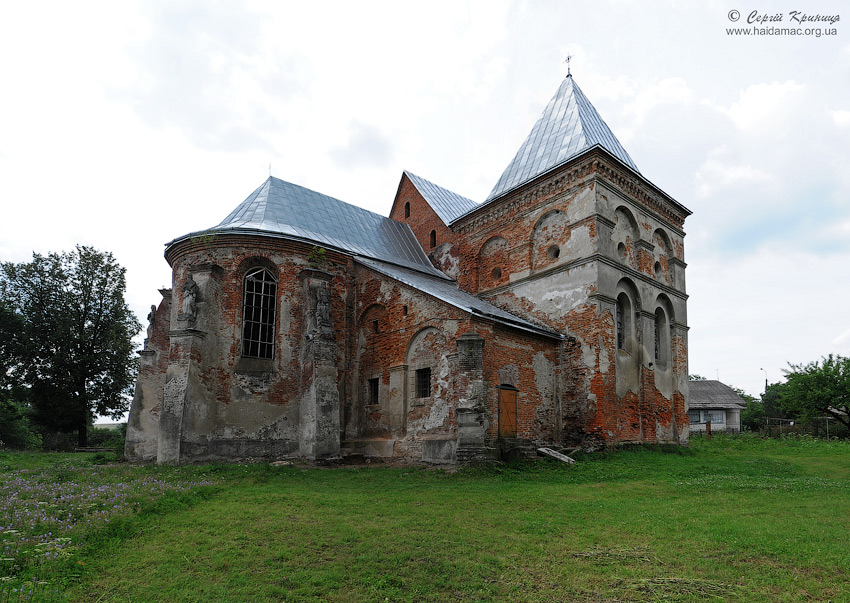
TheChurch of St. Michael the Archangel is an outstanding 17th-century Baroque architectural monument in the village of Stara Sil, Lviv Oblast, not far from Staryi Sambir. It was built in 1660 in the Baroque style and is considered the most perfect among the architectural structures of the village. In addition to the church, Stara Sil also boasts two ancient wooden churches - the Church of the Good Friday and the Church of the Resurrection.
The Church of St. Michael the Archangel is a one-nave, brick-built, rectangular church with a semicircular presbytery supported by buttresses. Near its northern façade is the ancient square chapel of St. Anne, whose facades are decorated with a frieze and arched niches. On the façade of the church there is a bas-relief depicting the Archangel Michael, and above its narthex is an original mosaic icon.
The first mention of a church on this site dates back to 1365. Thus, at the expense of Mr. Jerzy Mnieczek, the repair of the building began in 1613. An inscription in Latin was found in the chapel of St. Anne behind the altar: "Know that the descendant of Bolesław is building this shrine and asks you to take care of it in obedience. Year of our Lord 1365." The date of 1365 is the basis for the statement that the northern chapel (the oldest building in the complex) was built at the expense of King Casimir III. A one-nave church of wood was added to the existing chapel in 1469.
During the liberation war of the Ukrainian people under the leadership of Hetman Bohdan Khmelnytsky, this Catholic wooden church was destroyed by the Cossacks. After that, in 1660, a new, but already brick church was added to the chapel, which, according to a 1721 inventory, had seven altars. Throughout its history, the building has undergone numerous reconstructions, as evidenced by the layering of certain elements, the last of which is the result of repair work in the 1920s. A similar fate befell the Church of St. Martin in Felshtyn, but the latter is in much better condition. It was only in 1743 that the church was consecrated in the name of St. Michael the Archangel.
The ancient St. Michael's Church was damaged during the First World War by the soldiers of the Russian Empire. This forced the start of restoration and repair work in the postwar years. It was then that new ellipsoidal windows were created on the facade of the southern chapel and new sculptures of the apostles were installed, which gave the ancient building a neo-Baroque elegance. The decor of the church's facades was also somewhat restored.
In the post-Soviet years, the church was taken away from the community and turned into a storage facility for mineral fertilizers. In the 1970s, the church-storage facility was damaged by fire. According to legend, the fire was extinguished with a salt brine solution. This extremely worsened the condition of the architectural monument, because the salt attracted moisture and the walls of the ancient building were damp. Subsequently, the roof was also damaged, which led to the destruction of the frescoes. Since then, the building has been in a state of complete ruin. In the early 90s of the last century, Catholics tried to regain the church, but to no avail. Only with the proclamation of Ukraine's independence, in 1992, services began to be held in the church.
Not far from the church to the south is the bell tower, which in the past served as the gateway to the churchyard. This building is made of wood and brick, its first tier is brick, with a through archway, and the upper tier is wooden. Some researchers have suggested that this bell tower is an ancient tower of a former defensive castle that stood on this site in the distant past. According to Volodymyr Pshyk's opinion about the defensive structures of the Lviv region, the bell tower in Stari Soli should be dated to the 17th and 18th centuries. Probably, there was once a fence here, and the bell tower served as a gate tower. It still has a through passage.
Thechapel on the southern façade is a latechapel, built in the 1920s, of the rotunda type, brick, now covered with a rounded roof with a fracture. The oval windows are the result of a renovation in the 1920s. At the same time, semicircles above the windows were added to the façades, supported by decorative capitals without pilasters. There are similar decorative capitals on the corners of the church under the cornice.
At the beginning of the 20th century, Polish historians were encouraged to renovate old buildings in the "native style", inspired by the architectural details of provincial Polish Baroque. The project for the reconstruction of the church in Stara Sola was designed by the architect Bronisław Wiktor, which was completed in 1923. Bronisław Wiktor studied at the Lviv Polytechnic and is known for the reconstruction of a complex of Baroque buildings in the village of Obroshyno. Repair and restoration work was carried out in 1926-1927. The newest sculptures of the four apostles were installed on the buttresses of the facade of the altar part of the church in 1928. There is information that the accidentally preserved altar of St. Anne's chapel was taken to the Lviv National Gallery of Art for safekeeping.
At the beginning of the 21st century, the Church of St. Michael the Archangel was returned to a small local community of believers, which funded long repair and restoration work. The building finally received a new roof. The mural designed by Bronislav Viktor was also completed. The sculptures of the apostles on the facade are by Yurii Mykolaiskyi.
TheChurch of St. Michael the Archangel in Stara Sola is a functioning Roman Catholic church, noted for its original ancient forms and belongs to the architectural monuments of national importance. In general, the area between Staryi Sambir, Sambir, and the state border is a double find for tourists! There is Dobromyl with the Basilian monastery and Herburt Castle, and Susidovychi with the Carmelite monastery, and Khyriv... It's easy to get here by all means - by bicycle, bus, or car.
Location on the map
Comments
Trails nearby
All trails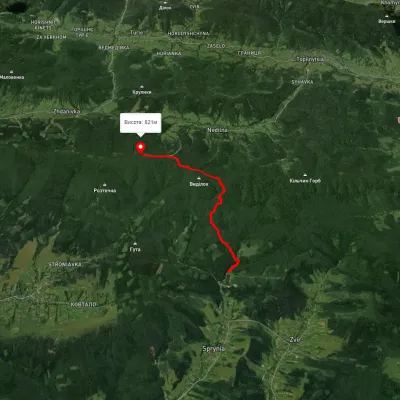 EasyOne-dayMarkedSprynia Tower of Memoryvia ChapelElevation profile460–823 m6.1 kmascent 617 m≈ 3 h walking18 km from St. Michael's Church, Stara Sil
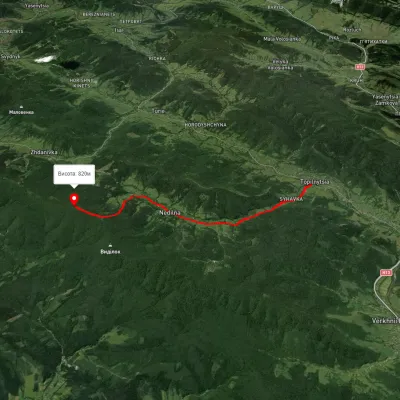 ModerateOne-dayMarkedNedilna Tower of MemoryElevation profile440–823 m9 kmascent 598 m≈ 3.5 h walking19 km from St. Michael's Church, Stara Sil
Nearby attractions
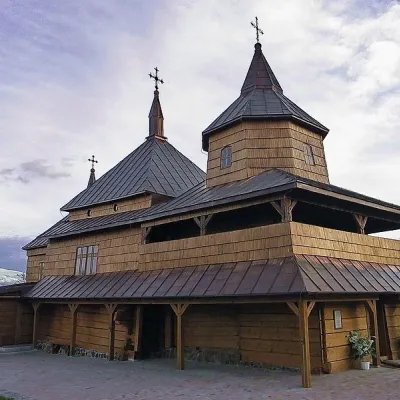 ChurchChurch of Paraskeva Friday, Stara SilStara Silunder 1 km from St. Michael's Church, Stara SilTheChurch of Paraskeva P iatnytsia is the oldest wooden church in the Starosambir region. According to tradition, during the time of Prince Lev Danilovich, monks...
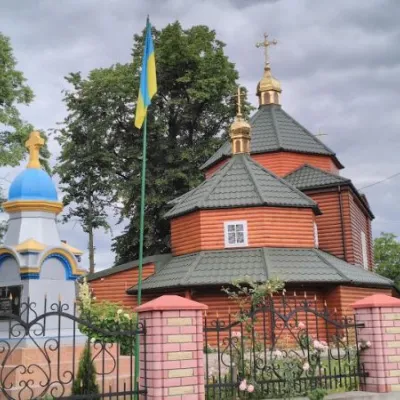 ChurchChurch of the Resurrection, Stara SilStara Silunder 1 km from St. Michael's Church, Stara SilTheChurch of the Resurrection in Stara Sola was probably built in the fifteenth century. It is located a little further along the Staryi Sambir-Khyriv road in the...
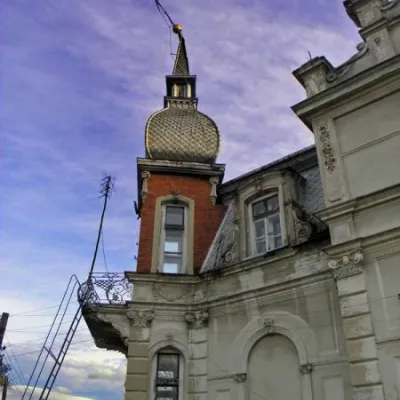 ArchitectureVilla Anna, Old SaltStara Silunder 1 km from St. Michael's Church, Stara SilVilla Anna is a striking example of a Secessionist private house. The building impresses with its slenderness, colorful stucco moldings on the walls, and an overly...