Reformed Church, Vyshkovo
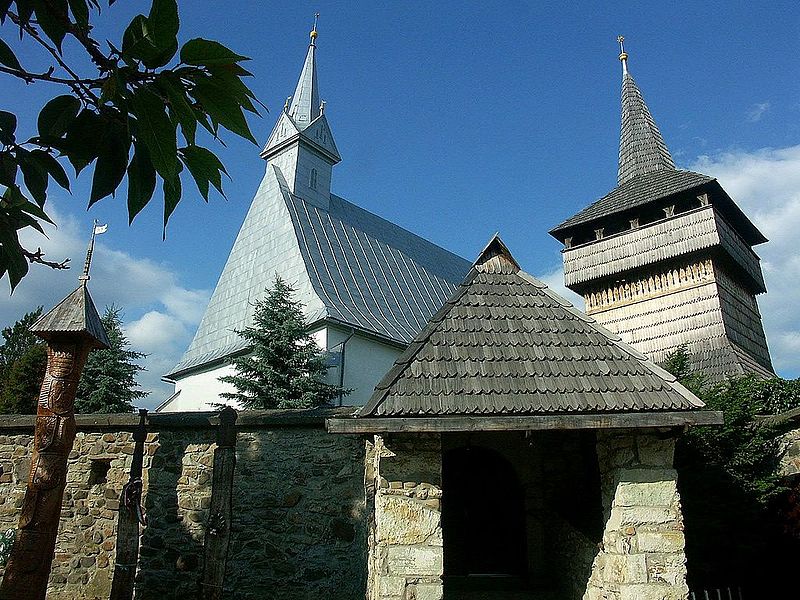
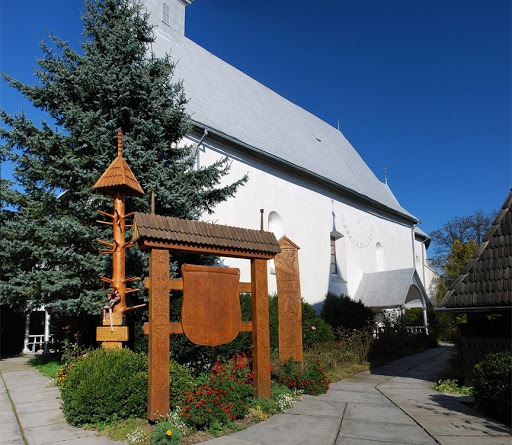
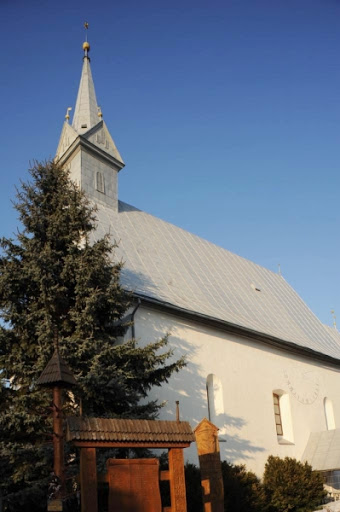
The Reformed Church is an architectural monument of local significance in the urban-type settlement of Vyshkovo, Khust district, Zakarpattia region. The features of the medieval building have been preserved to this day. The Reformed Church in Vyshkovo was one of the first churches built in Transcarpathia using stone. The church belongs to the unique monuments of Gothic architecture.
The first written mention of the church and the village of Vyshkovo can be dated back to 1281, when King Laszlo IV approved one of the previous charters. According to the text of the document, the settlement became the property of the sons of Zupan Marcellus. However, some researchers believe that the mention of this church in the document is an unreliable fact. The stone monument was originally replaced by a wooden church. The architectural forms of the Reformed church make it possible to come closer to determining the century in which the building was erected. The existing combination of many elements from different eras can be attributed to the 1300s. In 1326, Archbishop Bolesław of Esztergom approved the rights of the religious building. There are references to the parish priest Dierd, who was in charge of the religious building at that time. He sent a petition, after which the rights of the church were also approved by the monarch. This serves as proof that there was a church in Vyshkovo in the 14th century, but there is no evidence that it was the same building.
Some researchers call the second half of the 13th century the period when the church was built. In 1329, Vyshkovo was granted additional rights by King Charles Robert. According to them, the town had the opportunity to independently elect a priest who received tithes. He also had the right to make a will. There are records in the papal tithe register dating back to 1333. They indicate that Father George of Vyshkiv paid 2 kosotska marks. In 1335, the parish priest of the village paid 48 groszy. In 1346, the rector of the church was Dierd, who took an oath before the bishop of Eger. There is information about the people who took care of the church in the second half of the 14th century and the first half of the 15th century. In 1373, the church priest's name was Janos. His name is known because of an agreement between him and another person. Until the 1420s, the priest in Vyshkovo was László Assonpátaki. After him, Janos Pellifex, who at the time held the position of presbyter of the Eger diocese, claimed the position of parish priest in Vyshkovo. During the 14th and 16th centuries, the church was reconstructed several times. In 1524, the church and its parishioners converted to Lutheranism, and in 1556 to Calvinism.
In 1657, Prince György II Rákóczi organized and chaired a meeting of the State Assembly of Transylvania. In the middle of the 17th century, a school was founded at the Reformed Church, where education was conducted in Hungarian. In 1675, the church fence was damaged by a flood. In 1717, the church was destroyed by a Crimean Tatar raid, and the building remained in its ruined state for over 30 years. In 1789, it was rebuilt, as a result of which the building acquired Baroque features. In 1824, another school was opened at the church. In the middle of the 19th century, Laszlo Geresi served as the pastor of the Reformed Church in Vyshkovo for 35 years. He kept records, which can be used to obtain more information about the images on the northern wall of the church, which were created in the late 18th century. Pastor László Gérési created detailed records to preserve the information about the wall paintings, as the whitewashing of the church began in October 1867. This information was contained in the church minutes. They were found by the pastor Lajos Jozan and published. In 1868, the nave of the church was painted by Ferenc Schultz. The wooden painted pews and interior paintings, which were made in 1789 and 1868, have been preserved.
In the 1860s, the historian, ethnographer, and archaeologist Tivodar Lehotskyi studied the building's condition and features. His drawings of the church have survived to this day. In 1864, drawings of the building were made by the archaeologist Floris Romer and the researcher Ferenc Schultz. In 1868, a tower with a high spire was built. In 1866, Viktor Myszkowski made drawings that showed the architectural features of the church. At the end of the 19th century, Janos Wagner was interested in studying the church's paintings. In 1874, Florisz Romer noted in his notes that there were frescoes on the walls of the church under a layer of lime. In 1880, an organ was made for the church in Budapest. It was created by the master Sandor Orszag in the Neo-Gothic style. The organ has survived to this day and has been restored. During this period, ancient church items were discovered, but their whereabouts are currently unknown. At the beginning of the 20th century, the church was rebuilt again. In 2005, specialists carried out repair work. In the process, they discovered a Gothic-style door that served as the entrance to the baptistery. The plaster was knocked off the walls. A tabernacle for storing the Eucharist was found in one wall. Nowadays, the rector of the church is Fr.
The large church was built in the southern part of the village. Hot lime was used in the process of building the walls. The building has one nave. It is surrounded by stone walls. The building was strengthened by buttresses. They strengthened the corners that end the apse and the western corners of the nave. Broken stone was used to build the church walls. The structural elements were made of hewn stone. The original construction of the church was related to the type of church buildings that were also used as fortifications.
The apse has an elongated shape, and the building has survived to this day without an upper cornice. Most of the buttresses are two-part. They have no cornices on top. The original ceiling of the building was cross-shaped. The nave is built in the shape of a rectangle. It is supported by buttresses, the end of which is profiled with a frieze in the upper part. The nave is separated from the apse by a lancet arch. A small portal is located in the center of the north wall. Its profile has similar features to the western portal. A flat-shaped lancet arch is an integral part of it. The embrasure windows are located on the northern façade. They have the same design. Their height is also the same. The southern façade of the nave also has windows. The window located in the middle has a segmental ceiling. The five-walled apse is narrower than the nave. On its sides are windows that were built in the Middle Ages. In some cases, the profile for framing the window sills is a half-turn and a brace. The window located in the middle is wider. On the southern wall of the apse there is a two-pane window that has been preserved in its original form. The openings are characterized by a lancet ceiling. The nave has a flat wooden ceiling. The apse has a two-part nave. There is a crypt under the apse. Some elements indicate that the building could have been of a defensive nature. The pediment is decorated with a tower.
The church building once had a sacristy, located near the north side of the apse. There is a cement plinth around the church. However, there used to be another plinth made of stone. The crowning cornice is located on top of the nave wall. It is characterized by a complex profile. It may not be the original profile, but it tries to copy it and be close to it. The profile of the dripping tubes had several components: a roller, a thin brace, and half-turns. The pillars with their upper part ended with a frontal overlap. The aisle of the church is made with a lancet ceiling. The stone frame is whitewashed. The profile of the frame consists of a brace, a chamfer, an asymmetrical drop shape, a belt, and other components. The wall columns on the sides of the portal are a more modern addition than the rest of the structure. There is no evidence of external framing of the portal. One window was preserved, which ends with a four-leafed capitol. The church is covered with a pitched roof. The building type is a basilica.
The thickness of the nave walls was changed. There are doubts about the presence of a vault at the time when the church was built. Nowadays, the ceiling of the nave has a flat shape, which was created in 1789. The asperities have a lancet ending. The triumphal arch contains pillars that end in a lancet ceiling. There are columns at the corners of the abyss. Two of the four columns were built in a cylindrical shape. They are decorated with floral ornaments and double rollers. The upper part contains images of acorns, oak leaves, and grape bunches. The other two columns of the apse retain traces of a segment of vertically arranged spouts. In 1878, paint of different colors was visible on the apse columns. The images may still exist today, but under a lime layer. Experts, based on archaeological research, believe that the nave, windows, portals, apse, and columns were built in the same period. Their shapes resemble Romanesque architecture. At the same time, there are elements that can be attributed to the Arpadovych dynasty, and there are elements of Gothic architecture. The defensive wall of the temple has been preserved, its length is about 140 meters, its thickness is 1 meter, and its height is 2-3 meters. Some of the architectural features found in the northern portal of the building are typical of the southern portals of Reformed churches built nearby. These are the Reformed Church in Tyachiv, the building in Palad-Komarivtsi, and the one in Khust.
In 2005, during repairs on the interior walls of the church, the plaster was knocked off, under which a Gothic door was found that was the entrance to the baptismal chamber, and a tabernacle was found in the wall, where the Eucharist was kept.
The temple has been relatively well preserved to this day, although its original appearance has changed as a result of numerous alterations and restorations. The defensive wall along its entire length is very well preserved. Only the Khust Castle can boast a similar defensive wall for the whole of Transcarpathia. To this day, services are held in the church according to the Reformed rite.
Accommodation around Reformed Church, Vyshkovo:


Which trails pass by Reformed Church, Vyshkovo?
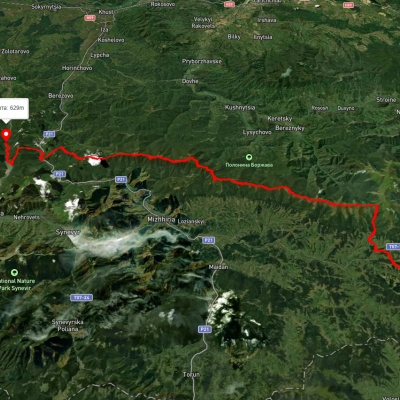
We suggest these hiking trails through or near Reformed Church, Vyshkovo: Bushtyno, via Zanivka tract to Mount Manchul, Pyntia's Path, Vovchyi village, via Mount Stiy, Mount Zhyd-Mahura, Pryslip Pass, Kuk polonyna, Mount Korytyshche and Shyroke village to Nyzhnii Bystryi village, Skotarske village, via Borzhava polonyna and Palenyi Hrun polonyna to Nyzhnii Bystryi village, Skotarske village, via Borzhava polonyna and Palenyi Hrun polonyna to Vilshanske reservoir, Lukovo village, via Mount Buzhora to Svaliava


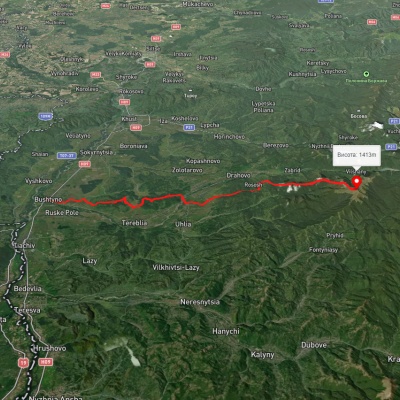
Bushtyno, via Zanivka tract to Mount Manchul
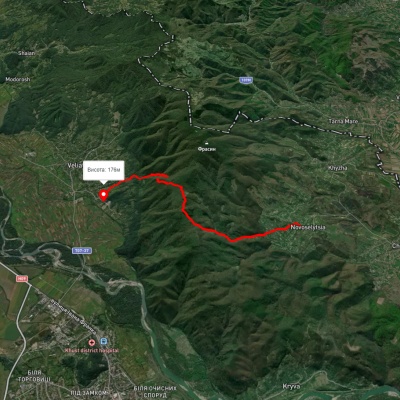
Pyntia's Path
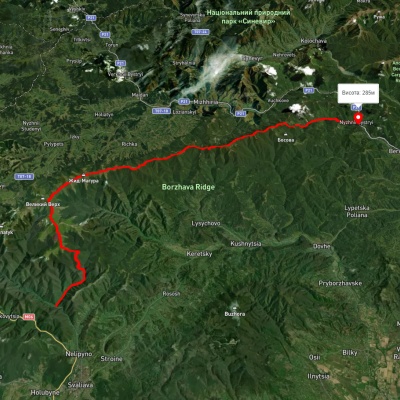
Vovchyi village, via Mount Stiy, Mount Zhyd-Mahura, Pryslip Pass, Kuk polonyna, Mount Korytyshche and Shyroke village to Nyzhnii Bystryi village
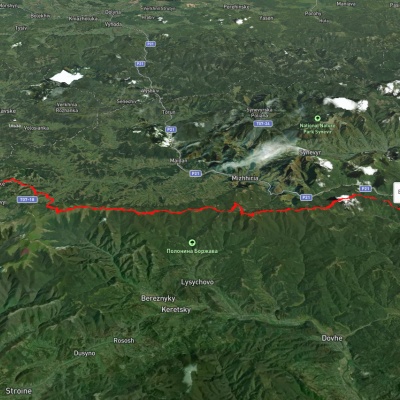
Skotarske village, via Borzhava polonyna and Palenyi Hrun polonyna to Nyzhnii Bystryi village